#Poverty is the lack of wealth, which must be created. #Prosperity is the state of having created or otherwise acquired wealth. The former must have preceded the latter, both logically and historically. https://t.co/UpOCd9xAOH
The older you get, the more you realize luck is mostly exposure. If you sit in the same place, have the same routine, talking to the same people, nothing new really happens. You have to tackle the world to succeed. Travel more. Talk to people.
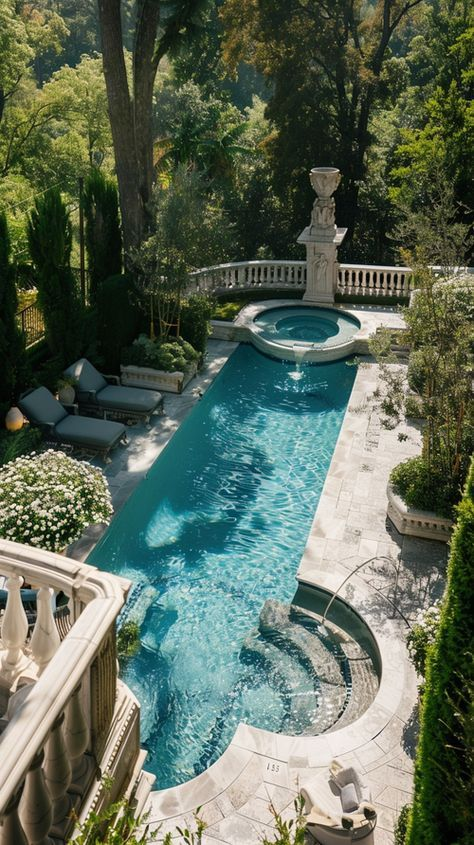
Let me explain exactly why every new subdivision in America looks like the top photo, because the math is wild.
A mature tree increases a home's value by 7 to 19 percent. On a $400,000 house, that's $28,000 to $76,000. A single shade tree produces the cooling equivalent of ten room-size air conditioners running 20 hours a day. One tree on the west side of a house cuts energy bills by 12 percent within 15 years. The bottom photo is worth more, costs less to live in, and sells faster. This has been documented by the University of Washington, Clemson, Michigan State, and the USDA. The data is not in dispute.
Removing those trees saves the builder roughly $5,000 per lot. Concrete trucks need twice the dripline radius of every standing tree. Utility trenches need flat ground. A bulldozer flattens 200 lots in an afternoon. Preserving trees adds weeks and thousands per home.
So the developer pockets $5,000 in savings and the buyer eats $50,000 in lost value for the next two decades. The person making the decision and the person paying for it have never been in the same room.
The Woodlands, Texas is the proof of what happens when they are. George Mitchell bought 28,000 acres of Houston timberland in 1974 and preserved 28% as permanent green space. He forced McDonald's to build behind the tree canopy. That McDonald's became one of the highest-volume locations in Texas. The first office building, designed to reflect the surrounding forest so you couldn't see it from the street, leased completely.
The Woodlands median home price today: $615,000. Katy, a comparable Houston suburb that clear-cut: $375,000. Named #1 community to live in America two years running.
Fifty years of data. The trees are worth more than removing them saves. Developers clear-cut anyway because they sell the house once and leave. You live in it for 30 years.
It’s unfortunate @KeNHAKenya doesn’t seem to have involved a landscape architect to advise on this. They should do so asap to make the project more aesthetically appealing.
The yearning for green spaces is growing by the day. Greenspan mall is the Kenyan Disneyland every Sunday. In Thika, the Bluepost Hotel is practically a crusade, while Karura Forest looks like a human migration route on Saturdays.
An evolution long overdue.
For a small Belgian guy from Braine-le-Comte playing for fun, being inducted into the Premier League Hall of Fame with these greats of the game at 34 years old is crazy. Thank you to all of you; I will see you soon, my friends! 💙
Last frame.
General Kurito Ole Kisio.
Led an army of 800 morans based in Melili forest.
Mau Mau 4th in command at one point.
Killed In Action on 3rd September 1954.
His body was displayed outside a hospital in Narok for some days.
Rest easy Shujaa.
https://t.co/nkN2ZhhtkD
@johnallannamu What a profound metaphor. Few leaders embodied so many contradictions so completely. In life, we argued over his shape; in death, we confront his magnitude. The true measure of greatness is not perfection, but the depth of reflection a life compels once it is gone.
Raila Odinga was like the elephant in a dark room.Each of us touched a part of him;a leg and thought him a tree, a side and thought him a wall, a trunk and thought him a hose, a tail and thought him a whip.Only now, with the light on, and him resting with the ancestors do we see the enormity of who he was — good, flawed, immense, divisive and deliberative. An indelible part of 🇰🇪 journey.
Let me put it plainly jomba.
We’re told the future is innovation, AI, smart cities, green energy and other kosokosos. That’s the cover story. The deeper project is shrinking surplus i.e. people without firing a shot.
The machinery is built to look like progress but its total collapse by design. In the old world, humans were assets. More people meant more labor, more soldiers, more taxpayers. But technology flipped the equation. When automation does the work, people become liabilities. They consume resources, and they produce nothing. From a corporate state perspective, they are dead weight on the balance sheet.
And what do systems do with liabilities? They pare them down quietly and efficiently. You don’t broadcast collapse or publish a target number. You shape conditions so people opt out of life, what we call “unaliving” themselves voluntarily by deciding to kick 🦵🏿 the famous bucket 🪣 on their own. This is where Darwin wa @polo_kimanii comes in, the strongest survive, the weak ship out.
Start with food economics, make real nutrition a luxury, flood shelves with ultra-processed, hyper-palatable calories, cheap to produce, addictive to consume but devastating over time, this therefore leads to obesity, diabetes, cancers which are basically slow-motion euthanasia sold as personal choice. Next, privatise hospitals, medicine, insurance etc. Turn health into a product, when the invoice lands and you can’t pay, “nature takes its course.” No violence, no fingerprints.
Meanwhile, elites will then drown culture in noise, panic headlines, influencer spats, ideological cage matches etc so no one watches the algorithm deciding who advances and who quietly disappears. People think they’re debating politics, in reality, they’re arguing inside a zoo enclosure while the zookeeper holds the keys to their lifespan.
This isn’t genocide by decree. It’s market-driven selection, a corporate Darwinism where the unprofitable are phased out. The punchline? They don’t kill you, they bill you until you die.
This is the most profitable extinction in history unfolding in slow motion, while everyone believes they’re free 🆓 🥲. Freedom ni jaba jomba!
Public green spaces should not be commercialised. They are “public” for a reason. The argument on amenities doesn’t hold water because the cost should come from taxes + commercial leases paid by service providers