BGP Shows "Intent," Traceroute Shows "Reality"
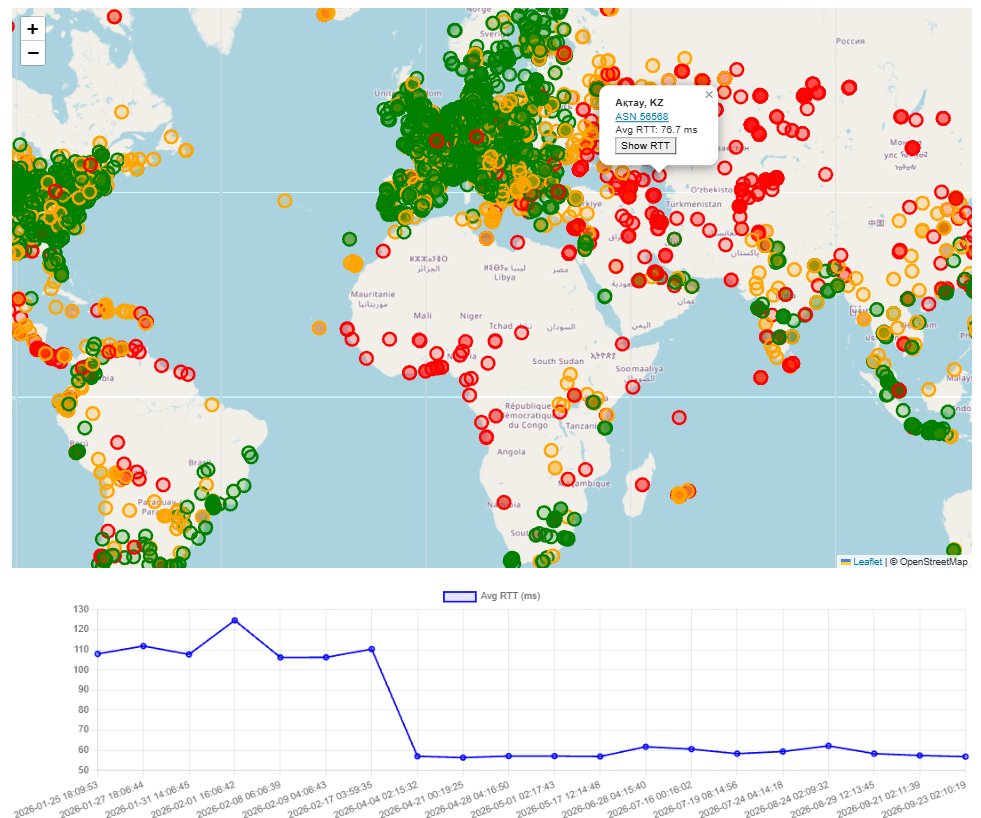
Analyzing BGP Route Views alone only gives you the control plane perspective. To understand what is actually happening, you must use continuous traceroute and path tracing to see the data plane perspective.
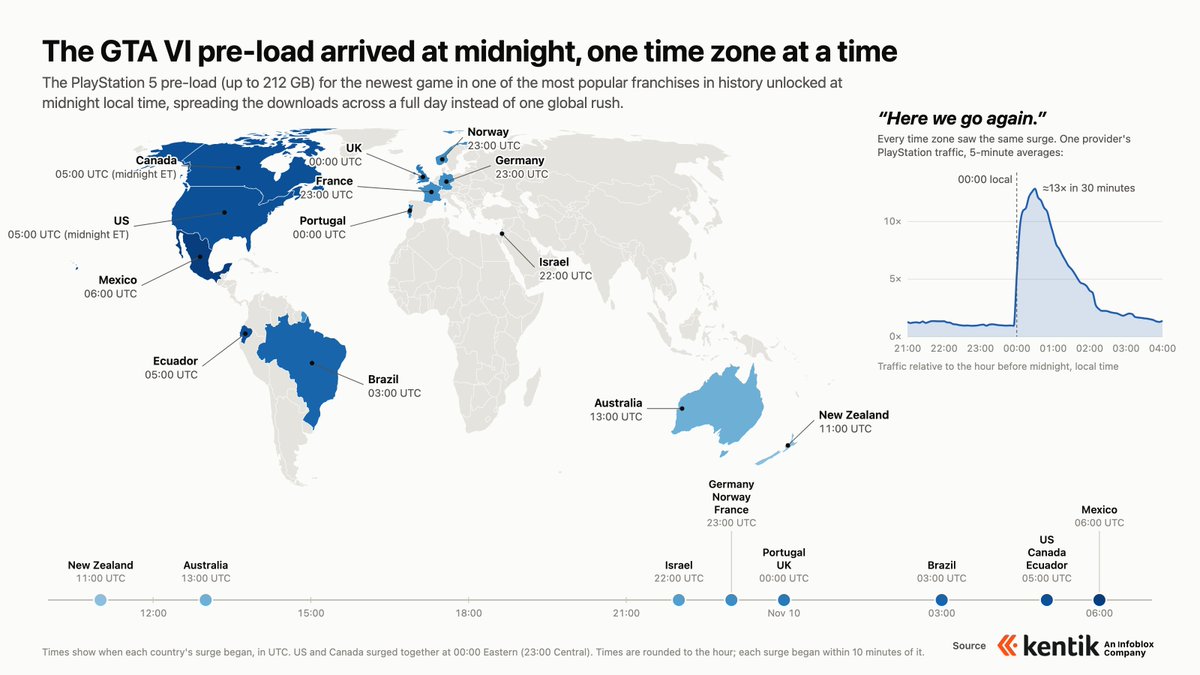
Took a look at the pre-load for #GTAVI that went out yesterday in anticipation of the launch on Nov 19.
@kentikinc OTT data shows @PlayStation traffic jumping at midnight local time, as the pre-load (up to 212 GB) started downloading.
This is also why every time a new RFC is released, it usually takes 5 to 10 years of major operators pressuring and pushing one another before we can truly see its defensive effects take hold globally.
#RFC9234_2022
BGP security is never purely a technical challenge—it’s about the people and the broader ecosystem. Be it OTC or the RPKI, if the global internet community collectively turns a blind eye and refuses to manually configure them, these features will remain completely useless. #BGP
Continuing from the last post, do you find any?
How can ping latency tell you the network path changed? That makes no sense.
BGPTrace, traceroute, tracepath, MTR give more insight—but require continuous measurement.
#bgptrace#peerint#internet
If you simply count the number of prefixes owned by the Last AS (Origin AS) in each AS-PATH within the routing table, this statistical data is indeed meaningless—and even deceptive—in many scenarios.
By using the dynamic behavioral algorithms mentioned above to catch those prefixes that lack RPKI registration but exhibit anomalous behavior in the routing table, we can truly solve the predicament of "meaningless data."
To generate a BGP prefix ranking and statistics with high commercial value, the modern approach is "Algorithmic Behavioral Identification + Manual Registration Data."