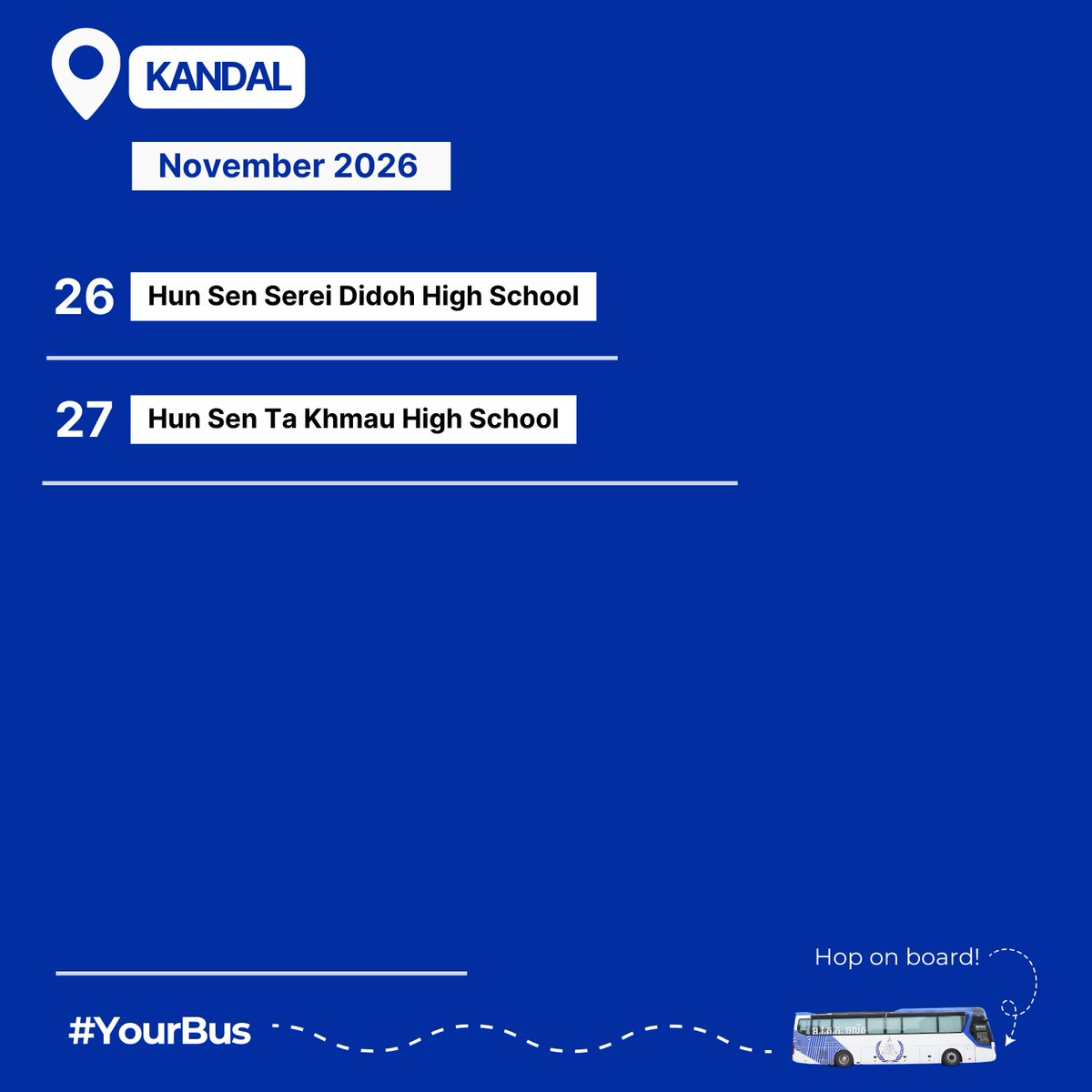
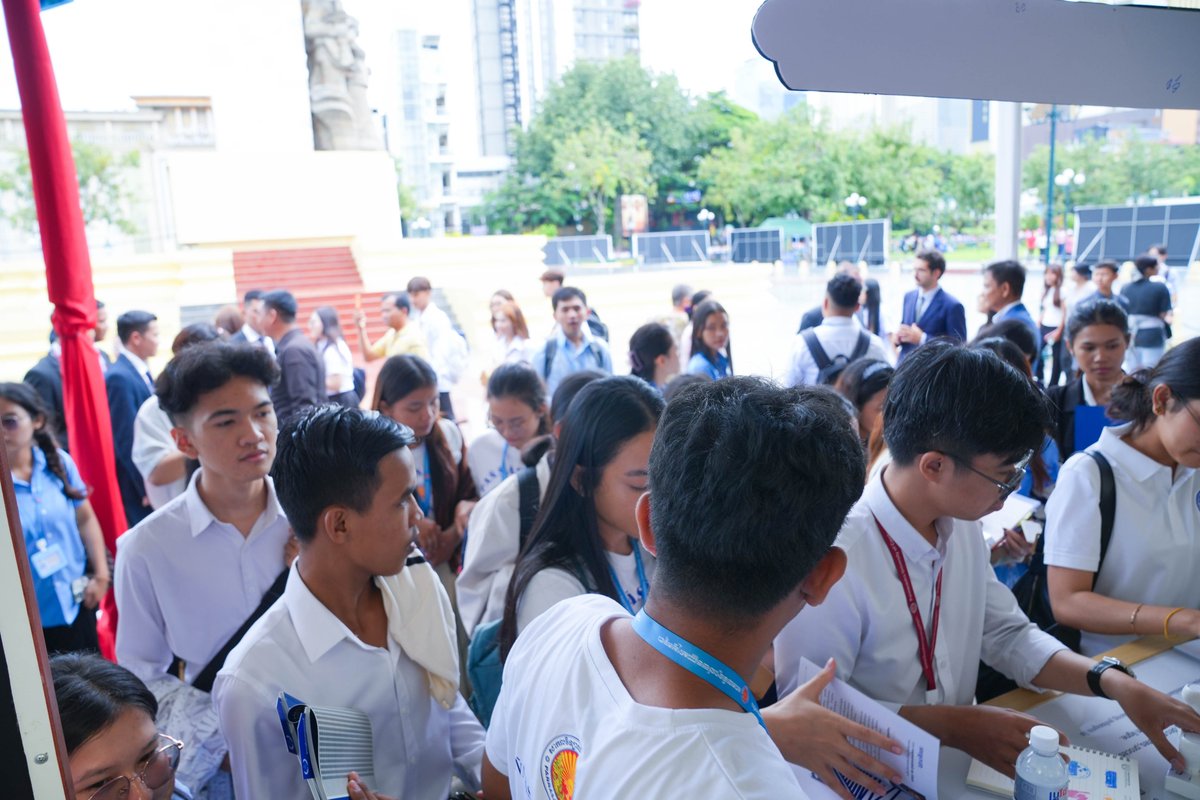
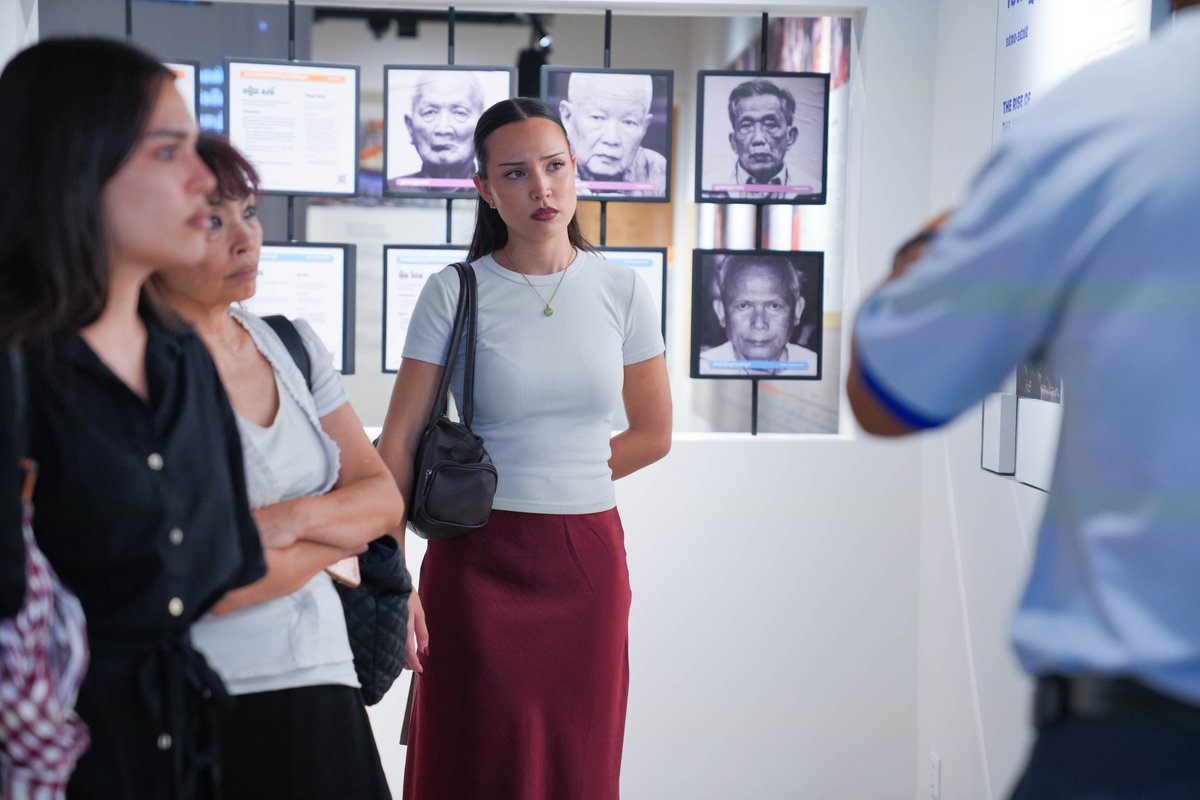
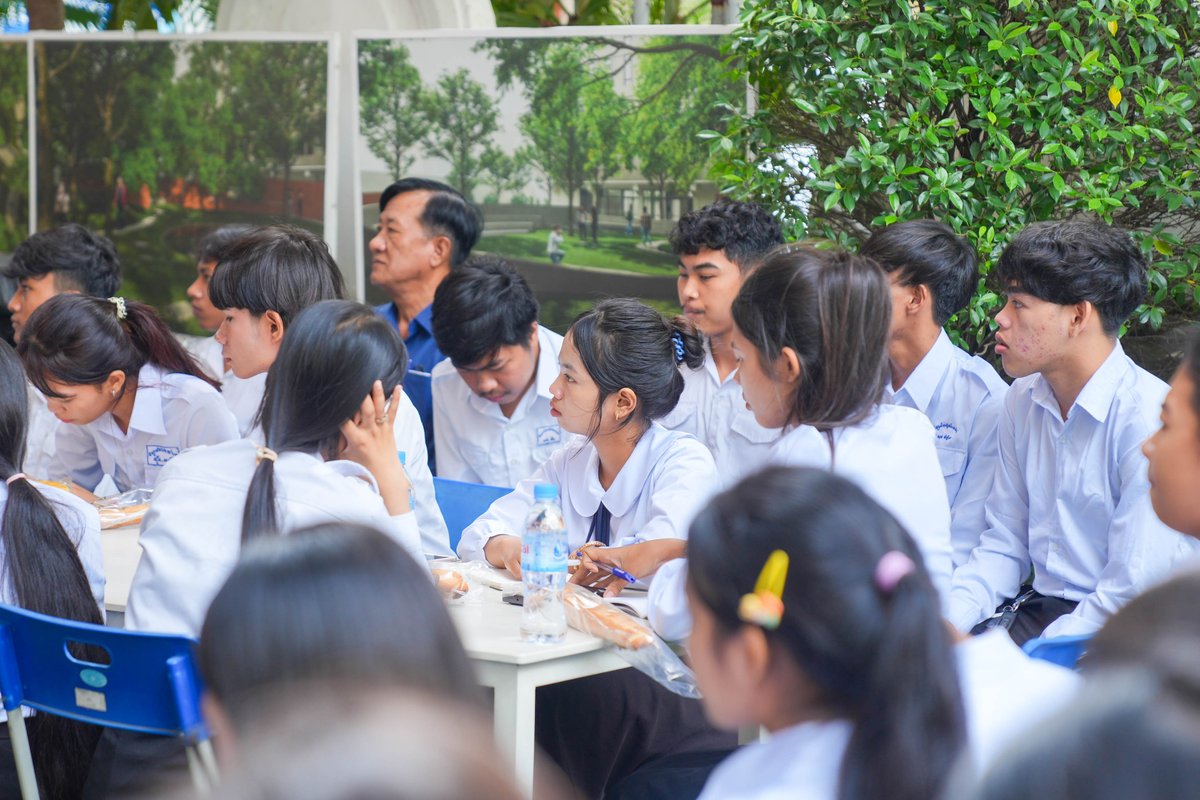
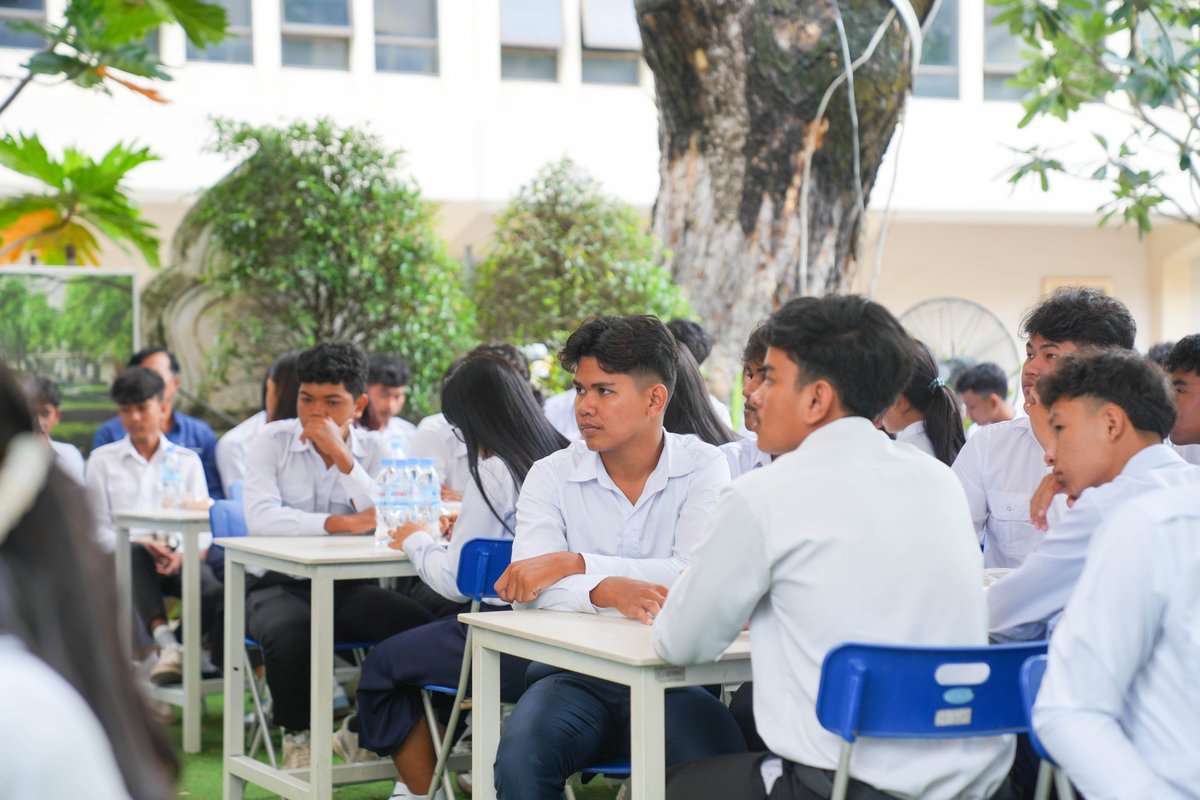
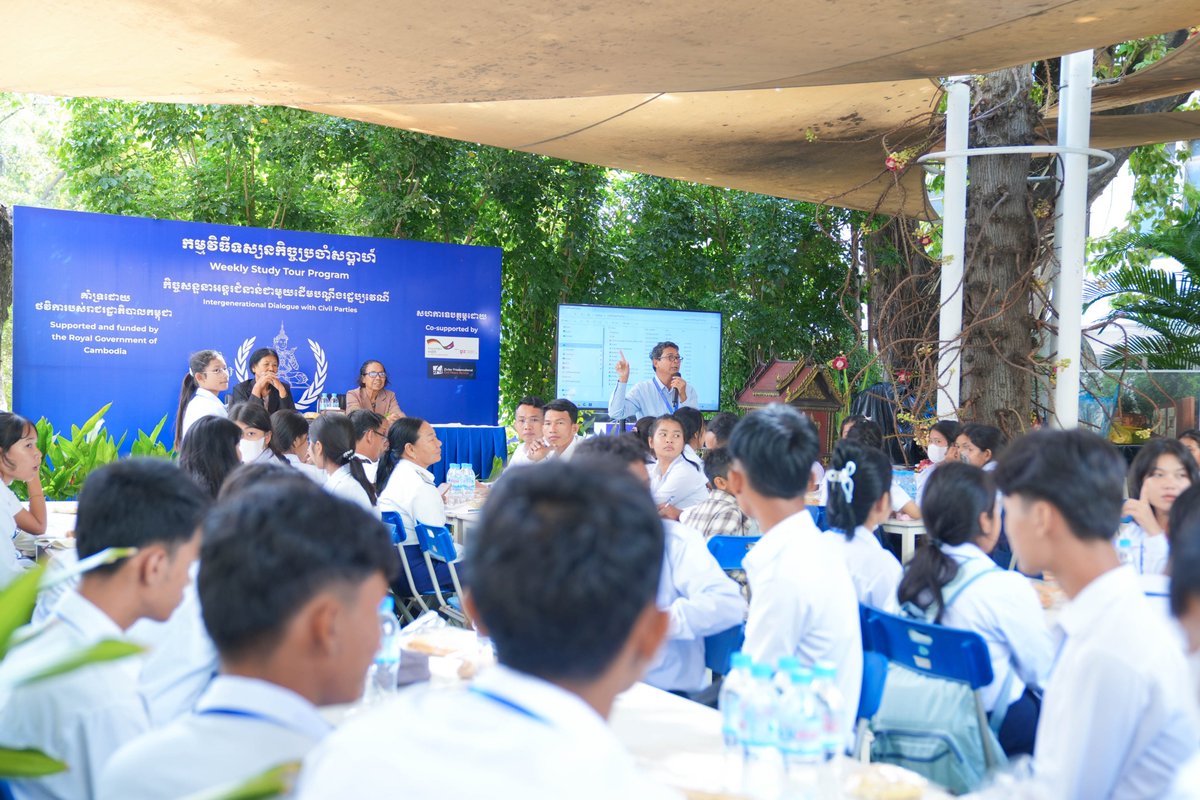
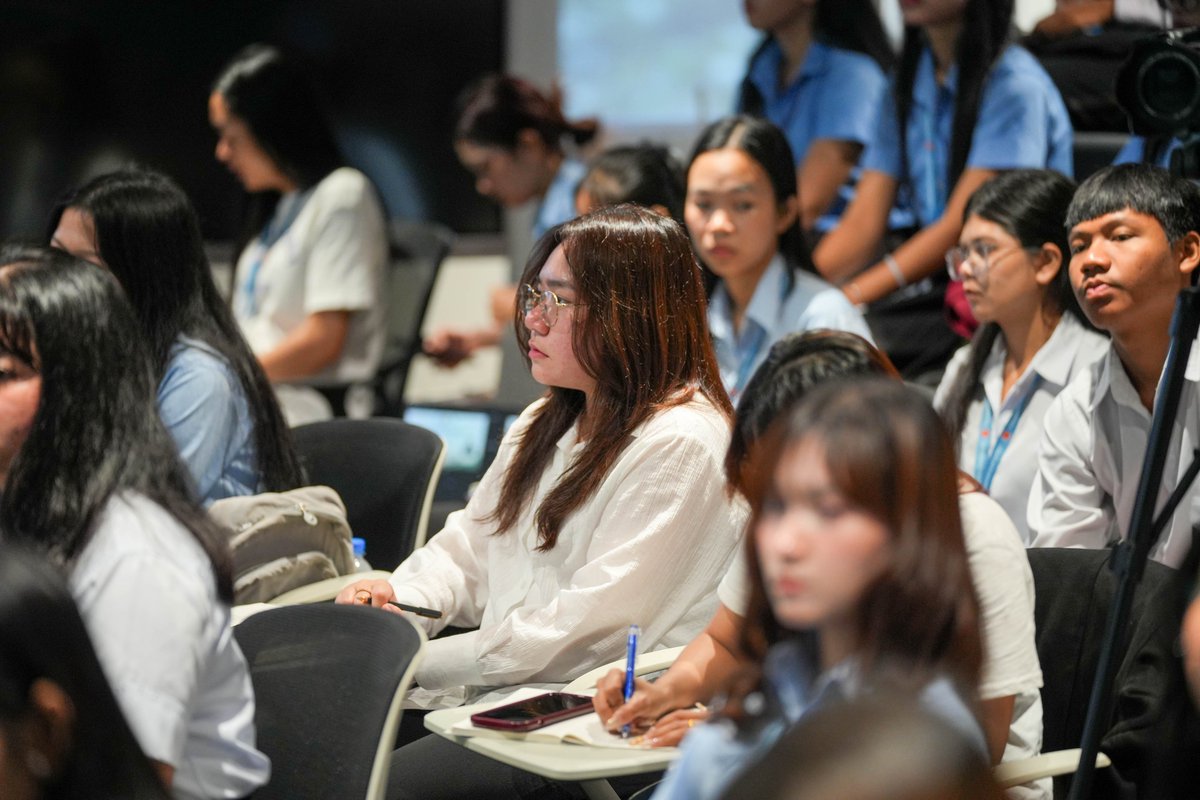
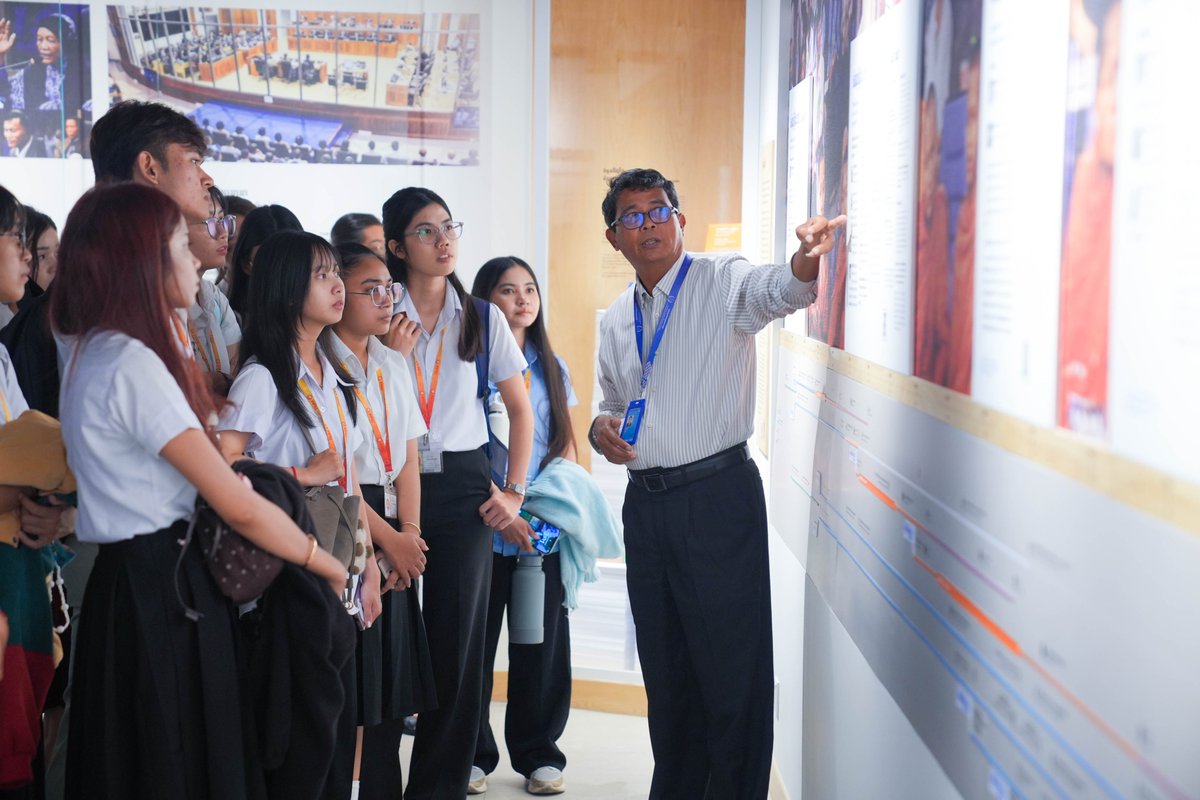
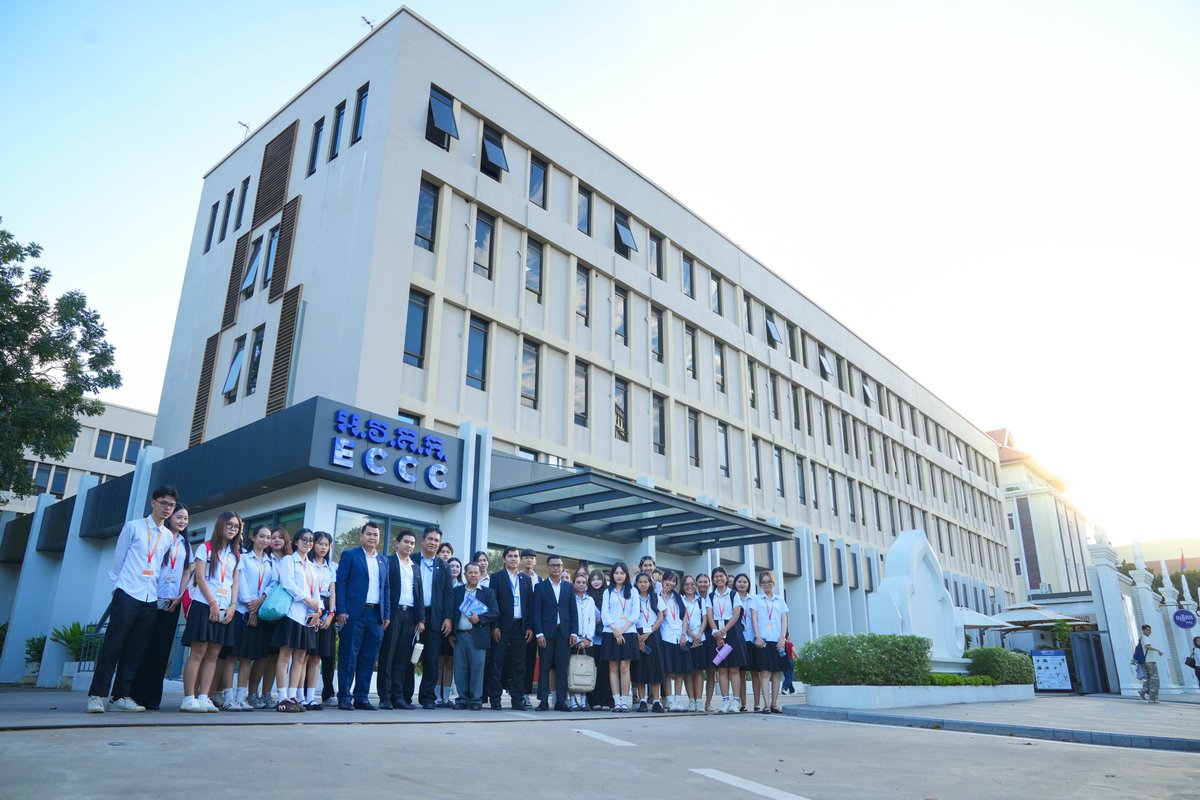
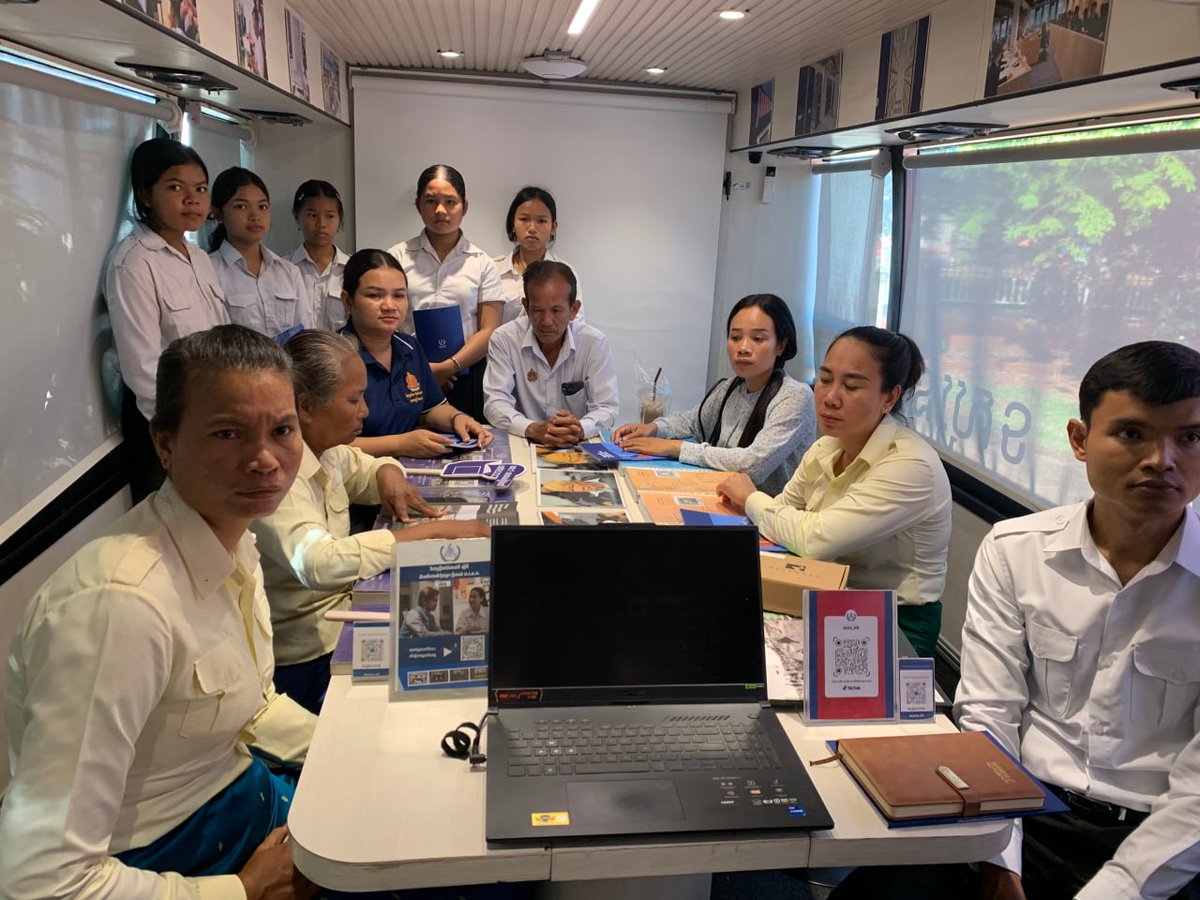
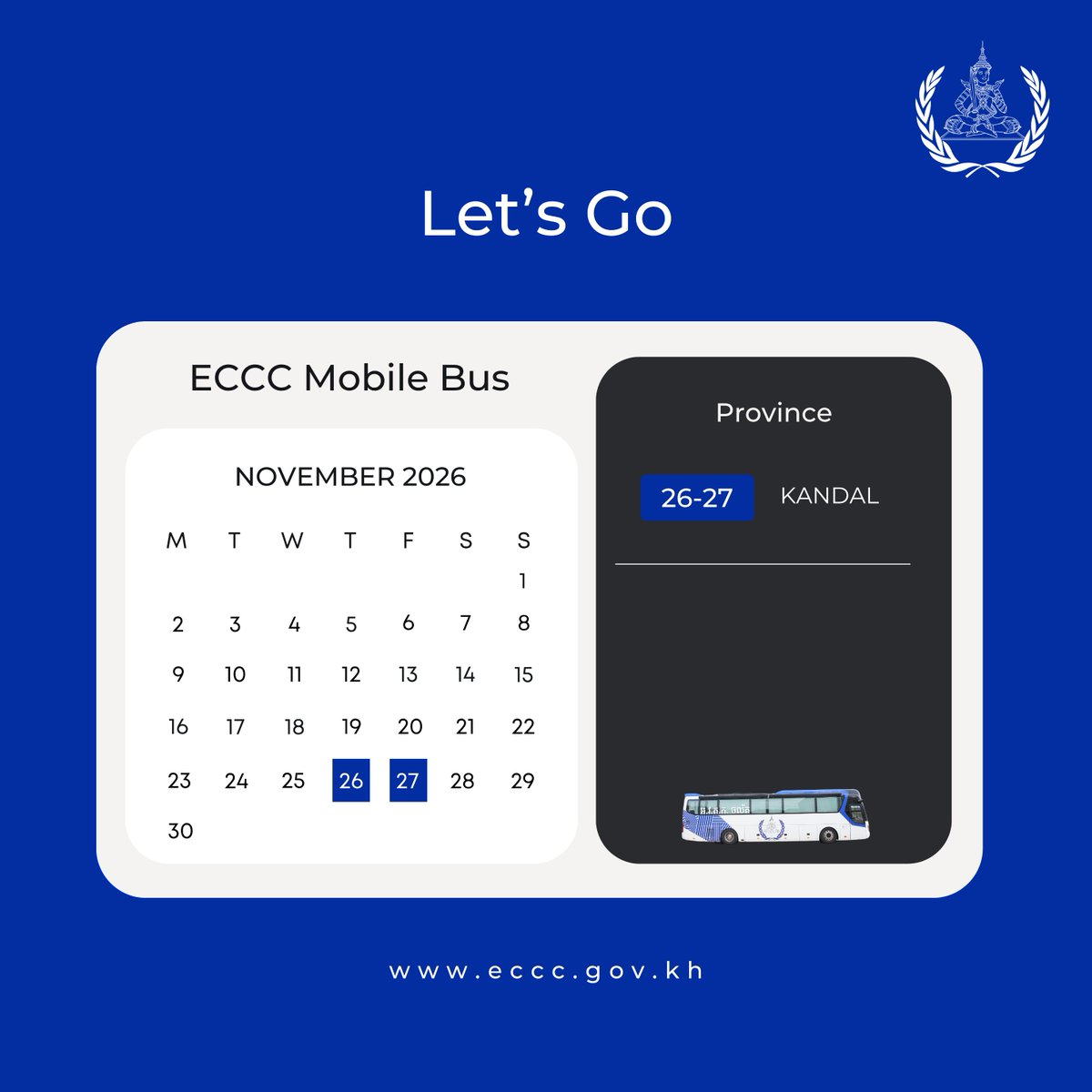
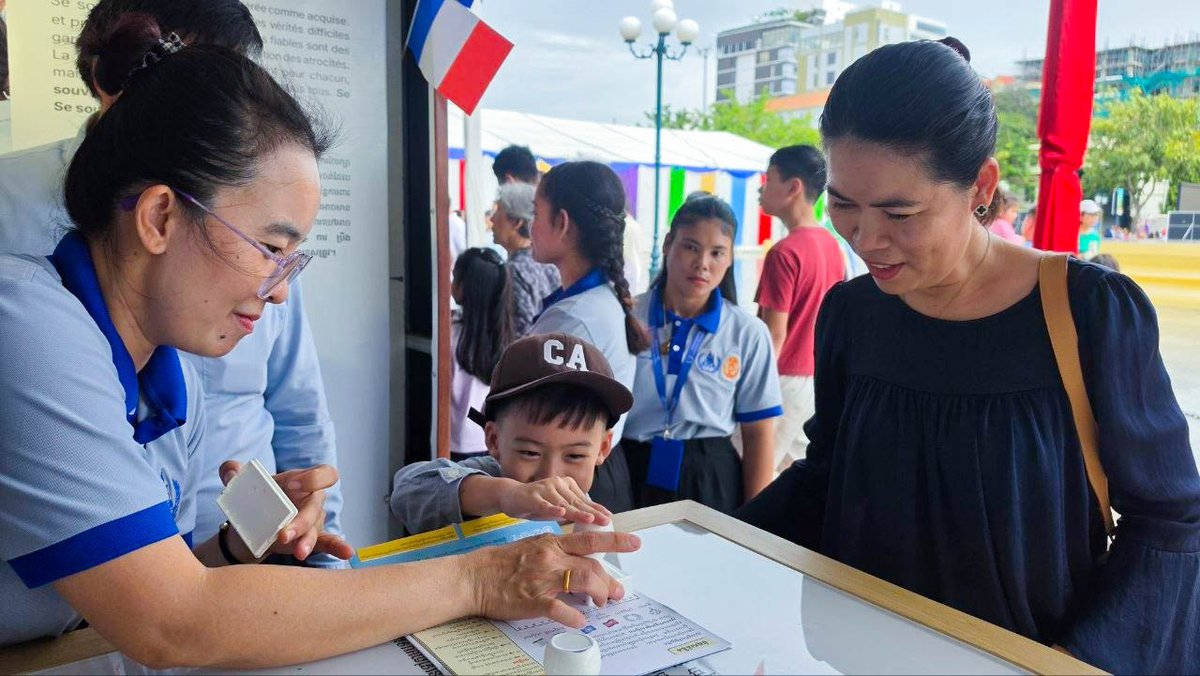
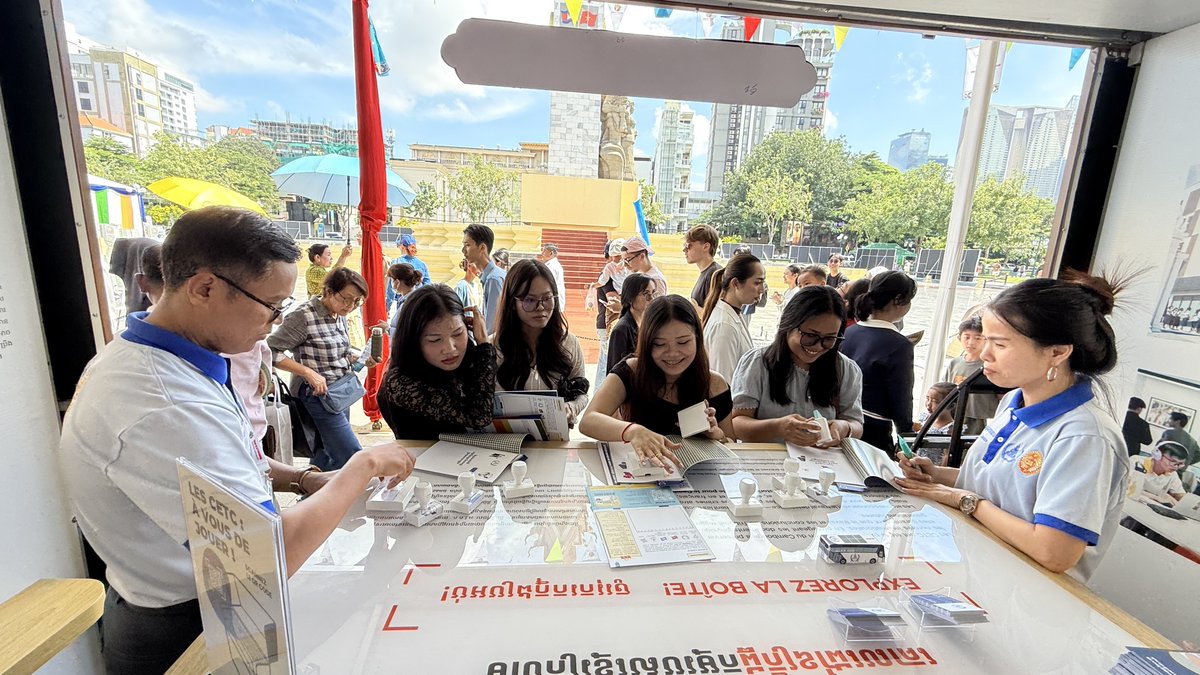
🚌 Welcome aboard the ECCC Mobile Resource Centre! We’re heading to two schools in Kandal Province.
🚏 Join us to explore historical evidence from the Khmer Rouge era and learn about the legacy of the trials held by the Extraordinary Chambers in the Courts of Cambodia (ECCC).
Stay tuned for our next stops as we continue learning about Cambodia’s history together. Let’s hop on the bus!
#ECCC #KhmerRouge #Justice #Education #YourBus #KhmerRougeTrials
Approximately 200 Students from Bun Rany Hun Sen Kampong Trabek High School Participate in an Intergenerational Dialogue with Civil Parties at the ECCC Resource Centre
On the morning of Wednesday, 18 November 2026, an intergenerational dialogue between Civil Parties and approximately 200 students from Bun Rany Hun Sen Kampong Trabek High School in Prey Veng Province was held at the Resource Centre of the Extraordinary Chambers in the Courts of Cambodia (ECCC).
The programme was organised during the students’ educational visit to the ECCC Resource Centre, where they had the opportunity to learn more about the trials of crimes committed during the Democratic Kampuchea regime and the process of seeking justice for victims.
Two Civil Parties, Mr. Un On and Mr. Chea Saroun, from Dom Chres Village, Boeung Khnar Commune, Bakan District, Pursat Province, participated in the programme.
During the dialogue, Mr. Un On shared his painful experiences under the Democratic Kampuchea regime, including the loss of his beloved father due to starvation and dysentery. Meanwhile, Mr. Chea Saroun also shared the suffering he endured following the loss of his family members during the regime.
Through listening to these personal testimonies and learning from historical documents, younger generations of students can gain a deeper understanding of the importance of remembering history, respecting human rights, pursuing justice, and preserving peace to prevent such tragedies from happening again.
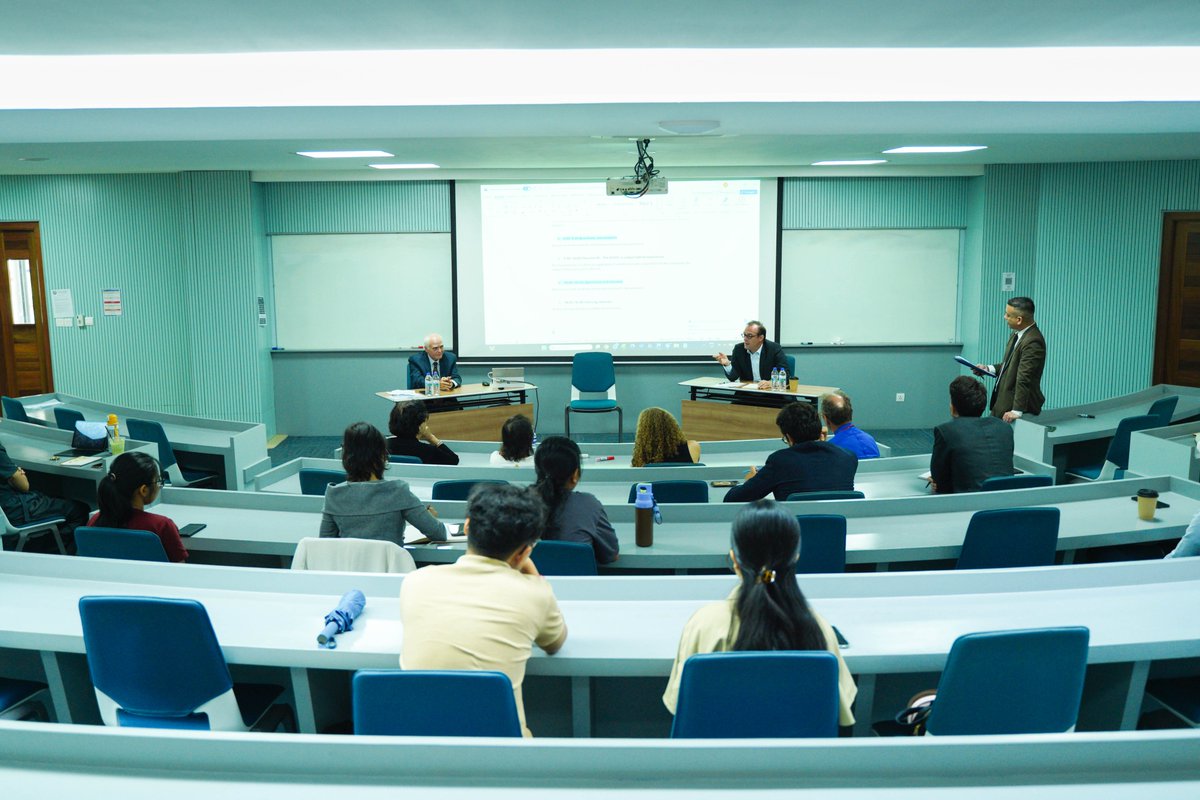
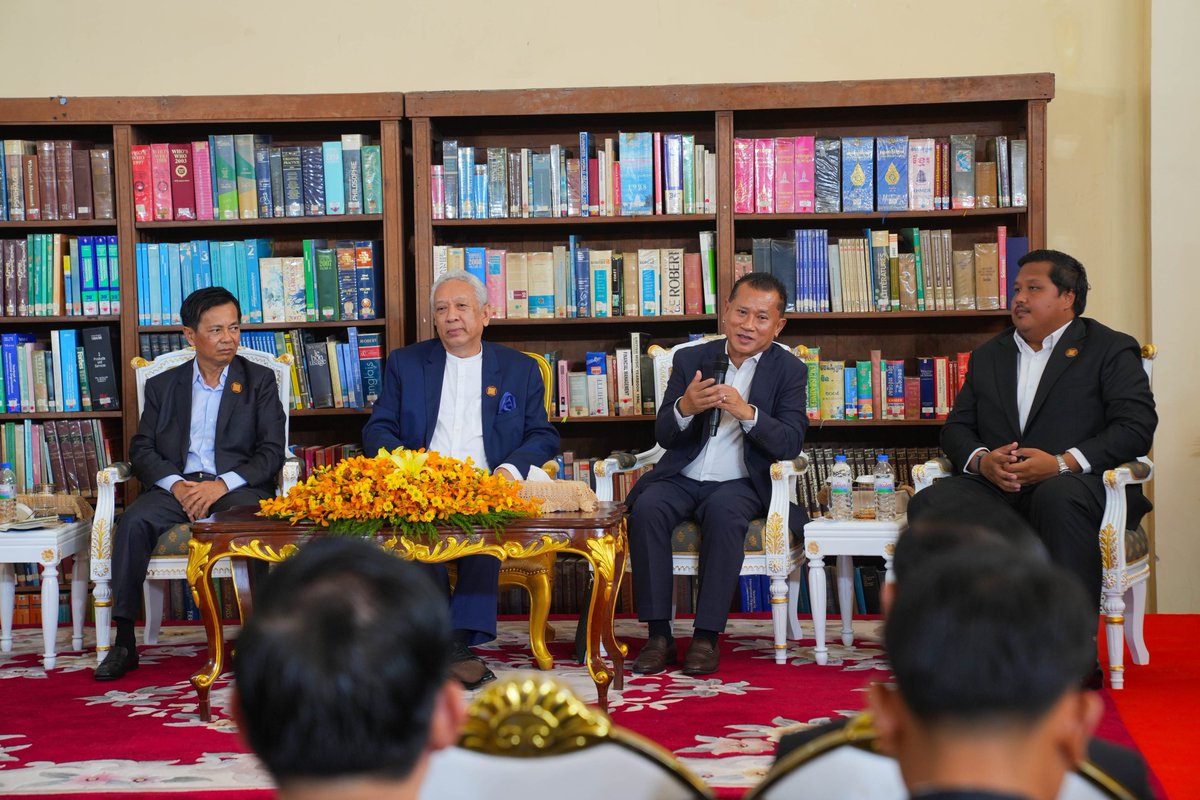
On the morning of 17 November 2026, the Extraordinary Chambers in the Courts of Cambodia (ECCC) organised an ECCC Law Talk on “The Role of an International Judge” for students and researchers interested in law and international justice. Held at the American University of Phnom Penh (AUPP), the event featured Judge Olivier Beauvallet and Judge Martin Karopkin, who shared insights from their judicial experience at the ECCC. The discussion was moderated by Mr. Hisham Mousar, Dean of the Faculty of Law at AUPP.
Drawing on their respective civil law and common law backgrounds, the two judges shared insights into the profession of an international judge, their experiences at the ECCC, and the roles, responsibilities, and challenges involved in delivering justice in accordance with international standards. The discussion also explored how judges from different legal traditions work together within international tribunals.
The event formed part of the ECCC’s ongoing efforts to promote legal education, share practical experience from the Court’s work, and strengthen students’ and young people’s understanding of law and international justice. It offered participants an opportunity to learn directly from experienced legal professionals about the exercise of judicial responsibilities within international justice systems, helping to advance legal knowledge among the next generation.
The ECCC extends its sincere appreciation to the speakers, moderator, American University of Phnom Penh, and all participants for sharing their time, knowledge, and experience, and for contributing to the success of the event.
Approximately 200 Students from Hun Sen Tuek Phos High School Visit the Extraordinary Chambers in the Courts of Cambodia (ECCC)
On the morning of Tuesday, 17 November 2026, approximately 200 students and teachers from Hun Sen Tuek Phos High School in Kampong Chhnang Province visited the Extraordinary Chambers in the Courts of Cambodia (ECCC) to learn more about the trials of crimes committed during the Democratic Kampuchea regime and the process of seeking justice for victims.
On this occasion, the students also participated in an intergenerational dialogue with two Civil Parties, Ms. In Sarot and Ms. Oun Yeun, who shared their personal experiences and memories of life under the Khmer Rouge regime.During the discussion, Ms. In Sarot recalled her painful experiences, stating:“My parents were killed by Pol Pot despite being innocent. I also lost two of my siblings.”
She further recounted the hardships she endured when she was forced to work in the fields just three months after giving birth. She explained:“My health had not yet recovered from childbirth, but I was forced to work, including collecting animal dung and grinding it into fertiliser.”Her child also suffered from sores all over the body, while medical treatment and medicine were scarce at the time.
Through listening to these personal testimonies and learning about historical documents, younger generations of students can gain a deeper understanding of the importance of remembering history, respecting human rights, pursuing justice, and preserving peace to ensure that such tragedies never happen again.
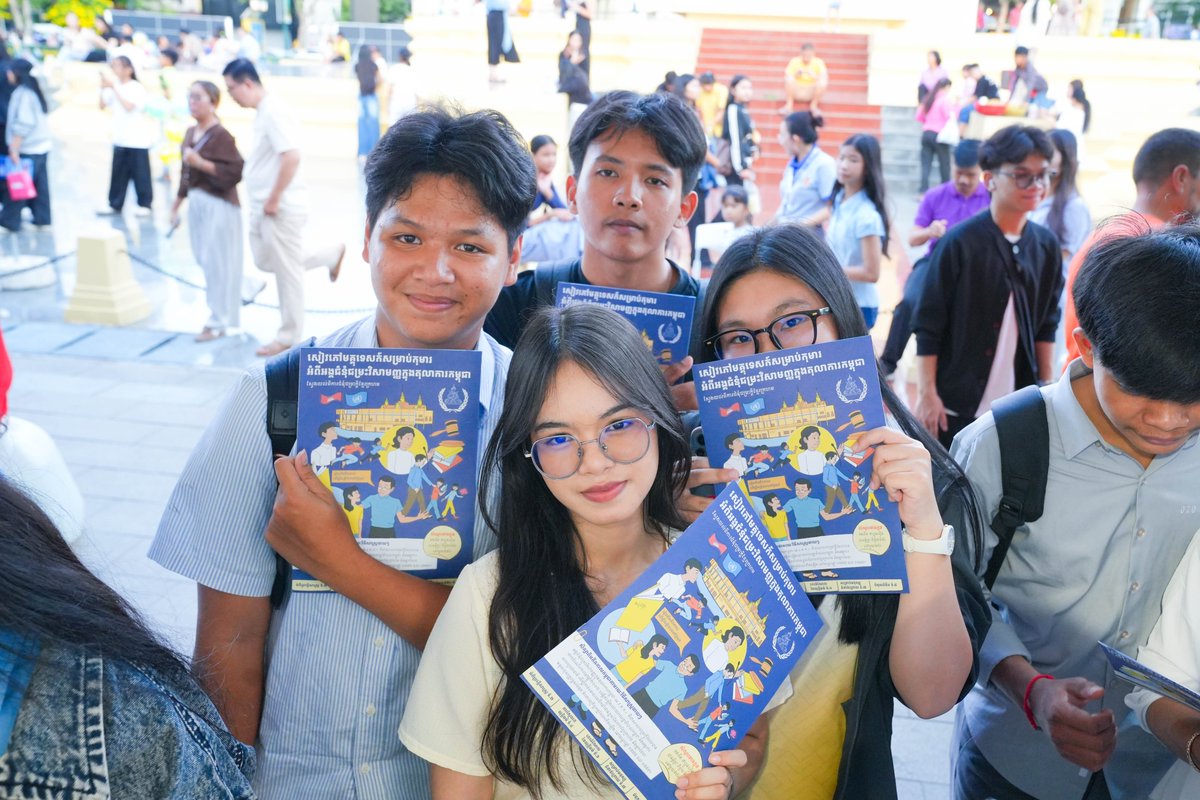
The Extraordinary Chambers in the Courts of Cambodia (ECCC) booth at Francovillage, located in the park in front of Wat Botum Vatey, was greatly honored to welcome Her Excellency Dr. Chea Serey, Governor of the National Bank of Cambodia, along with members of the public and many international visitors who came to explore and learn about the achievements, work, and legacy of the ECCC.
😍 Tomorrow, November 17, is the final day! Don’t forget to visit the ECCC Booth B10 at Francovillage!
If you’re visiting Francovillage, be sure to stop by the exhibition of the Extraordinary Chambers in the Courts of Cambodia (ECCC) to learn more about Cambodia’s history, the pursuit of justice, and the legacy of the Khmer Rouge Tribunal. ⚖️📚
Hurry and invite your friends and family to visit, ask questions, and learn more with our team before the event comes to an end! ☺️
📍 Location: ECCC Booth B10, Francovillage, in the park in front of Wat Botum Vatey
📅 Final day: November 17, 2026
💙 Thank you to everyone who has visited! For those who haven’t had a chance to come yet, we are looking forward to welcoming you. See you at Booth B10!
#ECCC #អវតក
🇰🇭✨ Day 3 of the Francophonie Village!
Don’t forget to visit ECCC Booth B10 at Wat Botum Park! Discover the work and legacy of the Extraordinary Chambers in the Courts of Cambodia (ECCC), explore our educational materials, and learn about Cambodia’s history, justice, and remembrance.
🙏 Thank you to everyone who has visited our booth. Your interest and engagement help keep this history alive and inspire future generations to learn from the past.
📍 ECCC Booth B10 | Francophonie Village, Wat Botum Park
We look forward to welcoming you!
#ECCC #Francophonie #Cambodia #Justice #Remembrance
From Booth B10 at the Francophonie Village to the ECCC Resource Centre: Discovering History, Memory and Justice
The Extraordinary Chambers in the Courts of Cambodia (ECCC) warmly welcomes all Cambodian and international visitors to visit Booth B10 at the Francophonie Village and invites you to continue your journey of discovery at the ECCC Resource Centre in Phnom Penh.
We would like to express our heartfelt gratitude to all visitors who have registered at our booth for a visit to the ECCC Resource Centre. Your interest and participation contribute to preserving Cambodia’s historical memory and sharing lessons from the past with future generations.
During your visit, you will have the opportunity to explore the permanent exhibition, discover archival documents, and visit the library to learn more about the Khmer Rouge regime, its devastating impact on the Cambodian people, and the ECCC’s work to deliver justice and accountability for crimes committed during that period.
The Resource Centre also offers an opportunity to learn about survivors’ experiences, victims’ participation in the justice process, and the importance of memory, justice, and education. Through these resources, you can discover how the ECCC’s legacy extends beyond the courtroom, continuing to support academic research and dialogue between generations.
📍 Visit Booth B10 at the Francophonie Village to learn more and register for a visit to the ECCC Resource Centre.
We look forward to welcoming you!
On the morning of 15 November 2026, the Extraordinary Chambers in the Courts of Cambodia (ECCC) organized a roundtable discussion entitled “Cambodia as an Innovative Model for Transitional Justice: How Can Cambodia’s Experience Inspire the Future of International Justice?” The event took place at the Conference Hall of the Francophonie Village in Wat Botum Park, Phnom Penh, on the occasion of the Francophonie Summit.
The discussion aimed to highlight the ECCC’s role and contributions to the development of international justice by sharing Cambodia’s experience in pursuing justice for crimes committed during the Khmer Rouge regime. It also reflected the Francophonie Summit’s broader objectives of promoting peace and stability within the Francophone community.
The roundtable brought together five speakers: H.E. Hem Kranh Tony, Secretary of State at the Office of the Council of Ministers and Acting Head of Administration of the ECCC; Judge Olivier Beauvallet, International Judge of the ECCC’s Pre-Trial Chamber and Reporting Judge in the Appeals Chamber of the Special Criminal Court of the Central African Republic; Ms. Ty Srinna, Civil Party Lawyer; Mr. Hisham Mousar, Dean of the Faculty of Law at the American University of Phnom Penh (AUPP); and Mr. Yin Romduol, a Civil Party in ECCC Case 002/01.
The speakers exchanged views on three main topics:
1. The distinctive features of the ECCC’s judicial model;
2. Victim participation in the justice process; and
3. The ECCC’s current role and legacy.
Drawing on the ECCC’s experience, the discussion explored the role of hybrid courts, victim participation, and the preservation of judicial legacy. It also highlighted the importance of connecting the pursuit of justice with historical memory, education, and lasting peace.
The ECCC’s legacy extends beyond its judicial decisions. It also lies in giving victims a voice, acknowledging their suffering, preserving historical memory, and sharing lessons with future generations and the international community.
The booth of the Extraordinary Chambers in the Courts of Cambodia (ECCC) at the Francophonie Village, in the park in front of Wat Botum Vatey, was deeply honoured to welcome H.E. Hun Many, Deputy Prime Minister and Minister of Civil Service, and His Highness Prince Norodom Chakravuth, President of the FUNCINPEC Party, alongside numerous members of the public and international visitors who came to learn about the ECCC’s achievements, work and legacy.
Through the displays and guided explanations, visitors learned about the judicial proceedings, justice mechanisms, victim participation and the ECCC’s contribution to pursuing justice for crimes committed during the Khmer Rouge regime.
The ECCC’s achievements and legacy represent an important chapter in Cambodia’s pursuit of justice. By bringing senior leaders of Democratic Kampuchea and those most responsible for crimes committed during the Khmer Rouge regime to trial, the ECCC has also contributed to truth, remembrance and reconciliation in Cambodian society.
Visits to the ECCC booth also provided an opportunity for the public and international visitors to deepen their understanding of Cambodian history, the role of the courts in pursuing justice, and the importance of preserving this historical legacy for future generations.e less
Delegation Led by French Senator Visits the Resource Centre to Learn About the ECCC’s Legacy
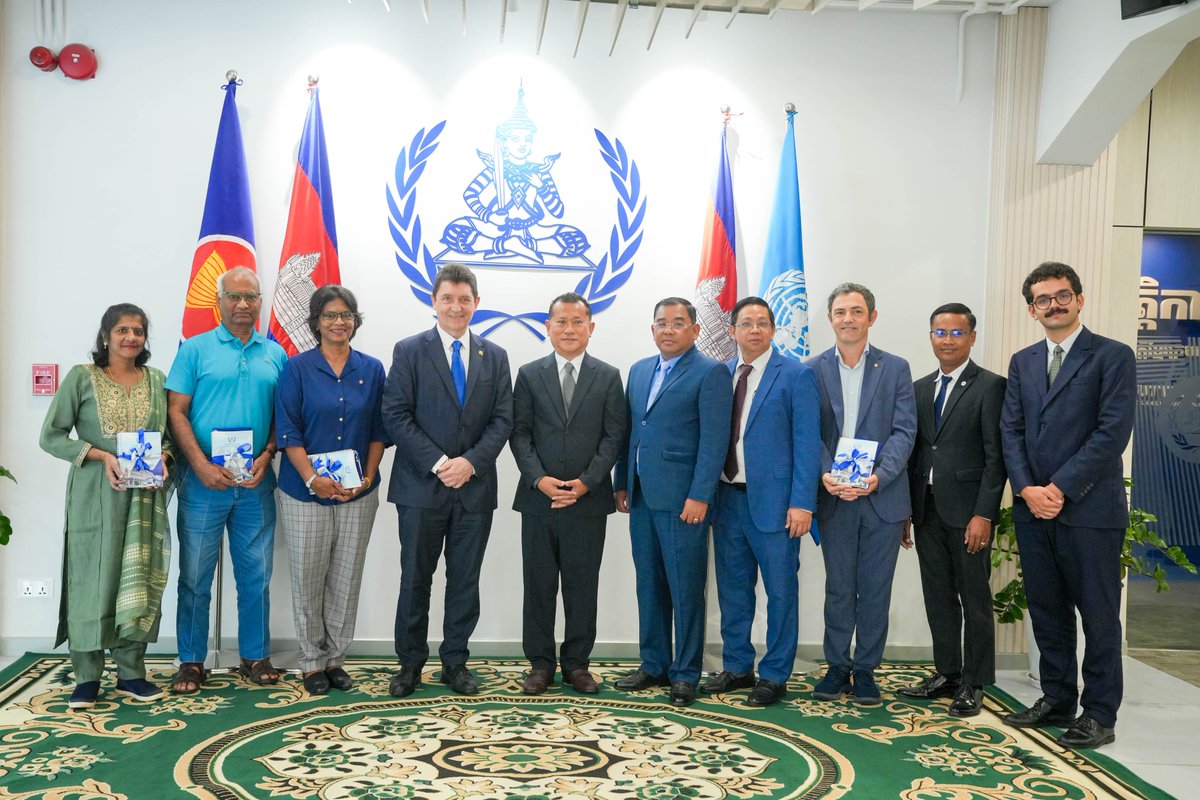
On the morning of Friday, 13 November 2026, Mr. Olivier Cadic, French Senator representing French citizens living abroad, led a delegation on a visit to the ECCC Resource Centre to learn about the achievements of the Extraordinary Chambers in the Courts of Cambodia (ECCC), the implementation of its residual functions, and ongoing efforts to preserve its judicial legacy.
The delegation was welcomed by H.E. Hem Kranh Tony, Secretary of State at the Office of the Council of Ministers and Acting Director of Administration, together with senior management and relevant officials. During the visit, ECCC representatives briefed the delegation on the Court’s key judicial achievements, its enduring legacy, and the continued implementation of its residual functions through the Resource Centre. These efforts focus on preserving historical records and memory, supporting education, and promoting public understanding of history and justice, particularly among younger generations.
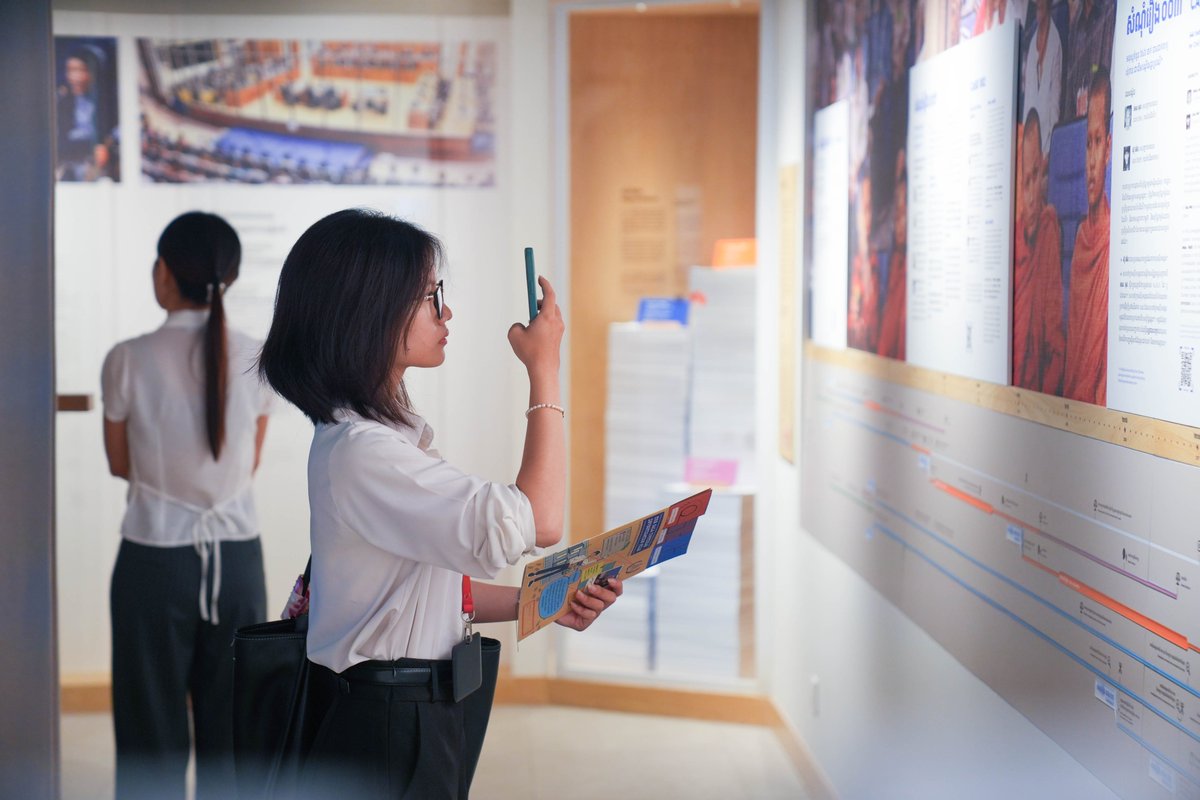
The delegation toured the permanent exhibition, the ECCC Mobile Resource Centre, the Remembrance Park, the archives, and the library. These facilities play an important role in preserving records and sharing the ECCC’s legacy, while promoting historical awareness, understanding of justice, and education for future generations.
“I felt deeply heartbroken when I saw the Khmer Rouge force children to kill their own fathers. They were not even allowed to cry. Instead, they were instructed to say, ‘I am not killing my own father; I am killing an enemy.’” – Mr. Orn Em, a survivor of the Khmer Rouge regime.
On the morning of Thursday, 12 November 2026, approximately 200 students from Hun Sen Chambok High School in Kampong Speu Province visited the ECCC Resource Centre to learn about the history of the Khmer Rouge regime and the important role of the Extraordinary Chambers in the Courts of Cambodia (ECCC) in seeking justice for victims of crimes committed during the Democratic Kampuchea regime.
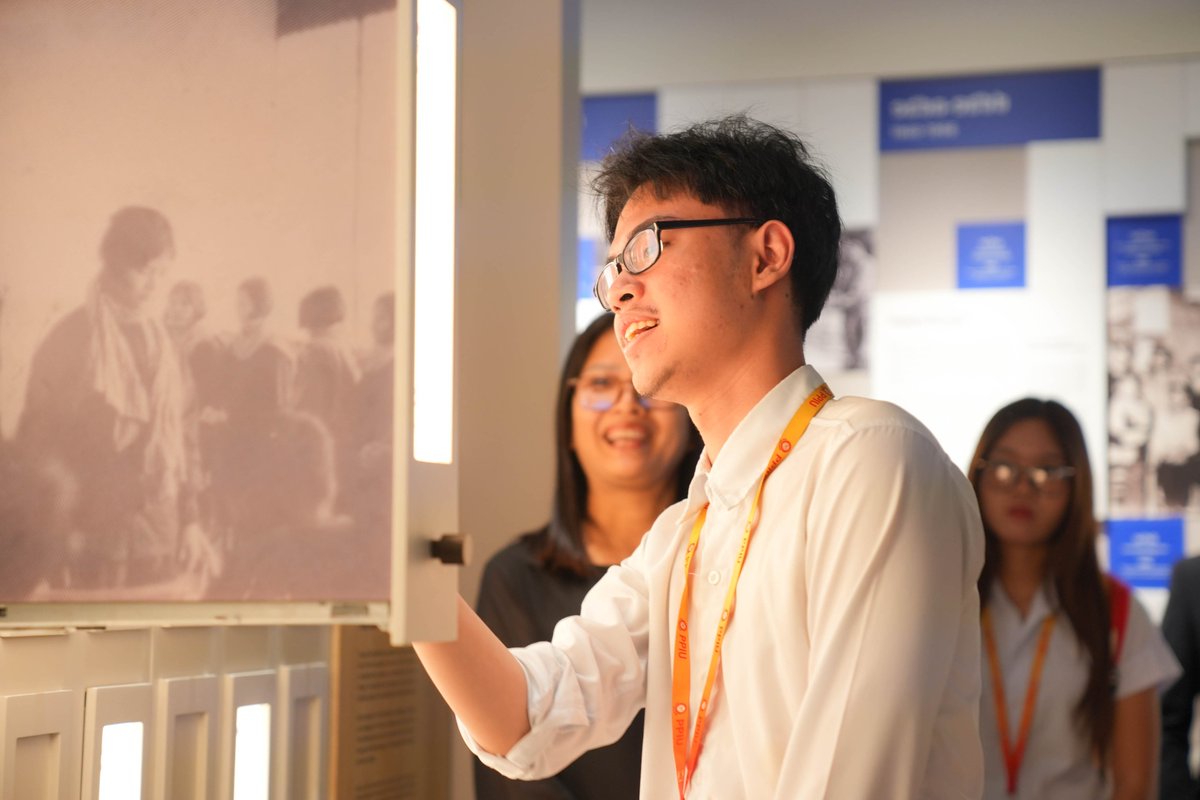
During the study visit, the students received presentations on the history of the Khmer Rouge regime and the achievements of the trials. They also explored the facilities and various educational resources available at the ECCC Resource Centre.
In addition, all students participated in an intergenerational dialogue with Mr. Orn Em and Mr. Mong Jim, civil parties from Chrap Village, Mroum Commune, Angkor Chey District, Kampot Province. During the dialogue, both survivors shared their painful experiences and the hardships they endured under the Khmer Rouge regime, including being forced to work beyond their physical capacity.
Mr. Orn Em expressed his deep sorrow, saying, “I felt deeply heartbroken when I saw the Khmer Rouge force children to kill their own fathers. They were not even allowed to cry. Instead, they were instructed to say, ‘I am not killing my own father; I am killing an enemy.’”
Meanwhile, Mr. Mong Jim shared, “No matter how much pain we were in, we could not escape the work. We had to continue working until we could no longer move forward.”
Both civil parties encouraged the students to work hard in their studies, gain knowledge, build a bright future, and maintain good health so that they could contribute to the development of the country. They also urged the younger generation to help prevent such a cruel regime from happening again.
It is worth noting that following the conclusion of its judicial proceedings, the ECCC continues to carry out important activities to promote public awareness, particularly among young people, about history, remembrance, and justice. These efforts contribute to building a peaceful society and preventing the recurrence of such atrocities.
On the morning of Wednesday, November 11, 2026, as part of the Intergenerational Dialogue Program held at the ECCC Resource Centre, two Civil Party complainants shared their personal experiences, recounting the suffering, pain, and hardships they endured under the Khmer Rouge regime.
They shared their stories with approximately 200 students from Sok An Kdey Thum High School in Takeo Province, who visited the centre to learn about the history and legacy of the trials for crimes committed during the Democratic Kampuchea regime.
The two Civil Party complainants were Ms. Uy On and Ms. Am Samoeun, both from Peay Neach Village, Krang Svay Commune, Preah Sdach District, Prey Veng Province.
In front of the students, Ms. Uy On recounted her painful experience of losing her father during the Khmer Rouge regime. She explained:
“My father, whose name was Nou Hon, was evacuated from Phnom Penh. Some time later, the Pol Pot regime called him to attend a study session. However, in reality, he was forced to work beyond his physical capacity and suffered from severe food shortages. He became extremely emaciated, to the point that his knees were bigger than his head. Unable to endure the suffering any longer, he secretly escaped and returned home at night.”
Representatives of International Bridges to Justice Visit the ECCC Resource Center
Phnom Penh: On the afternoon of November 10, 2026, His Excellency Thaung Socheat, Secretary of State at the Office of the Council of Ministers, Senior Management Officer, and Head of the Budget and Finance Unit, representing His Excellency Hem Kranh Tony, Secretary of State at the Office of the Council of Ministers and Acting Chief of Administration of the Extraordinary Chambers in the Courts of Cambodia (ECCC), welcomed Mr. Joshua Dohan, Legal Policy Advisor, and colleagues from the International Bridges to Justice organization during their visit to the ECCC Resource Center.
His Excellency Thong Socheat welcomed the delegation and highlighted the importance of the ECCC Resource Center in preserving the achievements and legacy of the ECCC following the conclusion of its judicial proceedings. He also emphasized the Center's continued role in providing resources and knowledge to the public, researchers, and younger generations. He underlined that understanding history and preserving memories of the past are essential foundations for promoting education, respect for human rights, and the strengthening of the rule of law in society.
During the visit, the delegation toured the permanent exhibition hall to learn about the history of the Khmer Rouge regime, the judicial proceedings, and the ECCC's major achievements. The delegation also visited the library and archives, which play an important role in collecting, preserving, and providing public access to historical documents and materials relating to the ECCC's judicial proceedings. These resources enable members of the public, researchers, and future generations to study and gain a deeper understanding of Cambodia's history and the pursuit of justice through the ECCC.
The visit provided the delegation with an opportunity to gain first-hand insight into the achievements and legacy of the ECCC, as well as the role of the Resource Center in preserving and disseminating knowledge about the trials and Cambodia's history to the public and future generations
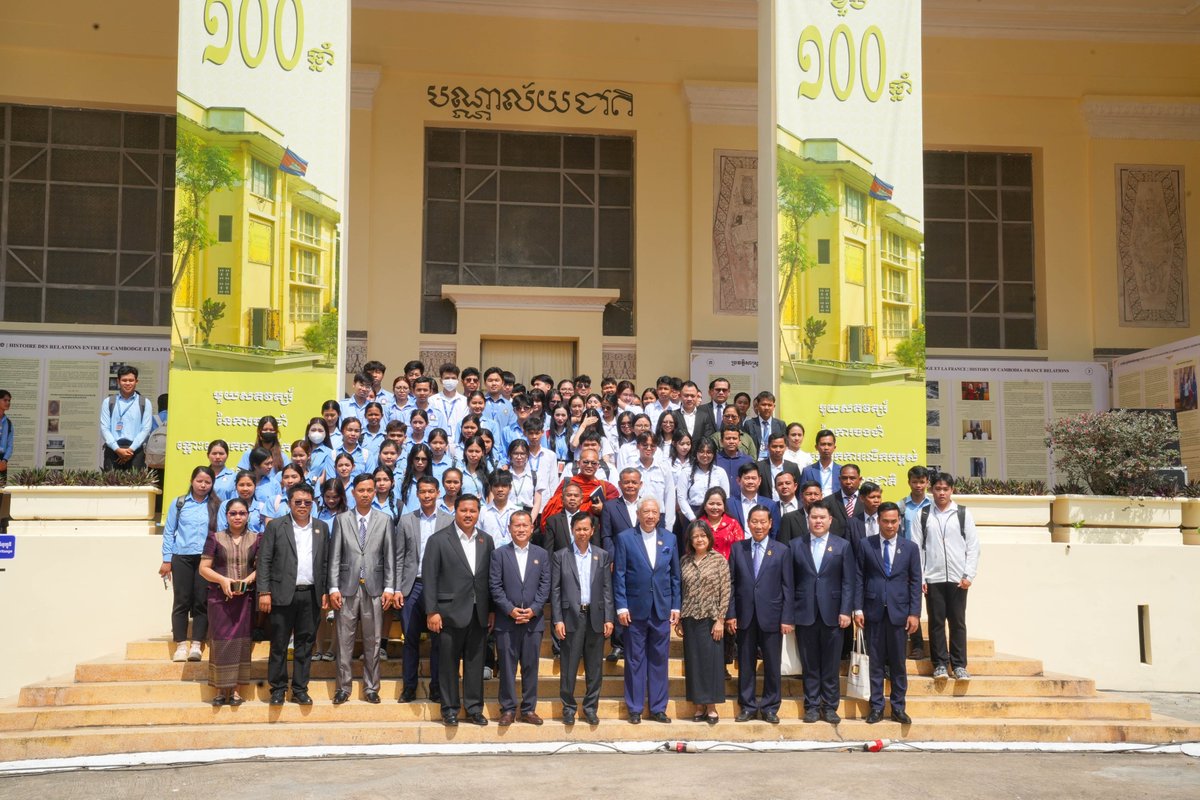
📚 Day 3 of the ECCC’s Participation in the Exhibition Celebrating the 100th Anniversary of the National Archives of Cambodia!
The Extraordinary Chambers in the Courts of Cambodia (ECCC) continues to warmly welcome members of the public to its exhibition booth, where visitors can learn about Cambodia’s history, particularly the Khmer Rouge regime and the process of seeking justice for its victims.
Through document displays and direct explanations from our team, visitors can gain further insights into the work and legacy of the ECCC, as well as the importance of preserving historical memory and promoting education for future generations.
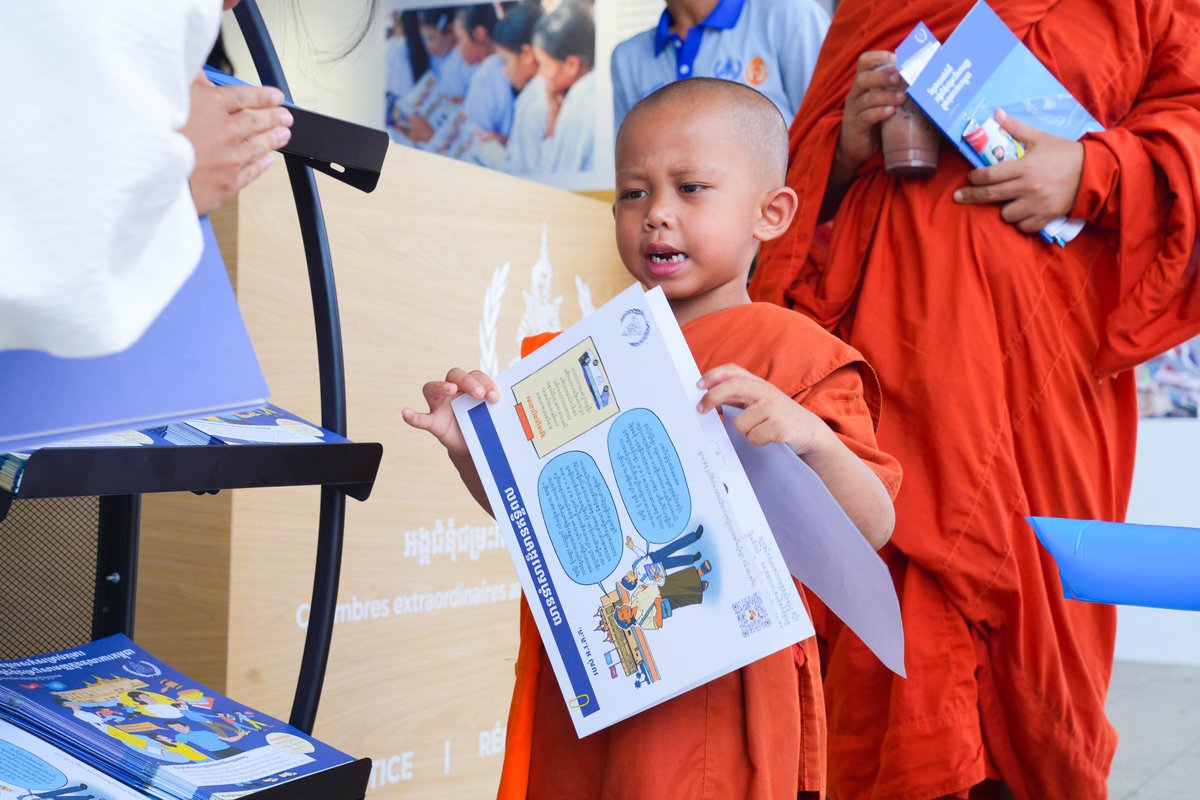
🎁 At our booth, we are also offering a selection of free books and educational materials, including:
Understanding the Extraordinary Chambers in the Courts of Cambodia (Khmer version)
Summary of Judgments
ECCC Educational Guidebook for Children
Court Reports in both Khmer and English
Please note that quantities are limited. Visitors are welcome to collect these materials at the booth, subject to availability.
🛍 In addition, ECCC souvenirs are also available for purchase!
📍 We warmly invite you to visit us, ask questions, and collect educational materials at Booth No. 17 during the exhibition celebrating the 100th Anniversary of the National Archives of Cambodia.
We look forward to welcoming you!
Historical memory serves as a bridge between generations, carrying forward the legacy of justice and building a peaceful future. 🕊
On 6 November 2026, H.E. Kranh Tony, Secretary of State at the Office of the Council of Ministers and Acting Director of the Office of Administration of the Extraordinary Chambers in the Courts of Cambodia (ECCC), delivered the opening remarks at a workshop entitled “Bridging Generations: Memory, Identity and Justice after the Khmer Rouge.” Organised by Paññāsāstra University of Cambodia, the workshop took place in the Multipurpose Hall of the ECCC Resource Centre.
In his remarks, His Excellency emphasised that remembering the past helps uncover the truth, acknowledge victims’ suffering, promote reconciliation and prevent such tragedies from recurring. Listening to survivors’ testimonies and studying historical records help young people better understand the past and appreciate the value of peace, human dignity and the rule of law.
His Excellency also highlighted the ECCC’s role in pursuing justice, enabling victims to participate in judicial proceedings and carrying forward its legacy through archival preservation, education and public outreach.
On 5 November 2026, approximately 40 students majoring in Law and International Relations from Phnom Penh International University visited the ECCC Resource Center for a study visit to learn about the trial proceedings and the cooperation between Cambodia and the United Nations in establishing and operating the Extraordinary Chambers in the Courts of Cambodia (ECCC).
During the visit, the students gained insights into the ECCC’s judicial proceedings, as well as the application of national and international laws in prosecuting crimes committed during the Khmer Rouge regime. These insights were closely connected to the subjects they are currently studying, particularly Public International Law and International Humanitarian Law.
For Law students, learning about the ECCC’s experience helped strengthen their understanding of the practical application of law, the procedures for prosecuting international crimes, and the pursuit of justice for victims. Meanwhile, International Relations students gained a deeper understanding of cooperation between states and international organizations through the establishment and operation of this hybrid judicial institution.
The study visit provided students with an opportunity to connect theoretical knowledge with practical experience in their respective fields of study. It also deepened their understanding of the role of law and international cooperation in promoting justice, accountability, and respect for human rights.
H.E. Hem Kranh Tony Participates as a Speaker in a Roundtable on “The Vision of the National Archives”
On the morning of 5 November 2026, H.E. Hem Kranh Tony, Secretary of State at the Office of the Council of Ministers and Acting Director of Administration of the Extraordinary Chambers in the Courts of Cambodia (ECCC), participated as a distinguished speaker in a roundtable on “The Vision of the National Archives” at the National Library of Cambodia, marking the 100th anniversary of the establishment of the National Archives of Cambodia.
The event was presided over by H.E. Prof. Dr. Chhem Keatrithy, Senior Minister in Charge of Special Missions and Chairman of the Economic, Social and Cultural Council. Other distinguished speakers included H.E. Kim Sethara, Secretary of State at the Office of the Council of Ministers and Personal Adviser to Samdech Moha Borvor Thipadei, the Prime Minister, and H.E. Seng Manoriddh, Director General of the General Department of the Royal Gazette and National Archives.
The discussion focused on the role and importance of the National Archives, as well as its vision and strategic direction for preserving, safeguarding and developing the nation’s documentary heritage to support research and pass knowledge on to future generations.
Preserving archives means safeguarding historical memory and providing an essential foundation for education, understanding the past and building the future. This commitment also aligns with the ECCC’s mission to preserve its archives and share the Court’s legacy with the public.
“A Century of Memory, Towards Strengthening National Identity”
On 4 November 2026, approximately 40 students majoring in Law and International Relations from Phnom Penh International University visited the ECCC Resource Centre for a study visit to learn about the application of legal procedures and cooperation between Cambodia and the United Nations in the judicial proceedings of the Extraordinary Chambers in the Courts of Cambodia (ECCC).
During the study visit, the students gained detailed insights into the ECCC's judicial proceedings, as well as the application of national and international laws in the prosecution of crimes committed during the Khmer Rouge regime. These topics were directly relevant to their academic studies, particularly Public International Law and International Humanitarian Law.
For Law students, studying the ECCC case provided an opportunity to understand the practical application of law, the prosecution of international crimes, and the pursuit of justice for victims. Meanwhile, International Relations students gained insights into cooperation between states and international organisations through the establishment and operation of this hybrid judicial institution.
The study visit provided students with a broader understanding of how academic theories are applied in practice within their respective fields, while deepening their knowledge of the role of law and international cooperation in promoting justice, accountability, and respect for human rights.
Two Civil Parties Share Their Experiences of the Khmer Rouge Regime with 200 Students at the ECCC Resource Centre
Phnom Penh: On Wednesday, 4 November 2026, an intergenerational dialogue between Civil Parties and the younger generation was held at the ECCC Resource Centre, with the participation of 200 students from Traeng Trayueng High School in Kampong Speu Province. The dialogue aimed to share personal experiences and memories of life under the Democratic Kampuchea regime.
On this occasion, two Civil Parties, Ms. Ros Sam Art from Sounan Chai Village, Krang Svay Commune, Pea Reang District, Prey Veng Province, and Ms. Uy Oun from Peay Noy Village, Krang Svay Commune, Pea Reang District, Prey Veng Province, shared their personal stories and experiences during the Khmer Rouge regime.
The intergenerational dialogue provided an opportunity for younger generations to hear directly from survivors of the Khmer Rouge regime and gain a deeper understanding of its consequences. Their personal testimonies also contributed to raising awareness of the importance of historical memory, respect for human rights, the pursuit of justice, and the preservation of peace.
On Wednesday, 4 November 2026, a total of 479 students, including 268 females, from Hun Sen Hmaset High School in Preah Vihear Province participated in an educational and outreach programme conducted by the ECCC Mobile Resource Centre. The programme aimed to raise awareness of the history of the Khmer Rouge regime and the significant achievements of the proceedings to bring the senior Khmer Rouge leaders to trial.
The programme featured a range of activities, including presentations, documentary screenings, group discussions, and question-and-answer sessions. These activities provided students with opportunities to gain a deeper understanding of the tragic history of the Khmer Rouge period, the judicial proceedings of the Extraordinary Chambers in the Courts of Cambodia (ECCC), and efforts to seek justice for the victims.
The programme also featured a sharing session with Mr. Kheang E, a survivor of the Khmer Rouge regime, who shared his personal experiences and suffering under Democratic Kampuchea.
Mr. Kheang E recounted that he had been detained for one month after being accused of supporting the Vietnamese Party and inciting the population.