Does spinopelvic mobility really matter in TKA? This study challenges the link with kneeflexion deformity, suggesting the compensation may be dynamic—not fixed.
#TKA#KneeArthroplasty#SpinopelvicMobility#Orthopaedics
Read more here: https://t.co/IudO8uRB6D
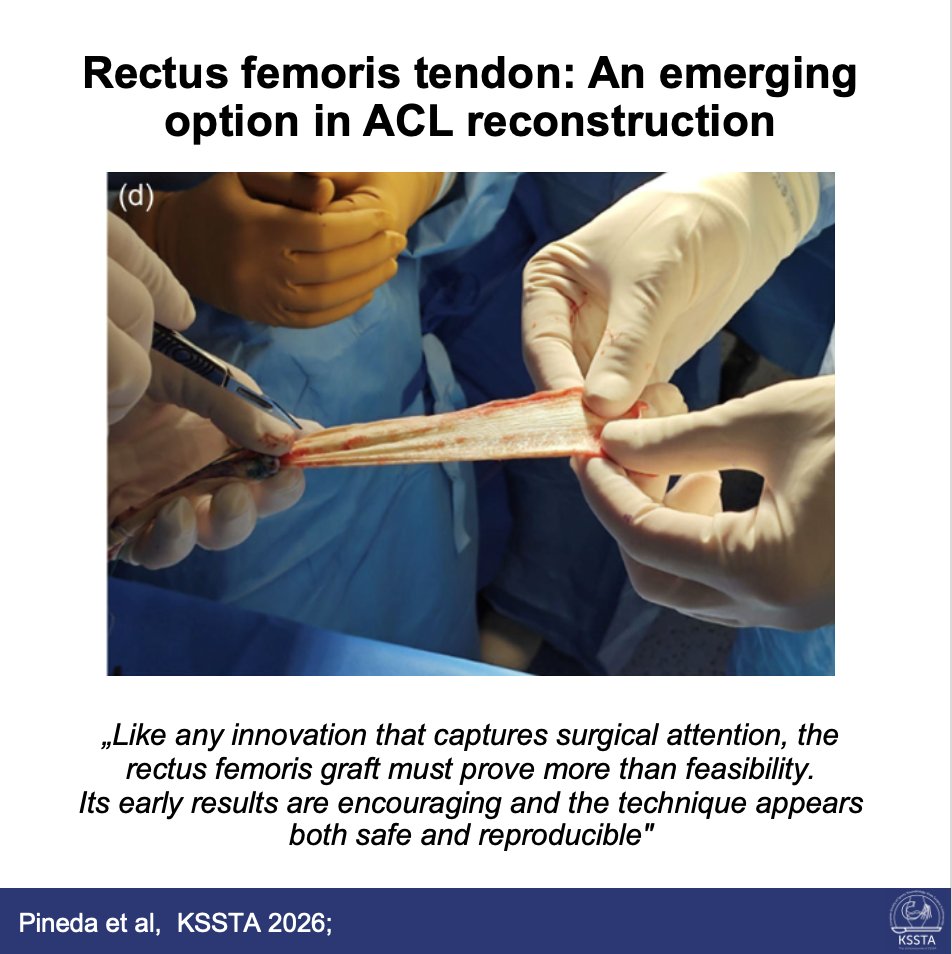
The rectus femoris tendon is gaining attention as a versatile autograft option for ACL reconstruction, offering predictable dimensions, low donor-site morbidity, and sufficient length for combined ligament procedures using a single harvest.
Read here: https://t.co/ZXxjc9vuLK
In a prospective blinded comparison of 20 paediatric orthopaedic consultations, physician-generated medical history summaries received significantly higher quality ratings than those produced by ChatGPT-4o (5.2 vs. 4.5, p<0.001).
Read here: https://t.co/c8Ukbxsj2E
Management of first-time shoulder dislocation varies worldwide, with emerging consensus on key factors—but continued reliance on personal experience in clinical practice.
#KSSTA#ShoulderDislocation#SportsMedicine#Orthopaedics
Read more here: https://t.co/fqTVRIQlIF
Have 50 years of innovation really solved the main problems in total knee arthroplasty?
#knee#TKA#advances#review#KSSTA
Read here: https://t.co/e7DNtUNvR3
Mild asymptomatic lateral osteoarthritis does not affect pain or functional outcomes after medial opening-wedge HTO, supporting broader indications.
#Knee#HTO#Osteoarthritis#Orthopaedics
Read more here: https://t.co/ERuzIalmha
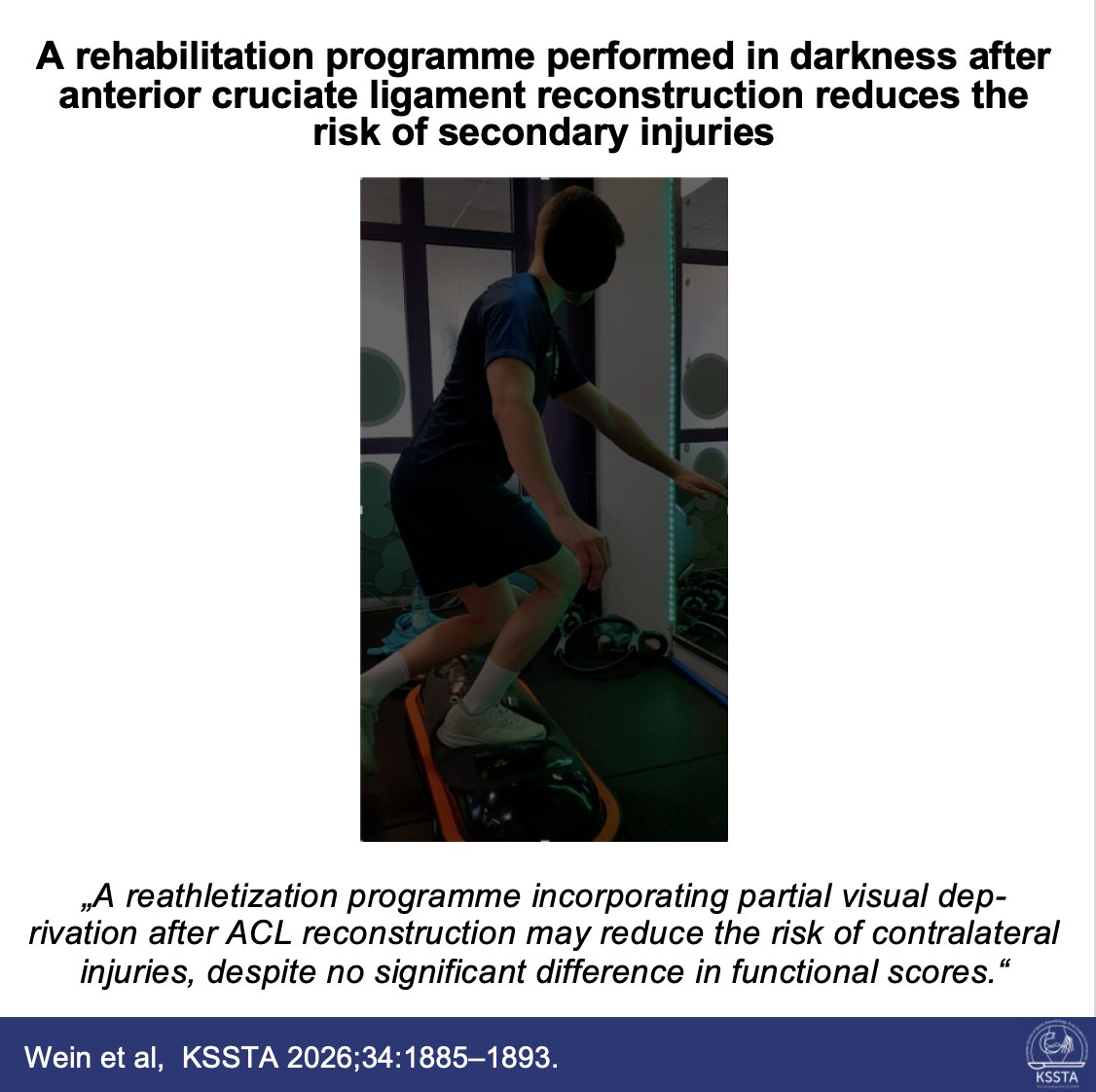
Partially exercising in darkness during reathletization after ACL reconstruction was associated with a significantly lower rate of contralateral ACL ruptures compared to conventional rehabilitation in well-lit conditions at 5-year follow-up.
Read here: https://t.co/T9tx4fOGR4
When AI models answer patients' questions about shoulder instability, the quality remains suboptimal: neither ChatGPT nor DeepSeek met JAMA transparency criteria, scoring zero on source attribution.
Read here: https://t.co/7wG5nUGGvT
#AI#KSSTA
Arthroscopic treatment of painful sternoclavicular joint disorders refractory to conservative management yields significant and sustained improvements in pain and function, with 90% of patients stating they would choose surgery again.
Read here: https://t.co/lwBsrQ4BE5
Beware of basing your patella alta diagnosis on a single parameter. This new KSSTA study presents a standardized MRI-based approach to assess functional patella alta more holistically.
#knee#patellofemoral#instability#MRI#clinicaltrials#KSSTA
Open-wedge HTO effectively redistributes knee contact forces from the medial to the lateral compartment across walking and stair tasks, significantly improving patient-reported outcomes.
Read here: https://t.co/urvOiafY7k
#Knee#KSSTA
China is no longer just following orthopaedic progress, it is helping shape it. This editorial highlights a rapidly evolving role in joint replacement and sports medicine on the global stage.
#Orthopaedics#SportsMedicine#Arthroplasty
•Reach here: https://t.co/Uui6z6c59n
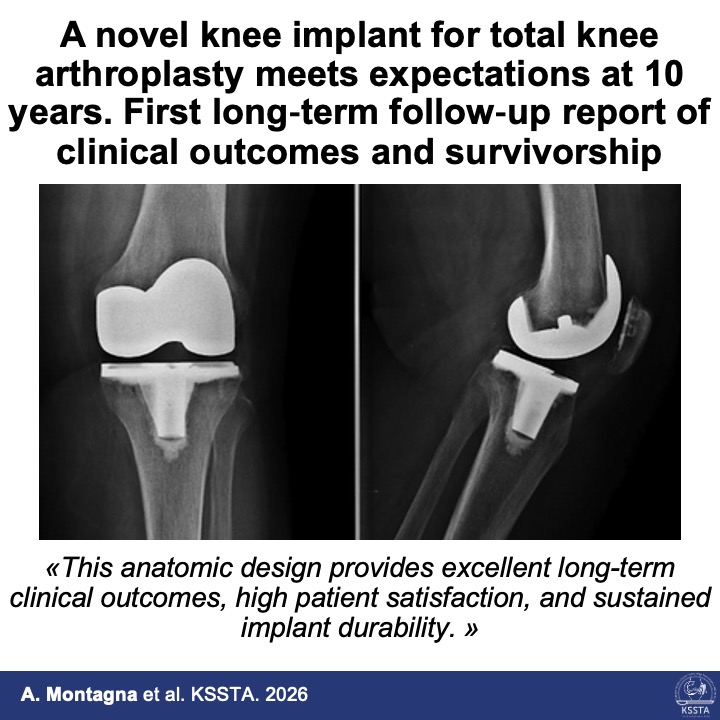
At more than 10 years, a novel knee arthroplasty achieved excellent clinical outcomes and 95.7% survivorship, supporting the long-term valueof anatomic TKA design.
#Knee#TKA#Arthroplasty#Orthopaedics
Read more here: https://t.co/FthgPnvWWf
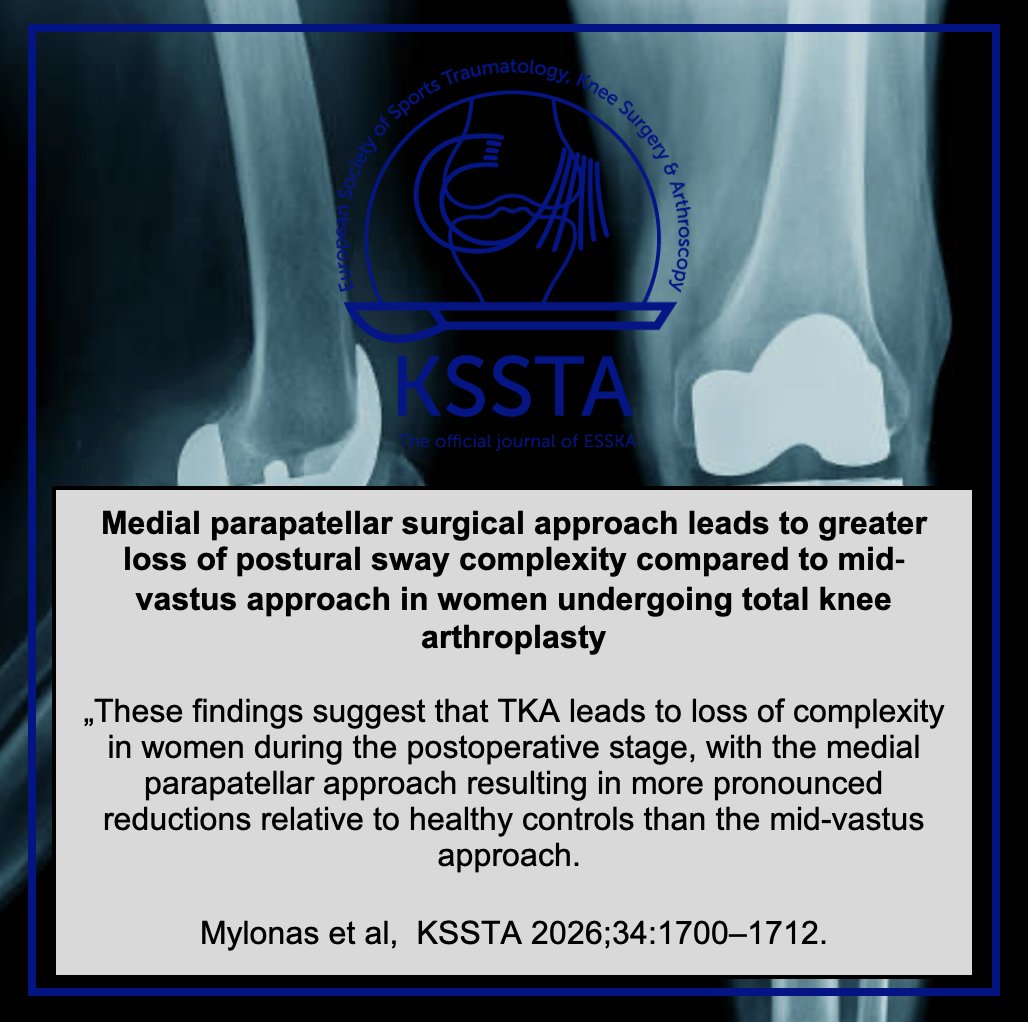
Surgical approach in total knee arthroplasty affects more than pain and range of motion, it may also influence postural stability in ways that predict fall risk.
Read here: https://t.co/VhaLyurFEj
#Knee#KSSTA
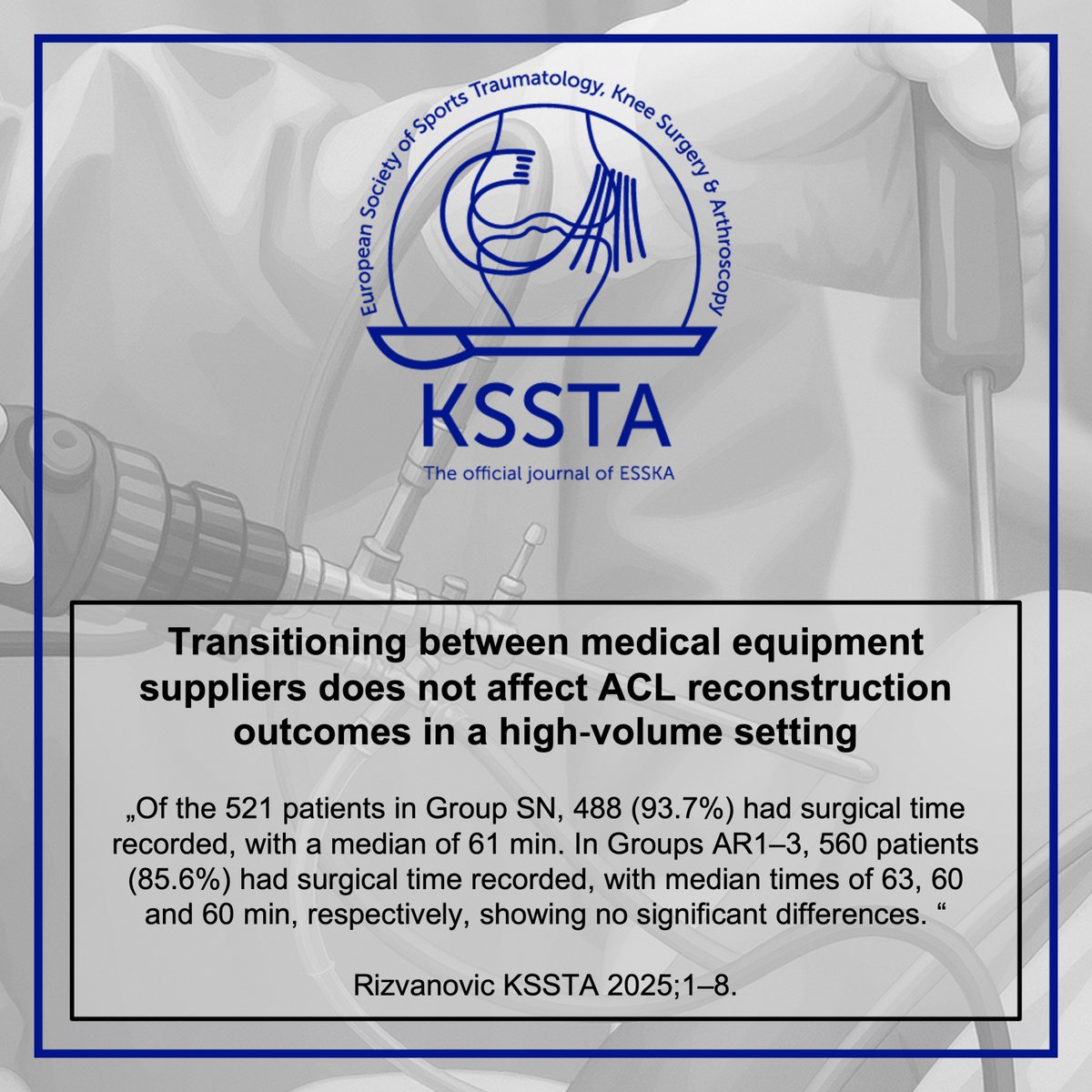
It‘s not the equipment, but the surgeon that determines quality and speed in ACLR.
#knee#arthroscopy#equipment#KSSTA
Read here: https://t.co/UAKtYUtgwR
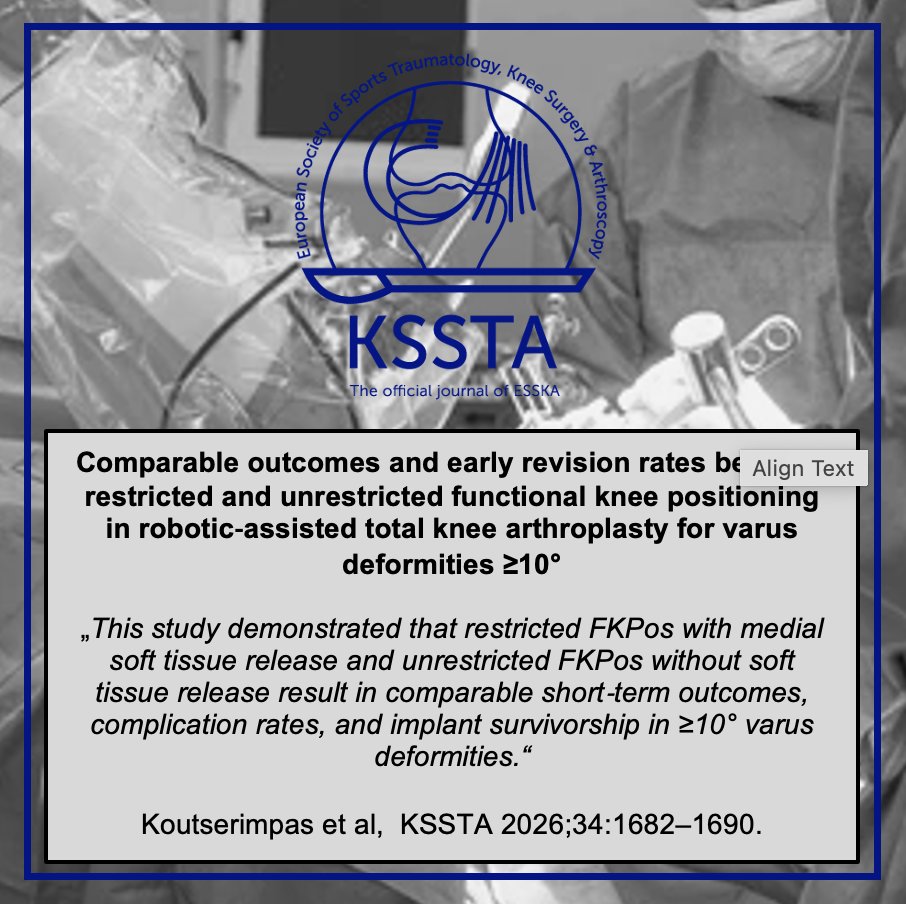
In patients with severe varus deformities > 10° undergoing rTKA, both restricted functional knee positioning with medial soft tissue release and unrestricted tibial positioning without release achieved comparable functional outcomes.
Read here: https://t.co/Q0jIBCRVSw
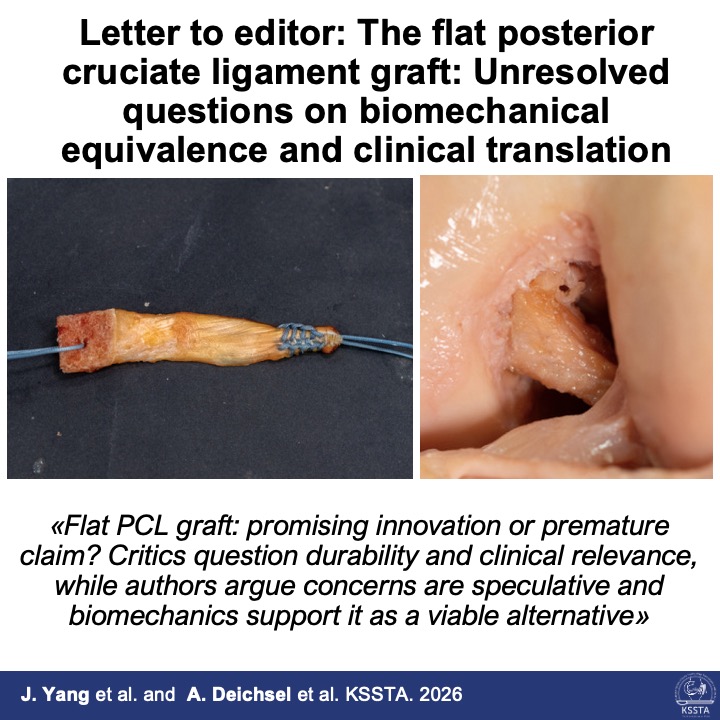
Advancing PCL reconstruction: the flatgraft concept shows encouraging biomechanical results, while ongoing discussion will refine its path to clinical adoption.
#Knee#PCL#Orthopaedics#ClinicalResearch
Read more here: https://t.co/lXifLEL3D2