आर्थिक विषयों पर भाजपा के राष्ट्रीय प्रवक्ता एवं हम सब के मार्गदर्शक आदरणीय श्री गोपाल कृष्ण अग्रवाल जी को जन्मदिवस की हार्दिक शुभकामनाएँ।
प्रभु श्री राम आप पर अपनी कृपा सदैव बनाये रखें।
@gopalkagarwal
The proliferation of QCOs is a reflection of how a suboptimal policy idea takes root and then spreads due to big-industry lobbying. Let’s hope that these QCOs would be withdrawn without further delay.
Thank you Minister @MinOfCultureGoI Shri @gssjodhpur for encouragement to all of us.
Your word of wisdom has given us profound energy to work towards the goal of #ViksitBharat through our #CulturalEconomy initiative.
We appreciate your commitment to the cause. @mcesofficial @
Quite enriching experience with cross-section of entrepreneurs @gopalkagarwal ji. Moving the needle for greater GDP contribution from mgg. asks for reforms in regulations, labour & making factor markets competitive. Welcome initiative by #DOST@FISME@minmsme@CimGOI@NITIAayog https://t.co/ZMIxOlI5AQ
India’s wisdom shows us how to live in harmony with nature while progressing forward.
In a session moderated by Shri Sambhrant Krishna (Advocate, Review Board–ICAI), the call was clear: reshape growth patterns for a future where people & planet thrive together.
@KSambhrant@gopalkagarwal
If India stopped buying Russian oil, it would be forced to compete in crowded West Asian markets, likely causing a sharp rise in global crude prices. By importing Russian oil, India is not just reducing its own costs but also helping to balance the global oil market.
Read #ThePrintOpinion by Gopal Krishna Agarwal
@gopalkagarwal
India imports around 85-90 per cent of its crude oil requirements. Its crude import bill was approximately $132-140 billion for FY 2023-24. It is evident that even a minor change in the price of crude can have a large overall effect on the balance of payment position. India does not have the luxury of printing dollars. It must always take steps based on the best interests of its 1.4 billion citizens.
In 2022, the world was on the brink of an oil shock after the Russia-Ukraine war. Panic hit the oil markets and crude prices soared to $137 per barrel. The West had two choices — ban Russian oil completely and let the prices explode or find other ways to keep the market functioning. The G7, therefore, introduced a price cap — $60 per barrel — to keep the supply flowing. Any country could buy Russian crude legally as long as it was below that price.
Before the war, Russian crude oil import was negligible for India, just 0.2 per cent of imports. In 2024-25, 36-40 per cent of our oil came from Russia. And it was vital for stabilising global oil prices. The US publicly supported India’s move. In 2022, US Treasury Secretary Janet Yellen said, “We’re happy for India to buy as much Russian oil as it wants… even above the cap…” Former US Ambassador Eric Garcetti said that the US wanted someone to buy Russian oil at the cap.
Russia’s crude production in 2024-25 averaged around 10.45 million barrels per day (bpd), which is about 10 per cent of global supplies. Of this, 4.2-4.5 million bpd was exported. Currently, oil demand and supply are fairly balanced. However, in case Russian supplies were disrupted, crude prices would go up by $10-15 per barrel. The oil market has seen such volatility every time there was talk of Russian flow disruption due to sanctions.
India’s balancing role
India has always respected global compulsions. But, strategically, India’s energy security is also linked to regional geopolitics. In 2007, Iran supplied 12 per cent of our crude. After being sanctioned over its nuclear programme, India stopped buying from Iran. Meanwhile, China still buys 1.4 million bpd from Iran despite sanctions. Between 2022 and 2025, more than 40 per cent of Russia’s crude exports went to China. And if India stopped buying crude from Russia, Moscow would sell more oil to China at bigger discounts. The net result would be that China will be at a greater advantage and global crude prices will go up.
In this global turmoil driven by protectionism and trade and tariff wars, India is treading its path carefully, balancing regional and global geopolitics with resilience. The Indian government’s prudent policy decisions are being appreciated across the globe and bringing positive results. Recently, S&P Global has also raised India’s long-term sovereign credit rating to ‘BBB’ from ‘BBB-‘, with short-term rating upgraded to ‘A-2’ from ‘A-3’. The stable outlook reflects confidence in India’s strong economic fundamentals, prudent policy management, and effective monetary policy — a recognition of India’s growing financial resilience.
The successful handling of the economy by the Narendra Modi government has imparted resilience to the economy, ensuring it can bear economic shocks. We are the fastest-growing major economy, our fiscal position is improving, and there is increasing efficiency in government spending. All these means India will be able to negotiate as a partner and won’t be a pushover.
India’s imports of Russian crude oil averaged 1.7–2 million bpd in 2024-25, accounting for 36-40 per cent of its total crude imports. The average discount on Russian crude was approximately $3.5 per barrel, compared to Middle Eastern crude, which was costlier by about $4-5 per barrel. This translated into estimated savings of $7-10 billion on India’s import bill, including $2.3-3.8 billion (Rs 19,000-31,500 crore) in direct savings from lower prices compared to alternative suppliers. In addition, India avoided a potential $9-11 billion increase in its import bill by helping stabilise global supply and preventing price spikes.
If India stopped buying Russian oil, it would be forced to compete in crowded West Asian markets, likely causing a sharp rise in global crude prices. By importing Russian oil, India is not just reducing its own costs but also helping to balance the global oil market.
@ThePrintIndia India is sought to be penalised for taking steps that’s helping the global economy. While the declared objective is to stem Russian cashflow, the fact that EU, China and Türkiye are exempted makes it evident that it is not the real reason.
@gopalkagarwal
@PradeepExIN भारत का विनिर्माण क्षेत्र को सरकार की असफलताओं (बिजली, सड़क, बंदरगाह इत्यादि) के कारण भारी मुश्किलों का सामना करना पड़ा है। आने वाले कुछ वर्षों में इन कठिन आर्थिक सुधारों का व्यापक सकारात्मक प्रभाव सामने आएगा।
@vmgjignesh@AmitShah@JPNadda@blsanthosh Modi government is not repeating the mistake of FTAs of previous governments. Unless the domestic manufacturing sector is made competitive, the FTAs can only cause damage. Therefore, the govt. has focussed on cost competitiveness of domestic sector.
@Susmita889@AmitShah@JPNadda@blsanthosh Agree. The earlier governments shied away from tough reforms that were necessary for the Indian manufacturing sector to take off.
EMERGENCY!
50 years ago today, thousands of families were silenced, jailed, and tortured—just for speaking up.
On June 25, 1975, the @INCIndia government murdered democracy. But they couldn’t kill the spirit of the people.
Today, in 2025, we remember. We won’t forget. We won’t let it happen again.
Watch Full Video: https://t.co/brGkXkqQ45
#50YearsOfEmergency #Emergency1975
Sh @narendramodi@AmitShah@JPNadda@PMOIndia@blsanthosh
भारतीय जनता पार्टी के राष्ट्रीय प्रवक्ता और देश में आर्थिक सुधारों के मज़बूत पक्षधर आदरणीय गोपाल जी को जन्मदिन की हार्दिक शुभकामनाएँ। ईश्वर से प्रार्थना है कि आपको देश, धर्म और समाज कल्याण में कार्य करते रहने के लिए स्वस्थ और सुरक्षित रखें।
@gopalkagarwal
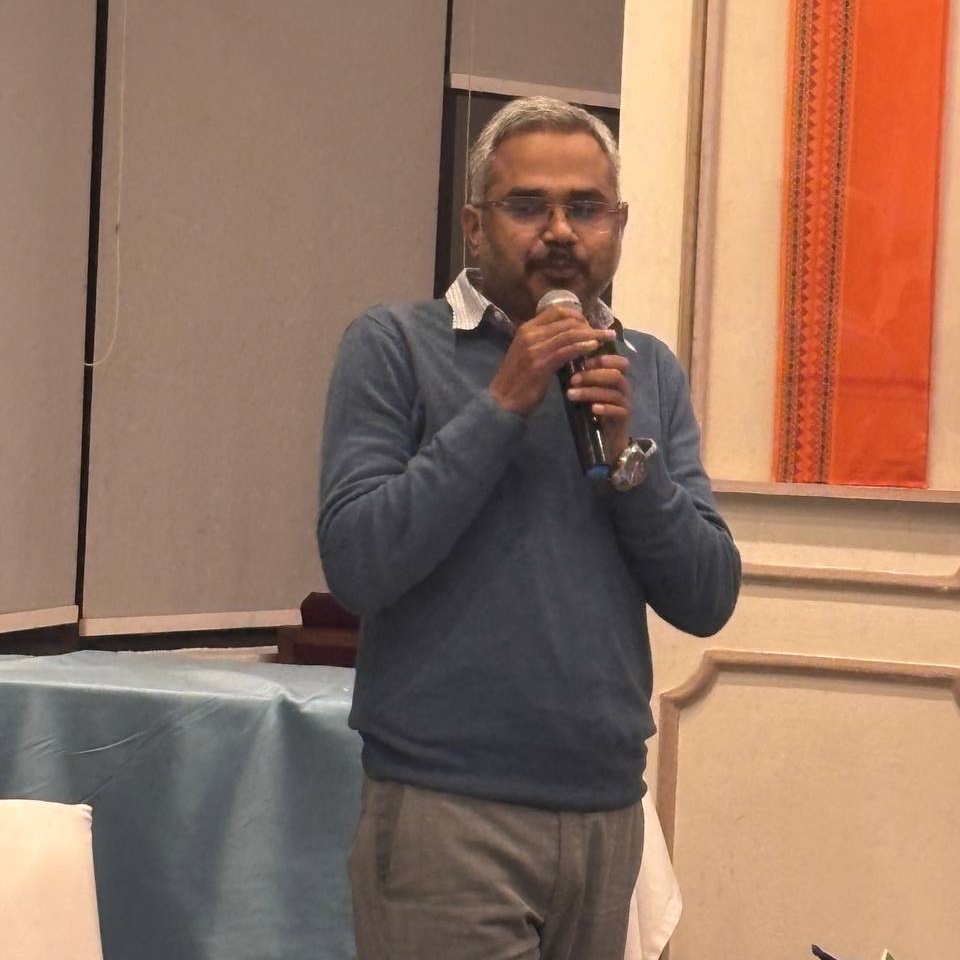
Led a focused dialogue at the #DOST Round Table Discussion on “#Tariff Wars: Challenges, Opportunities and the Way Forward” held at Le Meridien, New Delhi.
The deliberations highlighted India’s calibrated approach in navigating global trade tensions, strengthening economic diplomacy, and driving the vision of an #AtmanirbharBharat.
Valuable exchanges with fellow experts and policymakers reaffirmed our commitment to safeguarding national interest while accelerating India’s rise as a global economic force.
Sh @blsanthosh ji @BJPCentralMedia@noida_dialogue
Grateful to Mr. Sambhrant Krishna, Advocate on Record, Supreme Court & Economist, for enriching the #DOST Roundtable on ‘Tariff Wars: Challenges, Opportunities and the Way Forward’ with his nuanced legal and economic perspective.
Your insights helped deepen the dialogue on trade policy reforms.
#TradeStrategy #IndiaPolicy #EconomicDialogue
Grateful to Mr. Sambhrant Krishna, Advocate on Record, Supreme Court, and Economist, for sharing your valuable inputs during the discussion on 'From Bretton Woods to Kazan (BRICS): Promoting India's Interests.' 🙏 #DOST#EconomicPolicy