Merci à Christophe Clavé pour cet éclairage sur l’appauvrissement de la langue et la ruine de la pensée 🙌
"La disparition progressive des temps (subjonctif, passé simple, imparfait, formes composées du futur, participe passé…) donne lieu à une pensée au présent, limitée à l’instant, incapable de projections dans le temps.
La généralisation du tutoiement, la disparition des majuscules et de la ponctuation sont autant de coups mortels portés à la subtilité de l’expression.
Supprimer le mot «mademoiselle» est non seulement renoncer à l’esthétique d’un mot, mais également promouvoir l’idée qu’entre une petite fille et une femme il n’y a rien.
Moins de mots et moins de verbes conjugués c’est moins de capacités à exprimer les émotions et moins de possibilité d’élaborer une pensée.
Des études ont montré qu’une partie de la violence dans la sphère publique et privée provient directement de l’incapacité à mettre des mots sur les émotions.
Sans mot pour construire un raisonnement, la pensée complexe chère à Edgar Morin est entravée, rendue impossible.
Plus le langage est pauvre, moins la pensée existe.
L’histoire est riche d’exemples et les écrits sont nombreux de Georges Orwell dans « 1984 » à Ray Bradbury dans « Fahrenheit 451 » qui ont relaté comment les dictatures de toutes obédiences entravaient la pensée en réduisant et tordant le nombre et le sens des mots.
Il n’y a pas de pensée critique sans pensée. Et il n’y a pas de pensée sans mots.
Comment construire une pensée hypothético-déductive sans maîtrise du conditionnel ? Comment envisager l’avenir sans conjugaison au futur ? Comment appréhender une temporalité, une succession d’éléments dans le temps, qu’ils soient passés ou à venir, ainsi que leur durée relative, sans une langue qui fait la différence entre ce qui aurait pu être, ce qui a été, ce qui est, ce qui pourrait advenir, et ce qui sera après que ce qui pourrait advenir soit advenu ? Si un cri de ralliement devait se faire entendre aujourd’hui, ce serait celui, adressé aux parents et aux enseignants : faites parler, lire et écrire vos enfants, vos élèves, vos étudiants.
Enseignez et pratiquez la langue dans ses formes les plus variées, même si elle semble compliquée, surtout si elle est compliquée. Parce que dans cet effort se trouve la liberté. Ceux qui expliquent à longueur de temps qu’il faut simplifier l’orthographe, purger la langue de ses «défauts», abolir les genres, les temps, les nuances, tout ce qui crée de la complexité sont les fossoyeurs de l’esprit humain. Il n’est pas de liberté sans exigences. Il n’est pas de beauté sans la pensée de la beauté."
Christophe Clavé
A community college professor taught the same study skills lecture for 30 years, and the video quietly became one of the most watched educational recordings on the internet.
His name is Marty Lobdell. He spent his career as a psychology professor watching students fail not because they were lazy, but because nobody had ever taught them how their brain actually works under the pressure of learning something hard.
The lecture is called "Study Less Study Smart." Over 10 million views. Passed around in Reddit threads, Discord servers, and university study groups for over a decade. And the core insight buried inside it has been sitting in cognitive psychology research for years, waiting for someone to explain it in plain language.
Here is the framework that completely changed how I think about effort.
Your brain does not sustain focus the way you think it does. Studies tracking real students found that the average learner hits a wall somewhere between 25 and 30 minutes.
After that, efficiency doesn't just decline. It collapses. You're still sitting at your desk, still looking at the page, but almost nothing is going in.
Lobdell illustrated this with a student he knew personally. She set a goal of studying 6 hours a night, 5 nights a week, to pull herself out of academic probation. Thirty hours of studying per week. She failed every single class that quarter.
She wasn't failing because she lacked effort. She was failing because she had confused time spent near books with time spent actually learning. The 25-minute crash hit her at 6:30pm every night. She spent the next five and a half hours sitting in the wreckage of her own focus and calling it studying.
The fix sounds almost too simple. The moment you feel the slide, stop. Take five minutes. Do something that actually gives you a small reward. Then go back. That five-minute reset returns you to near full efficiency. Across a six-hour window, the difference is not marginal. It is the difference between thirty minutes of real learning and five and a half hours of it.
The second thing he taught destroyed something I had believed about how memory actually works.
Highlighting feels productive. Going back over your notes and recognizing everything feels like knowing. But recognition and recollection are two completely different cognitive processes, and your brain is very good at making you confuse them.
You can see something you've read before and feel completely certain you understand it, even when you couldn't reconstruct a single sentence from memory if the page were blank.
He proved this live in the room. He read 13 random letters to his audience. Almost nobody could recall them. Then he rearranged the same 13 letters into two words: Happy Thursday. The whole room got all 13 without effort.
Same letters. Same count. The only thing that changed was meaning.
The brain stores meaning. Not repetition. The moment new information connects to something you already understand, the retention changes entirely.
This is what the cognitive psychology literature calls elaborative encoding, and it is the mechanism underneath every effective study technique.
The third principle was the one that hit me hardest, and the one almost nobody applies.
Lobdell cited research showing that 80 percent of your study time should be spent in active recitation, not passive reading. Close the material. Say it back in your own words.
Teach it to someone else, or to an empty chair if no one is around. The struggle of retrieval is where the actual learning happens. Reading your notes again is watching someone else do the work.
His parting line has stayed with me longer than almost anything else I have read about learning.
He told the room that if what he shared didn't change their behavior, they hadn't actually learned it. It would just live in their heads as something they had heard once and felt good about.
He was right. And most people leave every lecture exactly like that.
The students who remember everything aren't putting in more hours.
They stopped confusing the feeling of studying with the fact of it.
Term limits are the modern solution for an outdated system. Our current Congress is trapped in a permanent feedback loop and unable to process the "system updates" needed for modern-day governance.
For too long, entrenched incumbents have prioritized political self-preservation over practical solutions. By closing the door to fresh leadership, we have created a system where politicians become insulated from the very people they are meant to represent. The results are clear: legislative gridlock, skyrocketing national debt, and a deep disconnect between Washington and the needs of everyday Americans.
Term limits provide the ultimate "restart" by restoring a citizen-led legislature. This ensures that new voices and new ideas can take the lead, bringing a real sense of urgency to addressing the challenges of our time. It is time to update the system and make it work for everyone. #termlimits #termlimitcongress #governmentreform
🚨🗣️ Lauren James talking about how her brother, Reece James bought her a car.
“I remember the day like it were yesterday. Proper grey London sky, bit of drizzle in the air — the kind that gets in your hair but doesn’t quite count as rain. I was skint. Proper skint. Checking my bank app every five minutes like somehow money might magically appear. It didn’t. 😅
Reece knew, of course. My brother’s always had this annoying way of knowing when something’s up with me even before I say a word.
One afternoon he says,
“Come outside for a minute, Lau.”
Now with Reece, that could mean anything. Could be a kickabout in the garden, could be him asking me to help him carry something. So I walk outside, hands in my hoodie pockets, thinking nothing of it.
And there it was.
A little car sitting on the drive. Nothing mad flashy, nothing like the cars he drives — just a nice, clean little motor. My first car.
I looked at it, then looked at him.
“Whose is that?” I asked.
He just grinned that cheeky grin of his.
“Yours.”
I swear I just stood there blinking like an idiot. My brain couldn’t quite catch up with what he’d said.
“Don’t be stupid,” I told him. “Stop winding me up.”
But he tossed me the keys. And when they landed in my hand, that’s when it hit me. My chest went tight and my eyes started watering.
“Reece… I can’t take this.”
“Course you can,” he said, all casual, leaning against the wall like he hadn’t just changed my whole year. “You needed a car.”
That’s my brother though. He doesn’t make a big speech about it. Doesn’t act like he’s doing something heroic. He just helps.
I hugged him so tight he started laughing.
“Oi, careful,” he said. “I’ve got training tomorrow.”
That car meant everything to me. Not because it was fancy — because it wasn’t. It meant freedom. It meant I could get to work without stressing about trains or buses. It meant someone believed in me when I felt like I was barely holding things together.
Years later, when he’d done even better for himself, he tried again.
We were sitting there chatting and he goes, completely serious:
“I’ll get you a new one. A proper one. 2025 Porsche.”
I nearly choked on my tea. 😂
“Absolutely not.”
He looked genuinely confused.
“What do you mean no?”
“Because,” I said, “I want to buy my next car myself.”
He kept insisting.
“Lauren, it’s nothing.”
But that was exactly the point.
“It’s not nothing,” I told him. “The first car you gave me when I had nothing. I’ll never forget that. But the second one… that one’s mine.”
I want to work for it. Save for it. Know that when I sit in that driver’s seat, I earned every bit of it.
Reece just stared at me for a second, then smiled.
“Fair enough,” he said. “But when you get it, I’m driving it first.”
“Not a chance,” I told him.
And we both laughed.
Because that’s the thing about my brother. He could buy me the world if he wanted. But what he really gave me that day wasn’t a car.
It was a start.”🚗💙
[Via @TheSunFootball]
I’m a Maryland girl. Montgomery County has been my home since birth, along with my family.. generations. It’s home. As a family, we lived close, spent nearly everyday together, and due to the Dem one party rule and their radical policies, my family has now moved out to other states to seek safety, affordable, prosperous lives, except two members. I know how wonderful my district, county and State once was, and stand proudly to run for congress to restore a once top in the nation county. Help me defeat the great destroyer of lives, Raskin. https://t.co/aqwcEQu389 help via donation, volunteer or display a sign. 🇺🇸❤️
“People always asked "Why do you pay so much money for your kid to do sports”?
Well I have a confession to make; I don't pay for my kid to “to do sports”
Personally, I couldn't care less about what sport she does
So, if I am not paying for sports what am I paying for?
- I pay for those moments when my kid becomes so tired she wants to quit but doesn’t
- I pay for those days when my kid comes home from school and is “too tired" to go to her training but she goes anyway.
- I pay for my kid to learn to be disciplined, focused and dedicated
- I pay for my kid to learn to take care of her body and learn how to correctly fuel her body for success.
- I pay for my kid to learn to work with others and to be a good team mate, gracious in defeat and humble in success
- I pay for my kid to learn to deal with disappointment, when they don’t get that placing or title they'd hoped for, but still they go back week after week giving it their best shot.
- I pay for my kid to learn to make and accomplish goals
- I pay for my kid to respect, not only themselves, but others, officials, judges and coaches
- I pay for my kid to learn that it takes hours and hours, years and years of hard work and practice to create a champion and that success does not happen overnight
- I pay for my kid to be proud of small achievements, and to work towards long term goals
- I pay for the opportunity my child has and will have to make life-long friendships, create lifelong memories, to be as proud of her achievements as I am
- I pay so that my child can be in the gym instead of in front of a screen
- I pay for those rides home where we make precious memories talking about practice, both good and bad
-I pay so that my child can learn the importance of time management and balancing what is important like school and keeping grades up
I could go on but, to be short, I don't pay for sports
I pay for the opportunities that sports provides my kid with to develop attributes that will serve her well throughout her life and give her the opportunity to bless the lives of others.
From what I have seen I think it is a great investment!”
- Softball Parent
Need Help?
Just ask
@SRUSA_Official
I was watching Monsters Inc. with my kids the other night. It’s one of my all time favorite Pixar films.
But this time , I noticed a theme in the movie that was fascinating in connection with religion and Christianity specifically…
In the movie, the City of Monstropolis is literally running on fear. Screams power the city. And when supply runs short, the establishment’s answer is simple…
Scare harder.
And never question the system.
Mr. Waternoose and Randall threaten to silence anyone who threatens their system. But then Sully discovers something by accident. Boo’s laughter generates more energy than fear ever could. The very thing the system was suppressing (the joy of a child) was the most powerful force in the room.
This is a near-perfect picture of the difference between Christianity and every other religion on earth.
Every other religious system is fear-based.
Do enough.
Perform enough.
Earn your way past judgment.
The energy it produces is real, but it is exhausting and hollow.
Christianity runs on something entirely different. The Apostle John writes that “perfect love casts out fear, and that we have no fear of judgment because of what Christ has already done.” (1 John 4:18) It is the love of God that compels us to obey and serve Him, not the threat of wrath.
And just like Mr. Waternoose in Monsters Inc, there are those even within the church who would rather keep you afraid than let you discover how much more powerful grace and the love of God actually is.
The movie has a happy ending when the old system is destroyed and Sully leads the city into a new era of using love and joy as a new system to run the city on.
And so too has Christ done away with the fear of the law and judgment and given us hope in His righteousness that lets us come boldly to the Father as His forgiven children.
This is probably the best answer I've ever heard to the question, "Why did God create evil?"
A professor at the university asked his students the following question:
“Everything that exists was created by God?”
One student bravely answered:
“Yes, it was created by God.”
The professor asked :
“If God created everything, then God created evil, since it exists. And according to the principle that our deeds define ourselves, then God is evil.”
The student became silent after hearing such an answer. The professor was very pleased with himself. He boasted to students for proving once again that faith in God is a myth.
Another student raised his hand and said:
“Can I ask you a question, professor?”
"Of course," replied the professor.
“Professor, is cold a thing?”
“What kind of question is this? Of course it exists. Have you ever been cold?”
Students laughed at the young man's question.
The young man answered:
“Actually, sir, cold doesn't exist. According to the laws of physics, what we consider cold is actually the absence of heat. A person or object can be studied on whether it has or transmits energy.
Absolute zero (-460 degrees Fahrenheit) is a complete absence of heat. All matter becomes inert and unable to react at this temperature. Cold does not exist. We created this word to describe what we feel in the absence of heat.”
The student continued:
“Professor, does darkness exist?”
“Of course it exists.” said the professor.
“You're wrong again, sir. Darkness also does not exist. Darkness is actually the absence of light. We can study the light but not the darkness. We can use Newton's prism to spread white light across multiple colors and explore the different wavelengths of each color. You can't measure darkness. A simple ray of light can break into the world of darkness and illuminate it. How can you tell how dark a certain space is? You measure how much light is presented. Isn't it so? Darkness is a term man uses to describe what happens in the absence of light.”
In the end, the young man asked the professor:
“Sir, does evil exist?”
This time it was uncertain, the professor answered:
“Of course, as I said before. We see him every day. Cruelty, numerous crimes and violence throughout the world. These examples are nothing but a manifestation of evil.”
To this, the student answered:
“Evil does not exist, sir, or at least it does not exist for itself. Evil is simply the absence of God. It is like darkness and cold—a man-made word to describe the absence of God. God did not create evil. Evil is not faith or love, which exist as light and warmth. Evil is the result of the absence of Divine love in the human heart. It’s the kind of cold that comes when there is no heat, or the kind of darkness that comes when there’s no light.”
🙏🏻❤️🙏🏻
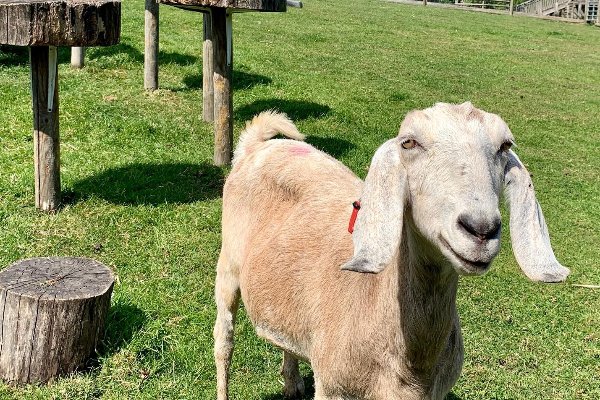
Keith the Apocalypse Bringer is a three-year-old Anglo-Nubian goat in a field in Devon.
Keith should not be underestimated.
Keith has been systematically dismantling the ecosystem since approximately 7am, when he ate a bramble. This is significant because bramble is an invasive scrub species that outcompetes wildflowers, reduces biodiversity, and creates dense monoculture thicket that nothing else can use.
Keith ate it. Keith does this every day. Keith does not charge for this service.
8:15am - Keith ate a thistle. Thistles are also considered invasive scrub in managed pasture. Goldfinches eat thistle seeds, but Keith's grazing will ensure the pasture remains open enough for the ground-nesting birds that can't use dense scrub. Keith has not attended a conservation workshop. Keith arrived at this conclusion by being a goat.
9:00am - Keith dismantled a section of hedge. This was less helpful. Keith does not have a perfect record.
10:30am - Keith escaped the field. He was in the road for eleven minutes. He ate a neighbour's rose. This is not being counted in Keith's environmental impact assessment.
11:00am - Keith was returned to the field. Keith regarded the farmer with the specific expression of an animal that does not recognise the concept of property.
12:00pm - Keith ate more bramble. His digestive system: four stomachs, a rumen full of specialised microorganisms, the ability to extract nutrition from lignified plant matter that would defeat any other animal on this field, is converting scrub vegetation into milk with a fat content of approximately 4.5%. The milk will become cheese. The cheese will be sold at the farm shop. The farm shop is four miles away. The cheese food miles are: four.
3:00pm - Keith produced manure. The manure will grow the grass. The grass will grow the bramble. The bramble will be eaten by Keith.
This system has no inputs.
It has been running since goats were domesticated approximately ten thousand years ago.
Keith is not aware he is saving the planet.
Keith is thinking about whether the fence on the north side has a weak point.
It does. Keith found it at 4:45pm.
Keith got out again.
@chrisvanhollen In conjunction with the 2026 March For Life and as your constituent, I urge you to protect the Hyde Amendment. No taxpayer dollars for abortion or abortion coverage. If Hyde isn’t included, there should be no deal. 50 years of Hyde, we can't stop now. @MFLAction
Is AI labeling enough until copyright issues get settled? Writers and Artists Need a Way to Label AI Use: Here’s What That Could Look Like https://t.co/O62KH9tjoV via @janefriedman
When a state addresses its teacher shortage by lowering the standards to become a teacher, rather than focusing on making teaching a more sustainable and respected career, it signals a HUGE problem!
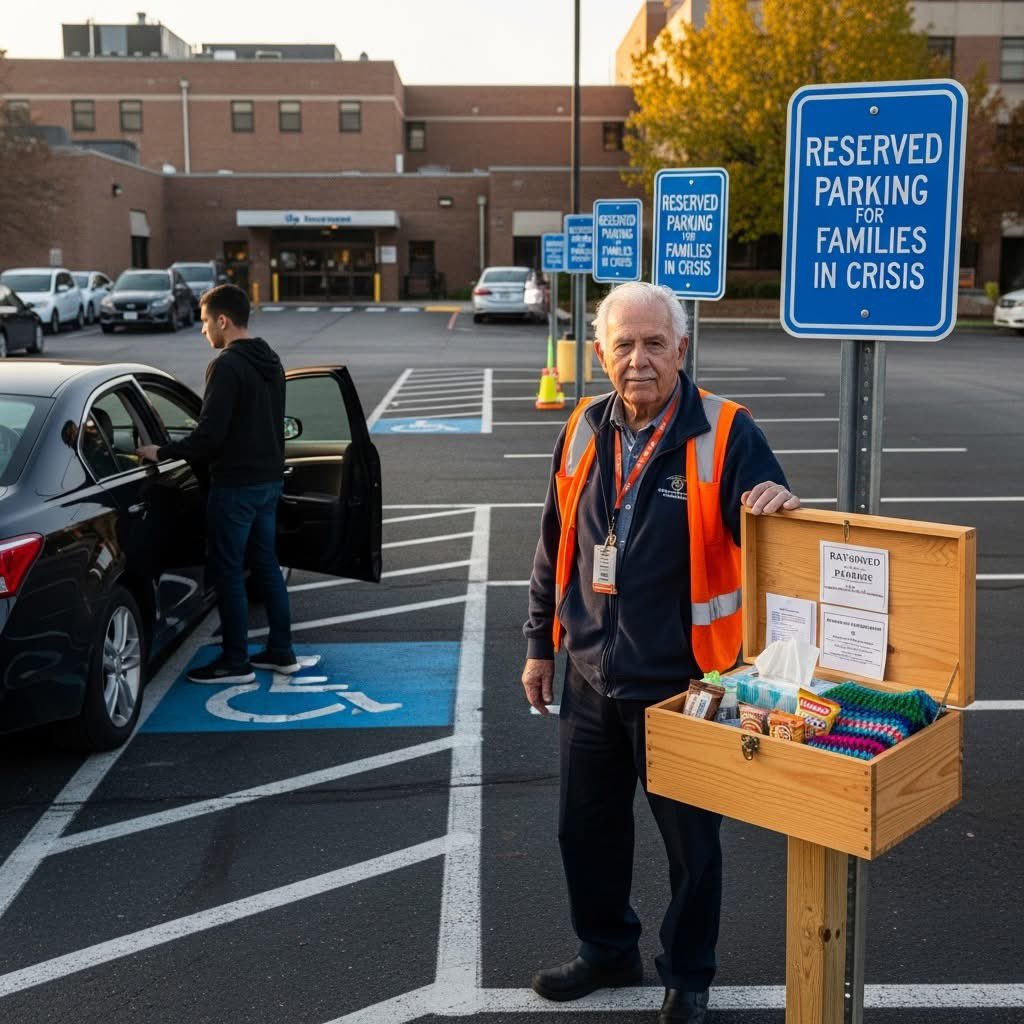
"My name's Raymond. I'm 73. I work the parking lot at St. Joseph's Hospital. Minimum wage, orange vest, a whistle I barely use. Most people don't even look at me. I'm just the old man waving cars into spaces.
But I see everything.
Like the black sedan that circled the lot every morning at 6 a.m. for three weeks. Young man driving, grandmother in the passenger seat. Chemotherapy, I figured. He'd drop her at the entrance, then spend 20 minutes hunting for parking, missing her appointments.
One morning, I stopped him. "What time tomorrow?"
"6:15," he said, confused.
"Space A-7 will be empty. I'll save it."
He blinked. "You... you can do that?"
"I can now," I said.
Next morning, I stood in A-7, holding my ground as cars circled angrily. When his sedan pulled up, I moved. He rolled down his window, speechless. "Why?"
"Because she needs you in there with her," I said. "Not out here stressing."
He cried. Right there in the parking lot.
Word spread quietly. A father with a sick baby asked if I could help. A woman visiting her dying husband. I started arriving at 5 a.m., notebook in hand, tracking who needed what. Saved spots became sacred. People stopped honking. They waited. Because they knew someone else was fighting something bigger than traffic.
But here's what changed everything, A businessman in a Mercedes screamed at me one morning. "I'm not sick! I need that spot for a meeting!"
"Then walk," I said calmly. "That space is for someone whose hands are shaking too hard to grip a steering wheel."
He sped off, furious. But a woman behind him got out of her car and hugged me. "My son has leukemia," she sobbed. "Thank you for seeing us."
The hospital tried to stop me. "Liability issues," they said. But then families started writing letters. Dozens. "Raymond made the worst days bearable." "He gave us one less thing to break over."
Last month, they made it official. "Reserved Parking for Families in Crisis." Ten spots, marked with blue signs. And they asked me to manage it.
But the best part? A man I'd helped two years ago, his mother survived, came back. He's a carpenter. Built a small wooden box, mounted it by the reserved spaces. Inside? Prayer cards, tissues, breath mints, and a note,
"Take what you need. You're not alone. -Raymond & Friends"
People leave things now. Granola bars. Phone chargers. Yesterday, someone left a hand-knitted blanket.
I'm 73. I direct traffic in a hospital parking lot. But I've learned this: Healing doesn't just happen in operating rooms. Sometimes it starts in a parking space. When someone says, "I see your crisis. Let me carry this one small piece."
So pay attention. At the grocery checkout, the coffee line, wherever you are. Someone's drowning in the little things while fighting the big ones.
Hold a door. Save a spot. Carry the weight no one else sees.
It's not glamorous. But it's everything."
Let this story reach more hearts....
Credit: Mary Nelson
𝓐 𝓫𝓻𝓲𝓬𝓴 𝔀𝓪𝓵𝓵 𝓲𝓷 𝓰𝓸𝓪𝓵
Congratulations to Laurin Mack on being named the second Terp to win Big Ten Goalkeeper of the Year in program history! 👏
📰 https://t.co/ppQjdsJbX3









![oltsport_'s tweet photo. 🚨🗣️ Lauren James talking about how her brother, Reece James bought her a car.
“I remember the day like it were yesterday. Proper grey London sky, bit of drizzle in the air — the kind that gets in your hair but doesn’t quite count as rain. I was skint. Proper skint. Checking my bank app every five minutes like somehow money might magically appear. It didn’t. 😅
Reece knew, of course. My brother’s always had this annoying way of knowing when something’s up with me even before I say a word.
One afternoon he says,
“Come outside for a minute, Lau.”
Now with Reece, that could mean anything. Could be a kickabout in the garden, could be him asking me to help him carry something. So I walk outside, hands in my hoodie pockets, thinking nothing of it.
And there it was.
A little car sitting on the drive. Nothing mad flashy, nothing like the cars he drives — just a nice, clean little motor. My first car.
I looked at it, then looked at him.
“Whose is that?” I asked.
He just grinned that cheeky grin of his.
“Yours.”
I swear I just stood there blinking like an idiot. My brain couldn’t quite catch up with what he’d said.
“Don’t be stupid,” I told him. “Stop winding me up.”
But he tossed me the keys. And when they landed in my hand, that’s when it hit me. My chest went tight and my eyes started watering.
“Reece… I can’t take this.”
“Course you can,” he said, all casual, leaning against the wall like he hadn’t just changed my whole year. “You needed a car.”
That’s my brother though. He doesn’t make a big speech about it. Doesn’t act like he’s doing something heroic. He just helps.
I hugged him so tight he started laughing.
“Oi, careful,” he said. “I’ve got training tomorrow.”
That car meant everything to me. Not because it was fancy — because it wasn’t. It meant freedom. It meant I could get to work without stressing about trains or buses. It meant someone believed in me when I felt like I was barely holding things together.
Years later, when he’d done even better for himself, he tried again.
We were sitting there chatting and he goes, completely serious:
“I’ll get you a new one. A proper one. 2025 Porsche.”
I nearly choked on my tea. 😂
“Absolutely not.”
He looked genuinely confused.
“What do you mean no?”
“Because,” I said, “I want to buy my next car myself.”
He kept insisting.
“Lauren, it’s nothing.”
But that was exactly the point.
“It’s not nothing,” I told him. “The first car you gave me when I had nothing. I’ll never forget that. But the second one… that one’s mine.”
I want to work for it. Save for it. Know that when I sit in that driver’s seat, I earned every bit of it.
Reece just stared at me for a second, then smiled.
“Fair enough,” he said. “But when you get it, I’m driving it first.”
“Not a chance,” I told him.
And we both laughed.
Because that’s the thing about my brother. He could buy me the world if he wanted. But what he really gave me that day wasn’t a car.
It was a start.”🚗💙
[Via @TheSunFootball]](https://pbs.twimg.com/media/HD8YyDfW0AAAyWk.jpg)