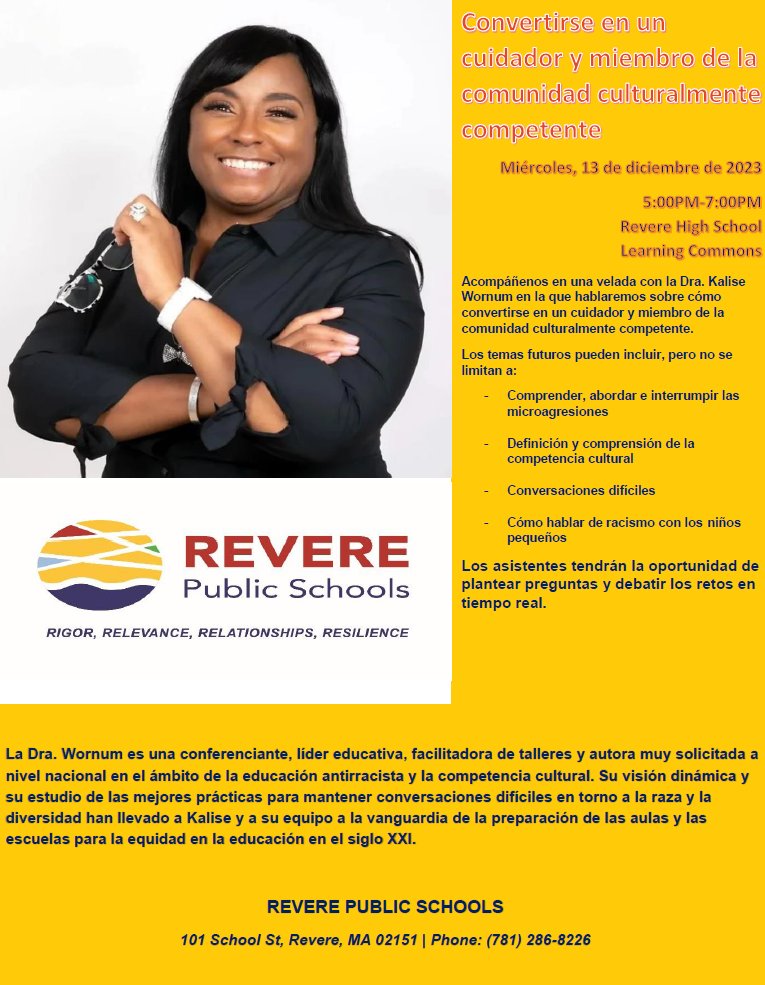
Join us on Thurs., March 21 at 5:00 p.m. at @RReverema as we welcome @KWDiversityInc and discuss becoming a culturally proficient caregiver and community member.
Visit https://t.co/8PMUkSSYE5 for more info!
@lourenco962 @RPS_Super @lourenco962 @RPS_AsstSuper
Thank you, @KWDiversityInc, for coming out to RPS earlier this month to discuss ways teachers and caregivers can become more culturally proficient!
Read the story here: https://t.co/DQDWxJBaPC
@lourenco962 @RPS_Super@RPS_AsstSuper@RevereAsstSuper
#culture is defined as the filter we use to make sense ofthe world. Therefore, every human has a culture. As an educator, I have tounderstand how my culture compliments and conflicts with the cultures of my students. Teaching is both objective and subjective.
Creating a system of equity is improbable but not impossible. It will require one to self-reflect, center the student, be willing to have difficult conversations, and, most importantly, interrupt and address all aggressions with a relentless commitment to equity. #equity
Students need a psychologically safe classroom. By that, I mean a classroom where they know and have confidence in the educator to protect them from and address all micro-aggressions. It is also a classroom where they are seen and have a sense of confidence, security, and equity.
#IndigenousPeoplesMonth, add a culturally relevant teaching habits that honors their history. Consider using the Native American talking stick practice instead of hand raising. Ensuring that every child has a response to your prompt by, resulting in a more equitable practice.
#questionoftheday: How are indigenous peoples' cultures depicted throughout your school? Are they missing? How is their humanity considered, and displayed?