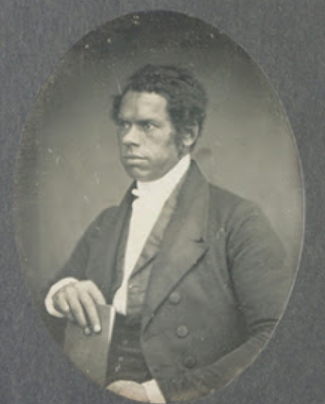
your pictures completely misrepresent the quaque family.
1. pictured on the left: the mulatto abolitionist, thomas birch freeman.
2. pictured on the right: benjamin william quartey-papafio, foremost native to practise western medicine in gold coast.
The SPG who were also financed by the RAC, which Richard Brew governed at the Anomabo fort, paid the fare & upkeep for Quaque’s trip & stay in England? Is that what you are saying? And his selection to be trained was also by chance? His father’s close association & partnership with Brew didn’t account for that?
The Quaque family should rather be paying reparations to the state.
1. Philip Quaque’s father, Obirempong Cudjoe, was a caboceer.
2. If you didn't know, a caboceer was a big, strong & powerful African man whose job was to raid communities in the hinterlands, and capture free men, women & children for sale to Europeans as slaves.
3. This job became lucrative following the arrival of the Portuguese on the Gold Coast, continued under the Danes and the Dutch, and ended with the British.
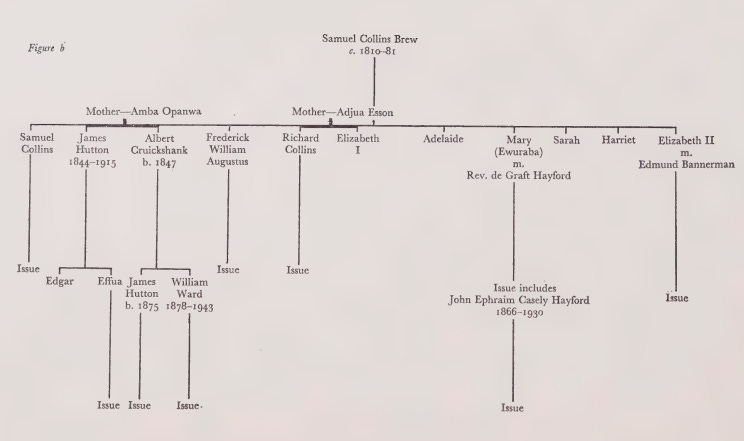
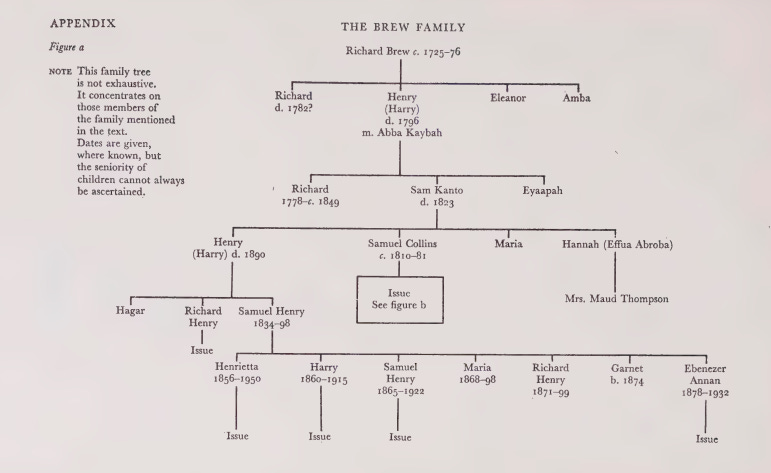
4. Obirempong Cudjoe built a strong business relationship with the biggest slave trader of the 1750s in Anomabo, an Irishman named Richard Brew, who was governor of the Royal Africa Company (RAC) at the slave fort in Anomabo.
5. But for the enterprise in Gold Coast’s slave forts, which were the manger that served greener pastures to most British employees, Richard Brew, an unemployed drunkard back in Ireland, would have perished in poverty. Ironically, now we rather troop to their ends in search of greener pastures.
6. Together, Brew & Cudjoe profited from slavery. Part of those profits financed the education of Cudjoe's son, Philip Quaque, at Oxford. Quaque later became Africa's foremost Anglican priest and preacher at the slave forts. After returning from Oxford, however, he was alienated from his Fanti people, could no longer speak his mother tongue fluently, and began trading in slaves himself.
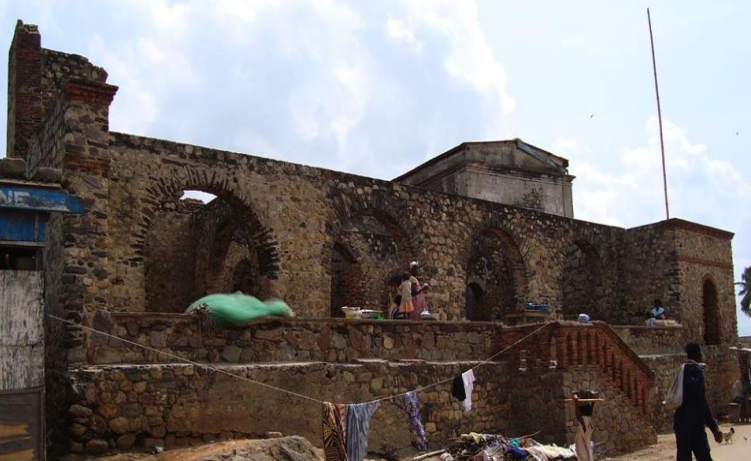
7. Richard Brew, on the other hand, undermined the RAC, made even greater profits, and built himself a fort named Castle Brew, which still stands in ruins at Anomabo.
8. To strengthen their relationship, Richard Brew's mulatto son from a caboceer's daughter, Henry Brew, married Quaque's sister, Abba Kayba. The Brew family in Ghana emerged from this union and developed into a large privileged lineage that persists to this day.
9. Kwesi Brew (poet, diplomat, & member of the first batch of students to attend Legon), his daughter Rama Brew (veteran actress), Marietta Brew (second female attorney-general & current chair of Legon Council), Amandzeba Nat Brew (celebrated musician), & hyphenated-and-allied Brews all descend from this lineage.
10. These descendants & their allied Quaque family should be among those held accountable for the ancestral debt.
11. They can begin by renaming the Quaque House at Adisadel College in memory of their enslaved victims, whose family names I would rather not mention to avoid stigmatization.
The descendants of pioneering Ghanaian educator and clergyman Philip Quaque have petitioned the government to settle an outstanding debt they say was owed to him at the time of his death in 1816.
According to the family, records indicate that the Castle authorities owed Quaque £369 in salary arrears when he passed away. They are therefore appealing to the government to pay the equivalent value of the amount as a symbolic gesture in recognition of his immense contributions to education and national development.
Continuity of Anti-Slavery Across Generations
1. While Britain abstained from supporting the motion to label the transatlantic slave trade as a crime against humanity,
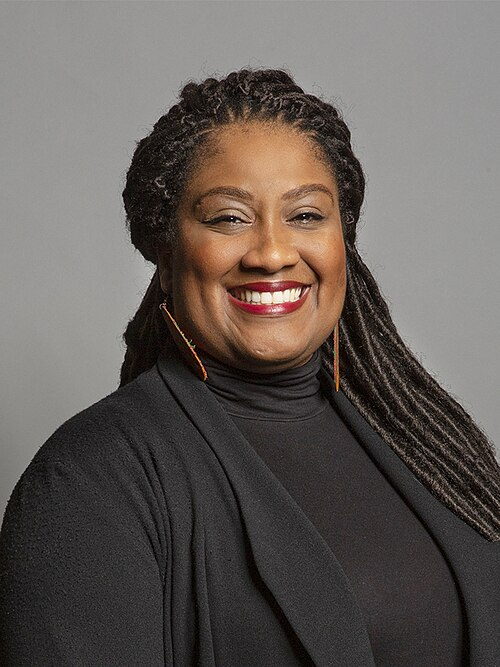
2. @BellRibeiroAddy, British MP for Clapham and Brixton Hill, has firmly supported a position aligned with her ancestral homeland, Ghana.
3. This stance echoes that of her ancestor, Thomas Birch Freeman, a Euro-African missionary whose family background included links to enslavement.
4. Freeman was a vocal critic of slavery in the Gold Coast in the 1840s.
5. While, many of his contemporaries at time, mainly prominent African and Euro-African elites, such as J.C. Grant (forefather of Paa Grant of UGCC fame), Joseph de Graft, Owuo Nemim, Kofi Blay, Mantses Ankrah & Dowuona, Togbi Amegashie, and Kwesi Akuffo, were involved in slave trading & resisted abolition,
6. Only to stop when officially banned the trade in 1874. Same year Ghana became a formal British colony.
#Ayekoo!
your pictures completely misrepresent the quaque family.
1. pictured on the left: the mulatto abolitionist, thomas birch freeman.
2. pictured on the right: benjamin william quartey-papafio, foremost native to practise western medicine in gold coast.
The descendants of pioneering Ghanaian educator and clergyman Philip Quaque have petitioned the government to settle an outstanding debt they say was owed to him at the time of his death in 1816.
According to the family, records indicate that the Castle authorities owed Quaque £369 in salary arrears when he passed away. They are therefore appealing to the government to pay the equivalent value of the amount as a symbolic gesture in recognition of his immense contributions to education and national development.
“The students who cannot read a 20-page article today are the voters who will not be able to read a bill, or the jurors who cannot follow a closing argument, tomorrow.”
surf boatmen: an extinct occupation.
1. before the construction of deep-water harbours at tema & takoradi, large ocean-going vessels could not dock directly along much of the gold coast's coastline.
2. instead, they anchored offshore in a roadstead, and smaller boats transported cargo, passengers, and mail between the ships and the shore.
3. the men in this photograph were part of that specialized occupational group often referred to as surf boatmen or canoe men.
4. their skill and courage kept colonial trade moving long before ghana's deep-water ports were built.
5. what jobs are at risk today?