Lilith. Hypatia. Aspasia. Artemisia. Cleopatra. Grace Hopper. Gloria Steinem. Madonna.
They lived in different centuries, came from radically different worlds, and could hardly have been more different from one another. So what connects them? Perhaps this: 1/4
or simply too unwilling to behave.
"She was difficult" can sound like a description. Sometimes, it’s a judgment; sometimes, it means only this: She wouldn't stay where we put her.
I'd love to know which "difficult woman" from history you would add to the list. 3/4
What happens when a woman stops apologizing for being intelligent, assertive, ambitious, or unapologetically herself?
Too often, she isn't asked why. She's given a label.
In my latest Substack post, Monopolar Bitch, I explore how language has long been used to police women 1/3
who step outside society's expectations. It's not a post about anger; it's about authenticity, independence, and the courage to stop asking permission to exist on someone else's terms.
I hope it sparks conversation, reflection, and maybe even a reconsideration of one of the 2/3
The Social Diagnosis of Difficult Women
History remembers women like Hypatia, Aspasia, Cleopatra, Irene of Athens, and Grace Hopper for their extraordinary achievements. Yet many women who challenge expectations are remembered for something else entirely: 1/3
the labels attached to them. In my latest Substack post, I explore how words such as difficult, bossy, abrasive, aggressive, and even crazy can function as social judgments rather than objective descriptions.
Where do these labels come from, and what purpose do they serve? 2/3
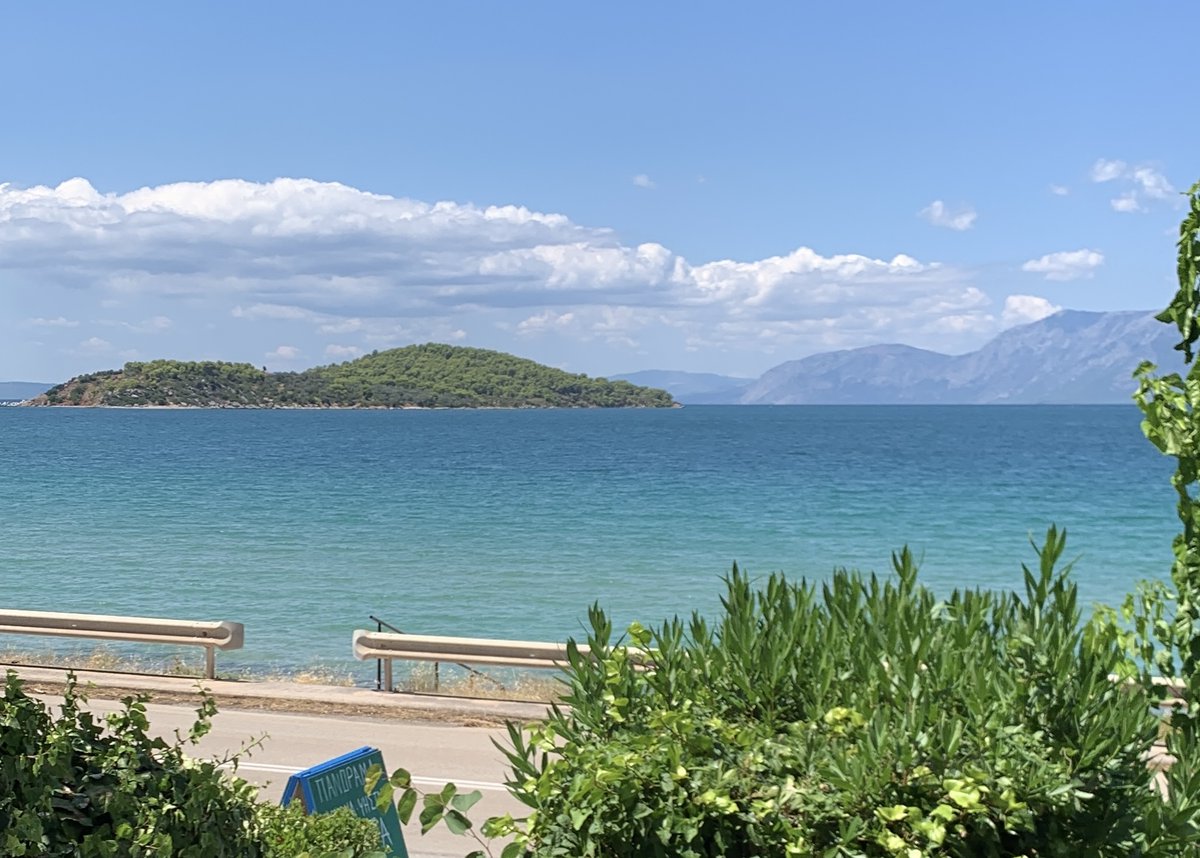
I went to the Aegean to contemplate Cavafy’s Ithaca.
The universe gave me Heidegger’s das Man instead.
Research question: Can authentic existence survive unsolicited conversation?
Methodology: Philosophical reflection. Repeatedly interrupted.
Findings: Das Man was loud. 1/2
The Chronicles of a Self-Prescribed Germaphobe, Part V: My Ithaca
For years, I thought life was about arriving: the better position, the higher salary, the bigger house, the recognition, the next achievement, my own personal Ithaca. 1/4
What if Ithaca isn't simply where we're going, but what gives meaning to everything that happens along the way?
In this post, I revisit Cavafy through Aristotle, Heidegger, Nietzsche, and Heraclitus, and through some hard-earned lessons of my own. 3/4
Amathia: The Most Dangerous Kind of Ignorance
The ancient Greeks distinguished between ἄγνοια: "I don't know," and ἀμαθία: "I don't know, but I believe I already know enough."
One is the beginning of learning, while the other is the refusal to learn. 1/2
People say, "Greece changed me," but there's a difference between the Greece a visitor experiences and the Greece many Greeks live every day.
My latest post is about loving my homeland enough to be honest about both its beauty and its flaws.🇬🇷 1/2