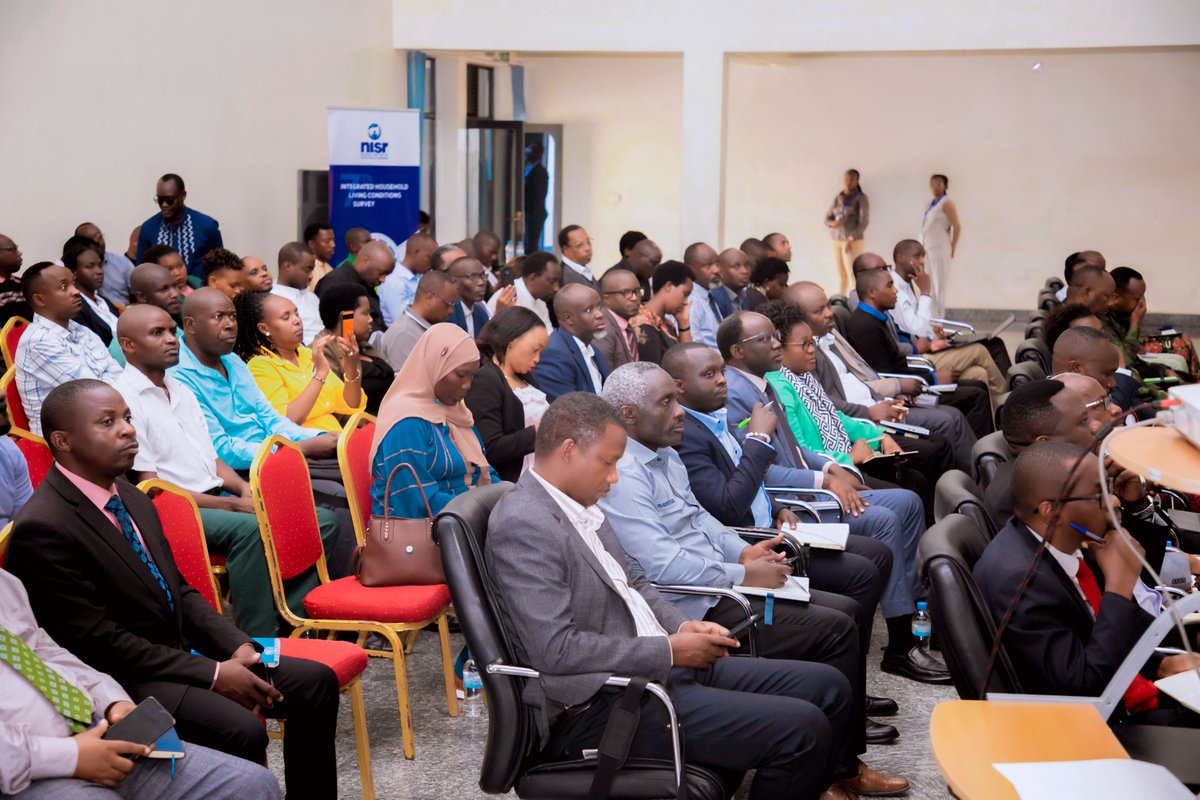
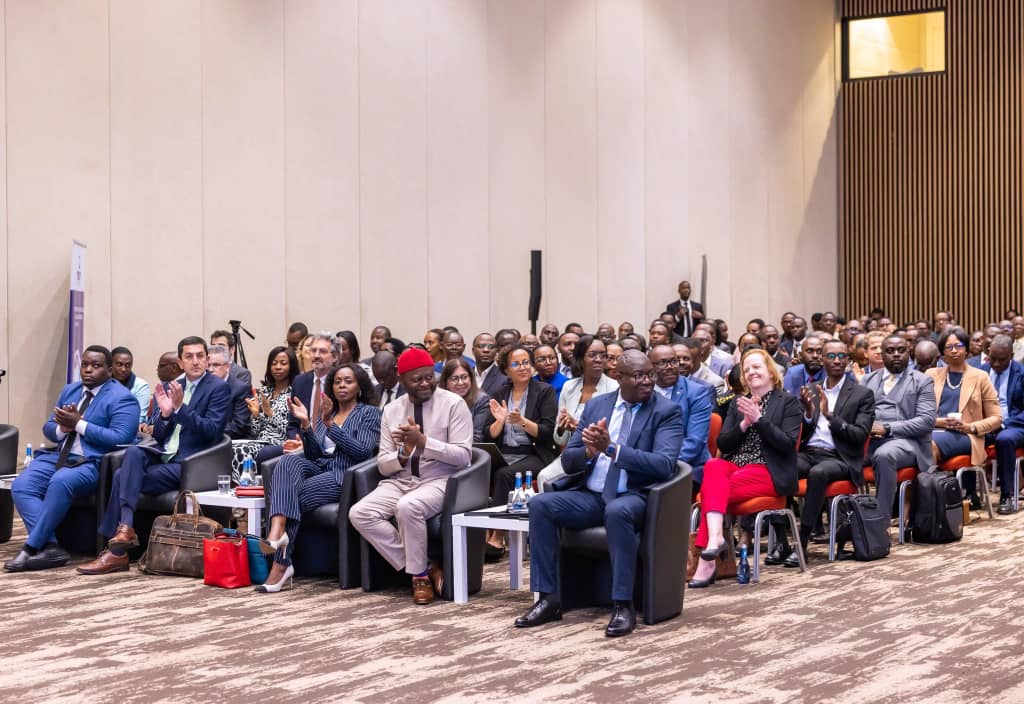
It was a great experience sharing my insights. Glad to see Rwanda’s data practitioners continuing the conversation and exchanging lessons from government data
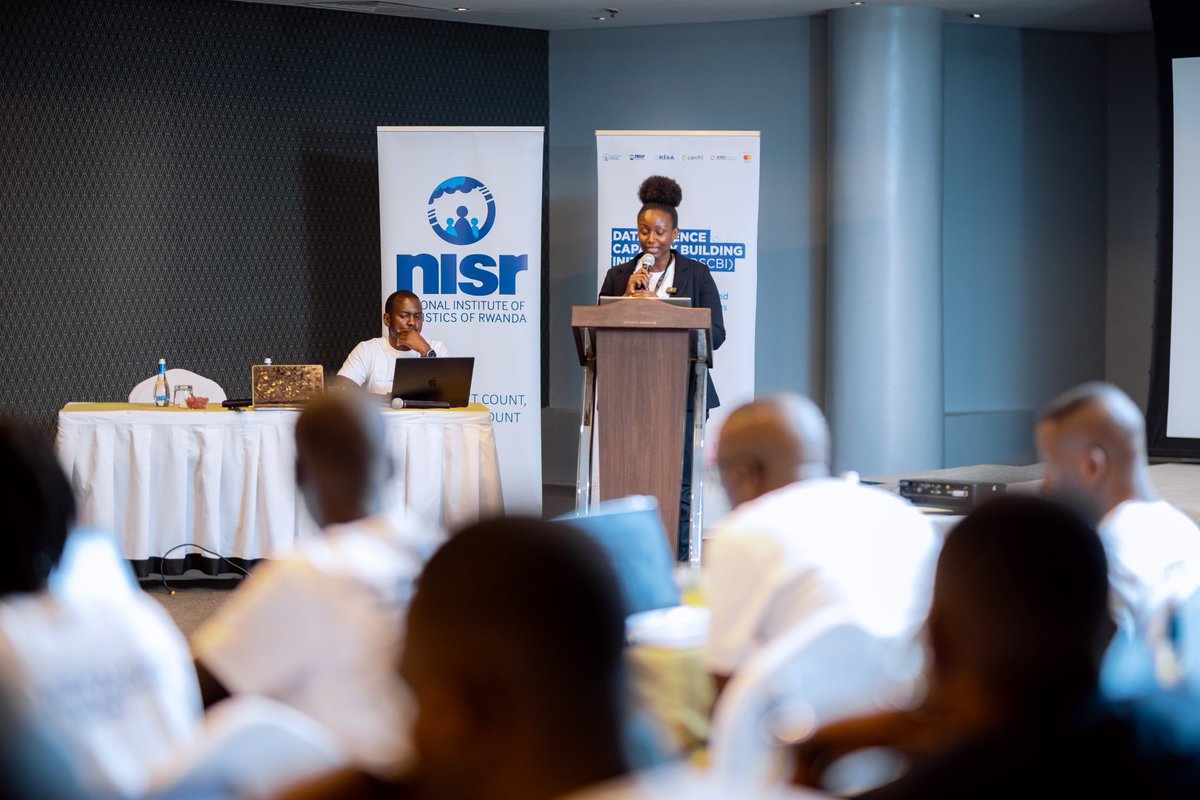
Last month in Kigali we hosted a session on “Making LLMs useful: A practical application for dashboards.”
Today we have a session with Rwanda’s data practitioners who will share lessons from their work across government data systems. Watch this space for highlights.
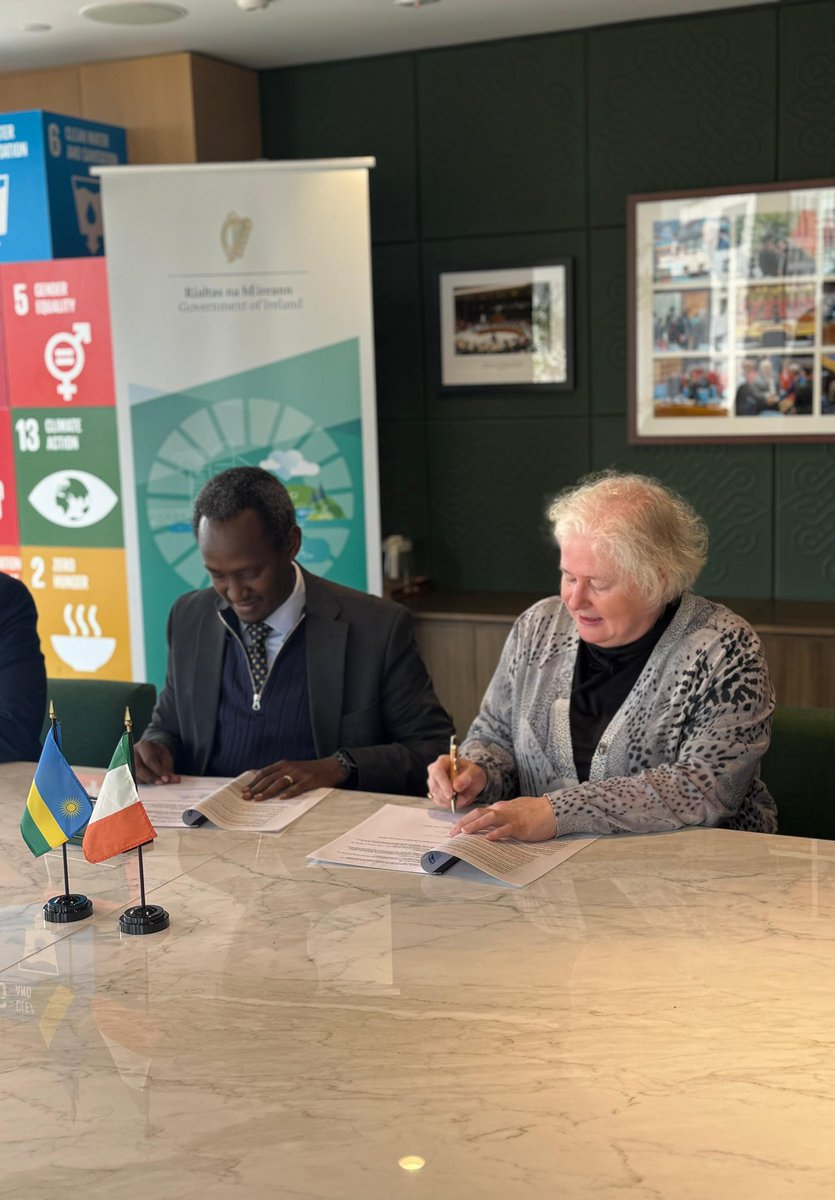
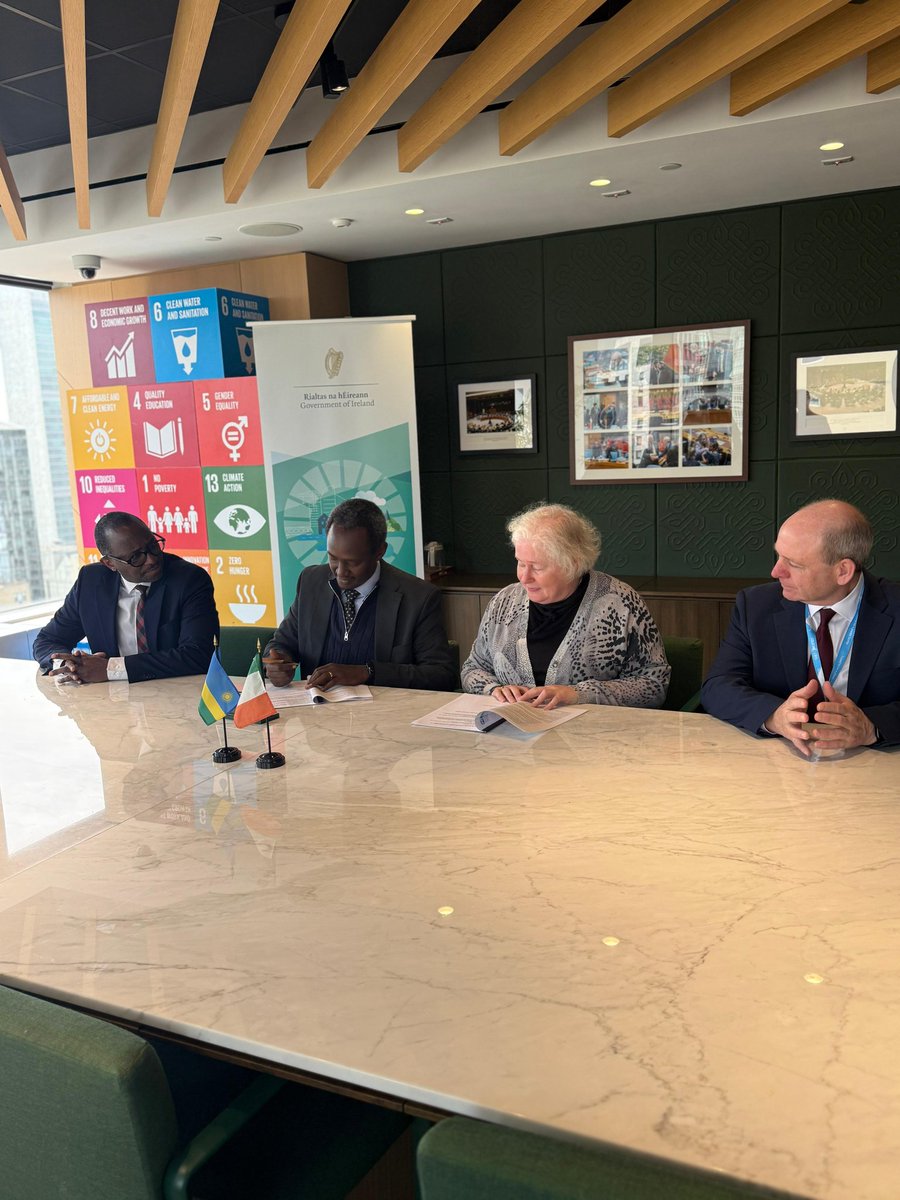
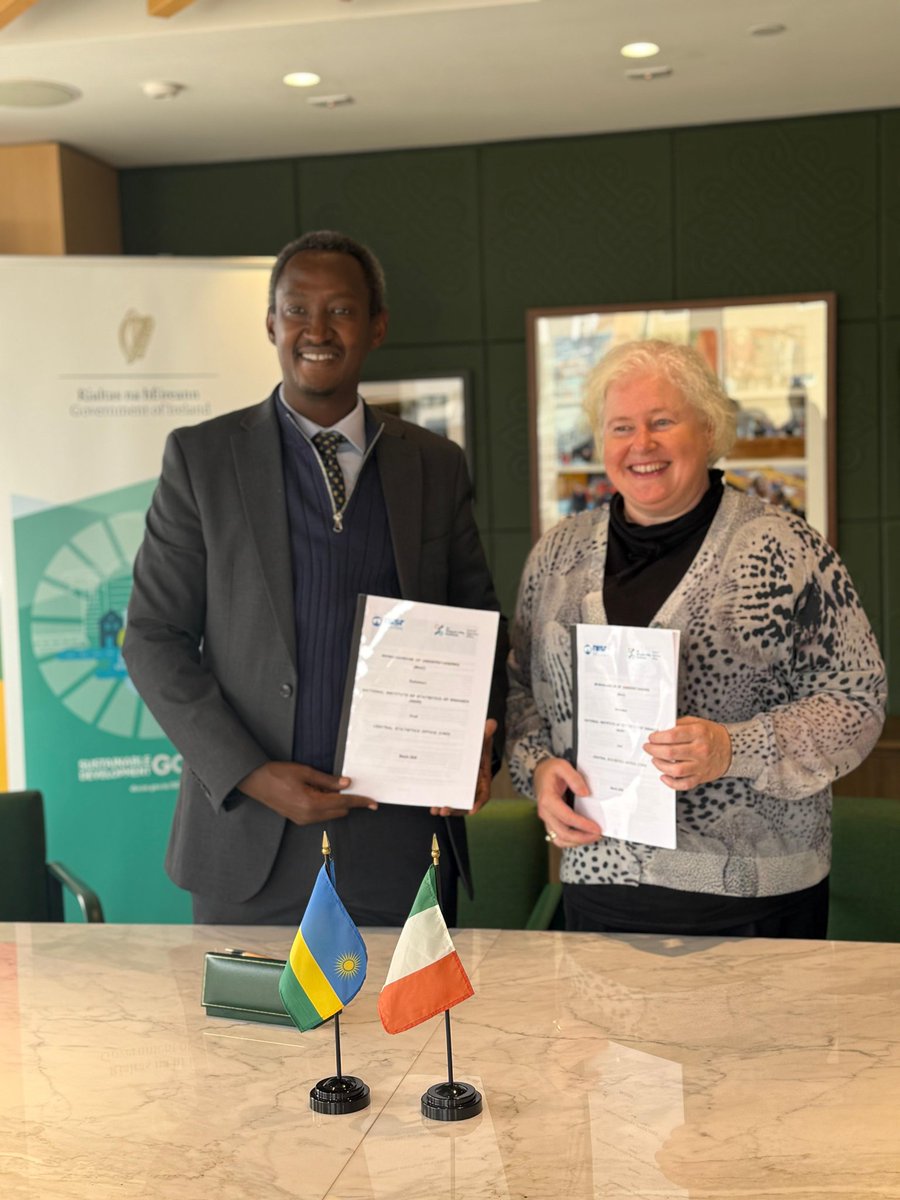
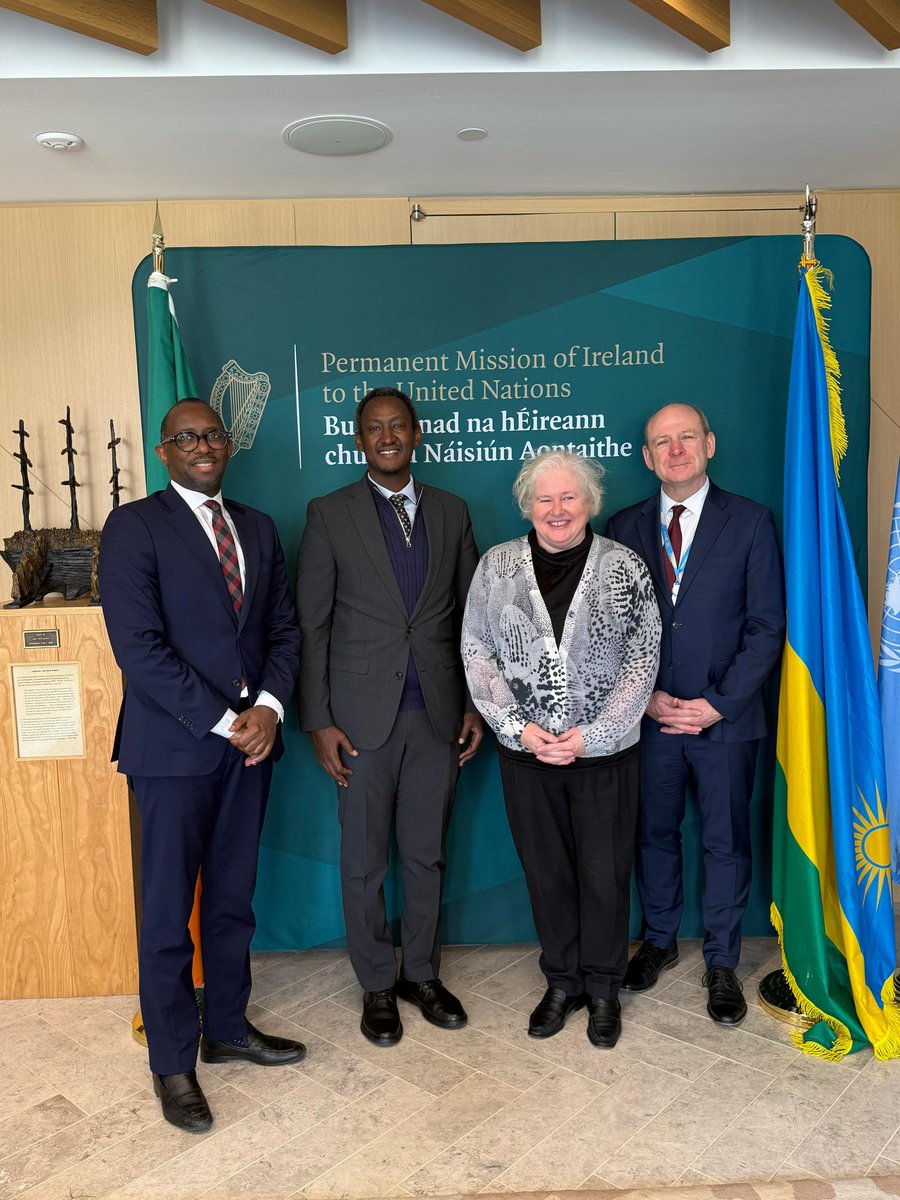
Today, NISR signed a MoU with the Central Statistics Office of #Ireland to strengthen the use of administrative data in #Rwanda
The agreement was signed in New York by DG @ivanmurenzi and DG Jennifer Banim of @CSOIreland, marking a key step in enhancing statistical collaboration
NISR Competitions Thread
👇
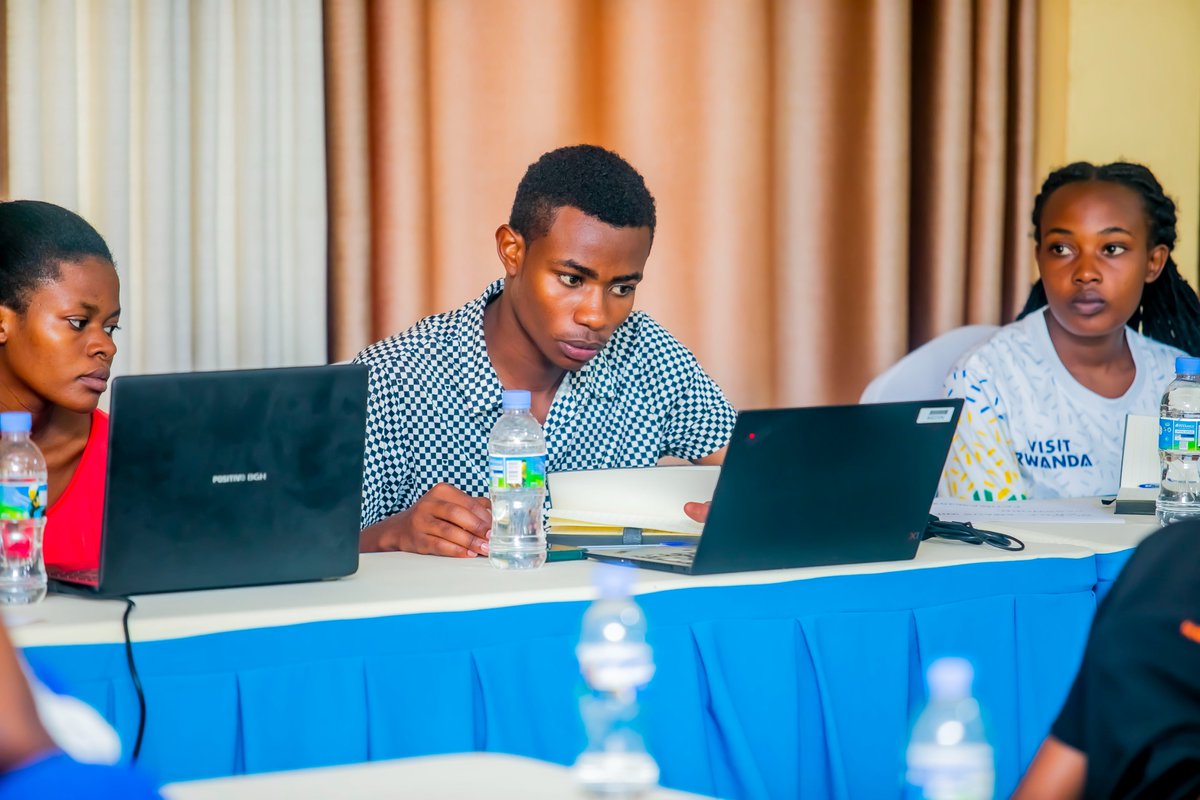
Since Monday, selected university students and fresh graduates from across #Rwanda have gathered in Musanze District for an intensive boot camp to advance their innovative data-driven projects for the 2025 Big Data #Hackathon.
Guided by NISR experts, participants are strengthening solutions aligned with national priorities and the African Statistics Day theme:
“Leveraging innovations in data and statistics to promote a just, peaceful, inclusive and prosperous society for Africans.”
They are developing solutions across various thematic tracks, enhancing data science skills and promoting youth-led innovation.(1/3)
#BigData
#AfricanStatisticsDay
🚨Another cohort of selected university students is participating also in an NISR-led boot camp to refine their data-storytelling skills, transforming complex statistics into clear and creative static and dynamic infographics for the 2025 #Infographic Competition
With support from NISR experts, participants are visualizing data stories from key national reports, including the EICV series, the Labour Force Survey, GDP trends over the last 15 years, and the 2024 Seasonal Agriculture Survey.
(2/3)
#DataVisualization
Good Morning, Rwanda!
The latest Labour Force Survey (Q3 2025) is out!
📌About 6 in every 10 people of working age (16yrs +) are employed.
📌 Unemployment has fallen by 1.9% compared to the same quarter last year.
Curious to know which sector is driving employment in #Rwanda?
Dive into the full report here:
https://t.co/66YoAFLiNg
#RwandaStatistics
#Employment
While celebrating the World Statistics Day, in #Rwanda, we have learned that statistics are not just numbers; they are the backbone of national planning and the compass that guides both individual and institutional decision-making.
Happy #WorldStatisticsDay
A major milestone in #Rwanda’s data governance journey!
These instruments move from policy to practice—guiding how data is classified, managed, and shared securely.
Next: adoption and capacity-building across institutions.
#DataGovernance#Rwanda#PublicData
🚨Here we go!
The National Data Governance Journey is gaining momentum!
Building on the Data Sharing Policy approved by Cabinet in May, #Rwanda has released key national instruments that strengthen data governance across the public sector:
📌National Data Governance Framework,
📌National Data Classification and Access Guideline,
📌National Metadata Management Guideline.
Explore the published documents via
👇👇
https://t.co/m9LVcjuPd4
#RwandaStatistics
#DataGovernance
@ivanmurenzi
📍Happening Now at NISR:
We are hosting a national consultation and validation workshop on the draft National Data Governance Guidelines, aimed at promoting effective data sharing across public institutions in #Rwanda
Government officials, including Chief Data Officers and Heads of Planning, IT, ...are reviewing and finalizing the guidelines ahead of their future adoption.
#DataGovernance
@ivanmurenzi
These guidelines, key to implementing the recently approved Data Sharing Policy, will foster a collaborative approach to managing #data as a shared national resource for the well-being of citizens and Rwanda’s sustainable development.
#DataSharing
The Labour Force Survey is key to understanding employment trends in Rwanda, guiding policies on jobs, skills, and economic growth. Data that drives inclusive development! #DataForDevelopment
In #Rwanda,
➡️ 5 in 10 people aged 16+ are employed, according to the LFS 2025 Q2.
➡️ Unemployment rate dropped from 16.8% (LFS 2024 Q2) to 13.4% (LFS 2025 Q2) a 3.4 percentage points decrease, a year back.
➡️ The service sector remains the leading sector in the number of people it engages/employs.
Learn more about the Labour Force Survey: https://t.co/dLx4iUk6I7
#RwandaStatistics
Data is the backbone of informed policy. Excited to see Rwanda investing in strong data science capacity across government institutions! #DSCBI#DataForDevelopment
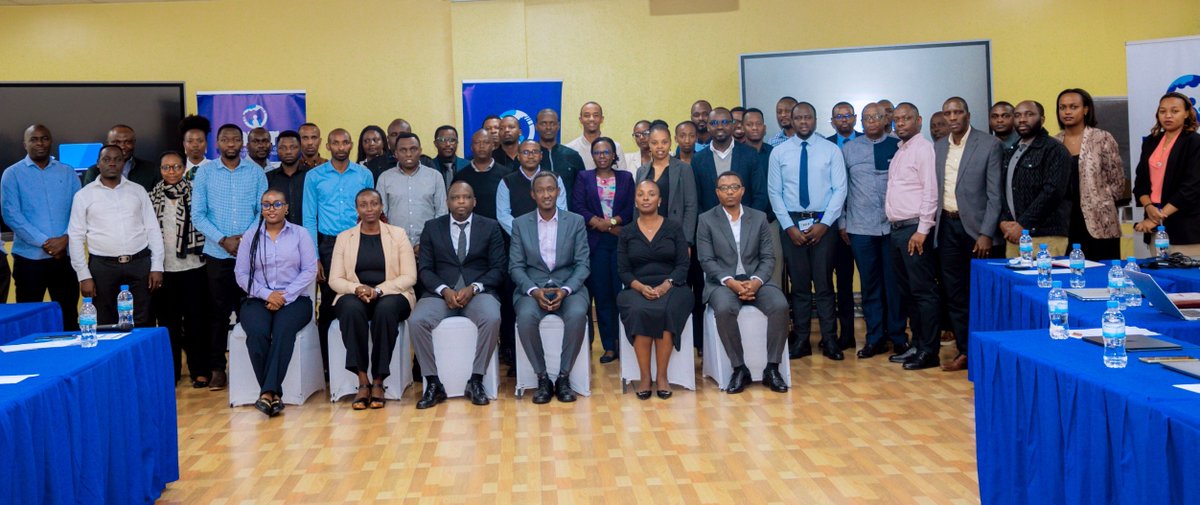
Today, we kicked off the first week of the six-month Data Science Capacity Building initiative (DSCBI), in partnership with @statisticsRW and @cenfri_org, bringing together professionals from 23 government institutions.
#DSCBI
Thank you @LiekevandeWiel, and the entire @unicefrw for this valuable support.
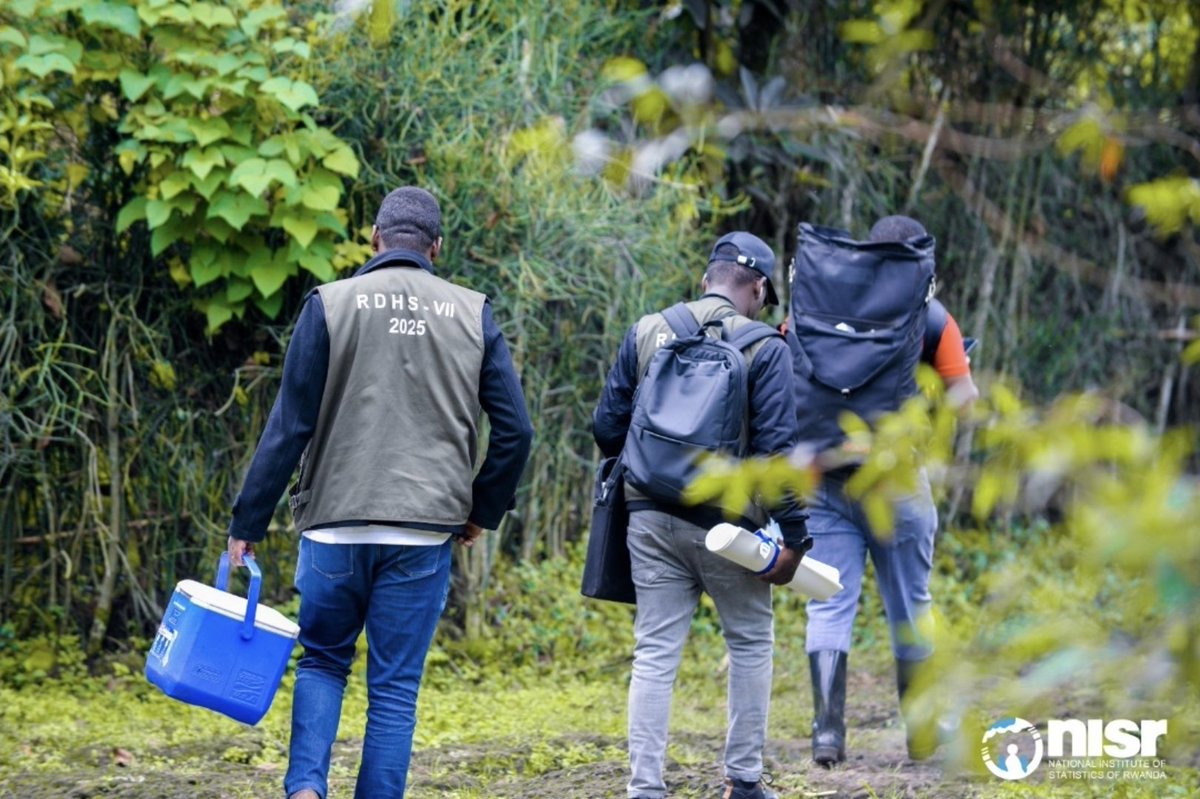
The two vehicles will greatly enhance our field operations for the ongoing DHS7 and future surveys. Your partnership reinforces our shared vision to deliver evidence that informs to better decisions and outcomes.
Wari uziko mu #Rwanda, ababa mu nzu 🏠zabo bagabanutse mu myaka 7 ishize?
Abakodesha 🏘️bo bariyongereye.
Ibindi ku bijyanye n'uburyo abantu batuye mu nzu wabibona unyuze aha
👇👇
https://t.co/kbDsBUKjjV
#RwandaStatistics
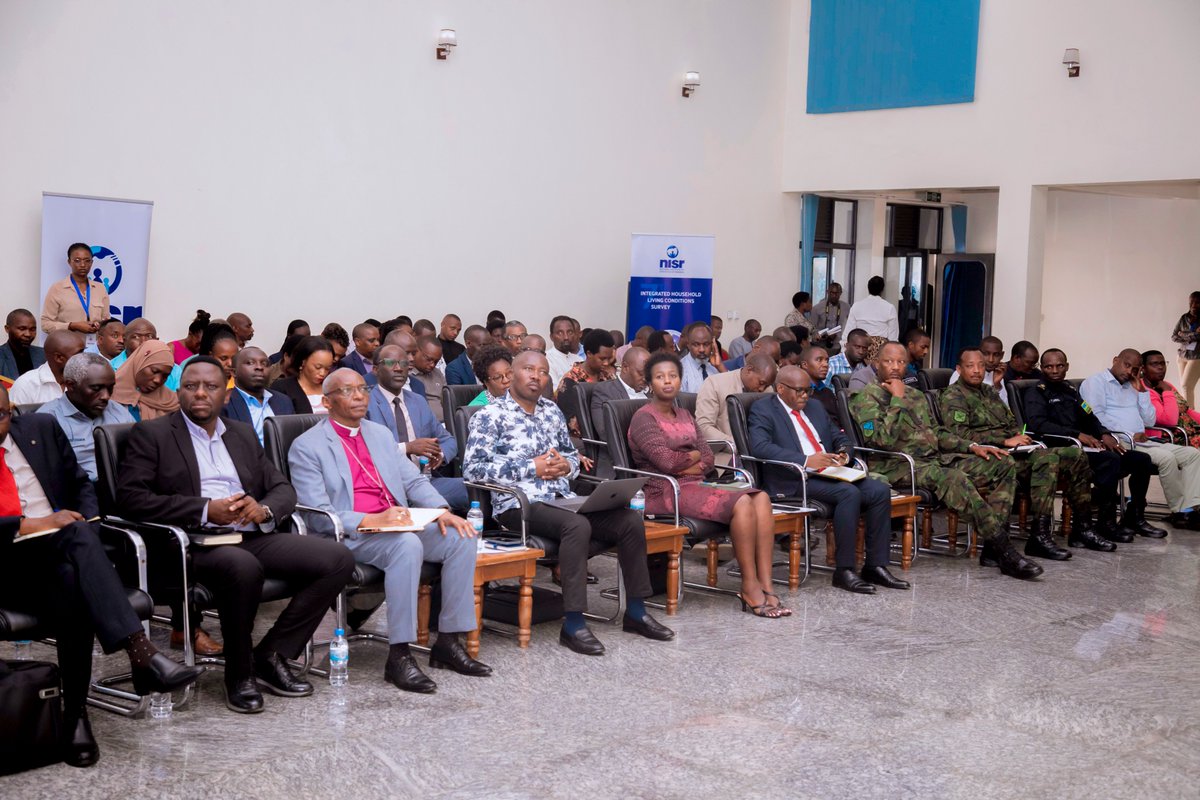
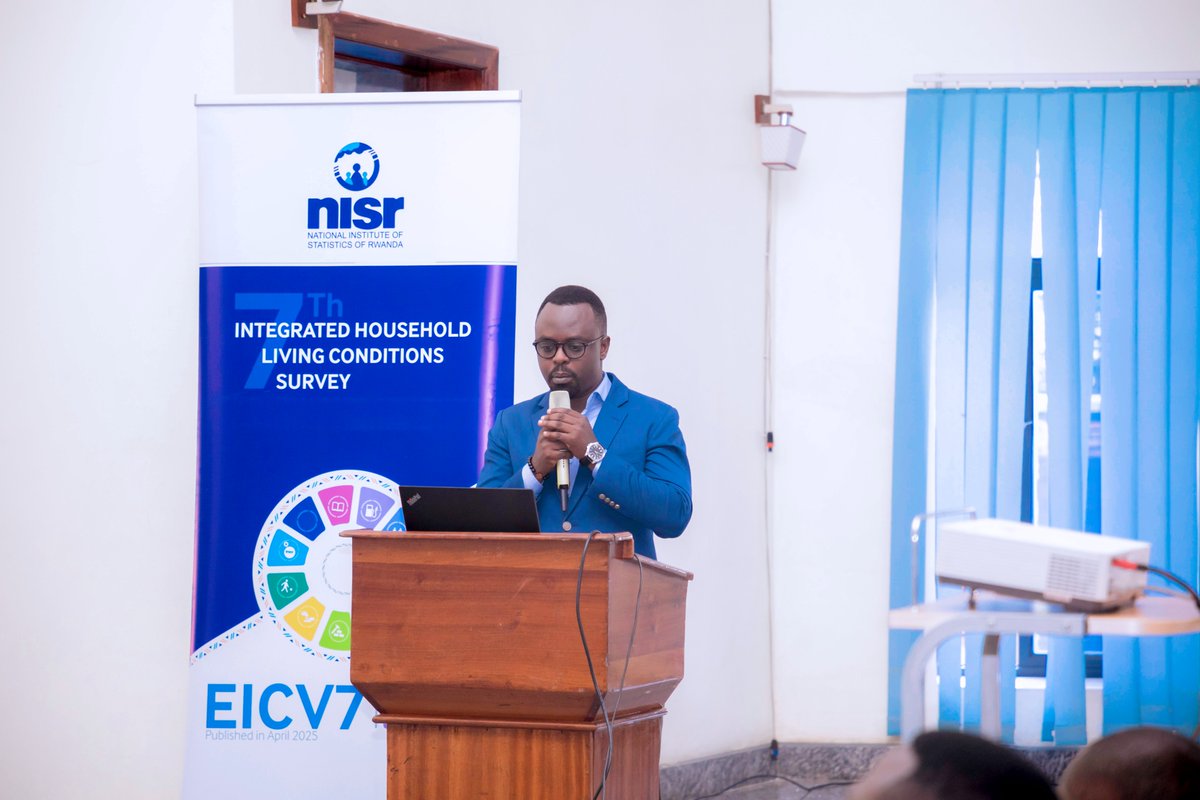
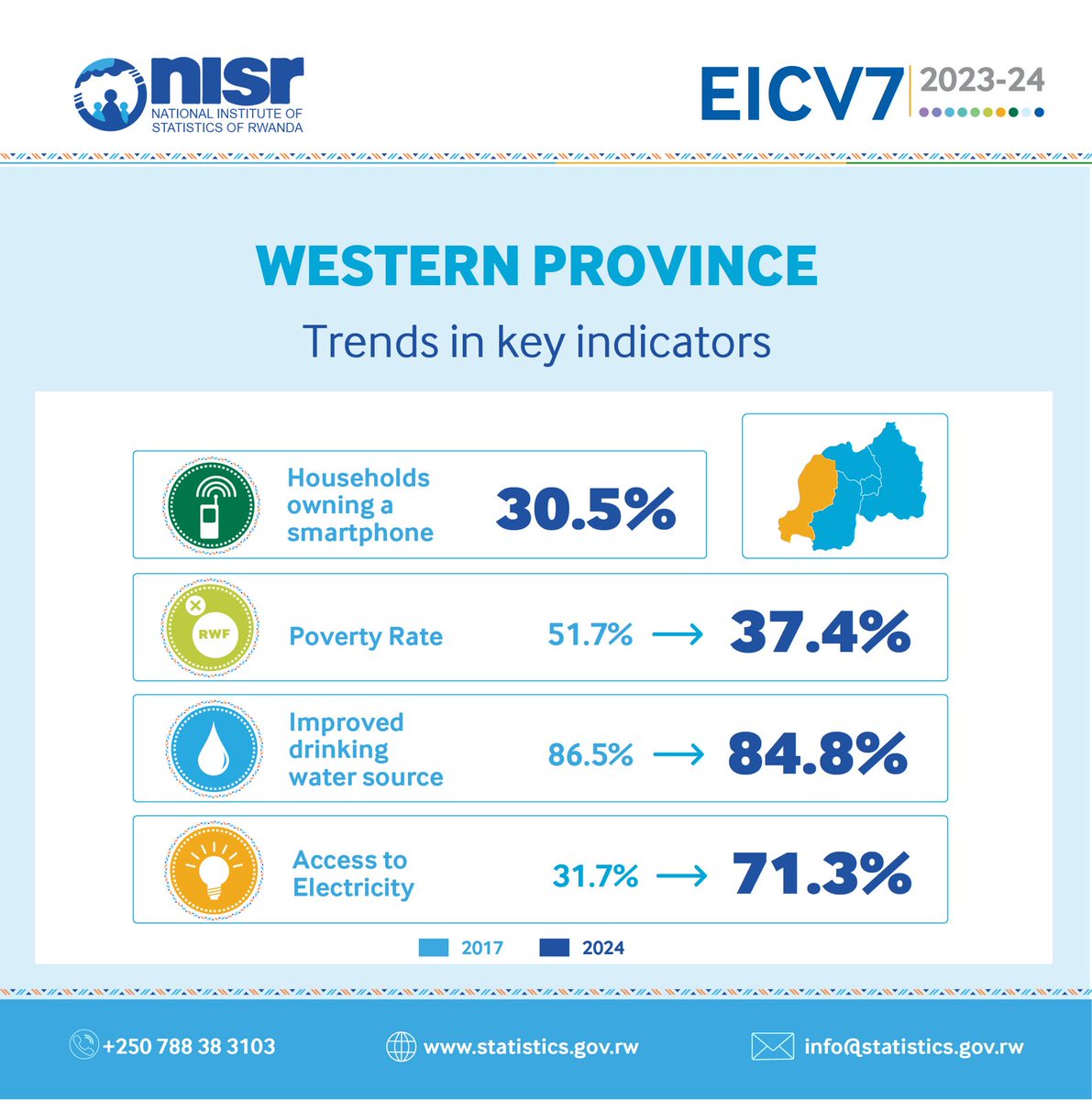
We held the #EICV7 dissemination workshop in @RwandaWest, bringing together mayors, security organs, and development partners, including faith-based organisations, NGOs, and private sector representatives. The session focused on the Western Province's #EICV7 findings, highlighting poverty and socio-economic trends, improvements, and areas needing more attention.
#RwandaStatistics
Prime Minister Dr. Edouard NGIRENTE today attended the official dissemination of the 7th Integrated Household Living Conditions Survey, #EICV7.
The survey provides updated indicators reflecting #Rwanda’s progress in poverty reduction and socio-economic development.
#RwandaStatistics
🚨𝐀𝐌𝐀𝐊𝐔𝐑𝐔 𝐀𝐆𝐄𝐙𝐖𝐄𝐇𝐎🚨
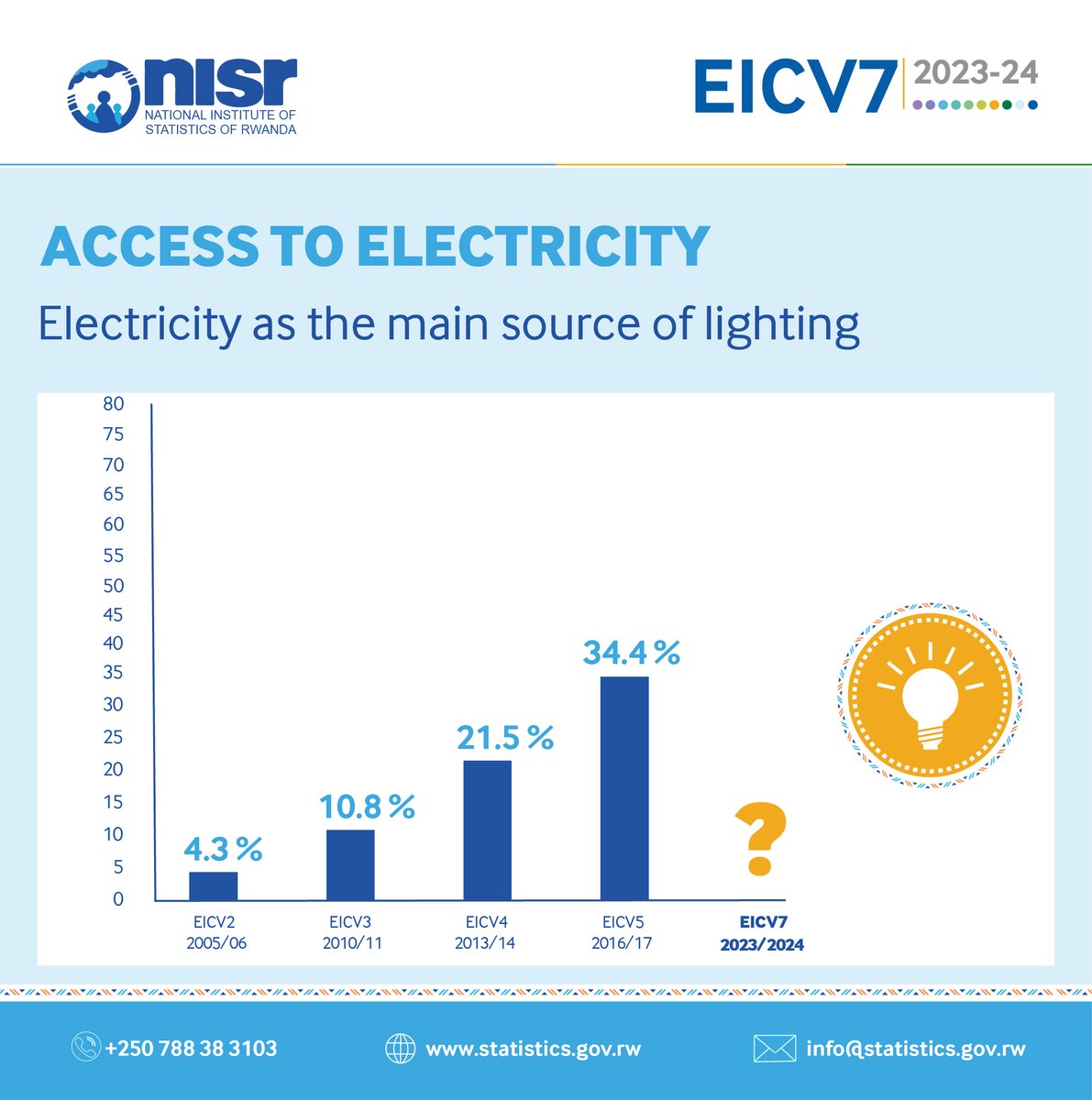
Ikigo cy’Igihugu cy’Ibarurishamibare (NISR), cyatangaje ko ingo zifite amashanyarazi mu Rwanda zikubye kabiri ziva kuri 34% mu 2017 zigera kuri 72%.
Muri ubu bushakashatsi kandi byagaragajwe ko ingo zigerwaho n’amazi meza zageze kuri 90%, zivuye kuri 87%, abakoresha ingufu zitangiza mu guteka bageze kuri 5%.
Ingo zo mu Rwanda zifite sima cyangwa amakaro mu nzu ni 39%, izifite telefoni ni 85%, izikoresha internet ni 30%, abarangiza amashuri abanza bari hagati y’imyaka 14 na 16 ni 42%.
Mu bindi byagaragajwe n’ubu bushakashatsi ni uko amafaranga Umunyarwanda akeneye ku mwaka mu kubona ibyo kurya n’ibindi nkenerwa ari 560.127 Frw.
Ubukene mu Banyarwanda bwageze kuri 27,4% buvuye kuri 39,8% mu 2017, mu gihe ingo miliyoni 1,5 zavuye mu bukene, bingana n’igabanyuka rya 12,4%. Kugeza ubu ubukene bukabije bugeze 5,4%.
🚨Guess what? The Big Day is here!
The #EICV7 dissemination Day has arrived, bringing fresh insights into #Rwanda’s paces in poverty reduction and socio-economic development.
Stay tuned for the latest data!!
@ivanmurenzi#RwandaStatistics
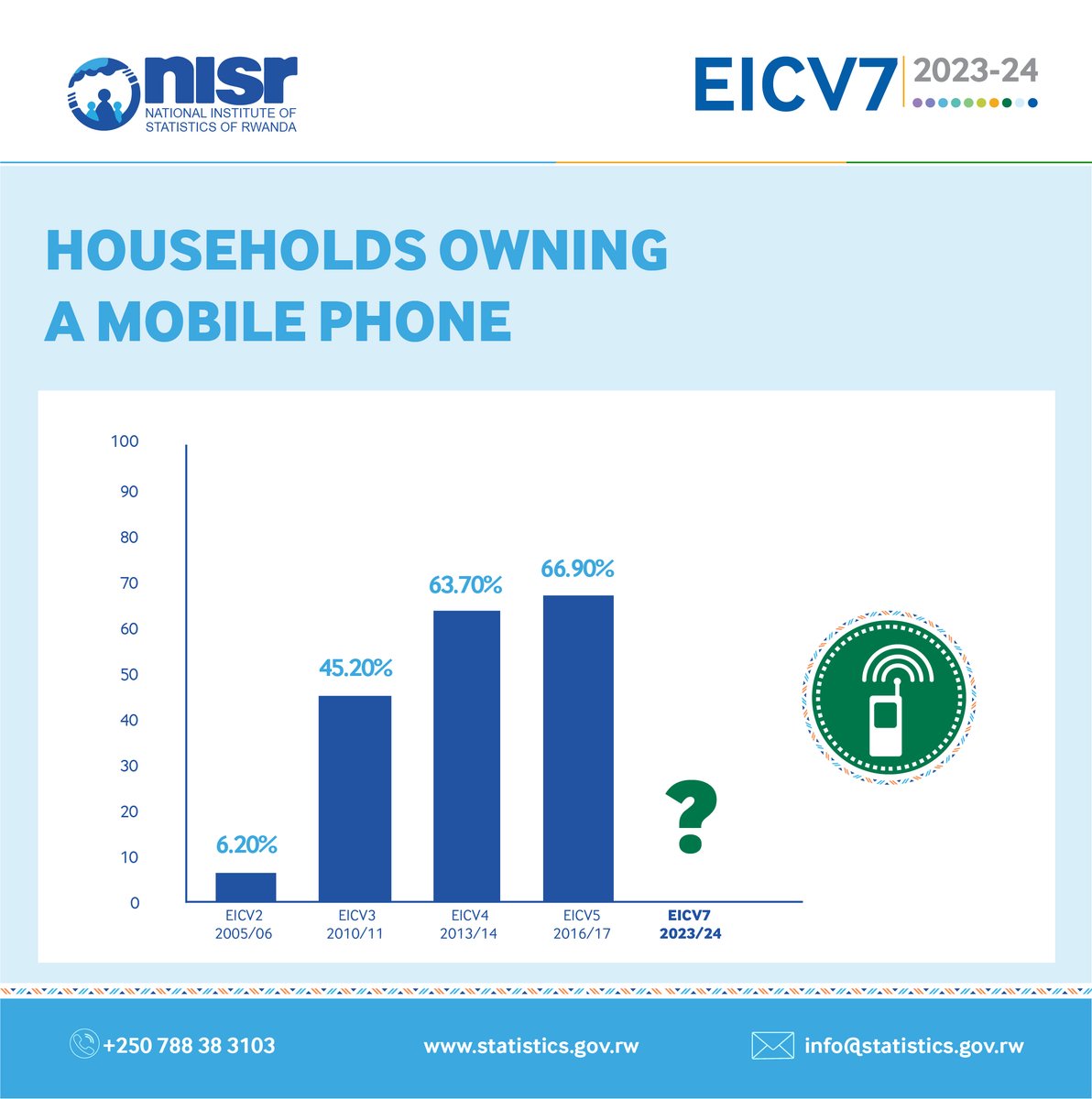
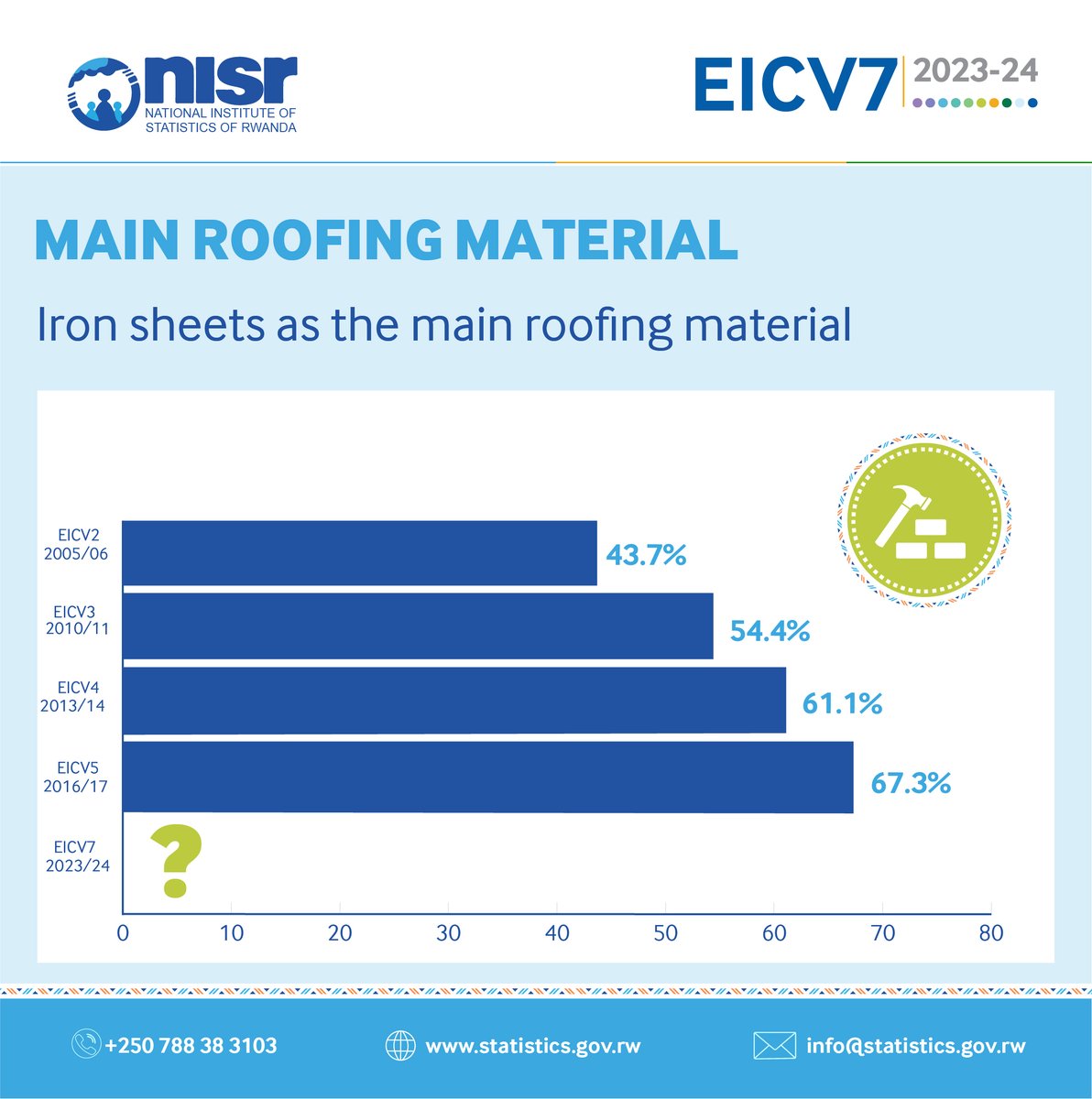
📢#ComingSoon...:
The official dissemination of EICV7, #Rwanda's key survey on household living conditions!
From poverty to education, health, infrastructure, and housing, get ready for fresh insights into national well-being.
While we count down🔄, let’s revisit some key indicators from previous EICVs, as highlighted in the posters below.
#EICV7
#RwandaStatistics
@ivanmurenzi