Hello friends!
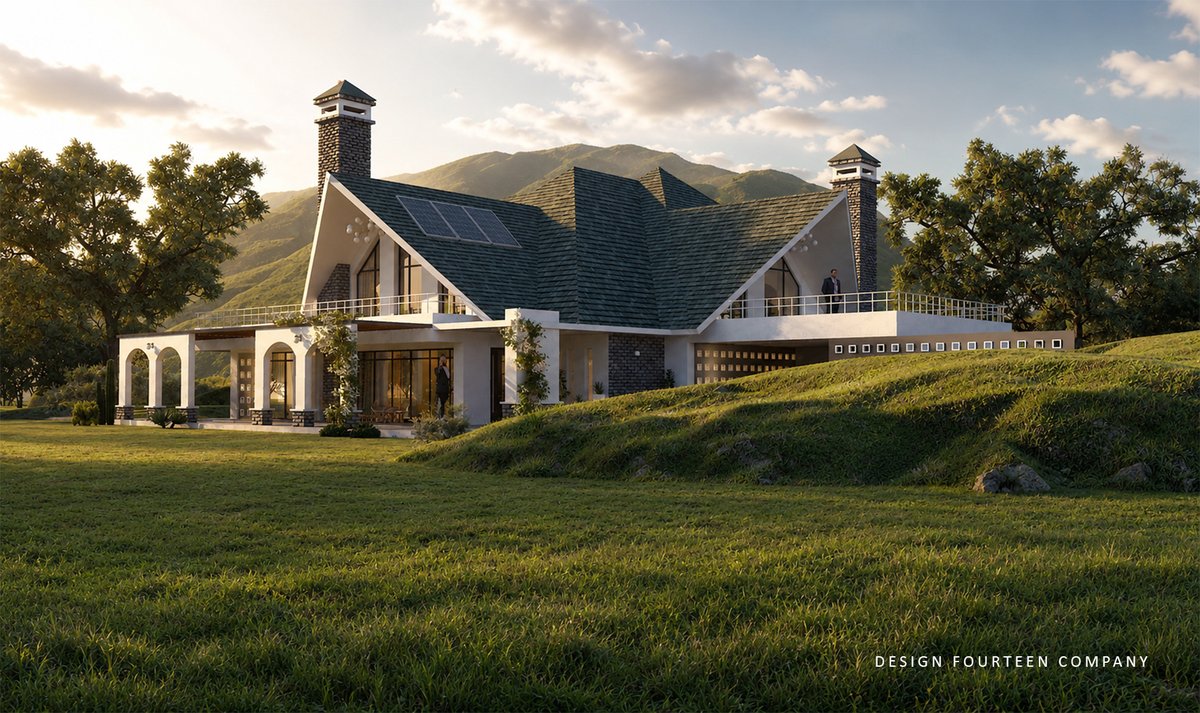
I need a small favor from you today. I’m up for a photography award and I would be incredibly grateful for your vote.
It only takes a few seconds!
Kindly click the link below and vote for for me (Vincent Chepkwony)
Thank you so much for cheering me on!
https://t.co/rmnQ4s8fJ6
Did you know Jacob was buried with Leah, not Rachel? Not the woman he loved. Not the one he cried for. Not the one he labored fourteen years to have. Leah. In Genesis 49:29–31, when Jacob was about to die, he gave a clear instruction: “Bury me… in the cave… where Abraham and Sarah are… Isaac and Rebekah… and there I buried Leah.” Pause. Rachel was his passion. Leah was his alignment. Rachel was the love story. Leah was the covenant story. Rachel had his emotions.
Leah carried the promise. Rachel was buried on the roadside (Genesis 35:19). Leah was laid in the ancestral grave of covenant the lineage of God’s dealings. And here is the mystery: Leah was the rejected one. The one Jacob didn’t choose. The one he endured, not desired. But heaven chose her. From Leah came Judah. From Judah came Jesus Christ. Let that settle in your spirit The woman rejected by a man became central to God’s redemptive plan. This is where many people miss it:
 We are all trying to be “Rachel”seen, desired, celebrated. But God builds legacy through “Leah seasons”And that is the gospel pattern: God does not build His purposes on human preference. He builds on grace and election. So if you feel overlooked… if you feel like second choice…
if life has not chosen you first— hear this clearly: God’s choice overrides man’s rejection... if you’re in your Leah season you are being written into something bigger.
Amen
YouTube Documentaries to Watch
1. Inside The Illegal Digital Arms Trade: Weapons For Profit — Witness Documentary
2. Dangerous Apps: In The Web of Data Brokers — DW Documentary
3. How Israel's Shadow War On Iran Ended In Open Conflict — Al-Jazeera
4. The Dark Story of Cadbury — Lost Grandeur
5. Putin, The Godfather: Mafia, Corruption and Absolute Power | World Documentary
6. The Drug Mule Scam: Trafficked: Underworlds With Mariana Van Zeller — Nat Geo
7. Too Rich to Live: Why are Russia's Billionaires Dying? —ENDEVR
8. The World's Most Extreme Cults — Vice
If you look at the lives of financially stable people, you will notice they often follow a handful of principles that are almost embarrassingly obvious. Yet millions struggle to practice them consistently. Why?....🧵
here's Barack Obama's entire speech commemorating the Obama Presidential Center. He reflected on his administration's successes and failures, critiqued the moral rot of contemporary America, and outlined a positive vision of the future -- all without ever mentioning Trump
More than 40 years ago, I arrived in Chicago in search of an idea. I was a young man looking for purpose, who believed deeply in America, was inspired by the Civil Rights Movement, and wanted to be a part of something larger. The America I believed in was one where everyone has opportunity, everyone is seen, everyone belongs—because that was an America that had a place for me, too.
"Kazi ya shule sio kulea tabia ya mtoto wako, kazi ya shule ni kusomesha. Hamuwezi peleka wauwaji shule, halafu wakichoma shule mnaanza kulaumu administration. Wengine watoto wao wakiwashinda kulea, wanawatuma boarding ndio wawaondokee!" Pastor Elizabeth Mokoro lectures parents over Utumishi fire tragedy and other fires
TIME IS NOT TREATED THE SAME EVERYWHERE:
1. Germany: Being late is disrespectful. Meetings start to the second. Punctuality here is not a habit. It is a moral standard.
2. Brazil: An invitation for seven means nine. Relationships matter more than schedules. Rigidity kills the atmosphere.
3. Japan: Trains run to the minute. A sixty second delay comes with a formal public apology. Time is a system. The system is everything.
4. India: Events begin when people arrive. The gathering defines the time. Presence matters more than precision.
5. Polynesian cultures: Time was tied to stars, seasons, and the ocean. Circular, not linear. The clock came later and from somewhere else.
6. United States: Time is money. Literally. Every hour is billable. Every minute is scheduled. Rest has to earn its place.
7. Spain: Lunch at three. Dinner at ten. The day bends around the person. Not the other way around.
8. Ethiopia: A different calendar entirely. Thirteen months. New Year in September. A different year than the rest of the world. Time here is a cultural choice, not a global agreement.
9. France: August belongs to rest. Emails go unanswered. Shops close. Nobody apologizes for this. Leisure is a right, not a reward.
10. Kenya: The clock starts at sunrise. Six in the morning is hour zero. Noon is hour six. Time is built around light, not an arbitrary number on a wall.
11. China: One time zone for the entire country. A landmass that should span five. In the far west the sun rises at ten in the morning. Unity was chosen over accuracy.
12.Australia: Aboriginal communities have always read time through seasons, animal movements, and the stars above. For over sixty thousand years the land itself served as the calendar. No clock was ever needed. Nature told them everything.
13. Mexico: Mañana means not right now. Urgency is often self-imposed. The present moment has its own demands and they are considered legitimate.
14. Greece: A guest arrives at any hour. You welcome them fully. The clock adjusts to the person. The person never adjusts to the clock.
15. Scandinavia: Months of darkness then months of endless light. The body follows seasons, not schedules. This is ancient. Science is only now catching up.
16. Nigeria: Start times are a suggestion. What matters is that everyone arrives, connects, and the evening becomes what it was meant to be. The experience always outranks the schedule.
17. Indonesia: Jam karet. Rubber time. Time stretches around mood, traffic, and social obligation. Rigidity is considered uncomfortable, not professional.
18. Russia: Eleven time zones. Vast winters. Long silences. Time here is treated with patience that outsiders often mistake for slowness.
19. Egypt: One of the first civilizations to invent a calendar. Yet modern Egyptian social time is deeply flexible. Hospitality always comes before the clock.
20. Congo: Community shapes the day more than any schedule. Time belongs to the people in the room, not the hands on the clock.
21. Philippines: Filipino time is a known and accepted reality. Six in the evening means seven or eight. Arriving before the host is ready is the real social mistake.
22. Vietnam: Built on endurance and long horizons. Planning here thinks in years and generations. Short deadlines feel foreign to a culture that measured time in struggles spanning decades.
23. Tanzania: Pole pole. Slowly slowly. A phrase that governs daily life. Rushing is not a virtue here. Moving with intention is.
24. Argentina: Dinner at ten. Parties at midnight. The night is its own world. Compressing it into earlier hours would make it something lesser.
25. Turkey: A meeting can become a meal can become a long evening. Nobody considers this a deviation. It is simply what time is for.
26. Iran: Its own solar calendar. New Year on the spring equinox. Time tied to nature, poetry, and a civilization so old that modern urgency feels like a passing trend.
I just saw a video of a divorced lady ranting that men who used to be in her DMs when she was still in her husband's house have all run away, and that now she's no longer married and none of them want to marry her.
😂 😂 😂 😂 😂 😂 😂 😂 😂 😂 😂 😂 😂
End.
Kenya’s imported cars face total taxes of about 70%–100% of their value, pushing prices higher.
Here is the explanation of how the taxes are structured.
Save the thread below: