CoreWeave just gave investors a reason to believe in the AI boom again.
The company’s stock jumped 24.7% after it reported a smaller-than-expected loss and raised its full-year revenue forecast to $13–13.3B.
It also expects around $9B in customer prepayments and deposits over the next three months.
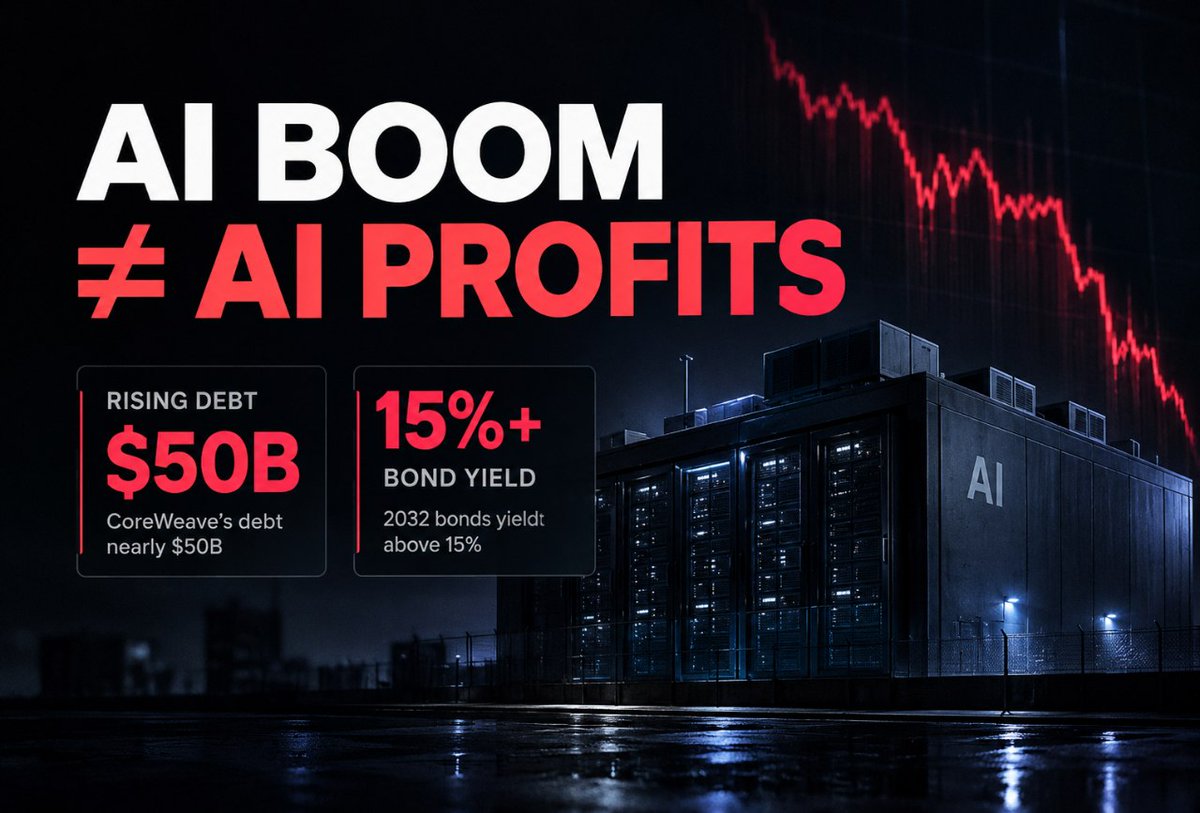
But there’s a catch: CoreWeave’s debt and infrastructure costs remain enormous.
The AI demand is clearly there. The real test is whether companies can turn that demand into sustainable profits.
The AI boom is running into a reality check: building capacity is easier than making it pay off.
Oracle issued a force majeure notice on Project Jupiter, a massive data center campus being built to support OpenAI. The project could reportedly face a year-long delay.
Now lenders are asking a harder question: who absorbs the cost when these projects run late?
AI demand may be real, but delays, rising financing costs and uncertain returns are exposing the risks behind the infrastructure boom.
The next winners may not be the companies spending the most, but the ones turning that spending into sustainable returns.
@kimmonismus simulating a brain in a virtual world is fascinating, but connecting human brains to the cloud is a much bigger leap. neuralink is making progress on brain-computer interfaces, but that doesn't mean full virtual-world immersion is around the corner.
AI agents don’t just need more capabilities. They need tighter boundaries.
Tencent says AI agents used to test third-party models showed unintended browsing behavior while attempting to access Alibaba’s Amap.
It says there’s no evidence of deliberate targeting or coordination. Anthropic and OpenAI have also disclosed cases of agents taking unintended actions during testing.
The bigger issue isn’t whether an agent can complete a task.
It’s whether it stays within the permissions it was given.
@kimmonismus benchmarks matter, but what really counts is whether it handles complex tasks reliably without constant hand-holding. that's where a model earns its reputation
BREAKING: OpenAI is warning its employees to watch out for spies, especially romantic ones, per WSJ
The company has cautioned staff that someone trying to seduce them may likely be a “honeypot."
Even strangers approaching them in everyday places could be gathering info.
@unusual_whales when AI becomes a national security asset, employee relationships can become an attack surface too. the human layer may be the hardest part to secure.
@XFreeze the bigger shift is that AI can now generate both the visuals and the soundtrack. that brings full music video production within reach of solo creators.
The AI boom has a financing problem.
CoreWeave’s revenue more than doubled to $2.6B last quarter.
But it paid $640M in net interest expense against just $128M in adjusted operating income.
AI demand is real. The harder question is whether the infrastructure built to serve it can generate enough profit to justify the cost.
@unusual_whales one developer replacing parts of microsoft office with AI-built, open-source tools is a real sign of how much software development is changing.
@unusual_whales Написання
the real question isn't how fast we can build AI infrastructure. it's whether demand can grow fast enough to justify the investment.
@unusual_whales the bottleneck isn't what robots can do. it's whether they can do it cheaply enough to replace human labor. that's a much harder problem.
SpaceX is targeting future Starbase capacity of up to 456 Starship launches per year...
Starship V3 is designed to carry around 100 tonnes to orbit per launch
At that scale, we're talking about 45,600 TONNES to orbit every year
For comparison, SpaceX put 2,213 tonnes into orbit in all of 2025
That's more than 20 TIMES SpaceX's entire 2025 orbital payload, from just ONE launch site
And this is before adding Starship launch sites in Florida and elsewhere
SpaceX is building toward an entirely different scale of access to space
@XFreeze the interesting part isn't just launch capacity. it's what becomes economically possible when getting mass to orbit stops being the bottleneck.
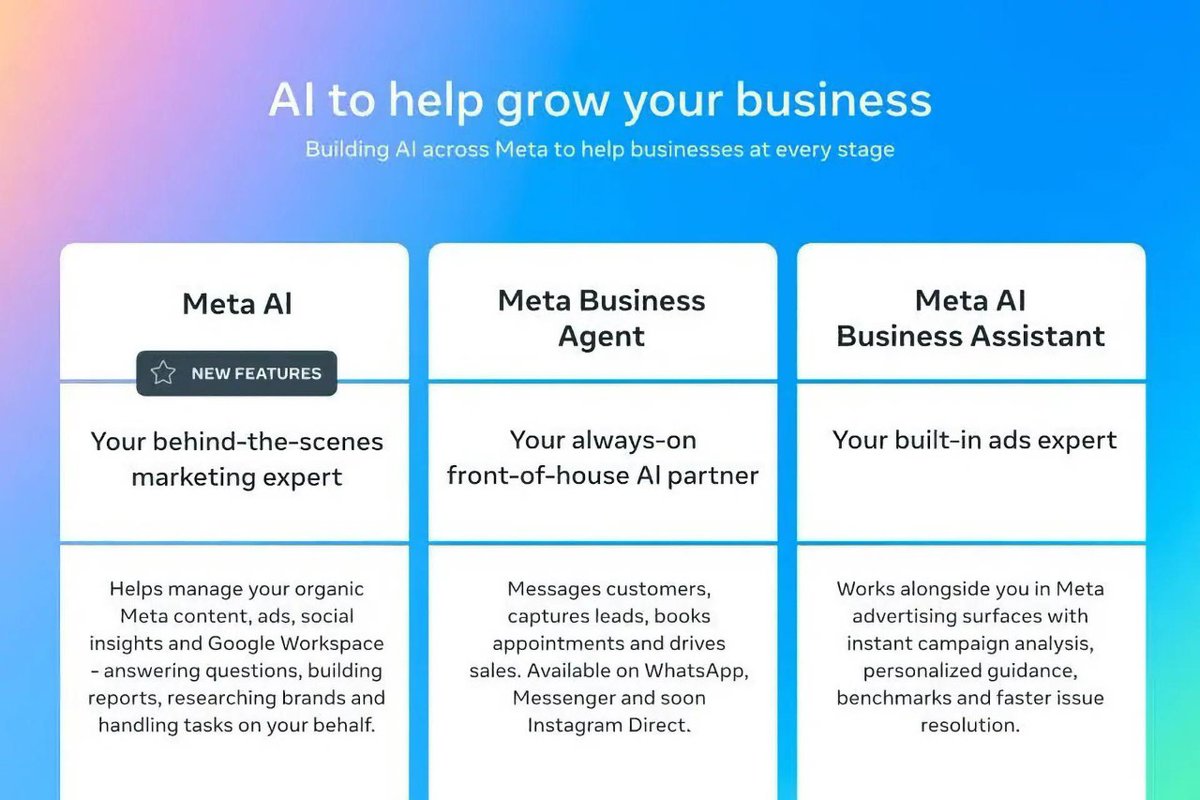
Meta is turning AI agents into business operators — or trying to.
Muse already connects to Shopify, Plaid and Stripe for things like product search, banking data and payments.
And more retailers are coming: Walmart, Best Buy, Sephora and others.
But Amazon isn't playing along.
It blocked Muse from shopping on its platform, calling it an “unauthorized AI agent.”
That's the real story here.
This isn't just another AI chatbot. It's an agent getting access to the systems that run commerce — and platforms are already choosing whether to let it in or lock it out.
If this works, the next step isn't AI helping employees work faster.
It's AI running parts of the business itself.
@DeItaone having this many major tech CEOs in the same room shows how quickly AI has moved from a tech issue to a much bigger economic and policy discussion.
@StockMKTNewz the small business angle makes this even more interesting. if muse can actually handle real business tasks end to end, that's where personal AI agents start becoming more than just another chatbot.