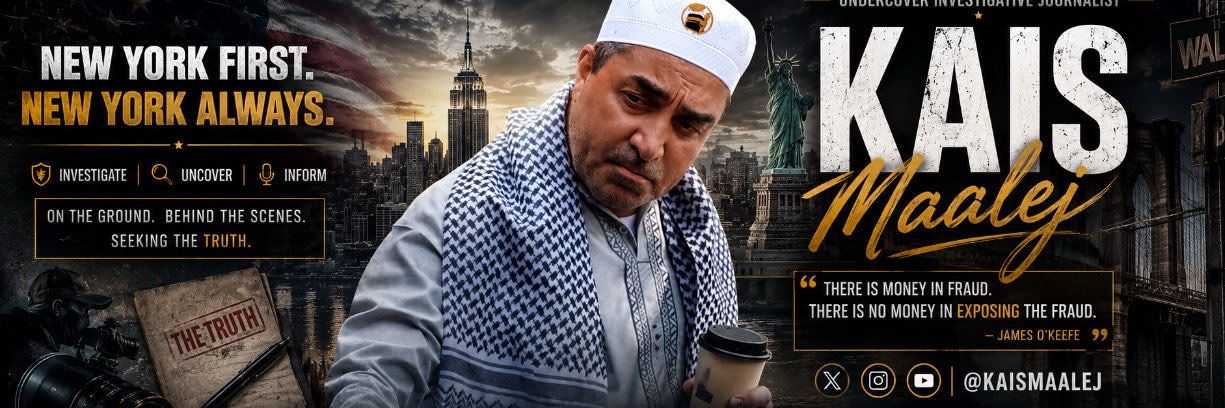
🇺🇸🗽 New Yorker. U.S. Citizen.
🕵️ Undercover Investigative Journalist
🏛️ Eyeing New York’s U.S. Senate seat in 2028 🫡🇺🇸
🗽 NEW YORK FIRST-NEW YORK ALWAYS
In Minnesota: “NO ID. YOU ARE THE ID. I AM THE ID. 🪪🗳️🫡🇺🇸
My interview on LindellTV @RealLindellTV with Alison Steinberg @alisonintheknow, @realMikeLindell discussing why Minnesota’s voting system needs to be fixed ASAP. 🇺🇸🗳️🎥
Through undercover investigative journalism, O’Keefe Media Group (OMG) @OKeefeMedia has raised serious questions for Minnesotans and Americans about Minnesota’s election safeguards—particularly the use of vouching and circumstances in which voters may register without presenting identification or documentary proof of citizenship.
These rules deserve public scrutiny. Any vulnerability that could potentially open the door to fraud or abuse should be examined and addressed to protect confidence in American democracy.
I believe Minnesota Secretary of State Steve Simon @MNSteveSimon should focus on answering these concerns, strengthening safeguards where necessary, and providing transparency to the public—not threatening journalists who are investigating and reporting on matters of public concern.
The First Amendment protects freedom of speech and freedom of the press. Journalists must be able to ask difficult questions, investigate government systems, and report their findings to the American people. 🇺🇸
FIX THE SYSTEM. ADDRESS THE CONCERNS. DON’T ATTACK THE MESSENGERS.
🔎🇺🇸 THE 2002 ELON MUSK TIMELINE HAS ME ASKING QUESTIONS.
Elon Musk @elonmusk reportedly became a naturalized U.S. citizen in 2002.
That same year, eBay announced its $1.5 BILLION acquisition of PayPal, where Musk was a major shareholder.
But here’s the question I want answered:
When exactly did Musk become a lawful permanent resident (green-card holder), and under what immigration category?
Naturalization generally requires 5 years as a lawful permanent resident under 8 U.S.C. § 1427.
I’m seeking the releasable records from @USCIS through FOIA.
No accusations. No conclusions.
Just dates. Documents. Facts. 🔎📄🇺🇸
🇺🇸 FOIA REQUEST TO BE FILED.
I’m seeking records from @USCIS sufficient to establish the publicly releasable facts surrounding Elon Musk’s U.S. naturalization in 2002—including the date, place, prior immigration status, and statutory basis for naturalization.
This isn’t about private information. It’s about transparency and understanding how our immigration and naturalization laws were administered.
If records are exempt, redact what the law requires—but release every reasonably segregable, non-exempt portion.
Let’s see what the records show. 🔎🇺🇸
@elonmusk
Seriously asking: How exactly did Elon Musk @elonmusk become a naturalized U.S. citizen? 🇺🇸🤔
He reportedly became a U.S. citizen in 2002, but why are the underlying immigration and naturalization records not publicly available?
Are naturalization records automatically public? If not, what information is legally protected from disclosure—and what can actually be obtained through FOIA?
These are legitimate questions. Where is the publicly verifiable record? 🔎🇺🇸
⚖️ Mark S. Zaid @MarkSZaidEsq — you’re admitted to practice in New York, Connecticut, Washington, D.C., and Maryland, as well as several federal courts. As an attorney, you know that the Rules of Professional Conduct apply to lawyers’ public statements and evidence-gathering activities.
You’re publicly asking for “inside info” about James O’Keefe and his undercover operatives while simultaneously referencing lawsuits, depositions, and authorized discovery.
In my view, that solicitation raises serious questions about potential professional-responsibility issues, including:
⚖️ Rule 3.6 — Trial Publicity: restrictions on certain extrajudicial statements concerning pending proceedings.
⚖️ Rule 4.2 — Communication With Represented Persons: restrictions on communicating about a matter with persons known to be represented by counsel.
⚖️ Rule 4.4 — Respect for Rights of Third Persons: restrictions on evidence-gathering methods that violate the legal rights of others.
⚖️ Rule 8.4 — Misconduct: prohibitions involving dishonesty, fraud, deceit, misrepresentation, and certain conduct prejudicial to the administration of justice.
I believe your public solicitation for “inside info” could implicate these rules depending on whom you are soliciting, what information you seek, and how that information is obtained. If your post or any resulting conduct violates your obligations under the applicable D.C. or New York Rules of Professional Conduct, delete the post.
James O’Keefe @JamesOKeefeIII is a journalist. He has the right to investigate and publish information protected by law, defend himself in court, and receive the same constitutional and legal protections afforded to other journalists and litigants. The First Amendment provides powerful protections for freedom of speech and of the press, subject to applicable law.
🇺🇸⚖️ Let the evidence and the law determine the merits in a courtroom—not intimidation on X.
⚖️ Mark S. Zaid @MarkSZaidEsq — you’re admitted to practice in New York, Connecticut, Washington, D.C., and Maryland, as well as several federal courts. As an attorney, you know that the Rules of Professional Conduct apply to lawyers’ public statements and evidence-gathering activities.
You’re publicly asking for “inside info” about James O’Keefe and his undercover operatives while simultaneously referencing lawsuits, depositions, and authorized discovery.
In my view, that solicitation raises serious questions about potential professional-responsibility issues, including:
⚖️ Rule 3.6 — Trial Publicity: restrictions on certain extrajudicial statements concerning pending proceedings.
⚖️ Rule 4.2 — Communication With Represented Persons: restrictions on communicating about a matter with persons known to be represented by counsel.
⚖️ Rule 4.4 — Respect for Rights of Third Persons: restrictions on evidence-gathering methods that violate the legal rights of others.
⚖️ Rule 8.4 — Misconduct: prohibitions involving dishonesty, fraud, deceit, misrepresentation, and certain conduct prejudicial to the administration of justice.
I believe your public solicitation for “inside info” could implicate these rules depending on whom you are soliciting, what information you seek, and how that information is obtained. If your post or any resulting conduct violates your obligations under the applicable D.C. or New York Rules of Professional Conduct, delete the post.
James O’Keefe @JamesOKeefeIII is a journalist. He has the right to investigate and publish information protected by law, defend himself in court, and receive the same constitutional and legal protections afforded to other journalists and litigants. The First Amendment provides powerful protections for freedom of speech and of the press, subject to applicable law.
🇺🇸⚖️ Let the evidence and the law determine the merits in a courtroom—not intimidation on X.
@JamesOKeefeIII@MarkSZaidEsq He’s probably not only going to lose his lawsuit—I believe he may also lose his license and his mind over what appears to be a serious breach of attorney ethics.
⚖️ Mark S. Zaid @MarkSZaidEsq — you’re admitted to practice in New York, Connecticut, Washington, D.C., and Maryland, as well as several federal courts. As an attorney, you know that the Rules of Professional Conduct apply to lawyers’ public statements and evidence-gathering activities.
You’re publicly asking for “inside info” about James O’Keefe and his undercover operatives while simultaneously referencing lawsuits, depositions, and authorized discovery.
In my view, that solicitation raises serious questions about potential professional-responsibility issues, including:
⚖️ Rule 3.6 — Trial Publicity: restrictions on certain extrajudicial statements concerning pending proceedings.
⚖️ Rule 4.2 — Communication With Represented Persons: restrictions on communicating about a matter with persons known to be represented by counsel.
⚖️ Rule 4.4 — Respect for Rights of Third Persons: restrictions on evidence-gathering methods that violate the legal rights of others.
⚖️ Rule 8.4 — Misconduct: prohibitions involving dishonesty, fraud, deceit, misrepresentation, and certain conduct prejudicial to the administration of justice.
I believe your public solicitation for “inside info” could implicate these rules depending on whom you are soliciting, what information you seek, and how that information is obtained. If your post or any resulting conduct violates your obligations under the applicable D.C. or New York Rules of Professional Conduct, delete the post.
James O’Keefe @JamesOKeefeIII is a journalist. He has the right to investigate and publish information protected by law, defend himself in court, and receive the same constitutional and legal protections afforded to other journalists and litigants. The First Amendment provides powerful protections for freedom of speech and of the press, subject to applicable law.
🇺🇸⚖️ Let the evidence and the law determine the merits in a courtroom—not intimidation on X.
@JamesOKeefeIII Congratulations to James O’Keefe @JamesOKeefeIII on this important victory for undercover investigative journalism and the First Amendment. I believe this case could help shape future protections for journalists who expose the truth. 🇺🇸🎥