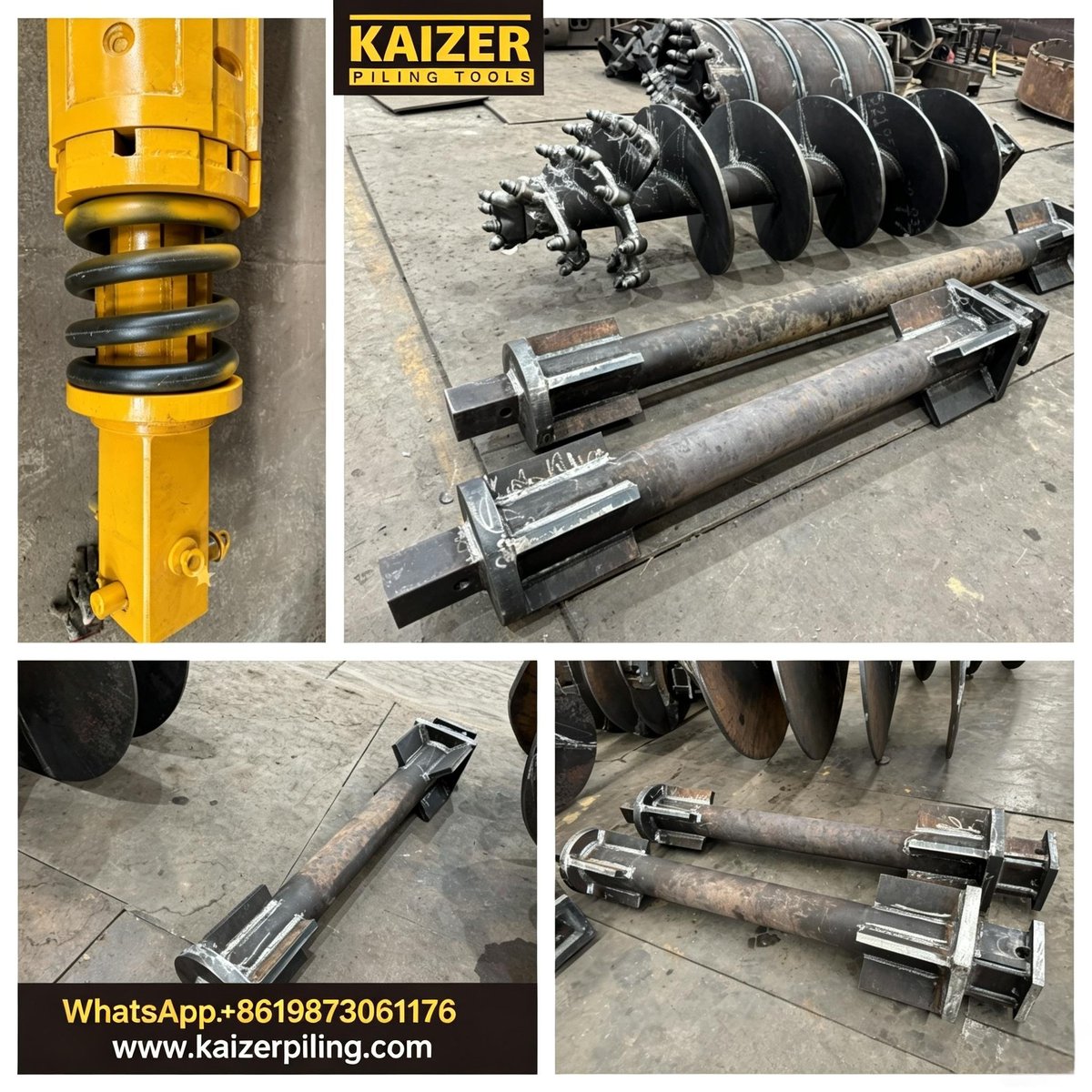
The reliability of a rotary drilling rig heavily depends on its core components. The Soilmec friction kelly bar of the rotary drilling rig is engineered for durability and efficient power transmission.
#SoilmecDrillingKellyBar#RotaryDrillingRig#FrictionTypeKellyBar
Interlocking Kelly Bar for Building projects is selected for foundation work where borehole alignment affects the structure above, and the interlocking mechanism keeps the tool centered through the telescoping range.
#InterlockingKellyBarForBuilding#FoundationWork
The interlocking Kelly bar for the SOILMEC drilling rig is produced to SOILMEC section diameters and drive key geometry, so the bar telescopes smoothly and locks positively across the full extension range.
#InterlockingKellyBarForSoilmec#SoilmecDrillingRig#SectionDiameters
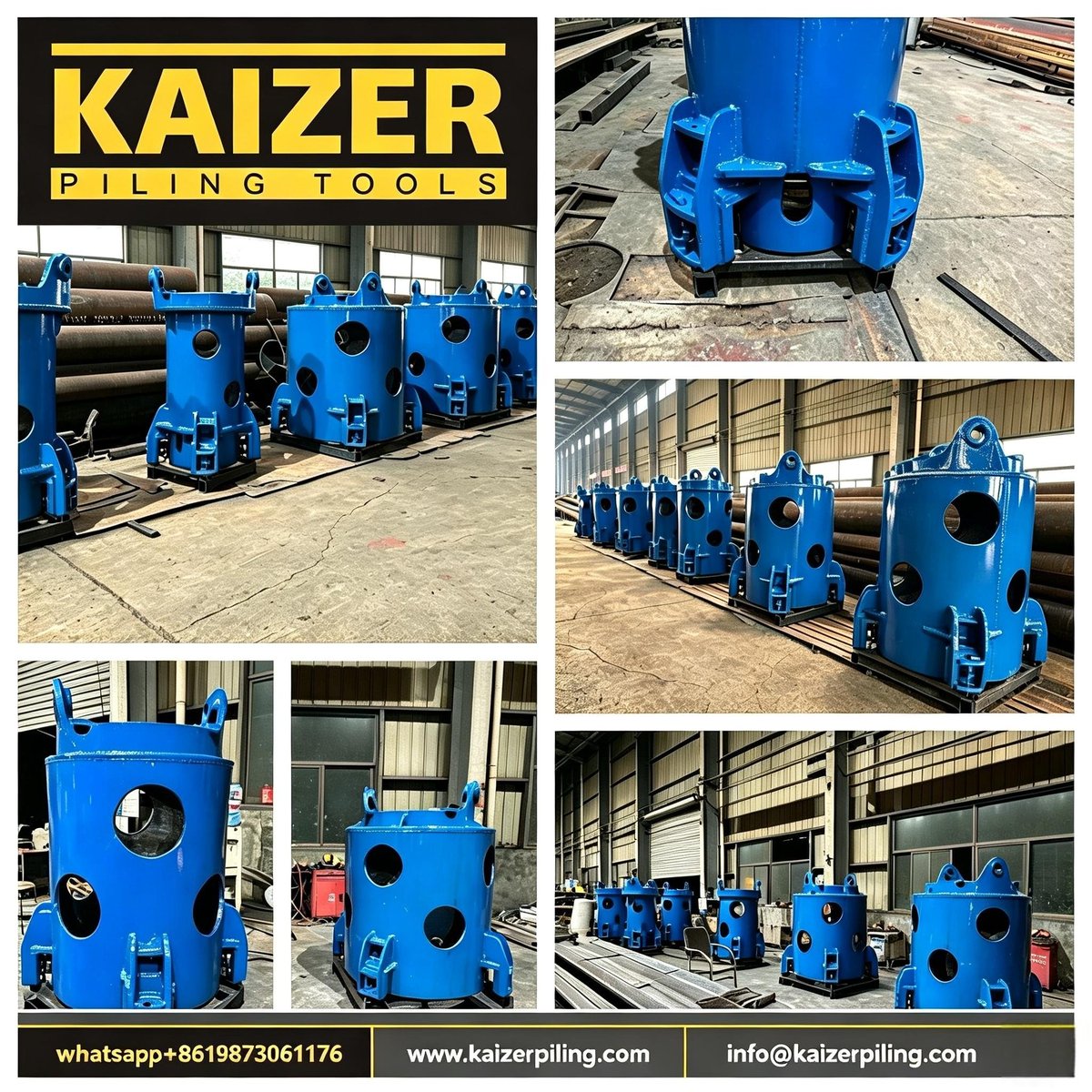
Casing with drive adapters is supplied as a matched assembly, with the adapter thread confirmed against the casing joint and the drive keys confirmed against the rig, so the connection arrives ready to install.
#CasingWithDriveAdapters#MatchedAssembly#ThreadMatching#DriveKeys
A double-cut conical auger combines a tapered profile with two cutting edges, so the cone centers the tool on entry while the double cut action spreads cutting force across more teeth; this arrangement suits drilled shafts where alignment and penetration both matter.
#ConicalAuge
Interlocking Kelly Bar Bauer BG-36 configurations are not interchangeable with Soilmec, Mait, or Casagrande equivalents even when outer diameters appear similar, because key profiles, kelly box dimensions, and section lengths vary by manufacturer.
#InterlockingKellyBarBauer#BG36
Foundation construction drilling tool rock bucket selection depends on the dominant ground type rather than the project depth, since bucket diameter and tooth configuration follow the formation being drilled.
#DrillingTools#RockBucket#ToolSelection#RigCompatibility
IMT rotary drilling interlocking kelly bar provides positive torque transfer in rotary drilling operations.
For the IMT rotary drilling interlocking kelly bar, the interlocking mechanism engages at multiple points along the bar.
#IMTRotaryDrilling#InterlockingKellyBar
concrete tremie pipe must match the concrete pipe diameter and connection type used on site.
Concrete tremie pipes for foundation construction should have smooth internal bores to minimize flow resistance.
#ConcretePipe#TremieCompatibility#AggregateClearance#FlowEfficiency
A conical rock drilling auger bucket provides a tapered bottom that centralizes the bucket during extraction, minimizing contact with the borehole wall. For a conical/flat rock drilling auger bucket, the base shape can be selected based on the expected rock bedding orientation.
foundation auger is used in a range of foundation applications, including drilled shafts, pile caps, and anchorage systems. Foundation augers provide the penetration and spoil removal required for deep foundation work.
#FoundationAuger#DrilledShafts#PileCaps
Rotary casing tube is available in various diameters and wall thicknesses to suit different project requirements. Rotary casing pipe provides a balance between weight and structural integrity for foundation applications.
#CasingConfiguration#DiameterRange#WallThickness
steel rock drilling bucket is manufactured from high-strength steel to withstand the impact and abrasion encountered in rock drilling. The bucket shell, cutting base, and wear plates are fabricated from wear-resistant steel grades.
#SteelConstruction#RockDrillingBucket
XCMG rig interlocking kelly bar is available in configurations matching different XCMG rig models and torque requirements. Section count and outer diameter are selected based on the rig's mast height and expected drilling depth.
#KellyBarConfiguration#DrillingDepth