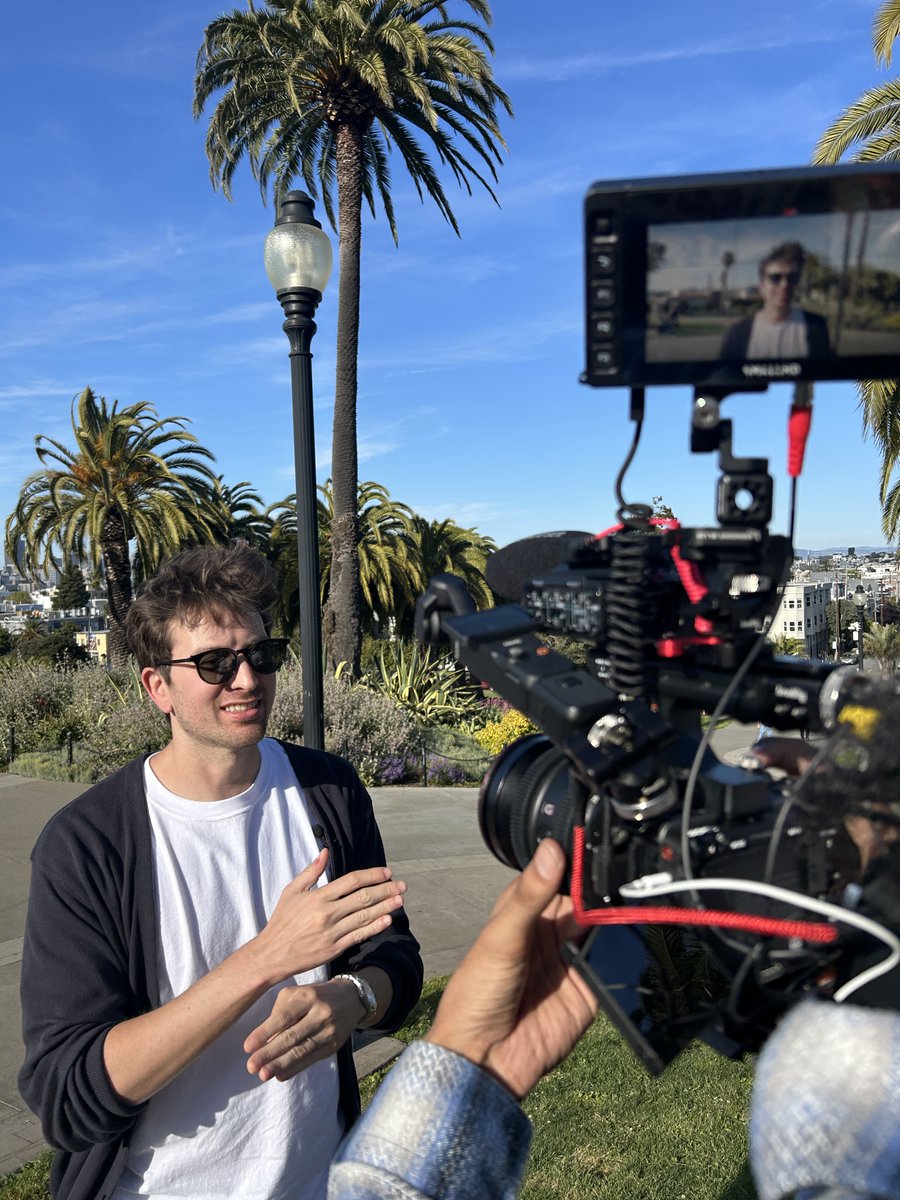
I just got back from SF and I FEEL INSPIRED.
I spent 5 days with frontier AI model teams, AI startup founders, and 3 billionaires.
My takeaways:
1. I had lunch with 3 billionaires. All of them are buying SaaS companies and rebuilding them agent-first. They were deeply inspired by Bending Spoons and Ryan Cohen's eBay deal. Buy the company, cut the headcount, rebuild the tech, add agents, add features, make more valuable experience, raise prices.
2. The frontier model companies are hungry for usage data from the field. They can see API calls and token counts. They can't see the actual workflows. If you're deep in a niche using these models in ways the model companies haven't seen, that understanding is incredibly valuable. Usage intelligence is the new alpha.
3. Consumer AI is massively underbuilt. Every billboard in SF is either B2B inference infrastructure or vertical agent companies. The entire city is optimized for enterprise. Meanwhile you have companies like Cal AI doing $50M ARR in 18 months as a consumer app. I met with a cool few teams doing consumer AI (@paulscherer / @ekuyda)
4. MCP came up in literally every conversation. The companies exposing their product as MCP endpoints are getting pulled into deals they never pitched for. The ones that aren't are becoming invisible to agents. This is the new SEO. If agents can't find you, you don't exist. Building products for agents is the new zeitgeist in general.
5. Not uncommon for hot seed rounds to be $25-50 million valuations. I saw a Series A at $450 million
6. If I had a dollar every time someone mentioned "forward-deployed engineer" this trip I could have funded a seed round. It's the hottest role in SF right now. The person who sits between the agent and the customer, making sure everything actually works.
7. The mood around open source shifted. A year ago it felt like open source was chasing the frontier models. Now founders are telling me Gemma and DeepSeek are good enough for 80% of what they need at a fraction of the cost. The "which model do you use" conversation is being replaced by "which model for which task." Model loyalty kinda feels dead.
8. Voice agents came up more than I expected. Multiple founders told me voice is the interface for the next billion users. The billion people who will never type a prompt will absolutely talk to one.
9. The Obsidian community in SF is weirdly intense. Multiple founders showed me their vaults unprompted. Like showing someone your home gym. It's a flex now. The quality of your knowledge base (second brain?) is becoming a status symbol among builders.
10. Maybe it was just the people I met but the age of the founders is shifting. I met more founders over 40 this trip than any trip before and more founders under age 21 than ever before. Founders getting older and younger at the same time.
11. I spoke to a lot of fast-growing startups, VCs and frontier models who are hiring content creators right now.
12. The restaurant scene in SF is actually better than it's been in years. Founders are going out more. Alcohol is out, not surprisingly.
13. SF doesn't feel like the only place anymore. We all have access to the same frontier models. We all read the same X feed. A founder in NYC or Lagos is calling the same APIs as a founder in SoMa. So in the past it felt like SF was always lightyears ahead, doesn't feel that way anymore. It's okay not to live in SF and have BIG DREAMS.
14. The coworking spaces in SF are half empty but the coffee shops are packed. People want to be around people. I had a few startup ideas here....
15. Walking around the Mission I noticed something: the street-level businesses, the taquerias, the barbershops, the laundromats, none of them use any AI at all.
16. I heard the phrase "agent debt" for the first time. Like technical debt but for agents. When you hack together an agent workflow fast and never clean it up, the system prompts conflict, the memory gets polluted, the tools overlap. 6 months later the agent is doing weird things and nobody knows why lol.
17. Met a few people who carry two phones now. One for personal. One that's basically an agent terminal running Telegram or iMessage connections to their agent fleet.
It's always amazing to get that dose of inspiration in SF. I FEEL INSPIRED.
But I'm so happy to be back home, locked in and building.
We're 12-18 months into a shift that will take 15 years to play out. The urgency in every conversation was real.
What an incredible time to be building.
Official launch is Monday.
Been quietly letting early access users kick the tires. The feedback has been really useful.
If you've been on the fence, now's a good time to get in before things get busy.
If you're an agency managing support for clients, Dispatch Tickets might make sense for you.
One dashboard. Separate inboxes per brand. Custom email domains. No separate subscriptions.
It's the setup I wanted for 16 years and finally built.
Early access is open for Dispatch Tickets.
What it is: API-first ticketing with per-ticket pricing. Multi-brand by default.
What I'm looking for: People who actually run support for multiple brands and will give honest feedback.
100 spots. Link in bio.
Opening early access for Dispatch Tickets soon.
If you run multiple brands and you're tired of the per-seat tax, I'd love to get your feedback before the official launch.
DM me or drop a comment if you want in early.
Been running Dispatch Tickets on our own brands for a few months now.
10+ brands. Thousands of tickets. Zero per-seat fees.
Feels good to actually use the thing before asking anyone else to.
One decision I made early with Dispatch Tickets: no feature-gating between plans.
Every plan gets everything. You just pay for volume.
Feels obvious but apparently it's not how most helpdesks work.
After years of either paying too much for bloated helpdesks or building custom ticketing from scratch, I'm finally building the thing I actually want.
Ticketing as infrastructure. API-first. Per-ticket pricing instead of per-seat.
Working name: Dispatch Tickets.
16 years running an ecommerce agency has mass-produced opinions I didn't ask for.
Most of them are about tooling that doesn't work the way real businesses need it to.
Genuine question for anyone running support across multiple brands:
Do you use one tool with workarounds, separate tools for each brand, or did you just build something custom?
Curious what's actually working for people.
The math on per-seat helpdesk pricing has never made sense to me.
Hire 5 more agents for the holiday rush? Bill goes up.
Let 3 go in January? Still paying for the seats.
Volume didn't change. Just headcount.
Running support for multiple brands is one of those problems that sounds simple until you actually do it.
16 years in, I still don't love any of the solutions.