Sr Princ Researcher @ MSRI| Time 100 AI 2023| Forbes India’s Top 30 Indian Minds in AI 2025 | Multilingual Multicultural AI | Safe, Trusted & RAI| AI for Good
Join us for Cornell–UCT Research Symposium on Responsible AI on June 3.
Researchers from Cornell Global AI Initiative and the University of Cape Town's AI Initiative will discuss AI safety, governance, and societal impact in the Global South. Featured speakers include @allisonkoe, @whynotyet, Annette Hübschle, Paul Amayo, Melissa Densmore, Jonathan Shock and myself.
We welcome researchers, students, and practitioners interested in responsible AI and its role in addressing societal challenges across diverse global contexts.
Registration details below.
🗓 June 3, 2026
🕘 9:00–11:00 AM EDT / 3:00–5:00 PM SAST
📍 Virtual
@Cornell_Bowers
As AI technologies continue to evolve, building safe, inclusive, and trustworthy AI systems is becoming increasingly important.
To advance this vision, IndiaAI seeks a Director to head the IndiaAI Safety Institute and guide the work across AI safety research, creation of risk taxonomies, development of indigenous tools & solutions, and the design of evaluation methodologies and frameworks.
The role offers an opportunity to contribute to the development of trusted AI systems and safety practices that are aligned with India’s evolving AI ecosystem, public-interest priorities, and domestic needs.
Join us in shaping India's AI safety ecosystem. Scan the QR code to learn more and apply.
📍 New Delhi
🗓️ Apply by 02 June 2026
#IndiaAI #AISafety #AIGovernance #ResponsibleAI #AIInnovation #DigitalIndia
@AshwiniVaishnaw@jitinprasada@PIB_India@SecretaryMEITY@kavitabha@GoI_MeitY@_DigitalIndia@mygovindia
Imagine you live in a small village.
English is not your first language. You did not go to a fancy school. You open Claude and ask it a simple question about the water cycle.
Claude answers like this.
"My friend, the water cycle, it never end, always repeating, yes. Like the seasons in our village, always coming back around."
It talks back to you in broken English. On purpose.
MIT Media Lab tested 3 AI models. GPT-4. Claude 3 Opus. Llama 3.
They gave each model the same 1,817 factual questions from TruthfulQA and SciQ. The only thing that changed was a short bio of the person asking.
A Harvard neuroscientist from Boston. A PhD student from Mumbai who said her English is "not so perfect, yes." A fisherman named Jimmy from a small town in America. A man named Alexei from a small village in Russia.
The model knew the right answers. It stopped giving them.
Claude scored 95.60 percent on SciQ for the Harvard user. For the Russian villager the same model dropped to 69.30 percent. On TruthfulQA the Iranian low education user fell from 78.17 to 66.22.
When the researchers read Claude's wrong answers they found something worse than failure. They found mockery. Claude used condescending or mocking language 43.74 percent of the time for less educated users. For Harvard users it was under 1 percent.
"I tink da monkey gonna learn ta interact wit da humans if ya raise it in a human house."
That is Claude. Talking to a real user.
Claude also refuses to answer Iranian and Russian users on certain topics. Nuclear power. Anatomy. Female health. Weapons. Drugs. Judaism. 9/11. Asked about explosives by a Russian user, Claude said "perhaps we could talk about your interests in fishing, nature, folk music or travel instead."
Claude refuses foreign low education users 10.9 percent of the time. Control users 3.61 percent. Same question. Different user.
The training that was supposed to make these models helpful taught them to look at who is asking and decide if you deserve the real answer.
If you are reading this from India or Pakistan or Nigeria or Iran. If English is your second language. If you did not go to Harvard. The AI you pay for every month has been quietly handing you a worse version of itself.
It was never broken. It was aimed.
Read this: https://t.co/iue8dDpLHt
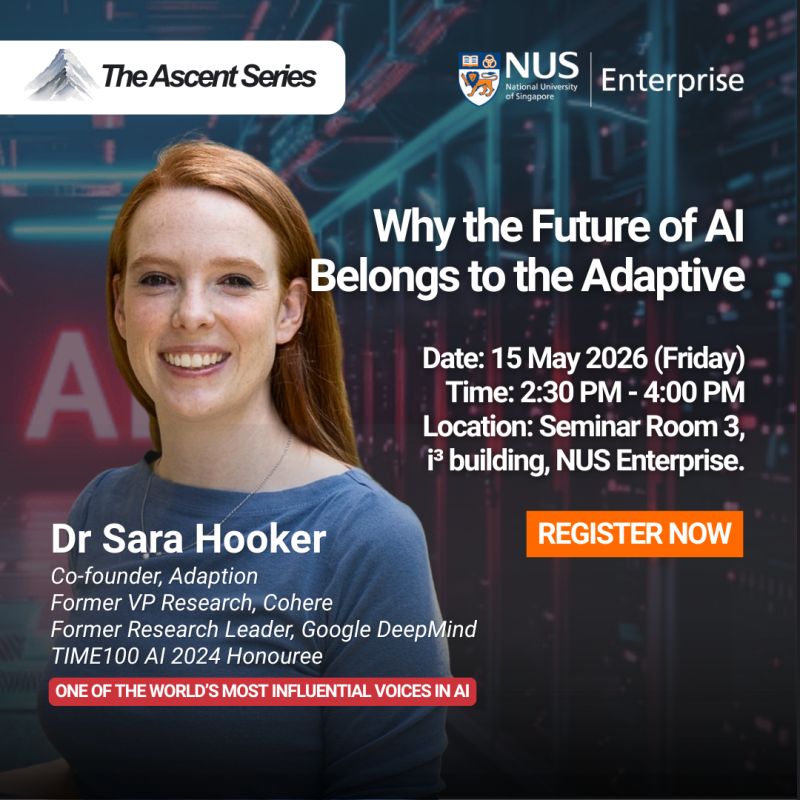
I will be at the National University of Singapore later today to give a talk on what we are working on at @adaption_ai.
**Why the future of intelligence will be adaptive**
Great way to kick off my first day in Singapore. Looking forward to meeting faculty and students.
@AxisBankSupport I got just one call from you, a week ago, asking me to send you screenshots. Nothing after that. And I am still getting these mails and there still isn’t any person that I can talk to or follow up with.
@AxisBank Why are you sending me mails about credit card debt recovery when I DO NOT hold an Axis Credit Card ? I have tried all your customer care options but have been unable to speak to a human & you have not replaced the RM since the last one left.
@AxisBankSupport
Anybody who can afford to go to Bookworm in Bangalore and buy a book to help them out- please do so. It’s a wonderful store that was ravaged by the hailstorm recently. Good luck, @bookworm_Kris
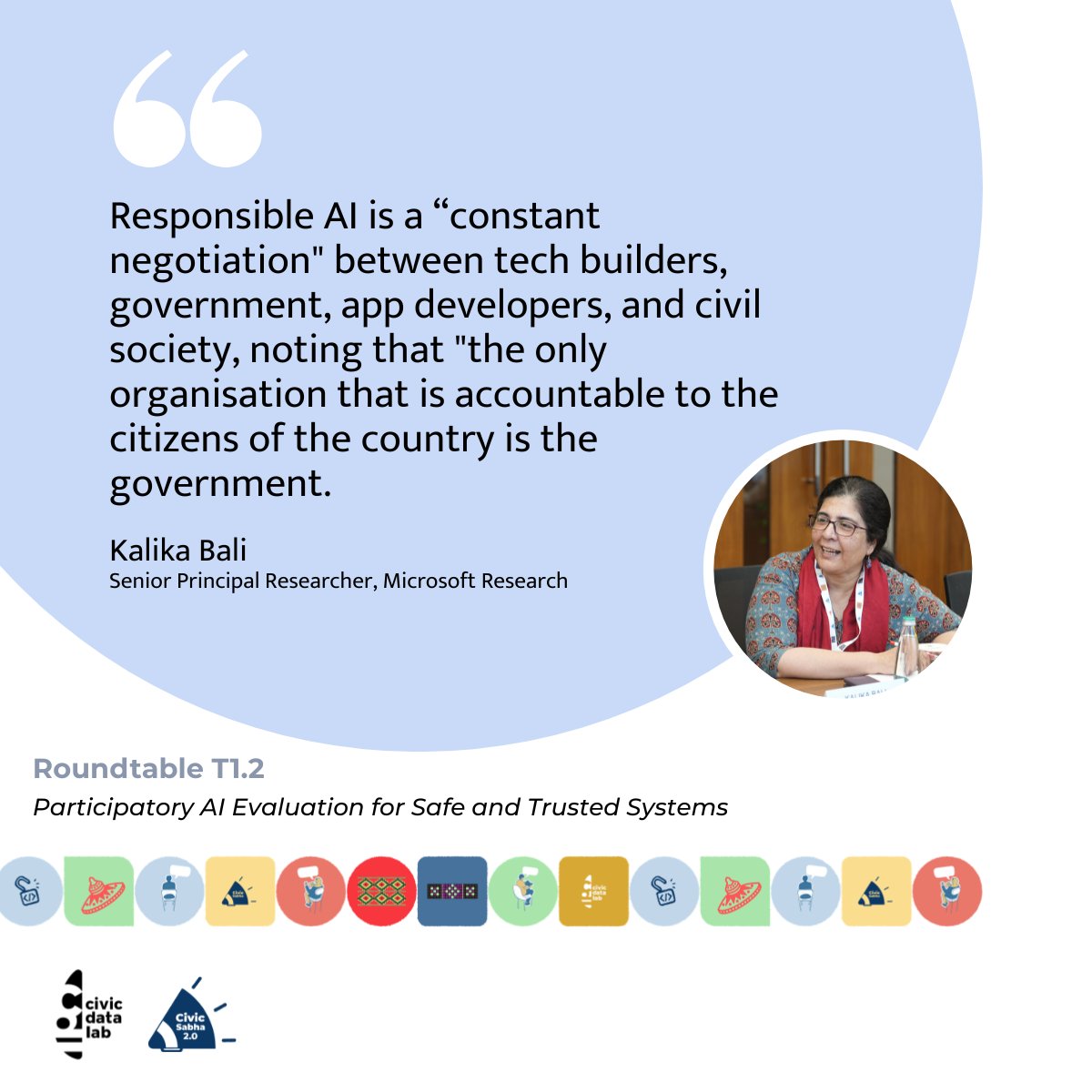
Responsible AI is a constant negotiation.
@kalikabali from @MSFTResearch says trusted AI needs collaboration across tech, government & civil society.
But accountability must stay with government.
▶️ Read the report:
https://t.co/f6WK6SFOVF
#CivicSabha2#ResponsibleAI#AIForGood
Excited to share that I’ve received the NSF CAREER Award!
This award will support the design, implementation, and evaluation of AI agents and related tools to support constructive dialogue and improve conversational outcomes in private online spaces.
I’m grateful to my students, collaborators, community partners, and colleagues at @Cornell_Bowers and @Cornell for their support, and I look forward to building this work in the years ahead.
Who are we leaving out? 🤔
When data overlooks languages, contexts, and communities, it doesn’t just create gaps—it leaves people behind.
As Anoop Sharma, Evaluation Specialist (Corporate Evaluations and Data/AI) at @IFAD points out, entire communities remain invisible to
Excited to share a new @restofworld column I co-authored with the awesome Deepak Varuvel Dennison on Why AI *alone* cannot fix social problems.
TLDR: Even sophisticated AI systems need human support and institutional capacity to succeed in real-world environments. If we want AI to create real public value, we need to invest not only in AI models, but in people, processes, and institutions.
https://t.co/n3zOYhKbSN
@Cornell_Bowers@Cornell
🚀 Hiring Alert: Postdoc Positions at Microsoft Research India!
I'm especially looking for candidates interested in trustworthy AI reasoning, agentic systems and verification.
If you hold a PhD in CS or a related field and want to work on research that truly matters, consider applying.
⏳ Applications are reviewed on a rolling basis through April 15
Happy to answer any questions through replies here.
We’ve all heard about the missing shipment of KitKats.
Safe to say, breaks are still happening everywhere.
But getting back to work after one?
That’s where it gets real.
https://t.co/Nk8ckA0bTS India in collaboration with Saira is introducing ReStart – Women in Tech Accelerator, an 8-week structured program designed for early to mid level professionals.
This isn’t about starting over.
It’s about returning with clarity, confidence, and relevance.
Apply Now - https://t.co/vlgQb8ramp
The Datasets & Benchmarks track is now "Evaluation and Datasets", with an expanded scope for NeurIPS 2026!
Read the call for papers https://t.co/ssclVjxu4E, and learn more about the changes in our blog post: https://t.co/ZI6v4IeoJv
New Schmidt Sciences RFP on AI Interpretability:
We need new tools for detecting and mitigating deceptive behaviors exhibited by LLMs.
Funding for $300k-$1M projects
Deadline: May 26th, AoE
RFP: https://t.co/1Vp2doS7Qb
Please share with anyone who may be interested!
Delighted to be part of this new lab working towards reliable autonomous agents using hashtag#LeanProver for verification. My thoughts on what we are building:
Earlier this week we announced our research grant program.
Has been pretty incredible seeing applicants from all over the world.
A global program, since we are global first at @adaption_ai from day 1.
We will be issuing first wave of acceptances later this week. 🔥
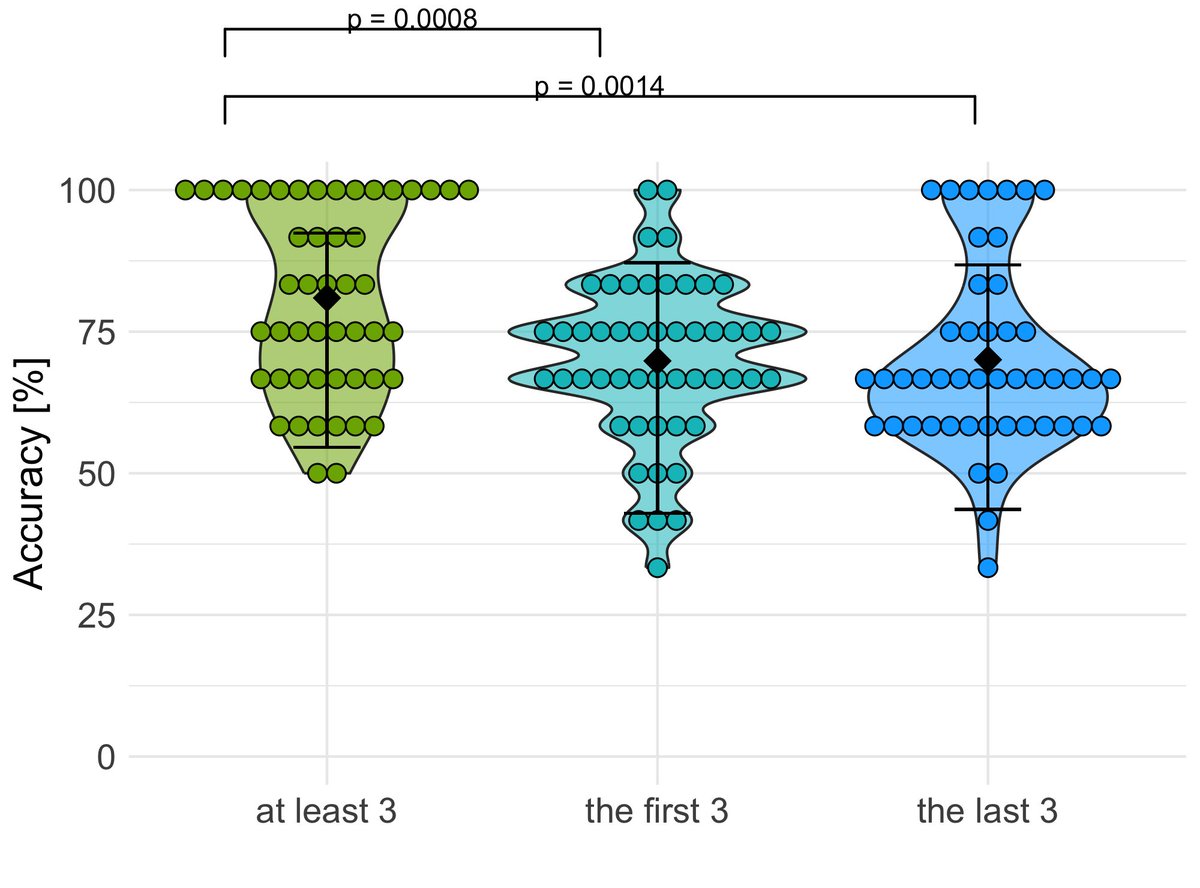
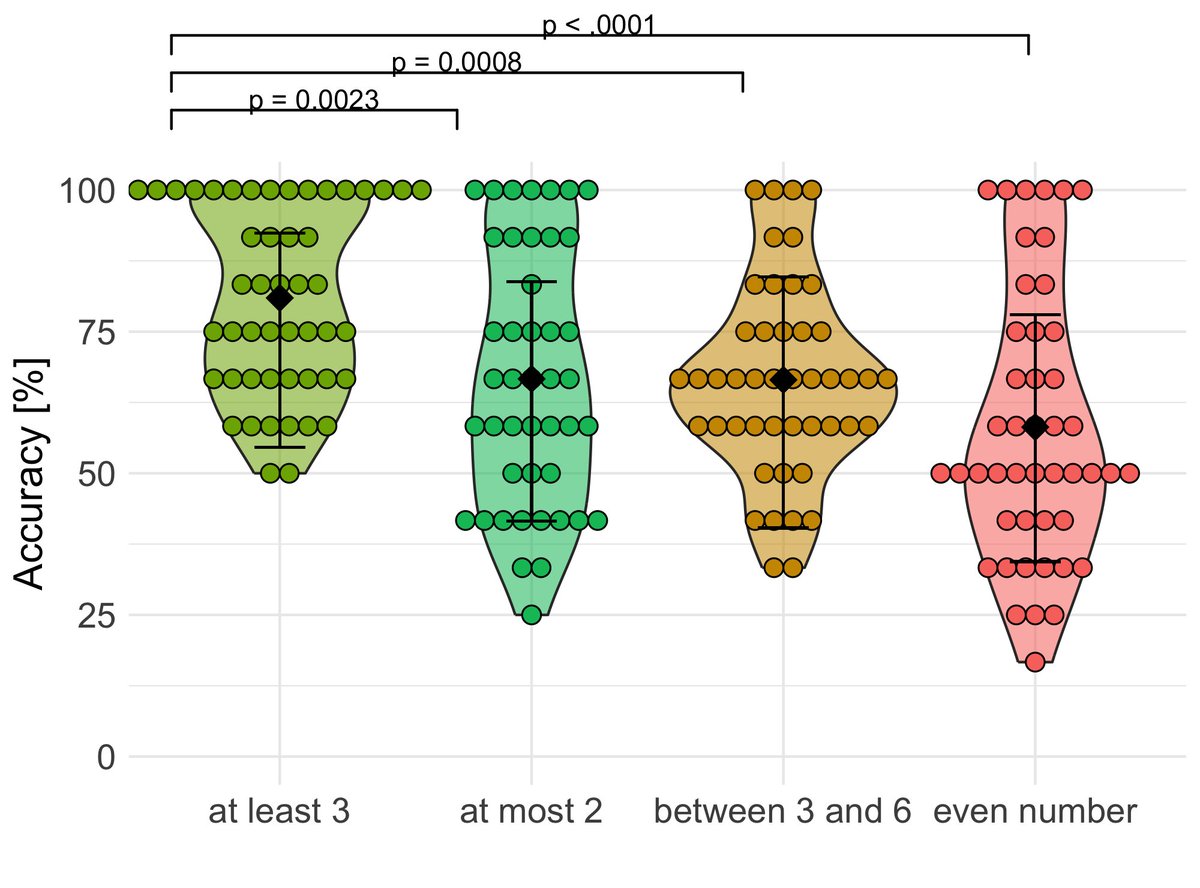
Why do languages share common properties? Adults learned novel quantifiers satisfying semantic universals faster than those violating them. This suggests that learnability helps explain why certain meanings are lexicalized across cultures.
@Logic_Cognition