You are confusing Pan-African intellectual history with Pan-African material contribution. We are gone past the Pan-African speeches from Carrbeans intellectuals.
I never denied the importance of Henry Sylvester Williams, Edward Blyden, Marcus Garvey, or Kwame Ture. They were great thinkers and activists. But Pan-Africanism is not sustained by speeches and books alone. It has never worked that way. It is also sustained by money, soldiers, diplomacy, infrastructure, scholarships, and economic sacrifice.
When Liberia was collapsing into civil war, where were all these self-proclaimed Pan-African champions? Where was the self acclaimed Caribbean Pan-Africanists? Nigeria led ECOMOG and bore the overwhelming burden of restoring order.
When Sierra Leone was being torn apart by the RUF and mass amputations were taking place, who shed blood and spent billions helping stabilize the country? Nigeria.
When apartheid was still in place in South Africa, Nigeria was one of the biggest financial and diplomatic backers of the anti-apartheid struggle. Nigeria funded liberation movements, imposed sanctions, provided scholarships, and even created the Southern Africa Relief Fund so ordinary Nigerians could contribute.
When many African countries were unwilling or unable to act beyond rhetoric, Nigeria repeatedly deployed troops, resources, and money across West Africa in the name of African stability.
Pan-Africanism is not only measured by who gave the most famous speeches. Speeches has done absolutely nothing for us in Africa. It is also measured by who paid the bills, who sent the troops, who absorbed the costs, and who took responsibility when African states were collapsing.
You mention Marcus Garvey. Fair enough. But Marcus Garvey did not deploy peacekeepers to Liberia. Marcus Garvey did not finance anti-apartheid campaigns. Marcus Garvey did not stabilize Sierra Leone. Those burdens fell largely on states, and Nigeria carried more than its share.
As for Nigerians in Britain, that is simply a stereotype. There are over 230 million Nigerians, and millions in the diaspora. Judging an entire people by the worst examples you can find is prejudice, not analysis. It is you exhibiting your xenophobia towards Nigerians, especially for your inability to do anything than cry about us.
The irony is that many of the same people who dismiss Nigeria’s contribution have never asked what their own countries sacrificed for African unity. Like, can you tell us what your Caribbean country has done for Pan-Africanism? Nigeria’s record is not perfect, but very few countries can point to comparable expenditures of blood, treasure, and political capital on behalf of other African nations.
So yes, the Caribbean produced some of the greatest Pan-African intellectuals who dropped speeches. But when it comes to sustained material contributions to African causes, Nigeria stands among the foremost contributors in modern African history.
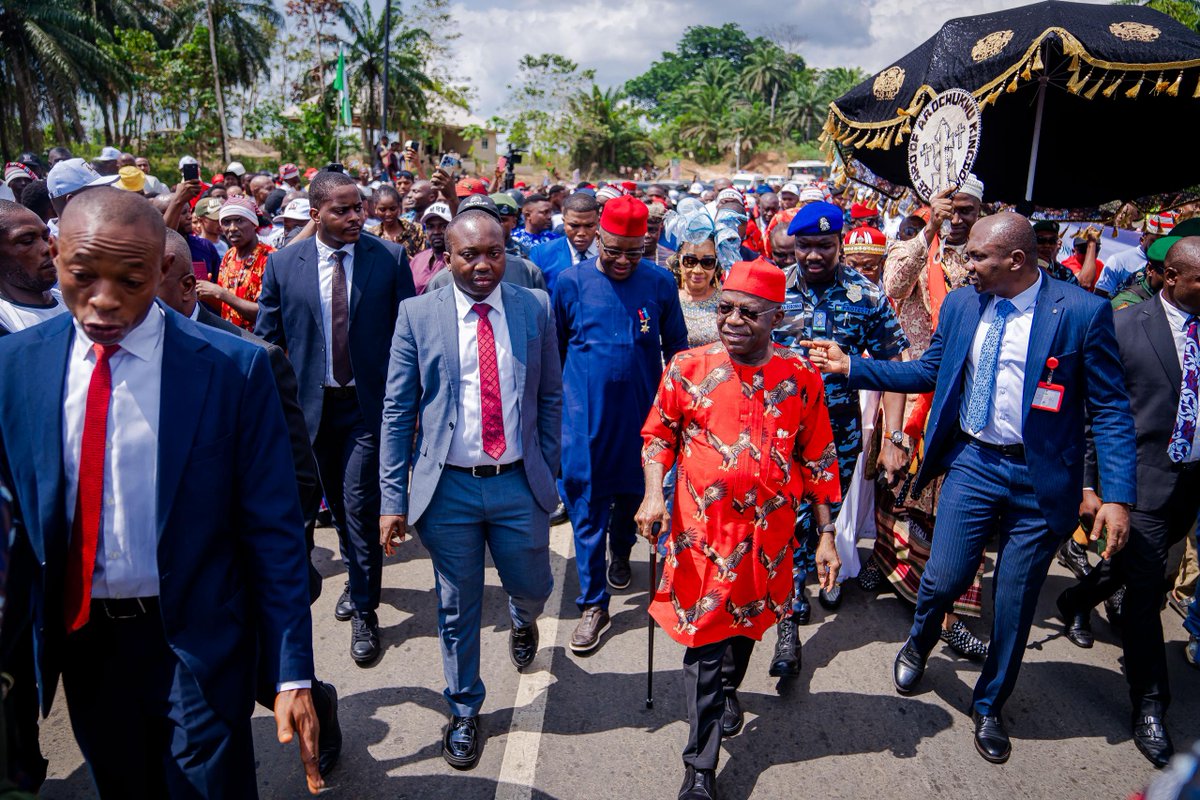
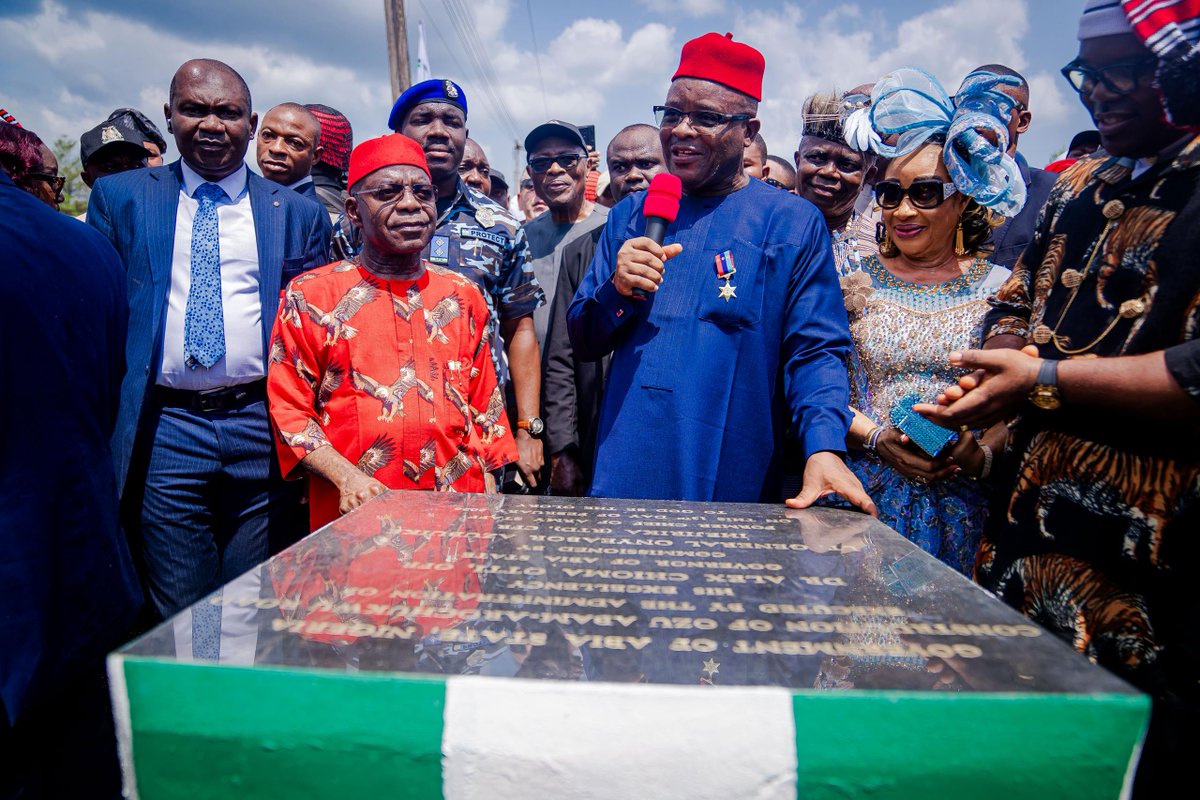
Today, history was made in Abam Onyerubi as we commissioned two landmark projects: the New Omenuko Bridge over the Igwu River and the 30-kilometre Ndi Okereke Abam, Okobo, Amuvi Arochukwu Road. The commissioning was performed by the former Chief of Army Staff, Lt. General Onyeabor Azubuike Ihejirika (rtd.), who turned 70 years old today. We wish him a memorable birthday in good health and God’s continued blessings. These projects stand as a testament to our collective resilience and the determination of our administration to end decades of neglect and usher in a new era of prosperity.
For years, the old Omenuko Bridge symbolised pain and loss, with families mourning loved ones who perished due to its structural failures. Today, we honour their memory and declare that deceit and failed promises shall never again define leadership in Abia. The commissioning is not just about infrastructure. It is about restoring dignity, hope, and safety to our people. And with the completion of the road, too, the age-old cliché that “there is no easy road to Arochukwu” has been abolished forever.
The nightmare of collapsed roads and broken bridges is over. Farmers can now move their produce to markets, students can travel safely to schools, and communities once cut off by fear and frustration are reconnected. The siege has collapsed, the jinx is broken, and Abam and Arochukwu stand tall as beacons of what is possible when leadership aligns with the aspirations of the people.
This is the dawn of a new Abia, one built on truth, progress, and shared destiny. Together, we have proven that our future is not bound by neglect but is shaped by our collective will. Abia has seen the light, and never again shall darkness cover our path.
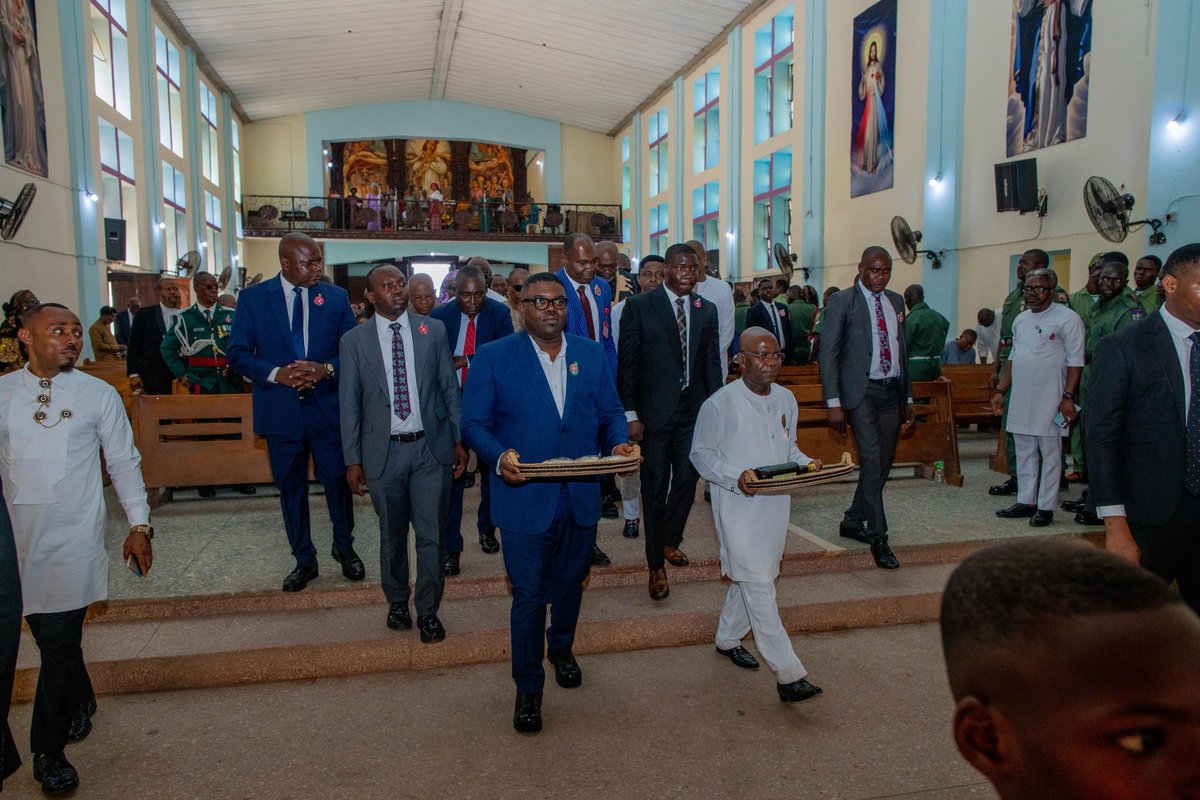
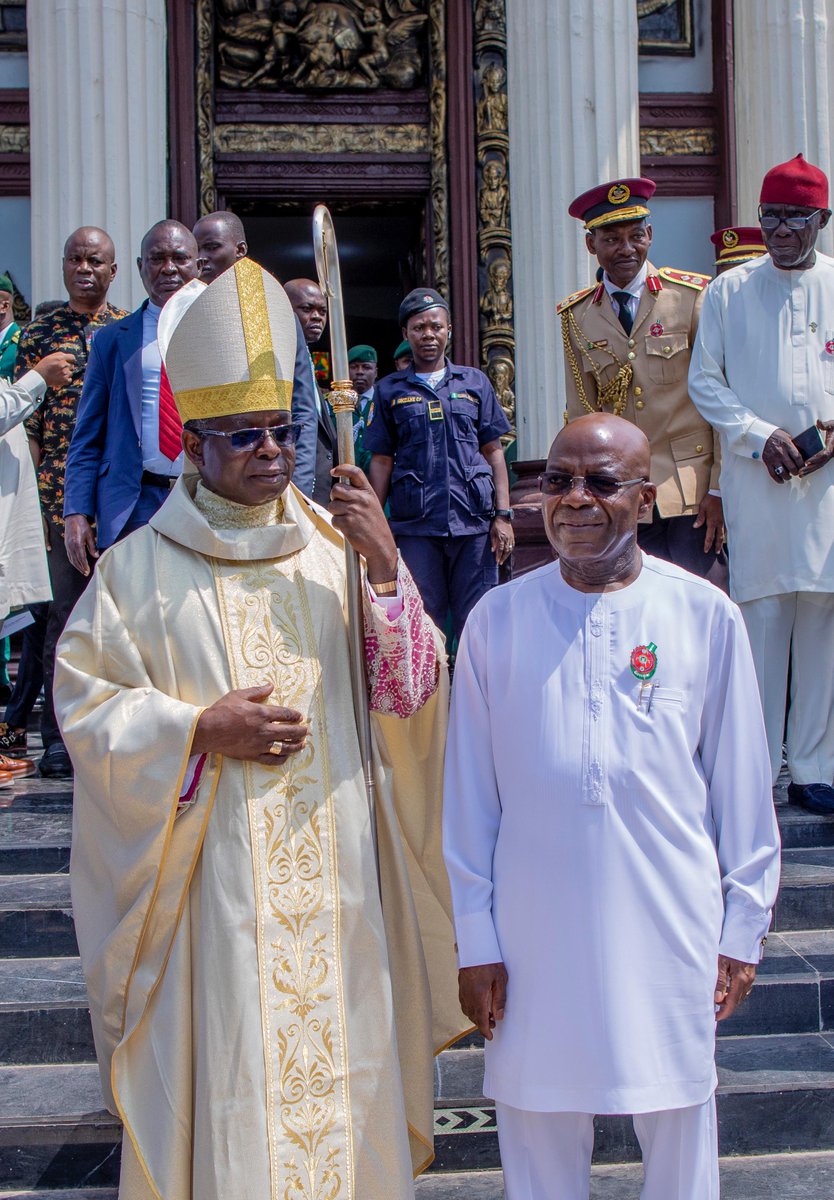
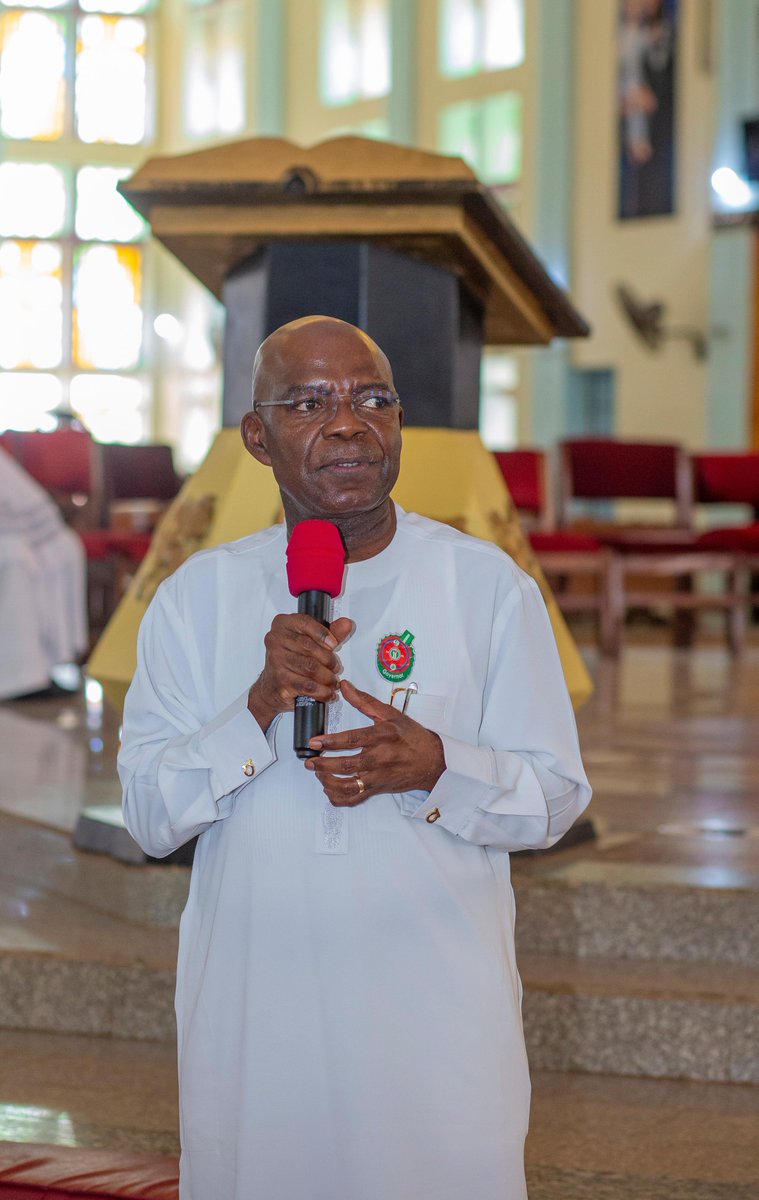
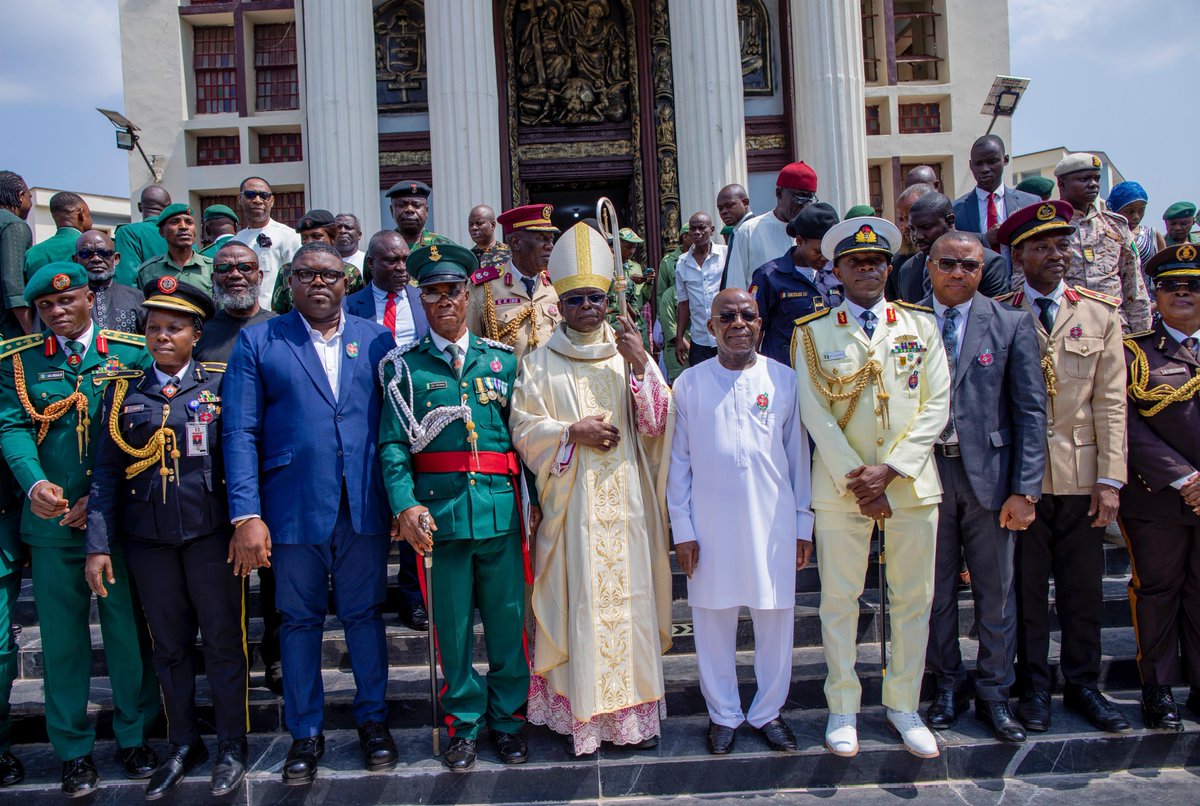
Earlier today, I had the honour of joining senior members of the Abia State Government at the Mater Dei Catholic Cathedral, Umuahia, for a solemn interdenominational Thanksgiving Service in commemoration of the 2026 Armed Forces Remembrance Day.
The service, organised in partnership with the Nigerian Legion (Abia Chapter), was a heartfelt tribute to the gallant men and women of our Armed Forces those who paid the ultimate price for our nation’s unity and peace, and those who continue to serve with unwavering dedication.
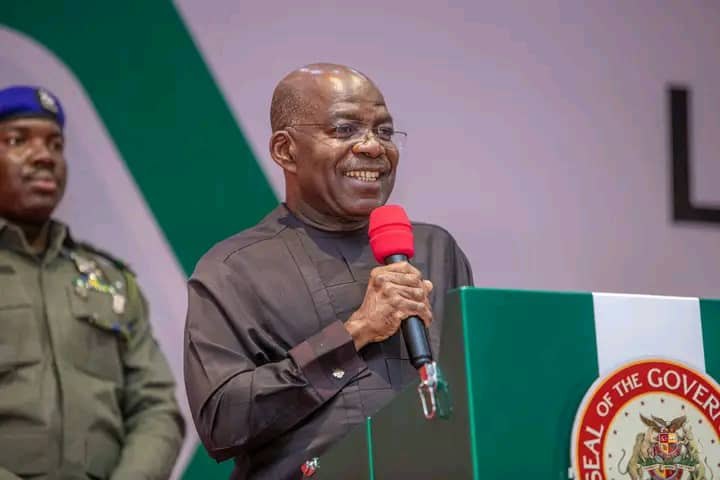
In my remarks, I reaffirmed our administration’s commitment to delivering good governance and upholding the sacred social contract we share with Ndi Abia. We remain resolute in our mission to build a safer, stronger, and more prosperous Abia.
I thanked our service commanders and security agencies for their tireless efforts in maintaining peace across the state. Their collaboration with the government and the active support of our people who are the first line of defence in their communities has yielded the relative calm we enjoy today.
Security remains a top priority for us. That is why we have institutionalised monthly security council meetings with all service commanders and the Chairman of the Council of Traditional Rulers. These sessions allow us to assess developments and proactively plan for the safety of our people.
Let me assure you: this government is focused, people-oriented, and inclusive. We are not distracted, and we will continue to serve with integrity and purpose. This is a government of the people, not of a privileged few.
As we step into 2026, I am confident that the progress we have begun will be sustained and deepened through the faithful implementation of our budget and development agenda.
To the families of our fallen heroes, we extend our deepest condolences. Your loved ones are not forgotten. Their sacrifice is the foundation upon which our peace stands.
I also thanked the administration of the Mater Dei Cathedral for graciously hosting us and for their continued partnership in building a better Abia.
May the souls of our departed heroes rest in peace, and may God bless Abia and the Federal Republic of Nigeria.
One of the most bizarre things I observed at Shell was how someone would spectacularly fail at a $$$ project, and instead of being demoted or fired, the opposite happens. They get transferred to manage another high-visibility project or even get a promotion!
It took me a long time to understand this but when I did, it changed everything for me.
You see, performance is measured in most companies on two prongs: the what and the how. The “what” is the actual result: did you or did you not strike oil after drilling that well? The “how” is the behavior you displayed during the entire process.
I was too focused on the actual results but I later found out that leaders rate behaviors higher. Hence, a project might fail in that it did not meet its stated objectives and yet the project manager might come out a winner because of how he carried himself through it all.
So what are the behaviors highly cherished by the higher ups?
First is daily updates. Forget weekly reports. Tell your boss and other key stakeholders about how the project is going at least once a day. When I say “tell”, I mean “tell.” Don’t rely solely on an email or a tool. Find a way to get in their face daily even if just for a min or two to verbally articulate the status of things. The pros at this put a standing 5-10 min meeting on their calendars and they come prepared to discuss the highlights and issues that need addressing. Which leads me to the second point.
Second, involve your superiors in solving the problem. Don’t form James Bond or Jackie Chan, trying to do it all alone. Any issue that will lead to a delay or cost overrun or any other wahala should be brought up asap to be discussed. Much easier to do if you talk with them daily. It is hard for them to blame you on the outcome of a project they have been integral to.
Third, conduct a “lessons learned” session where you perform an autopsy on the dead project. Share these lessons far and wide. You will be hailed as a sage. Suddenly you are now the guy helping the company become better by spreading wisdom gained from the school of hard knocks. This act alone has landed many people their promotion.
Bottom line: you can secure victory from defeat. The high flyers in your company do it all the time. If the project succeeds, they win. If the project fails, they win.
Be like them.
Let me explain something to you tribalism and religious bigotry have kept Nigeria trapped.
Nigeria scored a historic own goal by failing to properly reintegrate Eastern Nigerians after the Biafran genocide. Beyond the moral failure, it was a catastrophic strategic mistake. The war produced an extraordinary level of indigenous technological ingenuity. Locally engineered weapons, fuel alternatives, medical innovations, and manufacturing improvisations created under siege conditions. Instead of harnessing this knowledge, the Nigerian state discarded it, effectively wasting one of the most intense periods of problem-driven innovation Africa has ever seen.
History offers a stark contrast. After World War II, the United States made a cold, calculated decision: COMPETENCE mattered more than SENTIMENT. Through Operation Paperclip, Washington recruited German scientists including former Nazis because technological superiority was NON-NEGOTIABLE in a rapidly emerging Cold War. At the same time, refugees fleeing persecution, such as Albert Einstein and Enrico Fermi, were absorbed into American institutions, playing pivotal roles in the Manhattan Project and later the Space Race.
That singular choice of prioritizing capability over grievance shaped American scientific and technological dominance for decades. The U.S. understood that wars are not just won on battlefields but in laboratories, universities, and industrial ecosystems.
Nigeria did the opposite. Instead of integrating Biafran engineers, scientists, and industrial thinkers into national development, it pursued exclusion, suspicion, and economic marginalization. The result was predictable: a country that won the war but squandered the peace. Innovation was stifled, trust was destroyed, and national capacity was permanently weakened.
In statecraft, reconciliation without integration is cosmetic. Nations that rise are those that turn even their darkest chapters into strategic assets. Nigeria had that opportunity and let it slip.
This is why all these Pan-Africanism talk gives me a headache. A once-in-a-lifetime chance to practice it came and was blown. Smh.
As a parent, I think this video has taught me something useful.
I recommend that you should try it on your kids, too.
I have also shared it with my wife.
Credit: joe_drummer_boy on IG.
Umu Abia: I want to take this moment to share the good news coming our way in 2026 and beyond. Immediately after the election, His Excellency Dr. Alex Otti invited a group of professionals to help design and architect a roadmap for Abia’s future. I was privileged to be included in the transition council and had the honour of serving as Co-Chair, Economic Transformation.
At that time, the public sentiment was gloomy: Abia was described as broke, unable to pay polytechnic lecturers, unable to keep the state university teaching hospital functioning, with the college of education abandoned and pensioners left without hope. But a comprehensive document was submitted to the new administration, anchored on Governor Otti’s mandate. He improved it, refined it, and embedded his grand execution strategy, a methodical framework built on People, Processes, and Tools.
From day one, Governor Otti understood that Abia was not poor; rather, its wealth was locked away. He began unlocking it systematically. First came the tools, fixing key roads, restoring public infrastructure, repositioning education. Then came the people, clearing pension arrears, paying salaries promptly, restoring dignity. Then the processes, reviving the courts across LGAs, digitizing bureaucracy, and building a governance architecture that works.
Abians responded. Investors responded. Confidence returned. And Governor Otti’s core doctrine came alive: if Aba, the industrial heartbeat, is revived, Aba will revive the rest of Abia. Today, Aba is back: working, producing, exporting, and creating economic velocity that is lifting the entire state. Abia’s IGR, once stuck near N20 billion a few years ago, is projected to hit N100 billion in 2025 and potentially climb to N223.4 billion in 2026!
Now, the game is elevating: in the 2026 budget, Abia will cross the ₦1 trillion mark: “For the first time in the budget history of Nigeria’s South-East, a state has crossed the trillion-naira threshold. Abia achieved that milestone on Tuesday as Governor Alex Otti presented a ₦1.016 trillion budget proposal for 2026 to the State House of Assembly". About 80% will go into capital projects; the rest into recurrent spending. Please understand that Abia is ranked #1 in Nigeria by the federal DMO as the most fiscally responsible in Nigeria.
Fellow Abians, fellow Nigerians, Abia is working. Our Governor leads with merit, pragmatism, and honesty. The 2026 budget is tagged "Budget of Acceleration and New Possibilities” because Mr. Governor wants Abia to fund platforms of commerce (social services, infrastructure, etc), accelerate growth to unlock possibilities and abundance for all. May the good Lord bless Abia, Nigeria https://t.co/ID0OaFwaOp
Since this morning, I’ve been seeing a lot of tweets—especially from Northerners—criticizing Peter Obi’s statement regarding the court’s sentencing of Nnamdi Kanu to life in prison. Some of these comments suggest that Obi could lose northern support for his presidential ambitions because of this statement.
First and foremost, I’m not sure which part of the North these commentaries are referring to, but the core North that I know—and whose politics and voting patterns I’ve studied for a long time—can never deliver a block vote for PO, regardless of what he says or doesn’t say. Such threats are therefore inconsequential. There’s no political capital for Obi in abandoning a legitimate cry against the marginalization of his people over the years just to appease a region that, at best, hasn’t cared much or even contributed to the marginalization in the first place.
Peter Obi has risen to a position where he is a statesman and shouldn’t take positions merely because they are politically convenient. The peace and unity of Nigeria should matter more than political expediency.
Besides, why should PO deny a legitimate agitation of his own people to please Arewa—a region he can realistically never win in a presidential election? GEJ never won the core North in either of his presidential runs (2011 & 2015), despite all he did for the region.
If we were to politicize the issue, I wouldn’t advise PO to rely on the core northern states for his presidential pathway. In a united opposition where PO is the ticket holder, his path to the presidency must run through the Middle Belt.
Kudos to Peter Obi for not taking the easy path that so many would have chosen to score cheap political points. Often, the road to what is right, equitable, and fair can be lonely. Any true leader worth their salt shouldn’t be afraid to walk that path alone, as history shows those who achieve greatness understand what it means to stand for what is right.
Nigeria’s Potential Lies in Leadership and Institutions
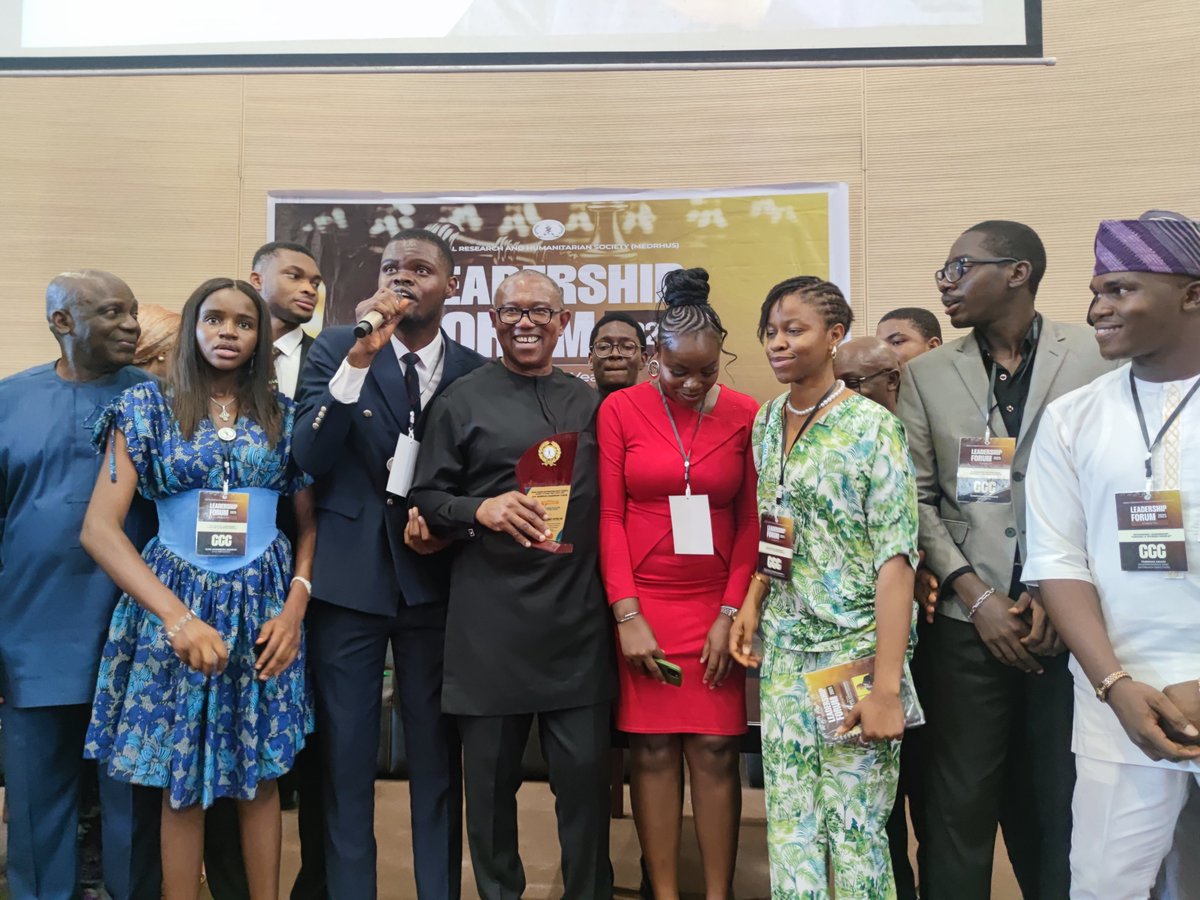
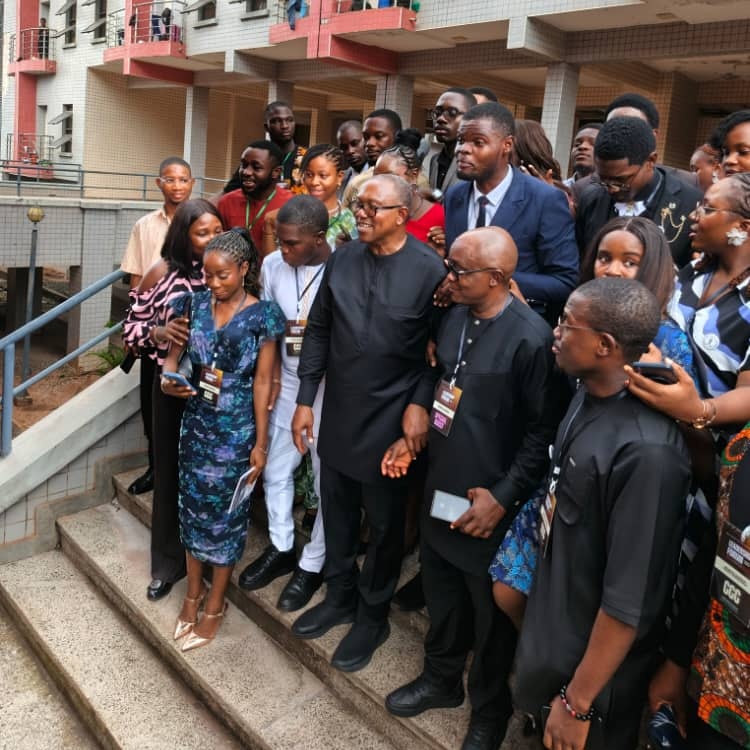
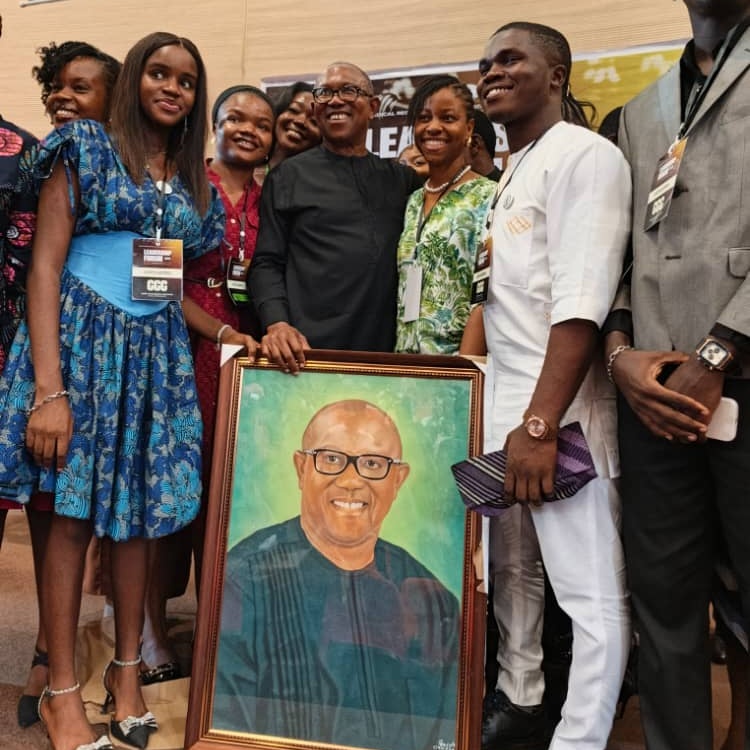
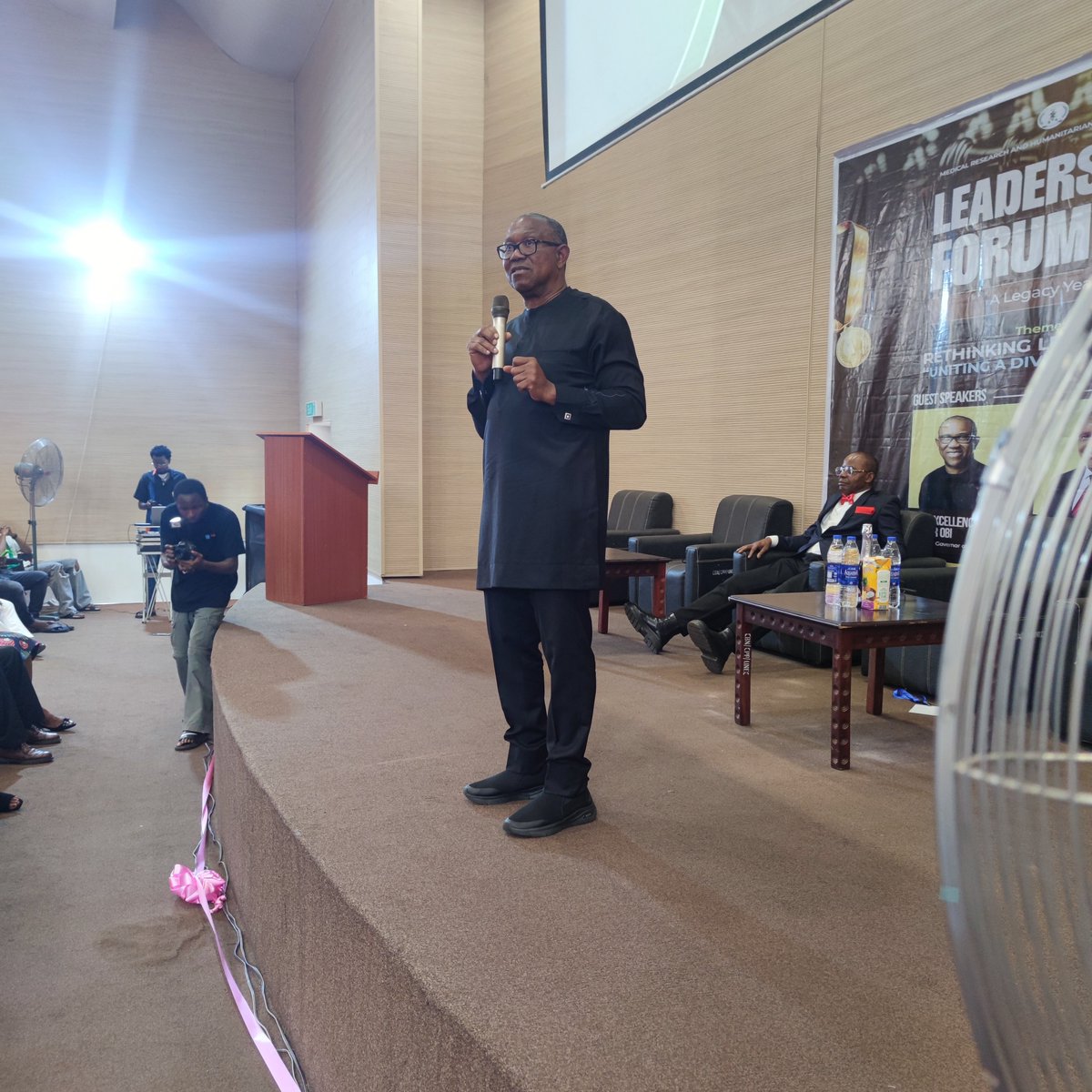
Today, after the Redeemer's Drug Rehabilitation Initiative (TREDR) event, I attended and spoke at the 2025 Leadership Forum Conference in UNEC Enugu, organized by the Medical Research and Humanitarian Society (MEDRHUS), on the theme: “Rethinking Leadership: Uniting a Divided People.”
I highlighted that Nigeria is blessed with fertile land, abundant minerals, and a favourable climate—more naturally endowed than most of comparable nations, yet we lag behind because we have not built strong institutions or cultivated a culture of competent, and compassionate leadership.
I observed that our challenges—ethnic and religious tensions, poor healthcare, low life expectancy, and rising infant mortality—reflect leadership failure, not the people. I emphasised that education and human development must be our top priority for real progress.
I noted that countries comparable nations like the Indonesian, India & others thrived by investing in people and institutions. I urged that we must do the same.
I encouraged young Nigerians to seek opportunities globally, but to remain committed to building a better Nigeria. I concluded that strong institutions, rule of law, and competent leadership are the keys to unlocking our nation’s potential.
A new Nigeria is POssible. -PO
Kanu’s Conviction: At a Time Like This.
The news of Mazi Nnamdi Kanu’s conviction should compel every well-meaning Nigerian to pause and reflect. This is coming at a time when our beloved nation is facing severe economic hardship, insecurity, and the consequences of poor governance.
Rather than reducing tension, this unfortunate development may well only aggravate it.
I have always maintained that Mazi Kanu should never have been arrested. His arrest, detention, and now conviction represent a failure of leadership and a misunderstanding of the issues at stake.
For years, I have consistently argued that dialogue, constructive engagement, and inclusive governance offer the path to lasting peace. Coercion becomes necessary only when reason has been exhausted. In this case, I submit that the reason was not only not exhausted, but was probably not explored at all, or not fully explored.
The concerns Kanu raised were not unheard of. The issues for which he demanded solutions were not insoluble. It only required wisdom, empathy, and a willingness to listen. In any functional society, such grievances are met with dialogue and reforms aimed at strengthening unity.
The government’s approach has only deepened mistrust and created an avoidable distraction at a time when citizens are overwhelmed by harsh economic realities and insecurity. While some may insist that “the law has taken its course,” leadership often demands more than a strict, mechanical application of the law. Nations around the world resort to political solutions, negotiated settlements, and even amnesty when legal processes alone cannot serve the broader interest of peace and stability. Nigeria is not an exception.
The handling of Kanu’s case mirrors the government as a man trapped in a hole but who, instead of looking for a way out, keeps digging deeper. It worsens not only the government’s predicament but also the nation's collective condition.
If we truly desire a new Nigeria - a united, peaceful, and progressive one, our leaders must choose healing over hostility, reconciliation over retaliation, and dialogue over division. Only by addressing grievances with justice, fairness, and compassion can we move towards a future where every Nigerian feels heard, valued, and safe.
My ultimate call at this time, without prejudice to how anyone feels about the decision of the court, is for us to be optimistic for peace and reconciliation which will come in the end. I am also saying, thereby, that the Presidency, the Council of State and credible statesmen who love this country and who are interested in cohesion and inclusivity, should rise to the occasion, for a lasting solution. -PO
The unwritten reason why many Igbo Billionaires and Older “Elite class”are SILENT on Nnamdi Kanu.
History NEEDS to be reintroduced and made compulsory.
#TheEmirSirdamShow#NnamdiKanu#Igbos#viralvideos
There’s something refreshing about a truly feminine woman with depth and wisdom. No yelling, no chaos. Just clarity and calm delivery. Watching her speak like that reassures me that there’s still hope. Can never be ndị they didn't give me land. Sigh.