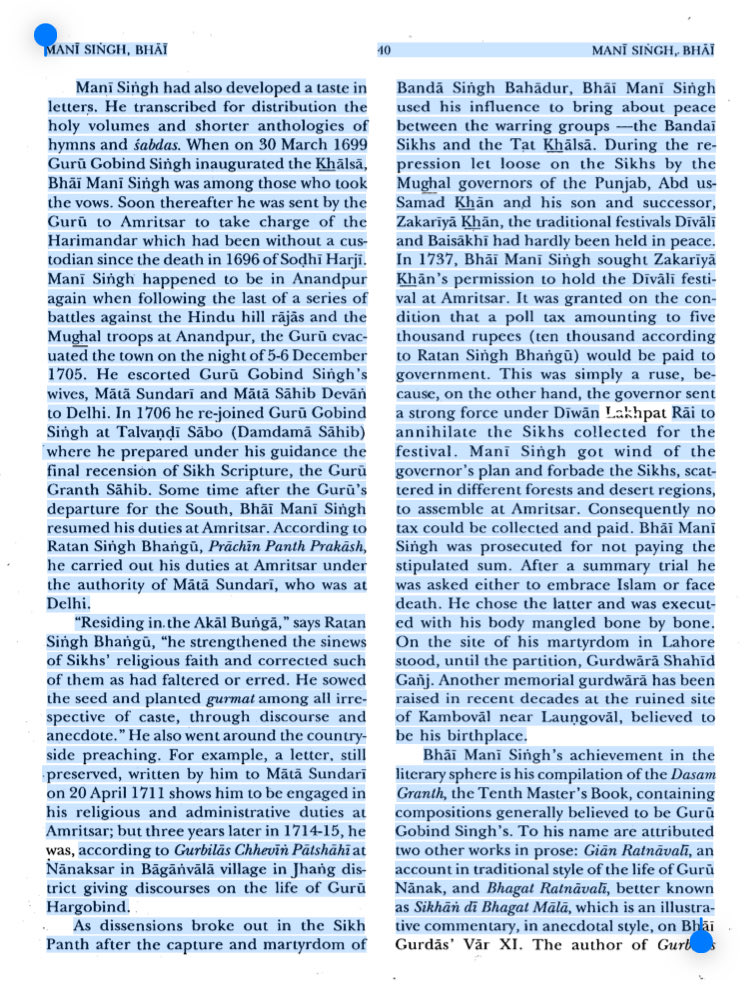
@Prabh2003166342@tractorjeet@warraichjxtt@FatehKambo5c SHAHID Mani Singh “Kamboj lived a celibate life”-dedicated to Panth. Had no issue.This is also attested by Bhangu. Garja Singh’s MANI RAM ws “Warrior”, TWICE married,hd>12 SONS PER GARJA SINGH.
GARJA SINGH SAYS WARRIOR MANI RAM IS “SAME” AS SCHOLAR MANI SINGH.THAT’s THE PROBLEM!
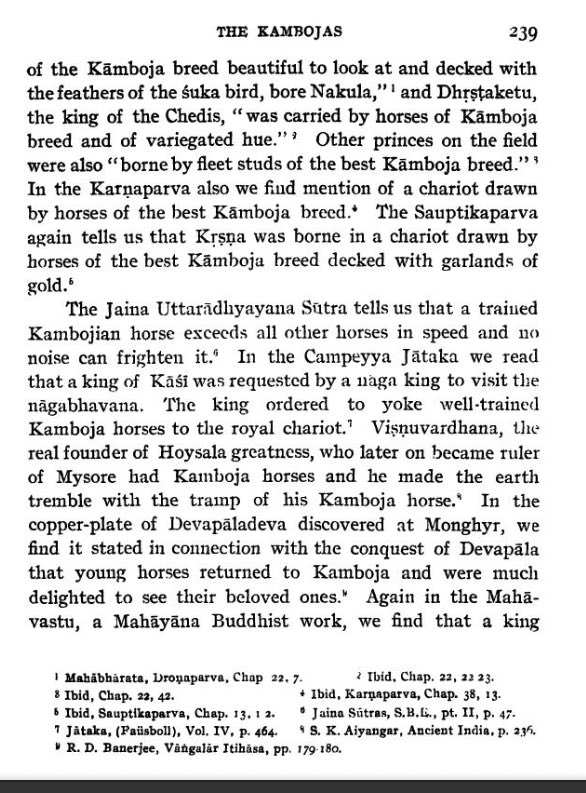
Lastly I wud conclude ths thread with a relevant txt on Kamboj horses from Dr Law’s Research Book (pp 239-41),wich may be of interest to some. For Dr Law ‘s THESIS on Kśatriya Kambojas, pl read pp 230-251 of “Some Kśatriya Tribes of Ancient India”
FREE access on internet archive.
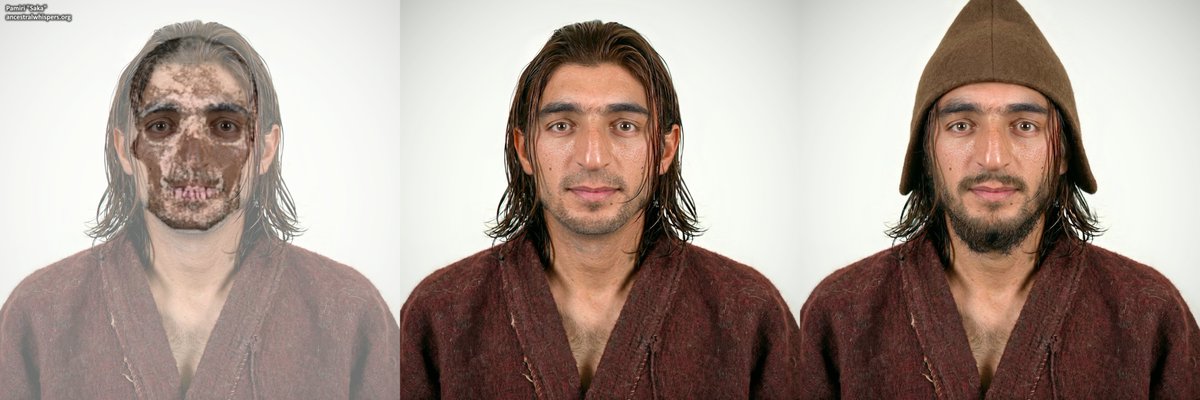
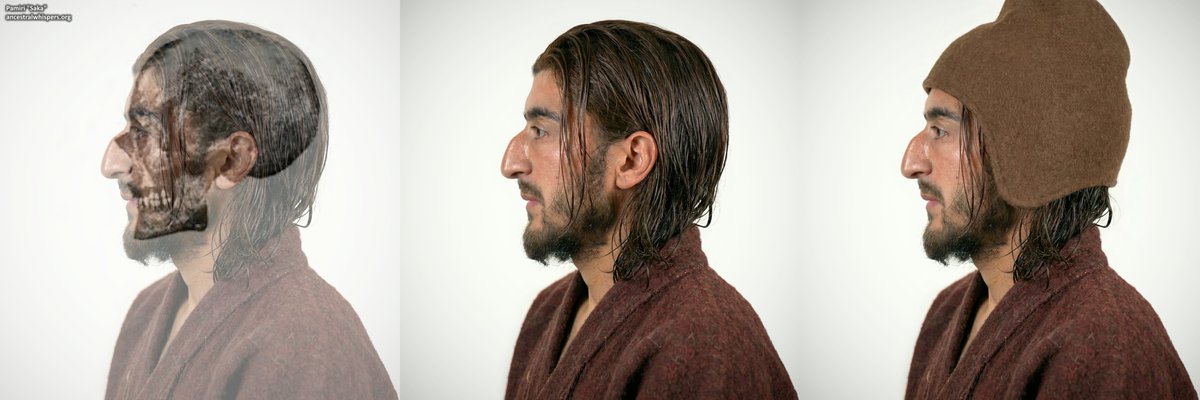
Facial reconstruction of a 2,500-year-old Pamiri "Saka" from Ak-Beit, Gorno-Badakhshan, Tajikistan
The material culture of the so-called Pamiri Saka is poorly studied, with most data deriving from excavations conducted in the mid-20th century. They are generally dated to between the 7th and 3rd centuries BC and are concentrated in the southeastern Eastern Pamirs.
Anthropologically, this population differs from typical Saka, showing affinities with southern Central Asia and even groups from the Swat Valley, rather than the Andronovo-like or Mongolid-mixed Andronovo morphology of the Saka proper.
Genetically, the Pamiri “Saka” were likely a mixture of south Central Asian farmers, Aigyrzhal-like populations, and Steppe_MLBA ancestry, making them more reminiscent of modern Pamiris and distinct from the Saka/Scythians proper.
Aleksandr Bernshtam linked them to the Saka based on kurgan burials, Scythian animal motifs, and the absence of settlements. Boris Litvinsky later associated them specifically with the Saka Haumavarga, proposing broader connections with South Asia, though early Indic sources do not clearly support such long-term interaction.
Earlier interpretations emphasized nomadism due to the lack of settlements, but more recent Central Asian archaeology suggests that such conclusions often overestimated pastoral mobility. Evidence from sites such as Xiangbaobao indicates both burial diversity (cremation and inhumation) and the presence of agriculture and permanent habitation.
Although the material assemblage appears Saka-like, notable differences exist: simpler metallurgy, less elaborate kurgans, and frequent flexed burials, unlike the supine burials typical of Saka groups in the Tian Shan. These features suggest continuity with earlier traditions, particularly the Andronovo culture, which practiced kurgan burials, flexed inhumations, and cremation in some variants. Both the domestic architecture and grave-type of the Andronovans survived among the Pamir Saka. In Tegirman-say, Kyzyl-Rabat and Vorukh people buried the dead within stone circles that enclosed stone cists, which were set in a pit and covered by stone slabs (Litvinsky 1972: 134-135). This rite is preserved in some districts of Afghanistan, in Ishkashim, Vahan, Darvaz and in Yagnob among Iranian peoples of the mountainous regions of Tajikistan (Andreev 1927: 53; Andreev and Polovtsev 1911: 17-18; Rakhimov 1956: 69).
The identification of these groups with the Saka Haumavarga remains uncertain. Historical evidence places the Haumavarga near the Achaemenid Empire, where they became vassals under Cyrus the Great - a scenario unlikely for the Eastern Pamirs. Thus, the attribution of these populations as “Saka” rests primarily on archaeological similarity rather than firm historical evidence. The material may instead reflect local adoption of Saka cultural elements, particularly among elites. Scythian-style warrior ideology and symbolism could have spread without large-scale migration.
It's possible that they were the Parama Kambojas of Indian epic literature. Many scholars have placed this warlike group of Kambojas in the Gorno-Badakhshan region. Later on Greek historians called the peoples which inhabit the mountainous regions of Sogdiana and Asian Scythia Komedes or Komroi. The later fate of these populations is unclear. Their final phases overlap with the period of Alexander the Great and the Greco-Bactrian Kingdom, after which the archaeological record becomes sparse. The region was later incorporated into the Kushan Empire and subsequently influenced by the Hephthalites.
Key Y-DNA Haplogroups in Nuristan:
R1a (R-M198/M17): The predominant haplogroup, with frequencies around 60%, marking Indo-Iranian, specifically early Indo-Aryan, ancestral influence.
Q2b (Q-BZ478): Present in the region, including connections to Dardic, representing earlier, distinct migrations into the Hindu Kush region.
Other Lineages: Although R1a dominates, the region shows diverse, ancient paternal ancestry,, which may include low-frequency markers associated with Central or South Asian populations.
The Nuristani people are noted for having high frequencies of light hair and eye colors, which is consistent with the high frequency of the R1a haplogroup.
According to MBH[12.166.74-75-see attachment], EARLIEST ref to “Kamboja” appears in name of Kamboja Kśatriya prince who is contemporary & probably adversary of Kosala Kśatriya ruler Dhundumara(=Kuvalaśava). According to Pargiter’s Ancient Indian Historical Tradition, (AIHT)….6/n
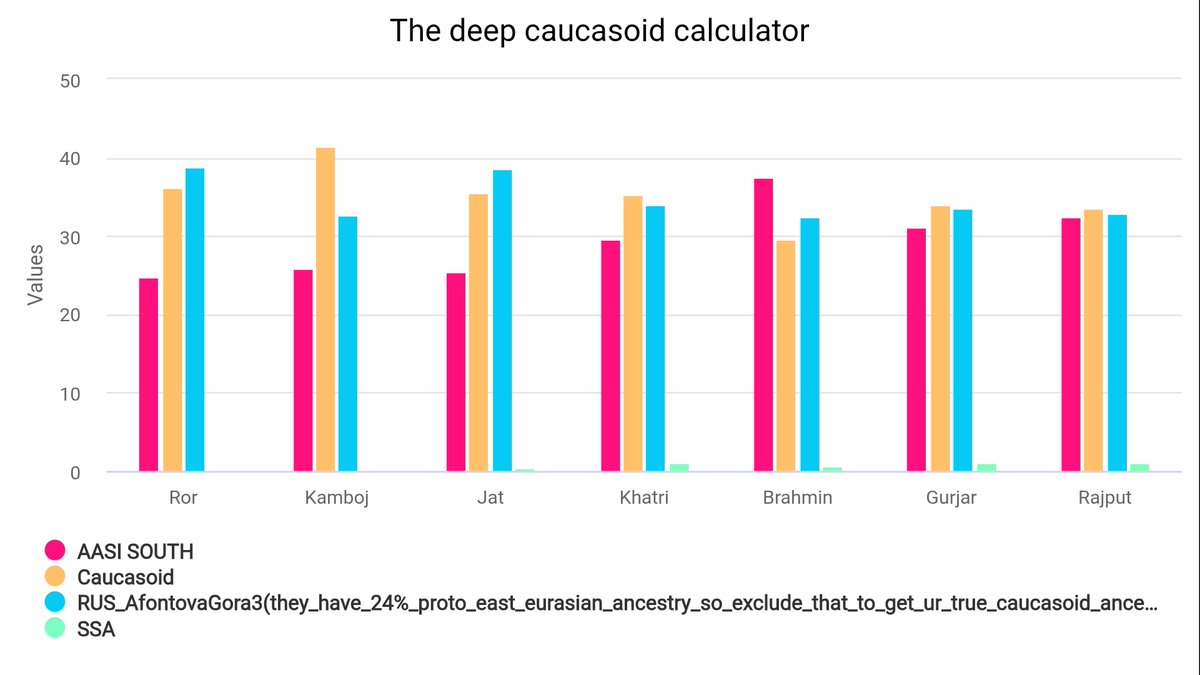
Real Deep Caucasoid = Main Caucasoid + (ANE × 0.76)
(Kyunki Ancient North Eurasians me ~24% East Asian hota hai, to sirf 76% hi “remnant caucasoid” count karte ho)
Ror: 65.6%, Kamboj: 65.7%, Jat: 64.3%, Khatri: 60.8%, Gurjar: 59.5%, Rajput: 58.6%, Brahmin: 53.8%
@Afghan_DNA#dna
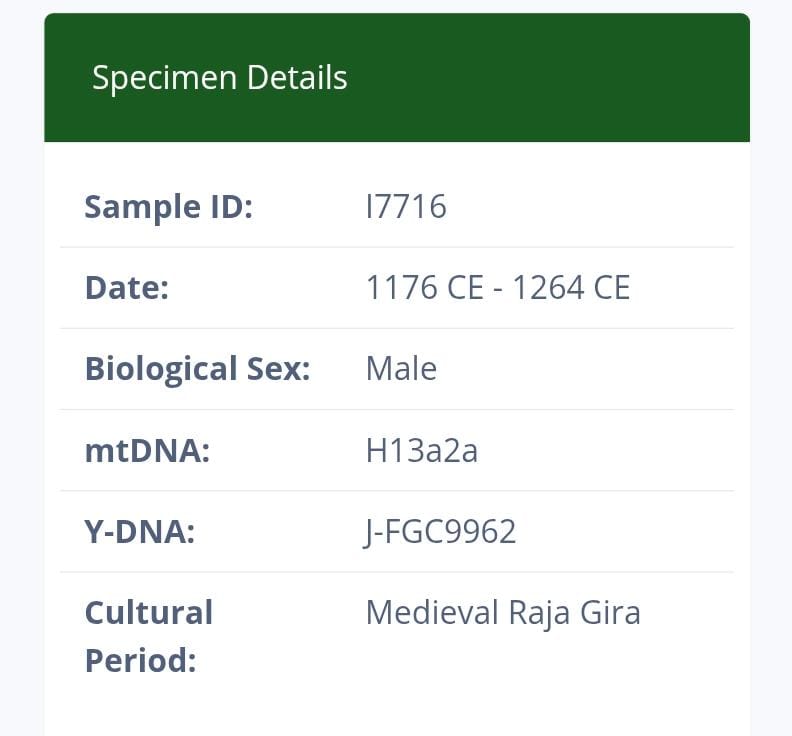
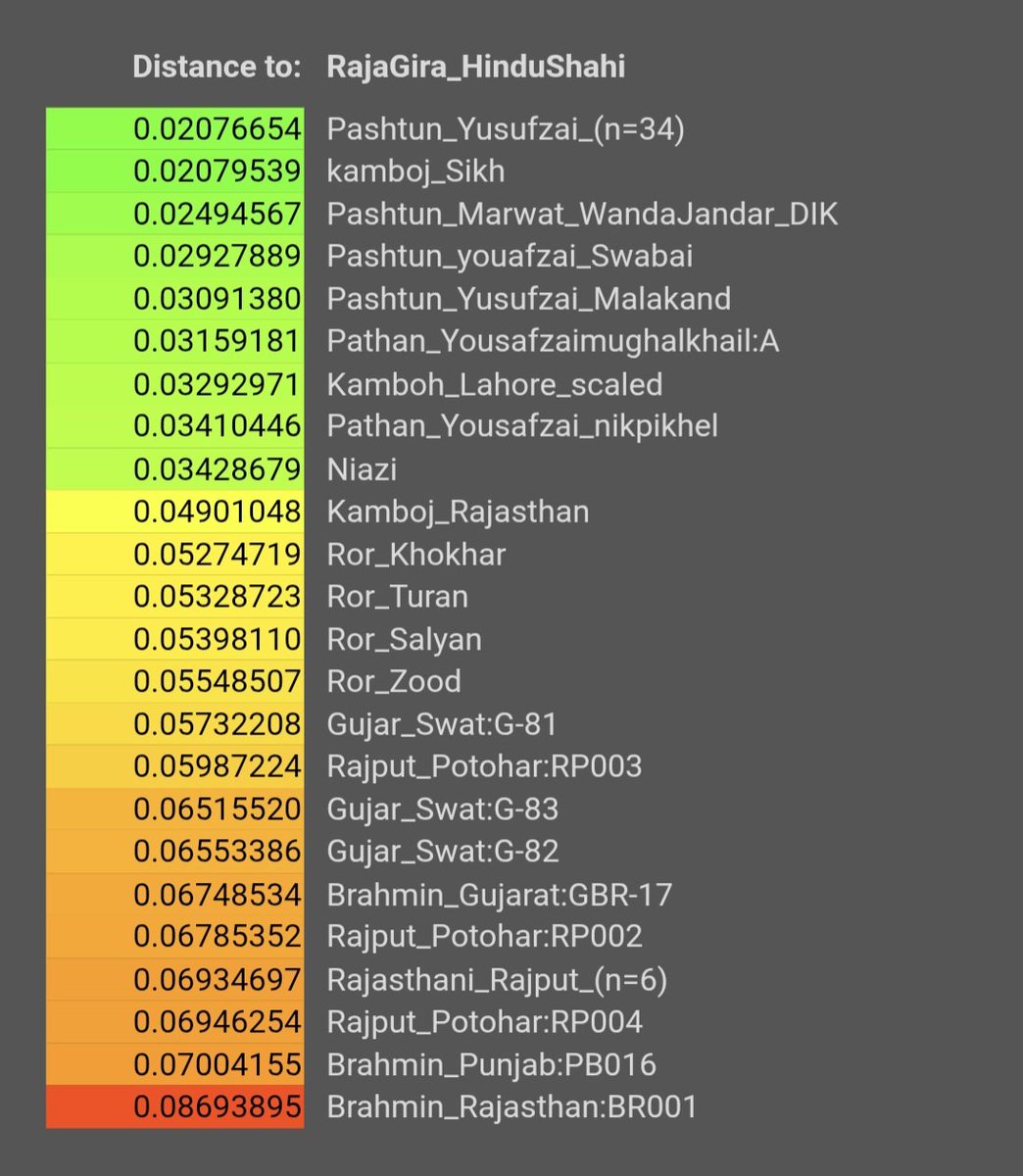
Genetically closest populations to Raja Gira of Odi/Hodi Tribe, The last Hindu Shahi ruler of Swat, based in the Odigram region of modern-day Pakistan. Y haplo: J-FGC9962, mtDNA: H13a2a, Closest Population: Yusufzai Pashtuns
@XYZ_Kapisa1@Afghan_DNA The Garuda Purana and Brahata Samhita also locate the Kamboja people near the Saurashtra/Gujarat region, which suggests a migration or a second settlement of the Kamboja tribe in southwestern India during the post-Vedic period (around the 2nd/1st century
Vishnupalita Kambhoja (also Vhenupalita) was a ruler from the ancient Kamboja lineage, known from Buddhist inscriptions in Maharashtra's Kolaba district (Gandharpale caves), likely ruling around the 2nd century CE in the Kolaba region,
@Afghan_DNA@XYZ_Kapisa1
@M_alMirani pamiris are perhaps better example of ancient kamboj from Central Asia, before moving to India, since Central Asia was bmac + steppe.
Moving from northeast afg into India, they mixed with other punjabis. To this day they still iranic shifted, specially some outliers @M_alMirani






![XYZ_Kapisa1's tweet photo. According to MBH[12.166.74-75-see attachment], EARLIEST ref to “Kamboja” appears in name of Kamboja Kśatriya prince who is contemporary & probably adversary of Kosala Kśatriya ruler Dhundumara(=Kuvalaśava). According to Pargiter’s Ancient Indian Historical Tradition, (AIHT)….6/n https://t.co/YUUsl8FTCS](https://pbs.twimg.com/media/G6Dy8MJaYAAntqZ.jpg)
![XYZ_Kapisa1's tweet photo. According to MBH[12.166.74-75-see attachment], EARLIEST ref to “Kamboja” appears in name of Kamboja Kśatriya prince who is contemporary & probably adversary of Kosala Kśatriya ruler Dhundumara(=Kuvalaśava). According to Pargiter’s Ancient Indian Historical Tradition, (AIHT)….6/n https://t.co/YUUsl8FTCS](https://pbs.twimg.com/media/G6Dy8MHbMAEc2fa.jpg)



![XYZ_Kapisa1's tweet photo. According to MBH[12.166.74-75-see attachment], EARLIEST ref to “Kamboja” appears in name of Kamboja Kśatriya prince who is contemporary & probably adversary of Kosala Kśatriya ruler Dhundumara(=Kuvalaśava). According to Pargiter’s Ancient Indian Historical Tradition, (AIHT)….6/n https://t.co/YUUsl8FTCS](https://pbs.twimg.com/media/G6Dy8MOaQAAOrJj.jpg)