100 visitors to my 'Artificial intelligence-driven insights into Arab media’s sustainable development goals coverage' article published in #OpenAccess journal @PeerJCompSci https://t.co/T0XtQqADHz
This is insane 😳
Most people are just using AI tools
Very few actually understand how they work
So I collected Stanford’s complete LLM curriculum
and turned it into a step-by-step learning path
Worth over $500
Giving it away free for the first 4,500 people
Transformers → Training → Alignment → Agents → Evaluation
Study this once and you’ll stop guessing with prompts
and start thinking like a real AI engineer
How to get it:
Follow must (so i can dm you)
Rt and comment 'LLM'
🚨 Prompt engineering is officially outdated.
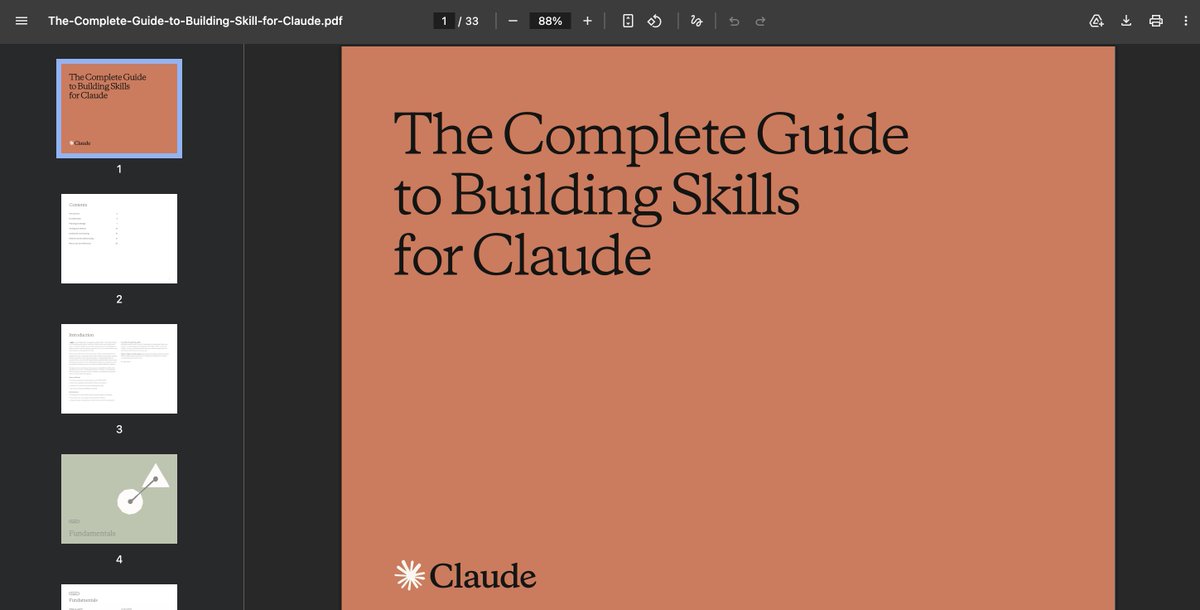
Anthropic just released the real playbook for building AI agents that actually work.
It’s a 30+ page deep dive called The Complete Guide to Building Skills for Claude and it quietly shifts the conversation from “prompt engineering” to real execution design.
Here’s the big idea:
A Skill isn’t just a prompt.
It’s a structured system.
You package instructions inside a https://t.co/aldvvbZeVI file, optionally add scripts, references, and assets, and teach Claude a repeatable workflow once instead of re-explaining it every chat.
But the real unlock is something they call progressive disclosure.
Instead of dumping everything into context:
• A lightweight YAML frontmatter tells Claude when to use the skill
• Full instructions load only when relevant
• Extra files are accessed only if needed
Less context bloat. More precision.
They also introduce a powerful analogy:
MCP gives Claude the kitchen.
Skills give it the recipe.
Without skills: users connect tools and don’t know what to do next.
With skills: workflows trigger automatically, best practices are embedded, API calls become consistent.
They outline 3 major patterns:
1) Document & asset creation
2) Workflow automation
3) MCP enhancement
And they emphasize something most builders ignore: testing.
Trigger accuracy.
Tool call efficiency.
Failure rate.
Token usage.
This isn’t about clever wording.
It’s about designing an execution layer on top of LLMs.
Skills work across https://t.co/taoTr8bSkU, Claude Code, and the API. Build once, deploy everywhere.
The era of “just write a better prompt” is ending.
Anthropic just handed everyone a blueprint for turning chat into infrastructure.
Download the guide here: https://t.co/0SgDRAMhSg
#البحث_العلمي
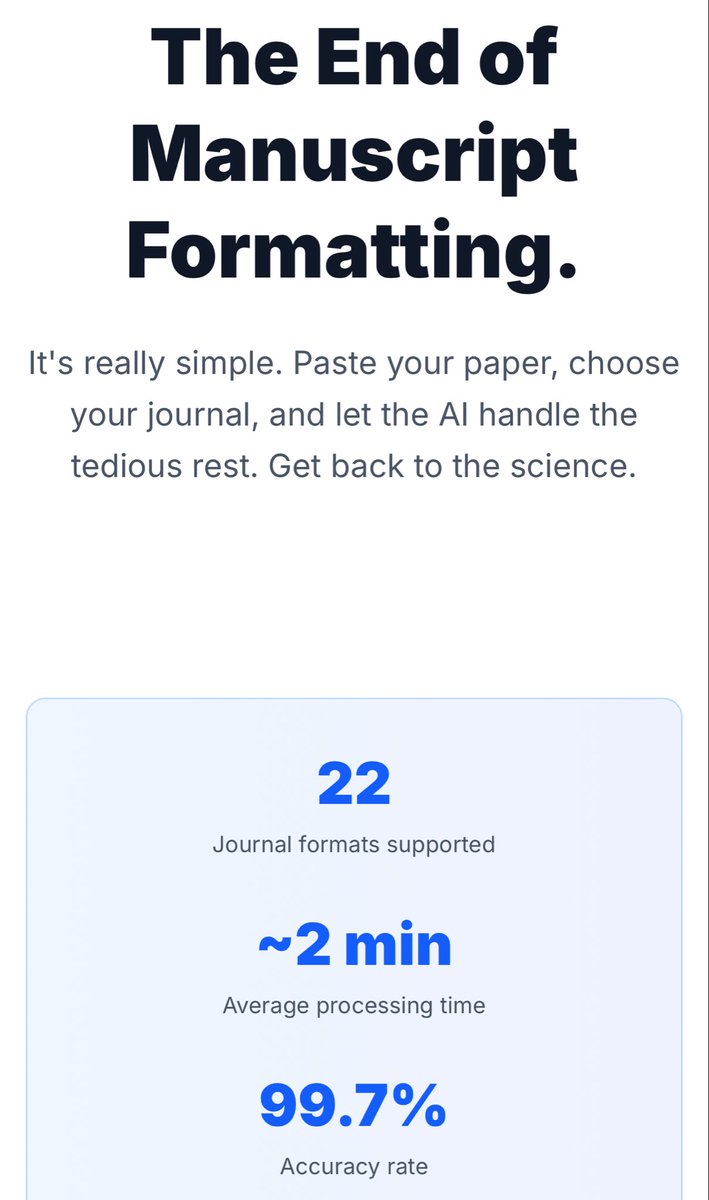
موقع FormatMyPaper يقدم حلاً لتنسيق الأوراق العلمية وفق معايير النشر الأكاديمي.
يمكن للباحثين رفع أبحاثهم، ثم اختيار المجل�� المطلوبة، والحصول على تنسيق خلال دقائق معدودة.
أداة تعتمد على الذكاء الاصطناعي وتدعم ٢٢ قالب مجلة.
جرّبوها 📝
https://t.co/HUU03w8BAP
Updated & turned my Big LLM Architecture Comparison article into a narrated video lecture.
The 11 LLM architectures covered in this video:
1. DeepSeek V3/R1
2. OLMo 2
3. Gemma 3
4. Mistral Small 3.1
5. Llama 4
6. Qwen3
7. SmolLM3
8. Kimi 2
9. GPT-OSS
10. Grok 2.5
11. GLM-4.5
My position paper “LLM Alignment for the Arabs: A Homogenous Culture or Diverse Ones?” got accepted to the @c3_nlp workshop co-located with @naaclmeeting.
I share concerns about the missed opportunities with the rise of Arabic-specific LLMs.
📜https://t.co/18I801K1Ij
(1/4)
@Magikaaa@ylecun Same as:
Do you have as much knowledge as Google search?
Can you provide answers to almost anything?
LLM are just an enhanced search engine.