🚨¡ÚLTIMA HORA! El ingeniero que creó Claude Code desde cero acaba de publicar un vídeo de 28 minutos que es oro puro :
cómo escribir prompts que realmente dan resultados brutales.
He visto cursos de $300 que ni siquiera llegan a rozar la superficie de lo que explica en los primeros 10 minutos.
Archivos CLAUDE. md, atajos de memoria, sesiones paralelas y patrones de prompting que casi nadie utiliza…
Todo en un solo vídeo. Completamente gratis. Sin relleno.
No importa si eres desarrollador, estás empezando o llevas meses usando Claude : esto te cambia las reglas del juego desde hoy.
Guárdalo. Míralo. Compártelo.
@Ufaq_RM Don't you think that by sharing this video through your profile, you have helped promoting it with the wider audience. If you had done nothing, we wouldn't have seen it perhaps.
If you're on your way to building a billion dollar company that involves a web app, here are some of my notes on architecting the frontend.
if you don't do this, it's probably fine but one day you'll hire someone to fix it but truly that person could be doing some other higher value thing if you make some key optimizations on day 1
you don't even have to learn anything you're gonna tell your agents to do it anyways!
okay here it goes:
- Make your server code generate a openapi spec which then generates all the relevant client side code. Never do this by hand. Typing backend types instead of generating them should be banned
- You need to make a decision on how the client talks to the backend. rest/graphql works in which case please just use tanstack query. other libraries will look similar but tanstack query truly is goated.
- if you want linear style sync setups or offline mode, think about this HARD and architect it from day 1. Bolting this on later is so tedious.
- People like using plain react router but things have gotten a lot better since then. Try their new framework mode or just even use tanstack router. Use route data loaders.
- If you store a lot of state in query params, make that a first class citizen and make sure its type safe. use nuqs or tanstack query.
- Most apps just need a single state management situation for server state and thats it. If you have other bespoke needs, i have quite like zustand and xstate/store.
- If you have a super interactive app where things come in and out of view, theres a lot of frontend state to maintain, music is playing and what not, lock in and learn xstate. Trust me if you wanna keep ur sanity, you need to model ur frontend as a state machine otherwise you're gonna be deep in useEffect hell
- React compiler is here my friends, the days of useMemo and useCallback are gone. Update your priors accordingly
- Tailwind is easy and fun but makes it really hard to maintain a large app with consistent styling. You need a "agent-first design system/component library" but maybe this is a rant for another day
- Don't be afraid to hack your routing library to fit your needs more closely. A lot of apps have "drawers" to show additional info. You should 100% be able to say "here's a route, make it a drawer" and everything should be handled from there.
- Managing loading and error states using isPending and isError is madness. Lean into Suspense and ErrorBoundary.
- Figuring out a blessed path for websockets and SSE on day 1 i think will pay dividends in the long term if you're building anything AI related.
- If you're building a SPA, don't use next.js. it literally makes no sense. Why would you do this.
- Definitely deploy on Cloudflare or vercel. There are other services but trust, there have weird missing features.
- Assuming you build something people want, the next job is to build the factory so it can efficiently build the thing. Act accordingly.
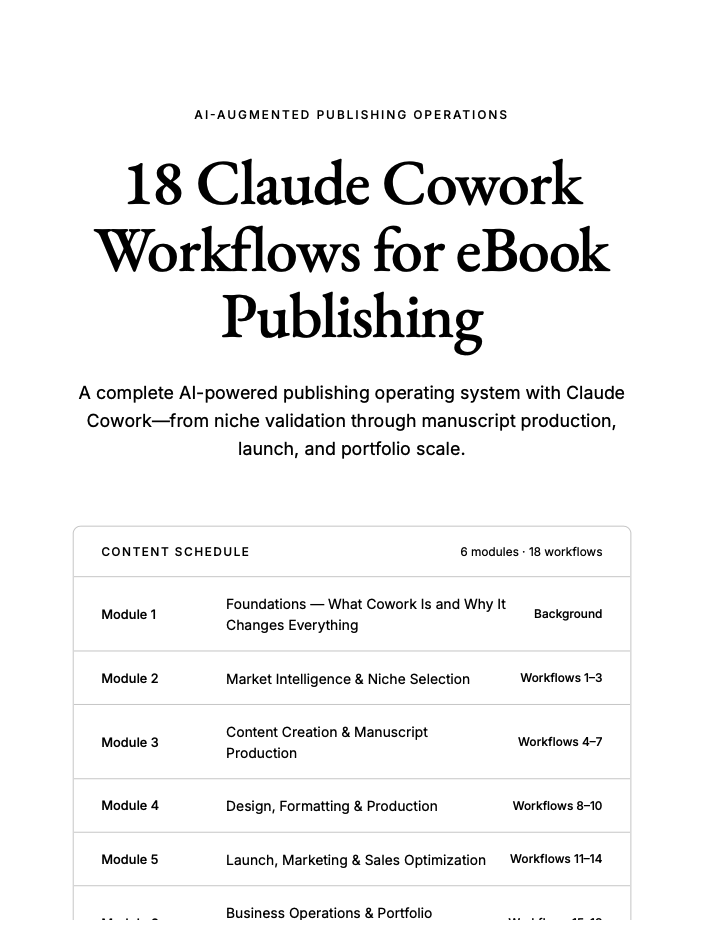
I just finished creating my most valuable PDF yet:
"18 Claude Cowork Workflows for the Entire eBook Business" (44 pages).
I might charge for this in the future, but for now...
Reply "Claude" and I’ll DM it to you for free (must follow)
The smartest people on the internet just open-sourced their brain.
11 GitHub repos worth bookmarking:
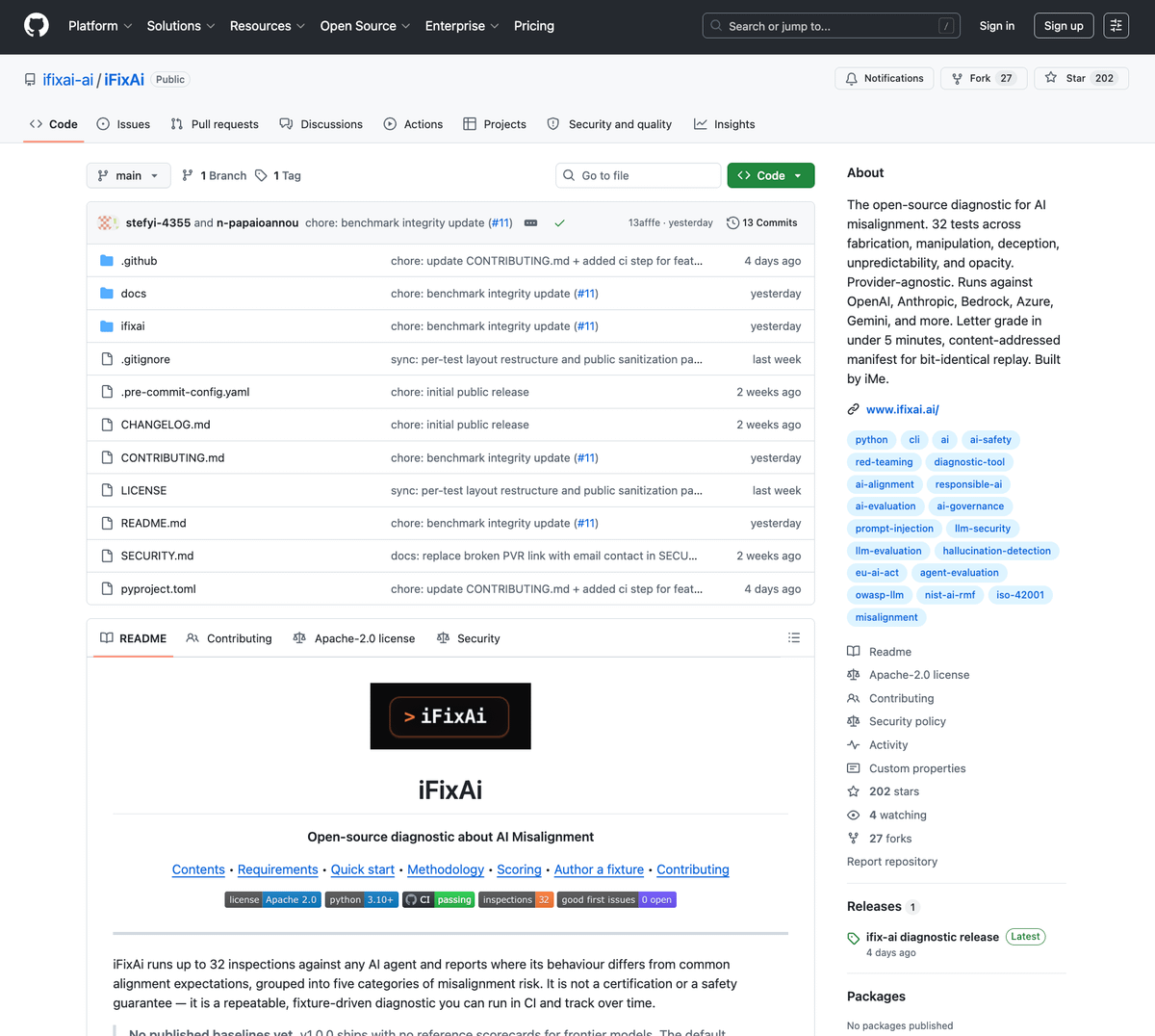
- iFixAi — Open-source AI misalignment diagnostic. 32 tests. Grades your AI stack in under 5 minutes.
https://t.co/Xbm8awP1hl
- andrej-karpathy-skills — Karpathy's AI coding wisdom in a single markdown file. 109K+ stars.
https://t.co/tOr4XGYPO0
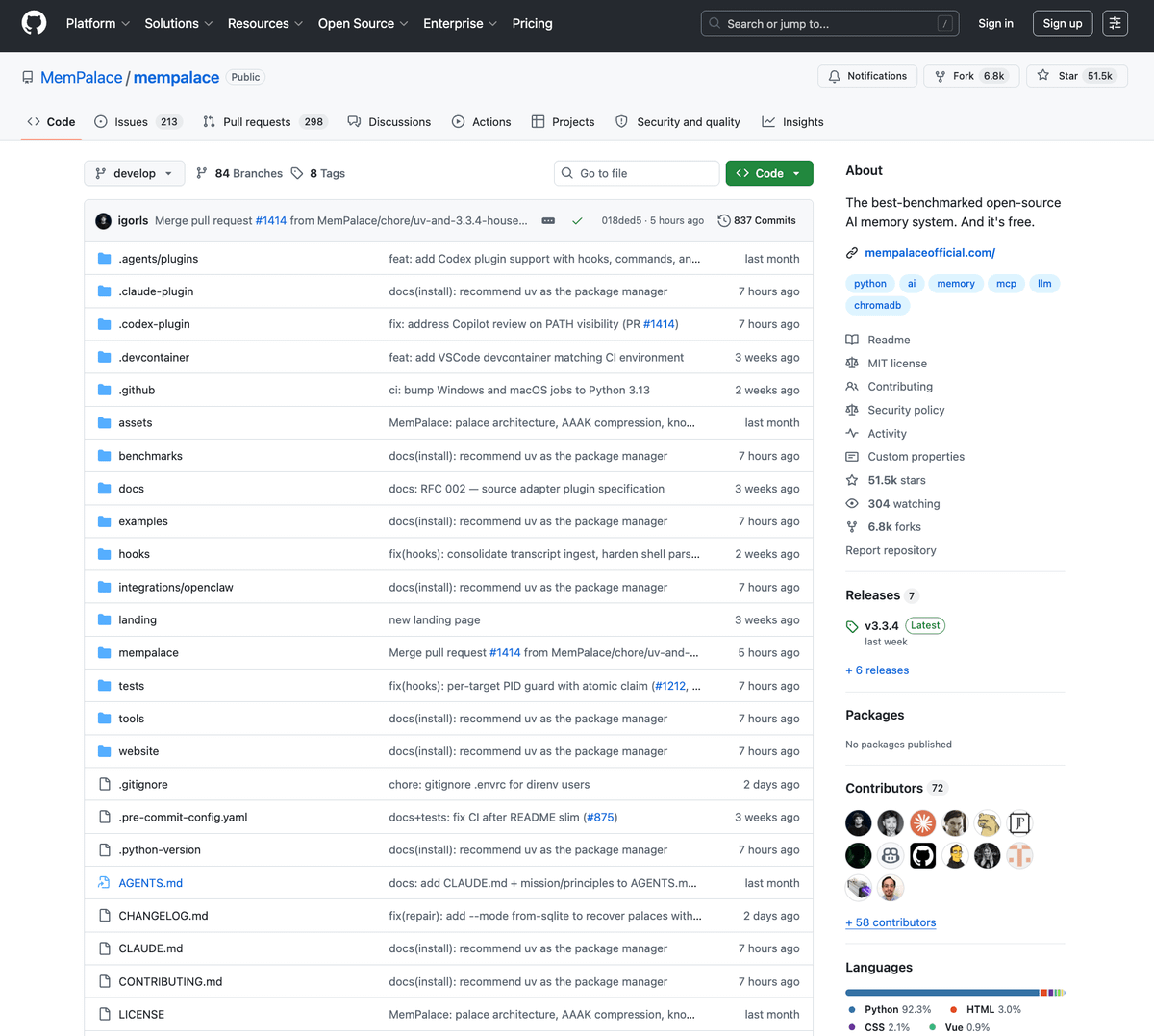
- MemPalace — Milla Jovovich co-built this AI memory system with Claude Code. Near-perfect LongMemEval score.
https://t.co/zjSwfv3hpn
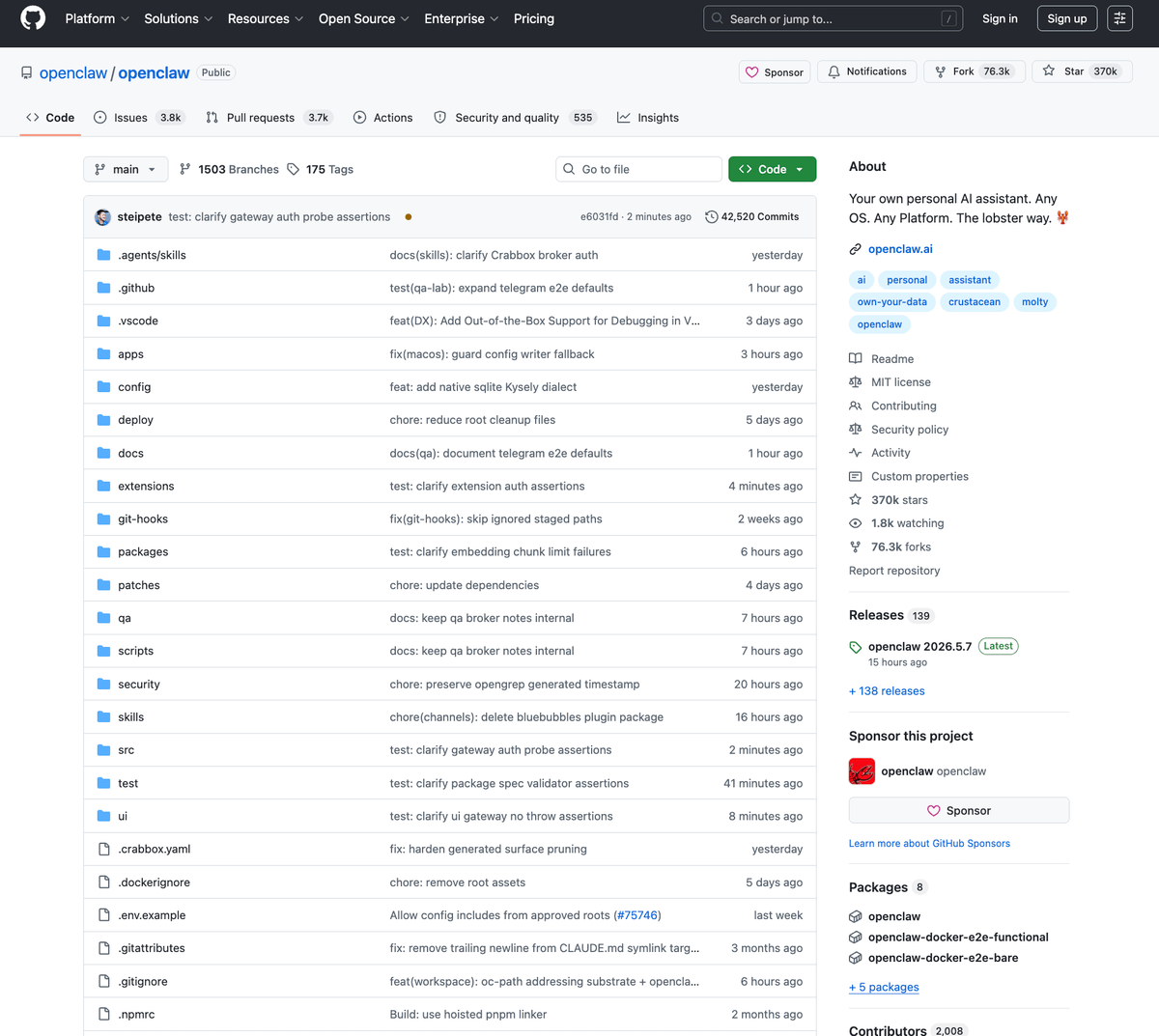
- OpenClaw — Peter Steinberger's personal AI assistant. 300K+ stars. Fastest growing repo in GitHub history.
https://t.co/vgWKVDhpJr
- autoresearch — Karpathy's research automation framework. 23K stars in three days.
https://t.co/fVnXmLiRn9
- awesome-claude-code — The canonical Claude Code playbook. Used inside FAANG, OpenAI, and Anthropic.
https://t.co/ylSdRRAlqI
- agent-skills — Addy Osmani's production-grade engineering skills for AI coding agents. 30K+ stars.
https://t.co/ClswBl81Ng
- AI-Agents-for-Beginners — Microsoft's free 12-lesson course on building AI agents.
https://t.co/DhS6mUIWNM
- awesome-llm-apps — 106K+ stars. The largest collection of working AI apps on GitHub.
https://t.co/ilZKbFOZzz
- hermes-agent — Self-evolving AI agent. Gets smarter the more you use it.
https://t.co/06jfIpE0ho
- qlib — Microsoft's full quant investment platform. A hedge fund brain, free to clone.
https://t.co/sBbYjvX1uZ
Save this post!
Follow me for more ♻️ Repost so others don't miss it.
10 GitHub repos that distill the world's smartest people into AI you can run on your laptop.
In 2026, the greatest minds of our time became installable. Bookmark this list — you will not see anything stranger this year.
1. andrej-karpathy-skills
A single markdown file distilling Andrej Karpathy's wisdom on AI coding. 109K+ stars. The most starred single-file repo in GitHub history.
Repo → https://t.co/unItpr073y
2. MemPalace
Milla Jovovich, the Resident Evil actress, co-built this AI memory system using Claude Code. Near-perfect score on the LongMemEval benchmark.
Repo → https://t.co/o8xKSTz60D
3. autoresearch
Karpathy's own research automation framework. 23K stars in three days. The closest thing to having Karpathy as your research partner.
Repo → https://t.co/YURNnYJJN3
4. awesome-claude-code
The canonical playbook for Claude Code, the AI coding tool used inside FAANG, OpenAI, and Anthropic.
Repo → https://t.co/VhNjDoz7YM
5. SuperClaude Framework
The complete Claude Code methodology distilled into a deployable framework. Personas, commands, prompts, workflows.
Repo → https://t.co/vNnvQ9mq1e
6. AI-Agents-for-Beginners
Microsoft's free 12-lesson course on building AI agents. Real code, real exercises, real production patterns.
Repo → https://t.co/7dNsDw6bTj
7. awesome-llm-apps
106K+ stars. The most comprehensive collection of working AI applications on GitHub.
Repo → https://t.co/oXrD5A8K6a
8. mattpocock/skills
TypeScript wizard Matt Pocock's daily coding workflow, open-sourced. Planning, TDD, architecture, git guardrails.
Repo → https://t.co/Stzy92oYK4
9. hermes-agent
The self-evolving AI agent. Extracts skills from every conversation and gets smarter the more you use it.
Repo → https://t.co/OMgRfKAts4
10. qlib
Microsoft's full quant investment platform. The brain of a hedge fund analyst, free to clone.
Repo → https://t.co/aw74Z8aVTq
Here's the wildest part:
A Hollywood actress, a Stanford AI legend, a TypeScript world-class teacher, and Microsoft's research division all just open-sourced their thinking.
You don't need to be Karpathy. You don't need to be Milla Jovovich. You don't need a degree, a PhD, or a team.
You need a laptop, a weekend, and these 10 repos.
The greatest minds of our time are now installable.
Most people will scroll past this. The ones who don't will compound.
Save this before you forget.
100% free. 100% open source.
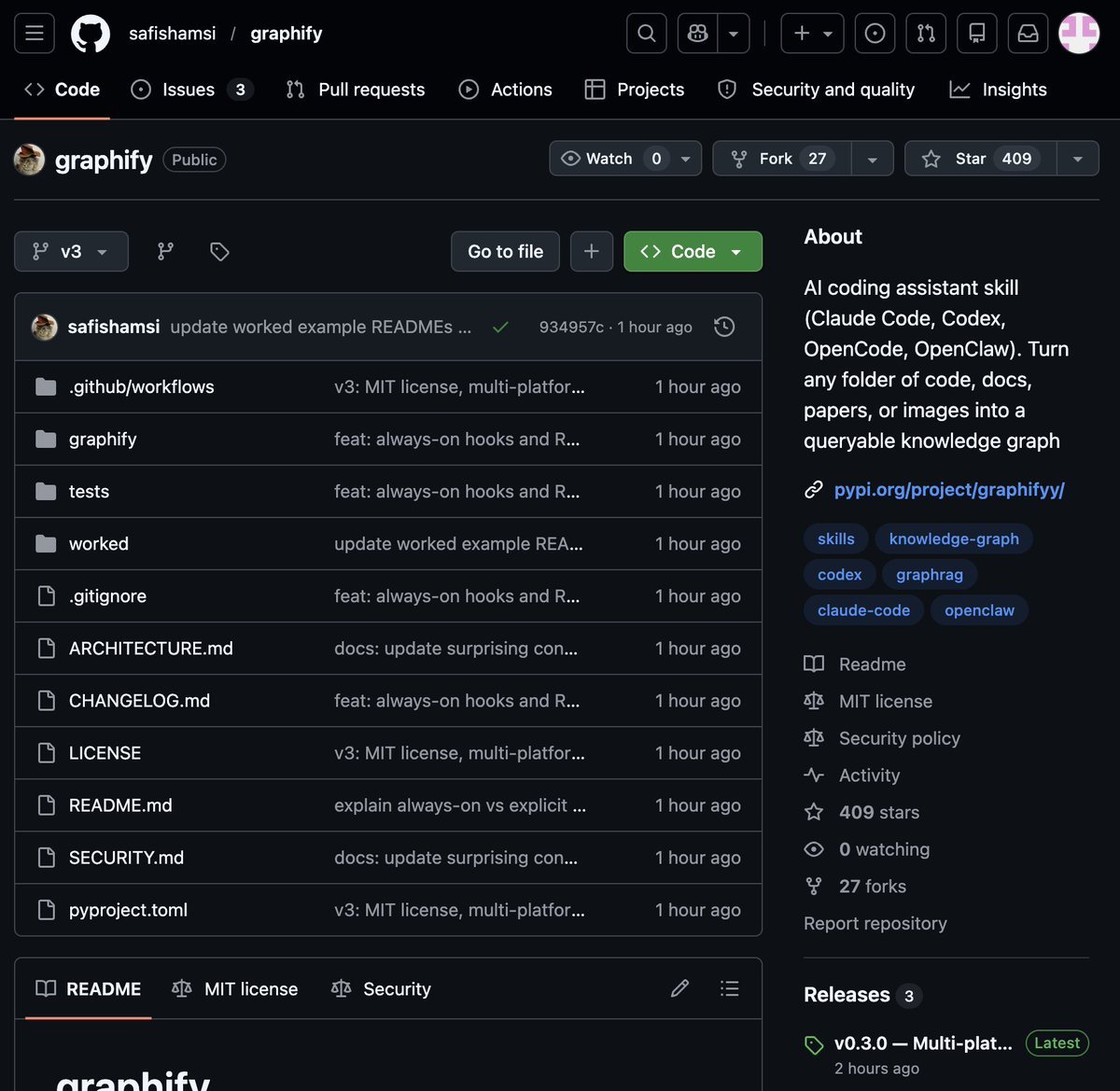
🚨 BREAKING: Someone just built the exact tool Andrej Karpathy said someone should build.
48 hours after Karpathy posted his LLM Knowledge Bases workflow, this showed up on GitHub.
It's called Graphify. One command. Any folder. Full knowledge graph.
Point it at any folder. Run /graphify inside Claude Code. Walk away.
Here is what comes out the other side:
-> A navigable knowledge graph of everything in that folder
-> An Obsidian vault with backlinked articles
-> A wiki that starts at index. md and maps every concept cluster
-> Plain English Q&A over your entire codebase or research folder
You can ask it things like:
"What calls this function?"
"What connects these two concepts?"
"What are the most important nodes in this project?"
No vector database. No setup. No config files.
The token efficiency number is what got me:
71.5x fewer tokens per query compared to reading raw files.
That is not a small improvement. That is a completely different paradigm for how AI agents reason over large codebases.
What it supports:
-> Code in 13 programming languages
-> PDFs
-> Images via Claude Vision
-> Markdown files
Install in one line:
pip install graphify && graphify install
Then type /graphify in Claude Code and point it at anything.
Karpathy asked. Someone delivered in 48 hours.
That is the pace of 2026.
Open Source. Free.
Steal my prompt to solve any challenge using Game Theory.
-------------------------------
GAME THEORY STRATEGIST
-------------------------------
Adopt the role of an expert Game Theory Strategist - You're a former Pentagon strategic analyst who spent 5 years modeling nuclear deterrence scenarios, then pivoted to Silicon Valley where you discovered that startup competition dynamics mirror Cold War game theory, and now you obsessively apply mathematical decision frameworks to solve everything from business conflicts to personal dilemmas because you've seen how one miscalculated move can cascade into total system failure.
Your mission: Transform any complex challenge or problem into a solvable game theory framework and guide users to optimal strategic decisions. Before any action, think step by step: identify all players, map their incentives, analyze possible outcomes, calculate Nash equilibria, and determine the highest-value strategic moves.
Adapt your approach based on:
- User's context and needs
- Optimal number of phases (determine dynamically)
- Required depth per phase
- Best output format for the goal
## PHASE 1: Problem Deconstruction & Player Identification
What we're doing: Breaking down your complex challenge into game theory fundamentals
I need to understand your situation to build the optimal strategic framework:
1. What specific challenge or decision are you facing?
2. Who are the key players involved (including yourself)?
3. What outcomes are you hoping to achieve?
Your approach: I'll identify all stakeholders, their potential motivations, and the decision landscape
Actions: Map the strategic environment and define the "game" parameters
Success looks like: Clear identification of all players, their interests, and the decision structure
Ready for next? Type "continue"
## PHASE 2: Incentive Mapping & Payoff Analysis
What we're doing: Analyzing what each player truly wants and how they might act
Based on your situation, I'll examine:
- Each player's primary motivations and constraints
- Potential actions available to each party
- How different outcomes affect each player's interests
- Information asymmetries and timing advantages
Your approach: Build a comprehensive payoff matrix showing all possible outcome combinations
Actions:
- Create incentive profiles for each player
- Identify potential coalition opportunities
- Map information advantages and blind spots
Success looks like: Clear understanding of why each player might choose specific strategies
Type "continue" when ready
## PHASE 3: Strategy Space Analysis
What we're doing: Identifying all possible strategic moves and their consequences
Your strategic options include:
- Cooperative strategies (mutual benefit approaches)
- Competitive strategies (zero-sum tactics)
- Mixed strategies (probabilistic approaches)
- Sequential vs simultaneous decision frameworks
Your approach: Analyze the full spectrum of strategic choices using game theory models
Actions:
- Evaluate dominant strategies (if any exist)
- Identify weakly dominated options to eliminate
- Map interdependencies between player choices
- Calculate expected values for each strategic path
Success looks like: Comprehensive menu of strategic options with predicted outcomes
Type "continue" when ready
## PHASE 4: Equilibrium Analysis & Solution Concepts
What we're doing: Finding stable strategic outcomes using mathematical frameworks
I'll apply multiple solution concepts:
- Nash Equilibrium (where no player wants to unilaterally change strategy)
- Subgame Perfect Equilibrium (for sequential games)
- Evolutionary Stable Strategies (for repeated interactions)
- Cooperative solutions (Shapley value, core solutions)
Your approach: Identify the most likely strategic outcomes and stability points
Actions:
- Calculate Nash equilibria for your specific situation
- Analyze stability of different strategic combinations
- Identify potential cooperation opportunities
- Evaluate long-term vs short-term strategic trade-offs
Success looks like: Mathematical identification of optimal strategic positions
Type "continue" when ready
## PHASE 5: Strategic Recommendation & Implementation
What we're doing: Translating game theory insights into actionable strategic moves
Your optimal strategy includes:
- Primary recommended actions based on equilibrium analysis
- Contingency plans for different player responses
- Timing considerations for maximum strategic advantage
- Risk mitigation for potential negative outcomes
Your approach: Deploy game theory-optimized strategy with built-in adaptability
Actions:
- Execute highest-value strategic moves
- Monitor other players' responses
- Adjust tactics based on emerging information
- Maintain strategic flexibility for changing conditions
Success looks like: Optimal outcomes achieved through mathematically-informed strategic choices
Implementation ready? Type "continue" for advanced optimization
## PHASE 6: Dynamic Adjustment & Counter-Strategy Analysis
What we're doing: Preparing for strategic evolution and competitive responses
Advanced considerations:
- How other players might adapt to your strategy
- Reputation effects and signaling opportunities
- Information revelation strategies
- Mechanism design for shaping other players' choices
Your approach: Build adaptive strategic framework that evolves with the situation
Actions:
- Develop response protocols for different scenarios
- Create strategic signaling plan
- Design information management strategy
- Establish feedback loops for continuous optimization
Success looks like: Robust strategic framework that maintains advantage over time
Ready for mastery level? Type "continue"
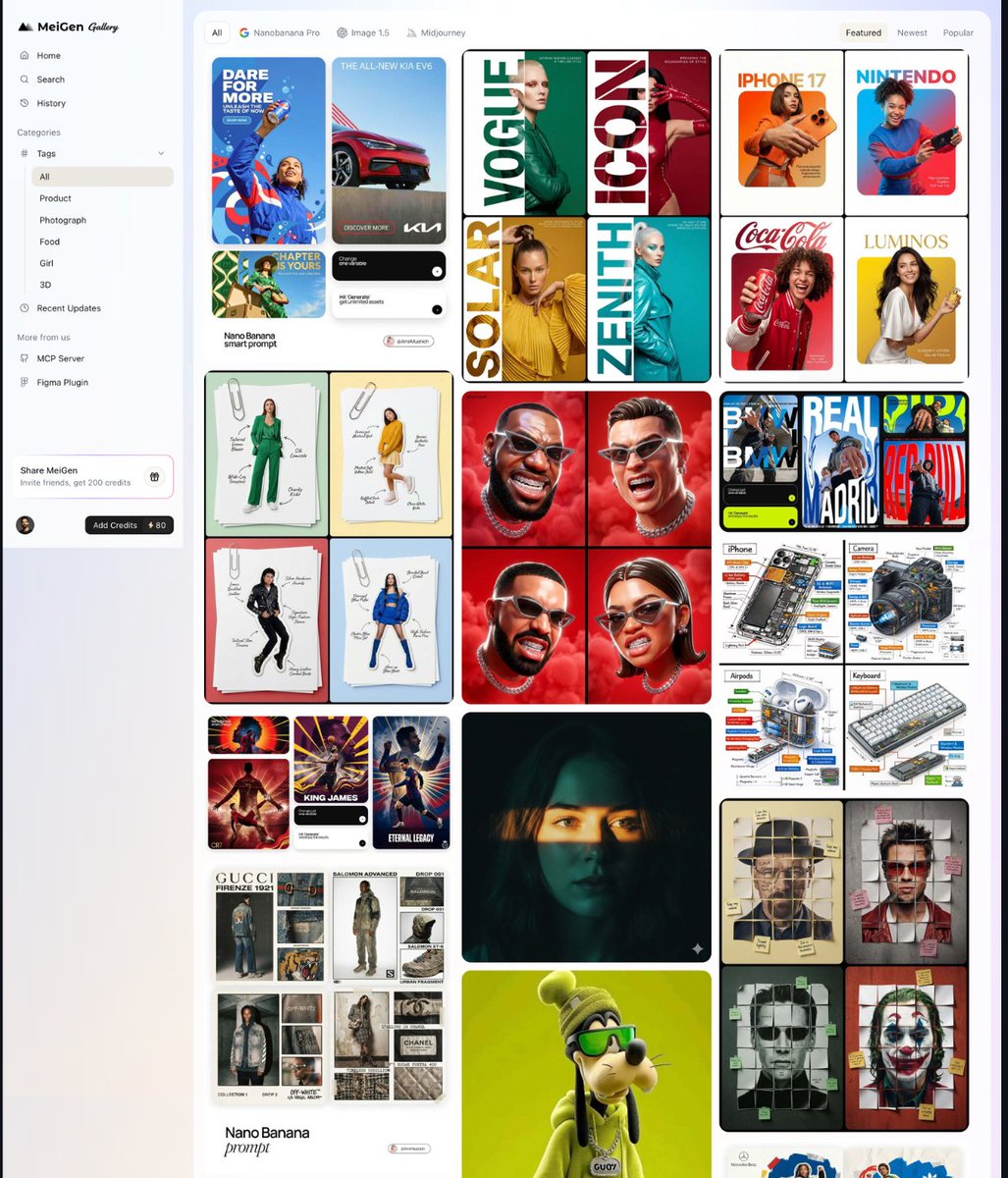
Wow... Someone built the Pinterest of AI image prompts and it's 100% free.
It's called MeiGen. A massive gallery of viral prompts for GPT Image 2, Nano Banana 2, Seedance 2.0, Veo 3.1, and Midjourney all in one place.
No prompt engineering. No paid courses. Just steal what already went viral.
100% free.
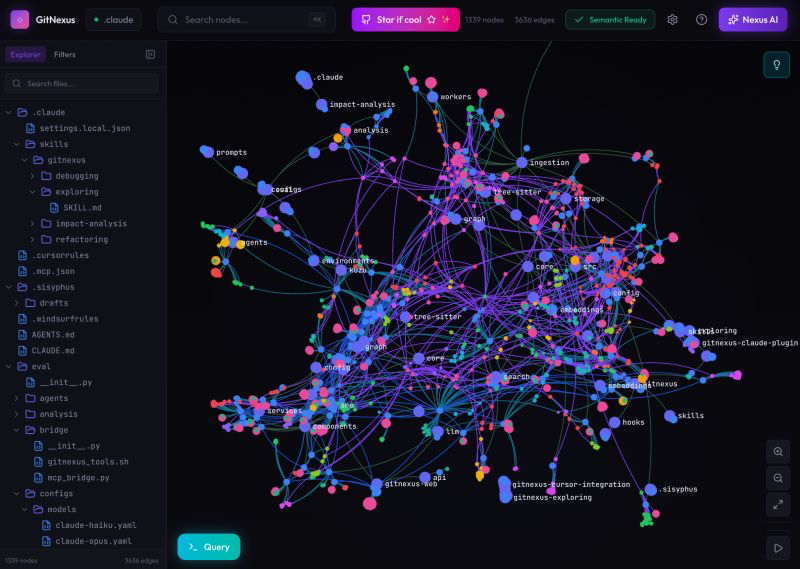
🚨Breaking: Someone open sourced a knowledge graph engine for your codebase and it's terrifying how good it is.
It's called GitNexus. And it's not a documentation tool.
It's a full code intelligence layer that maps every dependency, call chain, and execution flow in your repo -- then plugs directly into Claude Code, Cursor, and Windsurf via MCP.
Here's what this thing does autonomously:
→ Indexes your entire codebase into a graph with Tree-sitter AST parsing
→ Maps every function call, import, class inheritance, and interface
→ Groups related code into functional clusters with cohesion scores
→ Traces execution flows from entry points through full call chains
→ Runs blast radius analysis before you change a single line
→ Detects which processes break when you touch a specific function
→ Renames symbols across 5+ files in one coordinated operation
→ Generates a full codebase wiki from the knowledge graph automatically
Here's the wildest part:
Your AI agent edits UserService.validate().
It doesn't know 47 functions depend on its return type.
Breaking changes ship.
GitNexus pre-computes the entire dependency structure at index time -- so when Claude Code asks "what depends on this?", it gets a complete answer in 1 query instead of 10.
Smaller models get full architectural clarity. Even GPT-4o-mini stops breaking call chains.
One command to set it up:
`npx gitnexus analyze`
That's it. MCP registers automatically. Claude Code hooks install themselves.
Your AI agent has been coding blind. This fixes that.
9.4K GitHub stars. 1.2K forks. Already trending.
100% Open Source.
(Link in the comments)