The plan is to make Kenya a failed state;
1. Destroy the middle class.
-shut down manufacturing companies.
-overtax the working class.
-inflation.
-hike the cost of living.
-no increments on salaries.
2. Turn everyone into a beggar.
-introduce digital currency.
-government as biggest employer.
-destroy informal sector.
-divest manufacturing.
-over regulate/ over tax small and medium enterprises.
-subsidise corporates.
3. Privatize land.
-give access to farmland to global agricultural multinationals.
-bills that take away land sovereignty from the citizen.
-introduce a land tax.
-create squatters.
4. Control housing.
-15 minute cities.
-over surveillance.
-avoidable housing for those who can't afford a tax on their freehold land.
5. Destroy seed sovereignty.
-introduce only patented seedlings.
-prioritise GMOs and hybrids.
-demonize indigenous seeds and organic farming.
-pass bills that curtail the growth and aspirations of small scale farmers.
6. Privatize water.
-force a people to need a license to harvest rain water, rivers or dams.
-overtax boreholes so only the rich can afford them.
-give global beverage and bottled water companies uninhibited access.
7. Enslave the nation in debt.
-borrow from global banking cartels;
IMF, World Bank, China EXIM Bank, European Central Bank, African Development Bank...
-squander taxes.
-loot borrowed money.
-use national assets as colateral for debt.
8. Destroy Sovereignty.
-allow foreign military bases in your land.
-allow foreign governments say so in your socio-economic/ political issues.
-allow biological weapons labs.
-allow for looting of mineral wealth and natural resources.
9. Create an illiterate populace.
-remove free education.
-introduce a new education model without proper planning.
-allow globalist entities to fund your curriculum.
-dumb down the learners.
-divest/privatise higher learning institutions.
10. Devalue the currency.
-print fiat without regulation.
-inflation.
-loot gold and silver reserves.
-allow global banking cartels to set fiscal policy.
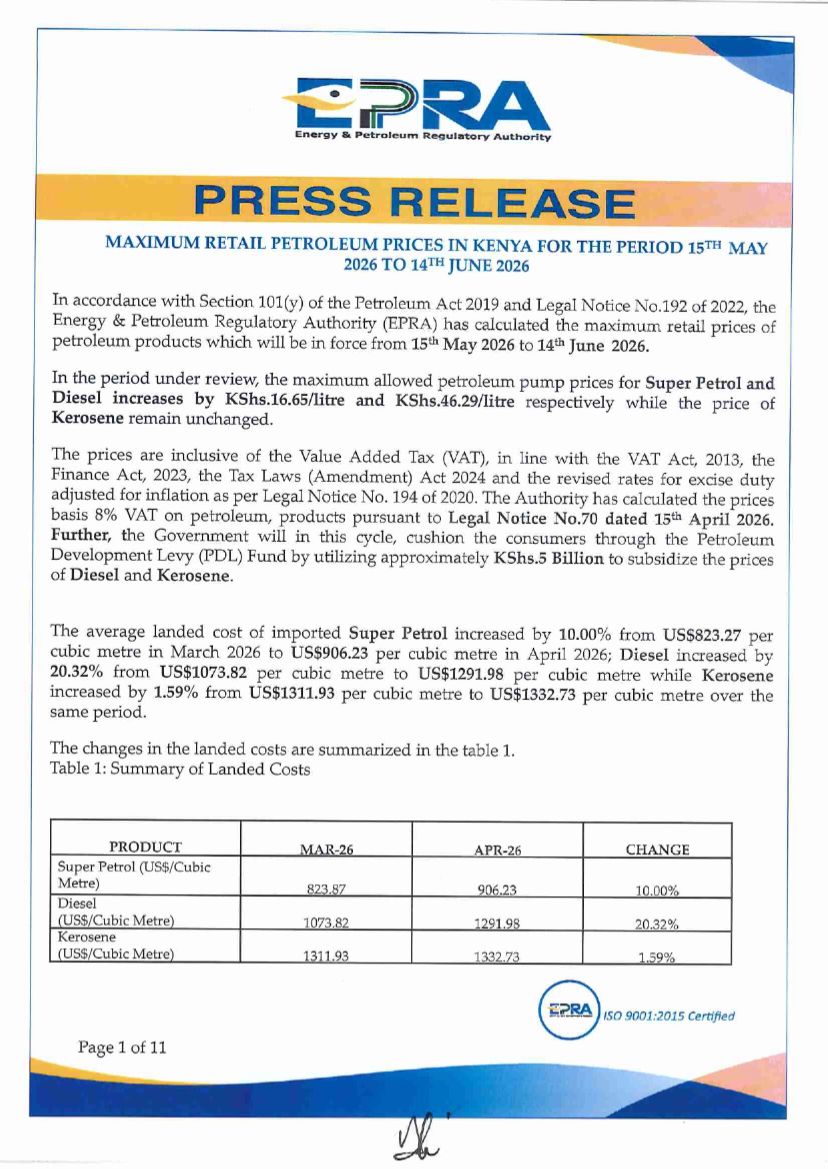
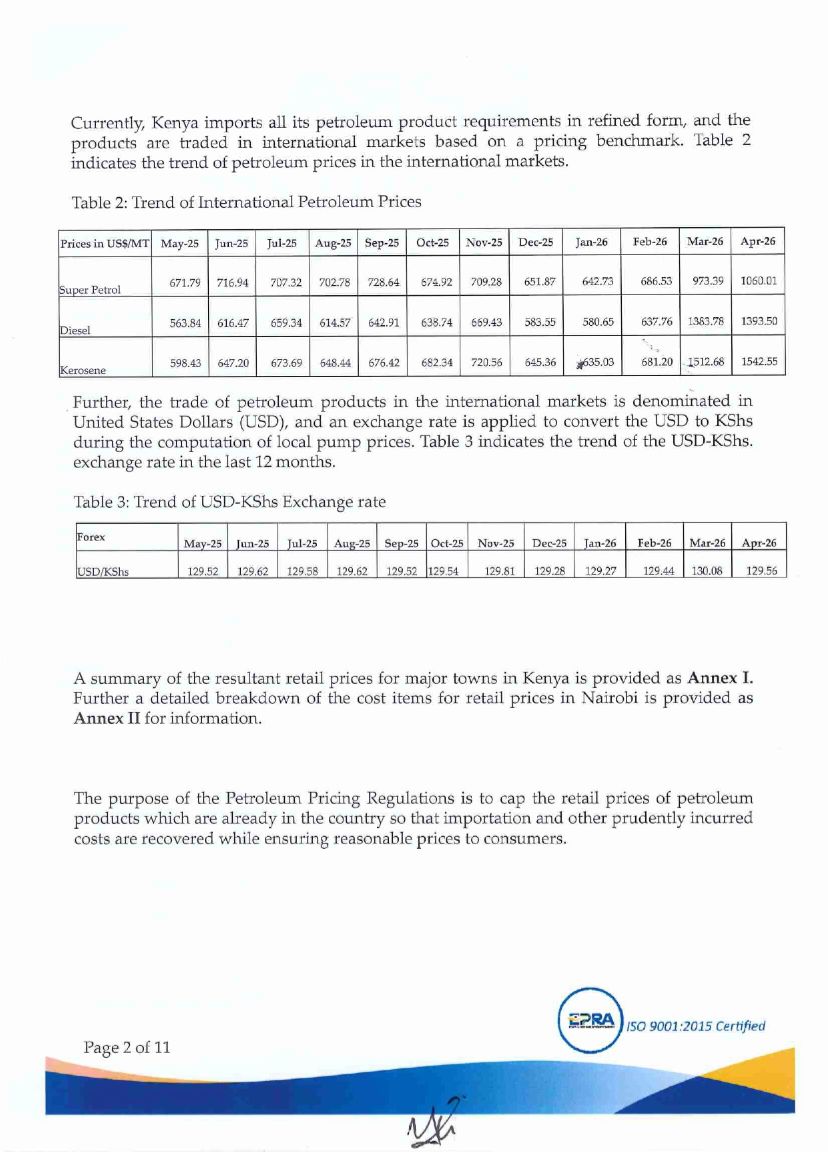
@EPRAKenya has released its Press Release for the period 15th May to 14th June 2026 pursuant to Section 101(y) of the Petroleum Act, 2019. Super Petrol goes up by Ksh.16.65 and Diesel by Ksh.46.29 per litre. EPRA states that the landed cost of Diesel surged by 20.32% which means it has increased from US$1,073.82 to US$1,291.98 per cubic metre.
The Government has deployed Ksh.5 Billion from the Petroleum Development Levy Fund, a fund built from levies Kenyans already pay at the pump, to cushion Diesel and Kerosene. That cushion is clearly not enough. Of concern is that VAT on petroleum has now been pegged at 8% pursuant to Legal Notice No.70 of 15th April 2026, down from 16%. That reduction should have meaningfully softened these prices. Yet here we are. Two consecutive brutal cycles.
Kenyans have a right under Article 35 of the Constitution to interrogate every line of this document. The PDL Fund is public money. Its deployment must be transparent and accountable. We will keep watching.
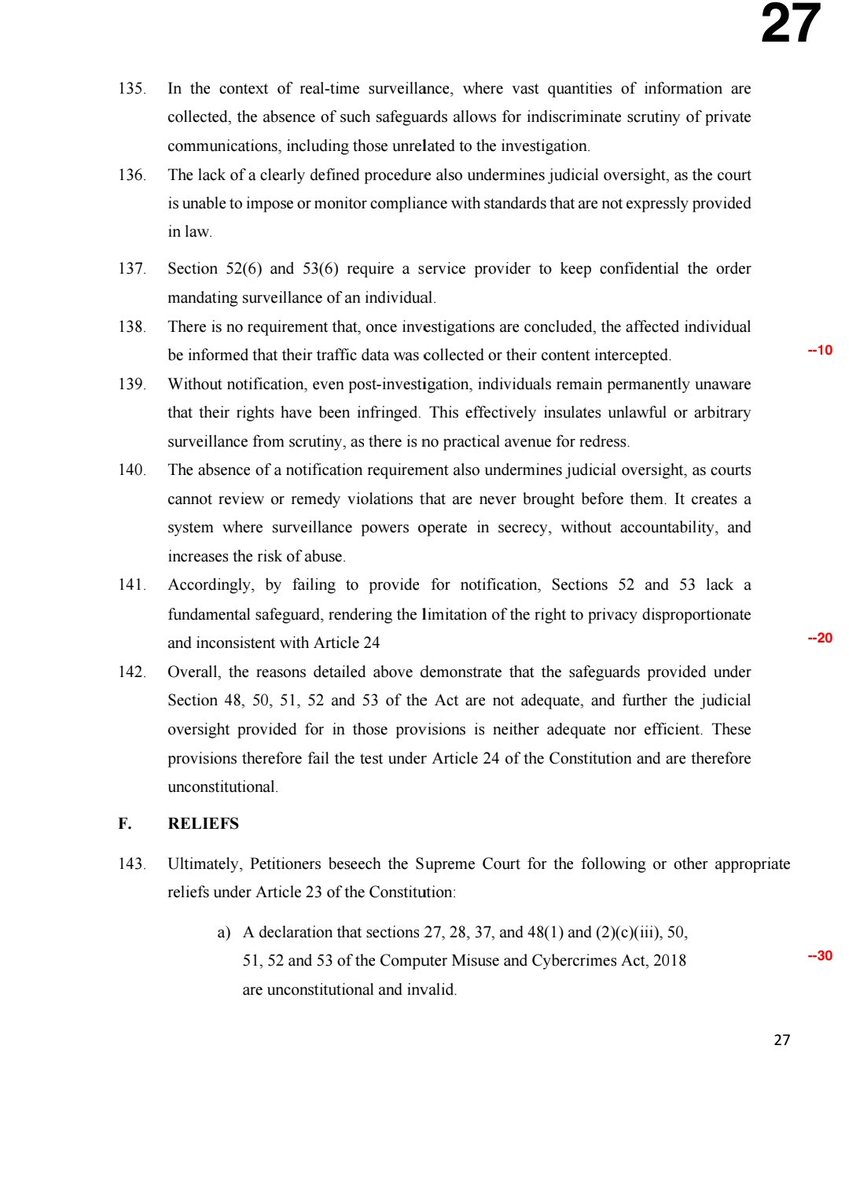
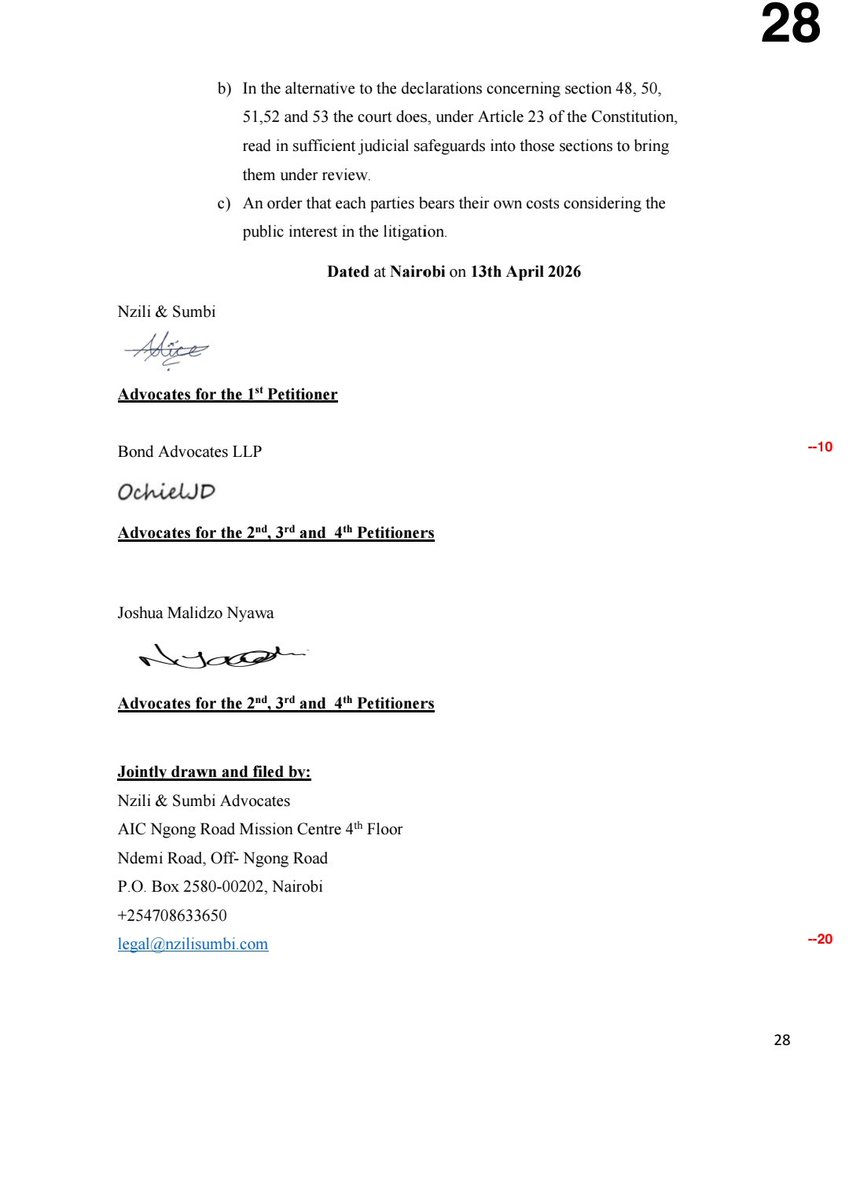
The @LawSocietyofKe has moved to the Supreme Court to challenge the surveillance provisions of the Computer Misuse and Cybercrimes Act, 2018 and I want every Kenyan to understand why this matters.
In March 2026, the Court of Appeal struck down Sections 22 and 23 of the Act. These are the provisions that criminalised publishing false or misleading information online. The court rightly described them as akin to unguided missiles likely to net innocent citizens. That was a necessary and welcome outcome.
However, the court upheld Sections 48–53, which permit the State to intercept your emails, voice calls and digital communications for up to 9 months, compel service providers to hand over your subscriber data and search any person present on premises during a data-related warrant all with what we believe is insufficient judicial oversight.
LSK, together with @BAKE_Kenya, @Article19EA, and @KUJKenya, has now petitioned the Supreme Court to determine whether these provisions meet the threshold set by Articles 31 and 33 of our Constitution which codifies the right to privacy and the right to free expression. The Supreme Court has certified the application as urgent.
Nearly half of Kenya’s projected FY 2026/2027 budget will go to debt servicing instead of development.
Out of the Ksh 4.82 trillion budget, taxpayers will pay approximately Ksh 2.3 trillion toward debt obligations, including Ksh 1.3 trillion consumed purely by loan interest payments before meaningful development spending even begins.
Under Kenyan law, debt repayment is a “first charge” on national revenue. Creditors are paid first, before hospitals, schools, counties, agriculture, or public services.
At the same time, Kenya continues borrowing heavily to repay maturing loans and cover budget deficits. The public debt has now risen to approximately Ksh 12.4 trillion, while ordinary citizens continue facing unemployment, high taxation, failing services, and rising economic hardship.
Kenyans must ask:
Who borrowed this money?
Were all these loans borrowed procedurally as per the constitution?
Who benefited?
Why should citizens repay debts arising from corruption, secrecy, inflated contracts, and mismanagement?
An odious debt is not a people’s debt. It is a regime debt.
This constitutional and economic battle continues in court.
The matter comes up on 25th June 2026 at the Milimani Law Courts.
Kenyans must remain vigilant. This fight is about economic justice, accountability, and the future of our Republic. #DeniBandia #OdiousDebt #ReKe
BRIEF ON TODAY’S PROCEEDINGS IN THE ODIOUS DEBT PETITION AT MILIMANI HIGH COURT
This morning, the Milimani High Court did not hear the substantive Odious Debt Petition. Instead, the matter was adjourned to allow the Court to address multiple interlocutory applications seeking either to dismiss the petition unheard or to strike out some parties from the suit.
The key applications before the Court are as follows:
1) The Attorney General argues that, because the Government has directed the Auditor‑General to conduct a special audit of Kenya’s huge odious debt stock, the petition is premature and the Court lacks jurisdiction to entertain it at this stage. The AG therefore contends that the Court should await the outcome of that audit. The National Assembly supports the AG’s position.
2) The @IMFNews seeks to exit the case, invoking immunity under a treaty it signed with Kenya in 1963, which grants it absolute immunity before Kenyan courts.
3) The Former Auditor General Edward Ouk and the former Controller of Budget Agnes Odhiambo claim personal immunity, asserting that they acted in good faith during their tenure and therefore cannot be held accountable for any shortcomings.
4) The Current Auditor General FCPA Nancy Gathungu, CBS, and the current Controller of Budget Dr. Margaret Nyakang’o maintain that they cannot be sued in their personal capacities; only their respective independent constitutional offices may be parties to the suit.
Although the petitioners had fully responded to all the applications and were ready to proceed, the @IMFAfrica and other parties stated that they were not ready and requested seven days to respond to the petitioners’ rebuttals of their applications.
The Court then directed that all parties wishing to file any responses (replying affidavits and/or submissions) do so within seven days of today. The Court will thereafter peruse the documents and render its ruling on the applications on 25th June 2026.
To fast‑track the matter, the Court will deliver its ruling on the applications without orally hearing the parties. There will be no highlighting of submissions.
If any of the parties are struck out, they will be dropped from the case, and it may become necessary to amend the petition before it is heard on the merits.
Finally, if the AG’s application to strike out the case unheard is dismissed, the petition will proceed to be heard and determined on the merits. If the application succeeds, the matter will end there.
The petitioners are fully prepared and are doing everything possible to succeed in this epic battle against Kenya’s huge odious debt stock. Kenyan taxpayers deserve accountability and fiscal justice. We shall not relent. The petitioners will not be the first to blink. #ReKe #DeniBandia #OdiousDebtKenya
They've engineered the silence because they fear you more than they fear any judge. An informed public is their worst nightmare. So read the filings. Track the hearings. Ask the hard questions. The @IMFAfrica@KeTreasury, @NAssemblyKE, and every pen that signed these loans must answer.
Some politicians waiting in the wings will not speak because they hope to inherit the same broken system. To those seeking office: this is a test of principle. You cannot inherit a system you refuse to question.
We don't need their headlines to know our rights. The Constitution didn't give us a voice to whisper. The front page isn't theirs to give. It's ours to demand. Stay loud. Stay informed. The law is on our side
#OdiousDebtKenya #PeoplePower #DeniBandia
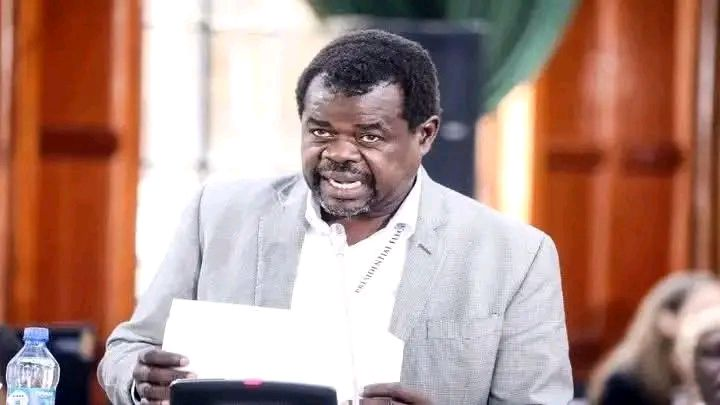
Senator Okiya Omtatah has taken the battle to the High Court with a petition that could change Kenya’s history.
Omtatah argues that of the Sh9.11 trillion borrowed between 2014 and 2024, only Sh2.57 trillion was legally approved by Parliament through Appropriation Acts. He alleges the remaining Sh6.54 trillion is "odious debt" money borrowed unconstitutionally, never appearing in any budget, and never benefiting the people.
The petition specifically targets USD 7.1 billion in Eurobond debt, asking the court to declare it null and void.
In recent sessions, the IMF has attempted to plead diplomatic immunity, seeking to be struck from the case. Omtatah’s team has countered this, arguing that an international organization cannot commit "economic terrorism" by funding illegal processes and then hide behind immunity to avoid accountability.
The Chief Justice has assigned a multi-judge bench to determine this case, acknowledging that the question of whether a nation can repudiate "illegal" sovereign debt is a matter of supreme public interest.
Tumefika almost 1.7M new voters (maybe more). As a result, politicians and interested parties have been trying to get me to work with them. Some offering money, positions and some blackmailing. Some interested parties are fundraising and getting money using my name. The worst is infiltration.
There’s something powerful happening in this country.
Tuko Kadi was never just a slogan. It is a call! A call to a generation that is choosing participation over apathy, values over tribe, and the future over fear. It is young people deciding that their voice matters, and their vote matters, and that Kenya must move beyond the politics that have held us back for decades.
But with any movement that carries hope, there will always be those who try to ride its wave for their own gain.
We have noted, with concern, individuals and groups falsely claiming association with Tuko Kadi to solicit funds and mislead the public. Let’s be clear: this is not who we are. Tuko Kadi is not a fundraising vehicle for opportunists. It is a civic call rooted in integrity, accountability, and collective responsibility.
If you are asked to contribute money in the name of Tuko Kadi, verify first. Question boldly. Protect the movement.
Because this moment belongs to young people. To new leaders. To fresh thinking. To a generation that refuses to inherit broken systems without challenging them.
We are not here to recycle old politics. We are here to redefine it.
And despite the noise, the confusion, and the attempts to dilute it ..... the spirit of this movement is stronger than ever.
You can feel it.
A new consciousness. A new energy. A new Kenya in the making.
This is our moment.
#TukoKadi #NiKokadi
Dennis Itumbi stood before the cameras, confident as ever, declaring that President William Ruto negotiated with Meta to bring monetisation on Instagram and Facebook in Kenya.
But out here, wananchi are not asleep.
Meta is a global company. It does not wake up one morning to negotiate country by country for creators to earn. Monetisation is a worldwide rollout, designed to reward creators who are consistent, creative, and meet specific thresholds. It is not a Kenyan favour. It is not a political achievement. It is a global system.
So when Itumbi speaks, many wonder, do they really think we are fools?
If they negotiated, then who negotiated for Kenyans to earn from X, YouTube, TikTok, and OnlyFans? Who sits at that table? Who signs those deals?
This is the new politics, where every opportunity must be branded and every global change must be turned into political credit. Even when things happen naturally, even when the world is simply evolving, they still say it is the President who makes it happen.
But Kenyans are watching, and more importantly, Kenyans are understanding.
Because not everything needs a politician’s signature to exist. Some things, like creativity, growth, and global platforms, move on their own.
I’ve been following Parliament closely lately.
And what I’m noticing should anger every Kenyan.
Because this is no longer lawmaking.
It’s state capture happening in real time.
Every bill I look at
is creating a new board, a new authority, or powerful new offices with appointment power, sitting with the President or CS.
Not solutions.
Not relief for Kenyans.
Just positions.
Fisheries Bill - 3 new boards.
Forestry Bill - a powerful approving authority.
Cooperatives Bill - more offices.
Technopolis Bill - another board.
Sacco Bill - an entirely new structure.
And the list keeps growing.
The pattern is too consistent to ignore.
In almost all of them:
👉 The President or CS decides who gets appointed. And you know who the president is likely to appoint.
So I keep asking myself,
Is the national assembly making laws for the country?
Or are they creating positions to reward loyalty?
Because at the same time, we’re being told:
“Kenya is broke.”
“We need austerity.”
“The wage bill is too high.”
But somehow, there’s always room for:
-More offices.
-More salaries.
-More allowances.
It doesn’t add up.
And what’s worse,
many of these roles already exist in other institutions.
So what exactly are we fixing?
Because the more I look at it,
The more it feels like Parliament has quietly shifted its role,
From solving problems
to expanding government and consolidating control.
Maybe I’m wrong.
But if you’ve been paying attention,
You can see the pattern too.
Kiambu County has shown KRA dust.
KRA audited the county.
And found the county was collecting serious money from:
- Parking fees
- Business licenses
- Market fees
- Renting stalls
- Renting stadia
- And other county fees
Then KRA asked:
- Where is our VAT?
- If you charge 10,000 for stalls
- You should have added 16% VAT
So Kiamburians should have paid: 11,600
And the extra 1,600 goes to KRA.
But Kiambu did not charge VAT. So KRA became dramatic and said:
- No problem. You'll give us that VAT from your own county coffers.
It is at that moment that, Gov Wamatangi knew hii si mchezo.
He ran to court.
He argued:
- The county is not a business entity.
- It is a government unit performing public functions
- It does not operate for profit
- The county fees charged are already a form of tax
- Charging VAT on them is double taxation
- It is illegal
The court agreed.
And KRA’s VAT demand was set aside.
This is a big precedent.
It means:
- County services should not be inflated by VAT.
- Public services are not businesses to charge 16% VAT.
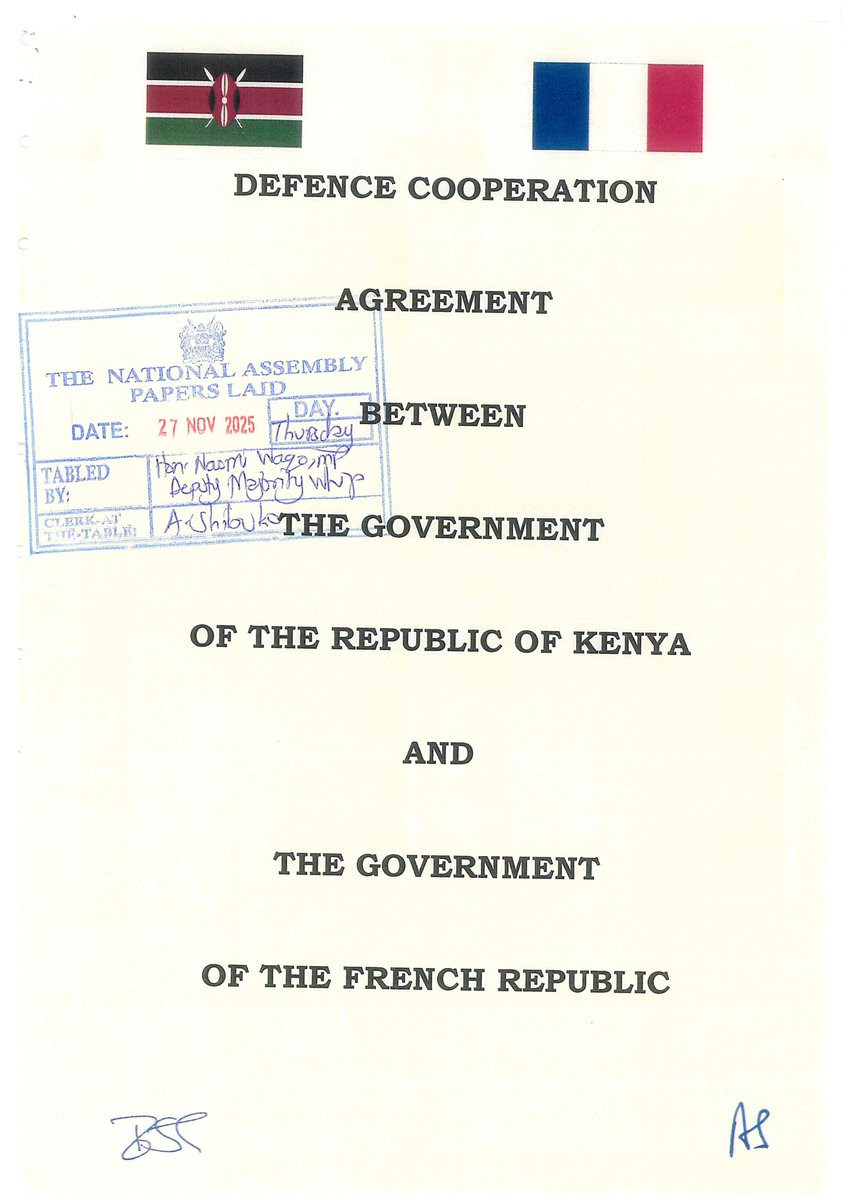
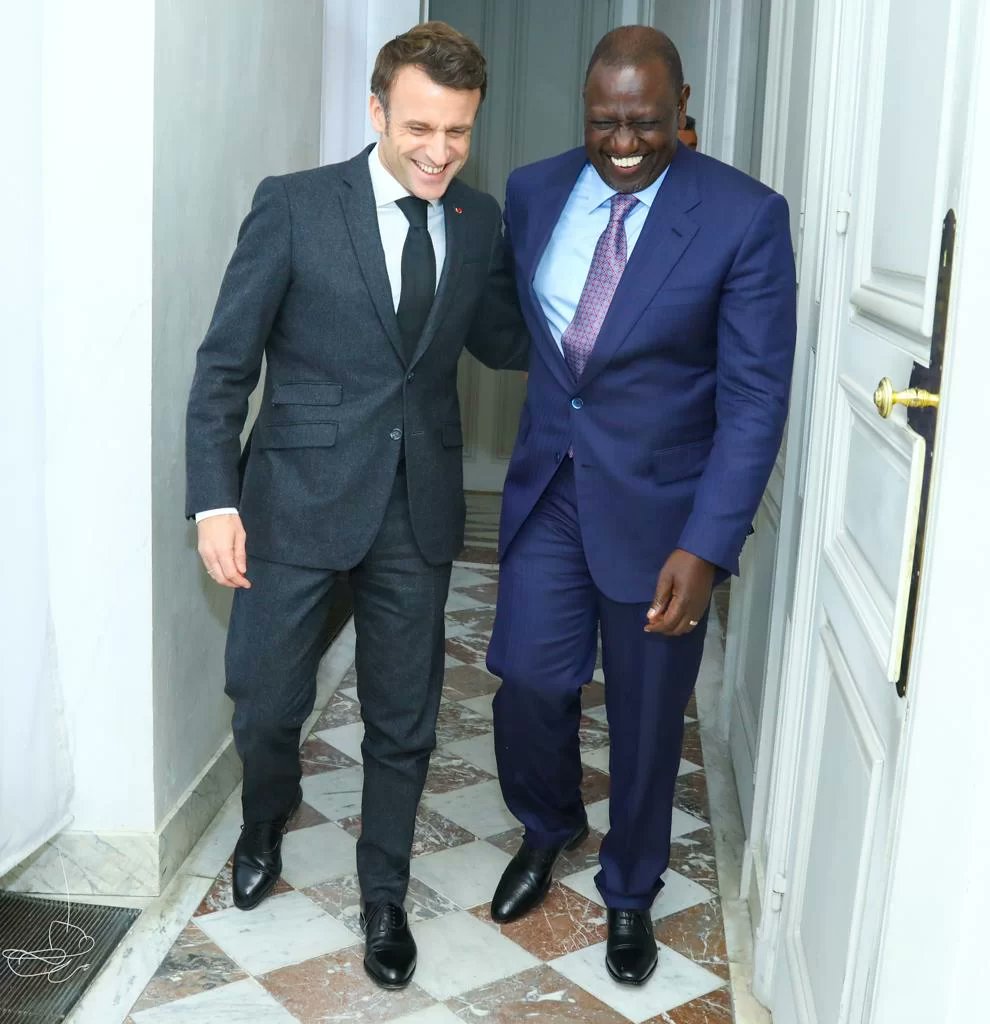
BREAKING: The William Ruto govt signed a defence deal with France allowing French troops to operate inside Kenya.
And now a Parliament report has confirmed it, while trying to amend two of some dangerous clauses partially.
Let that sink in.
At a time when African countries are expelling French military presence, Kenya is opening the door.
The deal is too open and risky.
Here’s the reality:
If a French soldier commits a crime in Kenya:
France can detain them and not kenya
France can influence jurisdiction
If France rushes a trial (even unfairly), Kenya may NEVER prosecute again
That is reduced sovereignty.
The deal allows “training and other activities.”
What exactly are “other activities”? Why so vague?
We’ve already seen what happens with the BATUK:
Community harm and even deaths
Environmental damage by brits using white phosphorus
Weak accountability eg the wanjiru case wher the murderer is being protected in the UK
Now we’re repeating it, with the french military?
Across Africa:
Mali 🇲🇱
Burkina Faso 🇧🇫
Niger 🇳🇪
All pushed out French forces over these exact concerns.
So why is Kenya going backwards?
And here’s the bigger fear:
👉 This is not just about “training”
👉 Kenya risks becoming a base for foreign military operations in Africa, because the french are good at this.
👉 We could be dragged into conflicts that are not ours
Why are we signing deals we would NEVER be allowed to have in Europe?
Why can’t Kenyan forces operate in France the same way?
Because they would never accept it.
So why should we?
Read the agreement. Read the Parliament report. Ask questions.
Before this becomes law.
Guys, there’s a Bill in Parliament that most people haven’t even noticed... but it’s about to affect fishermen, fish sellers, and even you as a consumer.
It’s sponsored by Kimani Ichung’wah.
At first glance, it looks normal… until you read deeper.
It creates new bodies like:
-Kenya Fisheries Service
-Fisheries Council
-Fish Marketing Authority
But we already have institutions like the Kenya Plant Health Inspectorate Service (KEPHIS).
So you start asking yourself... why add more layers with duplication of roles in a struggling economy?
Then you keep reading.
-Fish sellers will be required to keep records of the types of fish they sell and quantities. And they can be inspected randomly. Failure to produce can lead to arrest and fines or bribes
-Fishermen will be required to land fish only at designated landing sites, e.g., the Shimoni port that's about to be privatized
-So imagine you’re out there, low on fuel, bad weather... You still have to push to a specific landing point.
Otherwise? It becomes an offence.
Then you notice something else.
The Bill keeps using the words:
“as may be prescribed.”
Which basically means.... the real rules can be changed later and are broad enough that they can be used to abuse people.
And that’s where it gets uncomfortable.
Because in Kenya, that kind of setup usually turns into:
“Your paperwork is not okay…”
“Hii haiko compliant…”
“Tunaweza saidiana…”
Now combine that with:
More boards
More approvals
More inspections
And you can already see where this is going.
The people who will feel this the most are not big companies.
It’s the small fisherman.
It’s mama samaki.
It’s the ordinary Kenyan just trying to make a living.
To be fair, there are some good ideas in the Bill, like sustainability and safety.
But as it is right now... it feels like too much control, too many grey areas, and too many chances for abuse.
Maybe I’m wrong.
But this is one of those things we should be talking about early.
Because once it passes... It’s very hard to reverse.
SACCO Amendment Bill--Were the majority of members ever consulted? 15% taxation!
Bureaucracy in salaries/allowances.
SACCOs built over the years by members' contributions,majority being women. Savings now on the verge of being looted
Civil Societies, take this to Court
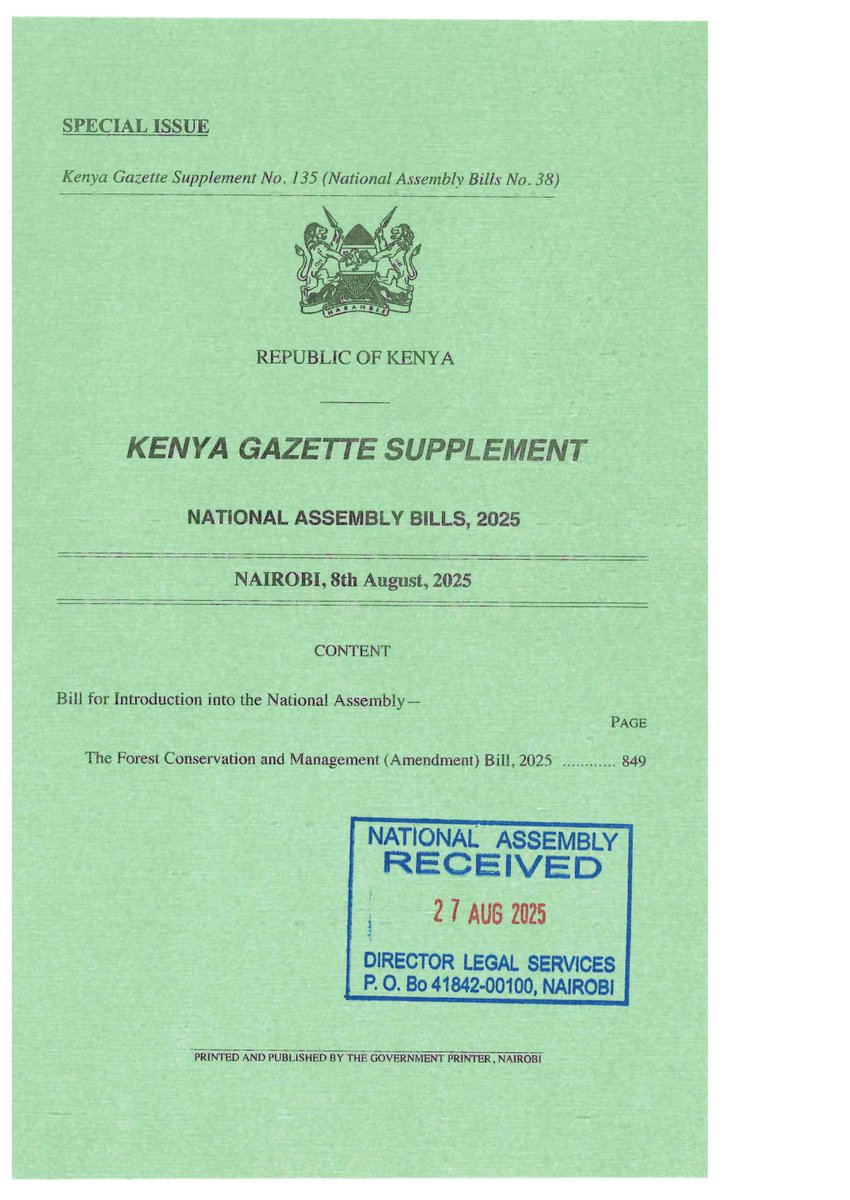
Do you remember when they tried to grab Karura Forest? Now read this carefully.
Today, a controversial bill that could completely change everything is in Parliament.
And almost no one is talking about it.
This bill creates a powerful new office, the Director of Forest Regulation.
This office will have the power to:
This office will sit at the center of approvals, permits, and Licensing projects in forests. They will also
-Analyze, then approve or block PROJECTS in forests
-Monitor forests
-Enforce rules
Now here’s the dangerous part;
The bill places major projects under this system, including:
-Roads, Dams & Pipelines
-Tourism projects
-Forest concessions
-Even schools & hospitals, and many others
(Page 8)
Meaning:
The Government will now have the ability to do any projects easily in forests, including Karura, without going through many legal processes as it does now.
At the same time, the bill expands what counts as a forest: Mangroves and bamboo are now included.
This means mangrove forests across coastal Kenya are now part of the mix.
Then comes the real money layer in it:
Carbon credits & Ecosystem payments have been mentioned in it
Forests are no longer just protected land; they are economic assets.
So ask yourself:
Once this becomes law, what will stop the approval of projects within forests within a short period, e.g., by 2027?
Because everything will be “legal.”
What you saw recently at;
Karura.
Nairobi National Park.
Those were not isolated attempts.
They were tests. They were testing the waters and now .....
🚨 There’s a SACCO bill in Parliament today, and most Kenyans don’t even know what’s coming.
Quietly... with almost no public attention…
A system is being introduced that will centralize SACCO money, and Govt will now have a massive say in it.
Think of it as a “Super SACCO” for all SACCOs.
It will:
- Hold funds from different SACCOs
- Manage liquidity
- Run payments
- Lend to SACCOs
- Invest your money
Sounds safe? Here’s the reality:
❗ SACCOs could lose some operational independence
❗ Oversight becomes much heavier (via Sacco Societies Regulatory Authority)
❗ Leaders must meet “fit & proper” approval
❗ Strict reporting & constant supervision
And yes, this could mean slower access to your money in some situations.
Now the part they won’t emphasize:
Your savings are only protected up to KSh 100,000
If a SACCO collapses?
Anything above that = your risk.
Even worse:
⚠️ Payouts are NOT immediate
⚠️ Must be approved & gazetted first
⚠️ You could wait while your money is locked
So ask yourself:
Why centralize SACCO money...
But limit protection for members?
This bill is being sold as “safety.”
But it also introduces control by the government, delays, and new risks for ordinary Kenyans.
This is how systems change,
slowly, quietly... then permanently
IEBC cannot acknowledge the success of #NikoKadi because it will mean that it’s possible to mobilize voters without billions which is bad for their budget. Catch 22
Today, the Ugandan film industry mourns the loss of one of its own.
It is with deep sorrow that we announce the passing of Esteri Tebandeke, a creative whose presence both on and off screen carried purpose, passion, and quiet strength.
Esteri was more than an actress and performer. She was a storyteller, a visionary, and a builder of platforms that created space for others to shine. From her performances in projects such as Queen of Katwe and Imperial Blue to her work behind the scenes, she embodied dedication to the craft.
In 2023, she introduced the Binti Film Festival, a bold and necessary platform that celebrated women in film and opened doors for many voices to be seen and heard. It was only the beginning of a vision she carried so deeply.
Even in her fight with illness, Esteri remained surrounded by hope, love, and faith. Her journey reminds us of both the strength of the human spirit and the fragility of life.
To her husband, Samuel, and the entire Tebandeke family, we extend our deepest condolences. Thank you for standing with her through it all.
The industry has lost a light. But her impact, her work, and her courage will remain with us.
Rest in glory, Esteri. Your story lives on.
#RIPEsteri