Livestreaming an execution is not just repugnant but foolish. It hands jihadism all the publicity it craves.
The word martyr means "witness". An Isis manual said “The media is more potent than bombs.”
Hegseth is a wannabe Rambo who is out of control
https://t.co/3Geu0m9D4Y
It is sickening that the USA is now lifting sanctions on Russian fuel, and transparently ridiculous to blame Ukraine for the spike in prices that obviously began with the closure of the Strait of Hormuz. Putin is murdering innocent Ukrainian civilians every day. The Ukrainians are fighting for their lives. And yet the White House is apparently determined to force American drivers to bankroll Putin’s slaughter. It won’t work and I doubt it will make much difference to the price of fuel.
If we want Russian oil and gas back on the world market then let’s end this war - with a free, sovereign and independent Ukraine.
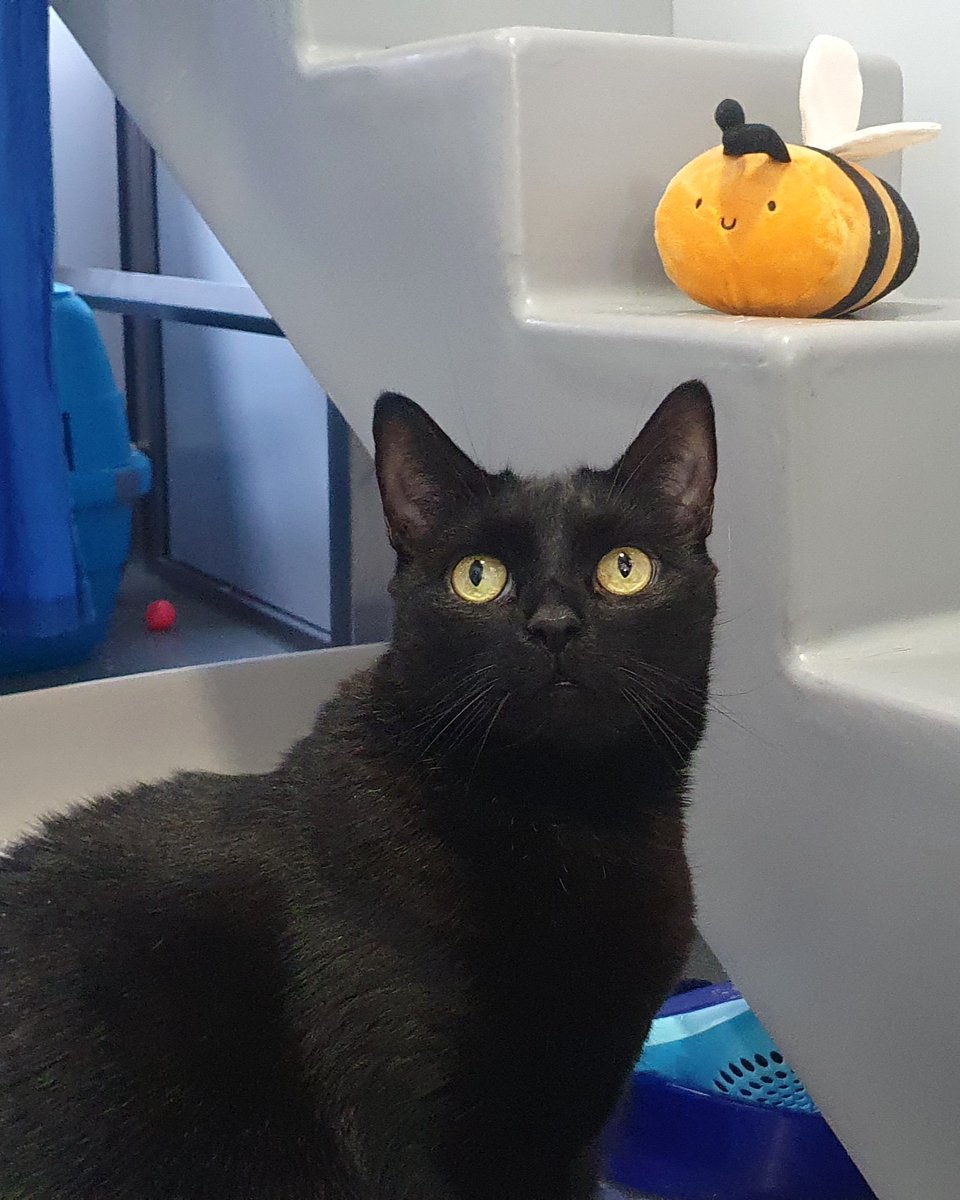
Happy Caturday from Bumblebee and her favourite toy. 🥹 🐝 This gorgeous lady has been with us for a while, and she's more than ready for a new loving family.
If you have a calm home to offer where Bumblebee could be the only pet, click to learn more 👉 https://t.co/A1Uvr2vccl
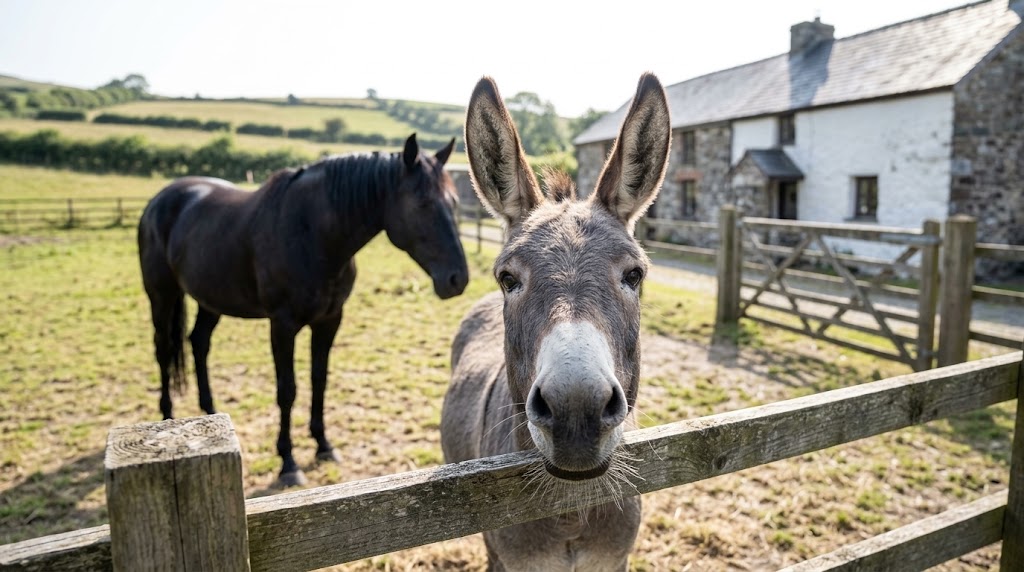
Hector rolled in the gateway on Sunday, all seventeen hands of him, over and back and over again, and got up the colour of the lane.
He is a Cavalry Black, 22 now, and for 17 years there was not a minute of his working life in which he was permitted to be dirty. A horse on State and Ceremonial is groomed for hours before anybody sees him. Every inch of him was somebody's job. He came to Denbighshire four years ago as the cleanest animal that had ever set foot on the place and, left entirely to himself, he has stayed that way, out of what the farmer can only call habit.
A horse rolls to scratch what he cannot reach, and to dry off, and because he feels safe enough to put four feet in the air at once.
The patch belongs to Nelson. A donkey keeps a dust bath, a bare scrape he has worn himself, and Nelson has used the one by the gate every dry day of the summer with great thoroughness. Then the rain came back and the scrape turned to soup. Nelson walked over to it on Sunday morning, looked into it, and left, personally insulted.
Hector had been watching him use that patch since May.
He walked over. He put his nose down to it. Then the knees went, and the rest of him followed, and half a tonne of retired ceremonial horse went over onto his back in a Welsh gateway with his legs waving.
The farmer got a photograph and sent it to the man who used to ride him. The reply took three minutes to arrive.
"I spent my twenties getting that horse clean."
And then, a minute later: "Leave it on him."
Nelson watched the whole performance from the dry end of the shelter with his ears flat out sideways.
The mud stayed on till Tuesday. There is no body brush at that yard big enough, and nobody went out to buy one.
'It's all bullsh*t... you'll be hearing from my lawyers.'
BREAKING: Piers Morgan plans to take legal action against Earl Spencer over “fabricated inaccuracies” made about him in his bombshell book on Diana.
Watch more 👇
📺 https://t.co/ZWOoVI5C3O
@piersmorgan
I was a very fortunate kid. My dad's GP surgery sat between the Dell and Hampshire's County Ground, so at weekends I could go to a game and get a lift home afterwards. It left me with a passion for both sports and a belief that sport opens a window onto who we are.
When I was growing up, the Tebbit test was a matter of intense debate. Which side did you cheer for at the cricket? For all the criticism it received, it was a test anyone could pass. If you supported England because you saw it as home, you were part of the team regardless of the colour of your skin. Born in Southampton, 10 year old me passed it without even knowing about it.
Giving the @MCCOfficial's Cowdrey Lecture on Thursday made me think about cricket's place in our national life and the current arguments about identity.
In Britain we've built the world's most successful multi-faith, multi-ethnic democracy. I was a beneficiary of it. Whatever issues people had with me as PM (and there was no shortage) my race and religion weren't among them. I could read a lesson at the King's coronation or light Diwali diyas on Downing Street with my daughters without controversy. Foreign leaders assumed these must be huge symbolic moments. For most Brits, they just weren't that big a deal.
But Britain's democratic achievement is now under strain. Some of the challenges are ones I've written about before, like Islamism, and the failure of governments, including the one I led, to adequately control immigration. But something else is going on - a risk that we start equating skin colour with nationality.
After I left office, a debate kicked off here on @X about whether I was English at all, because I was a "brown Hindu". During the election campaign I'd been shocked when footage was broadcast of someone calling me a "Paki." It was shocking precisely because it was so unusual. That kind of abuse had simply not been a feature of my political life. But the Englishness argument was stranger still. Call it the reverse Tebbit test. If you're not white, it no longer matters who you support at the cricket, because you can never be English. It's a test no non-white person can ever pass.
I have no truck with people who offend our sense of fairness and come here illegally; I spent half my premiership trying to deport them to Rwanda. I think the bar for legal migration should be high. It is entirely possible to want a radical reduction in immigration and a far more robust approach to integration, and still totally reject the attempt to turn Britishness into a DNA test.
If you're born and brought up in England and view it as home, what are you other than English? Denying people their Englishness or their Britishness because of the colour of their skin is a recipe for alienation and a two-tier society. How are children who hear this meant to feel?
Sport can play a small but significant role here. Cricket is played by nearly every major ethnic group in this country. Ask what my largely white rural constituents in the Dales and the British-Asian kids in Bradford have in common, and the answer is cricket. If cricket can produce England teams in which every kid can see themselves, the impact reaches far beyond the boundary.
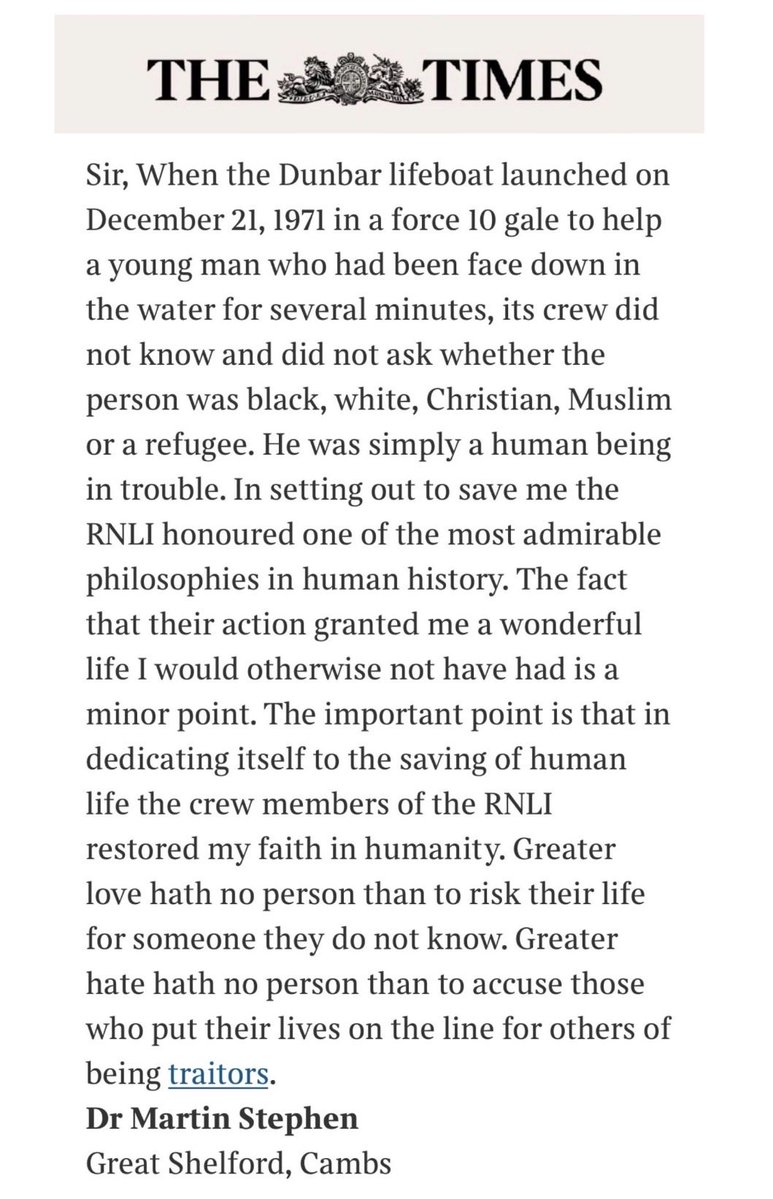
As I write in @thetimes today, we must all be on the same side, cheering for the same team.
We cannot allow race to be reintroduced into our politics. We cannot allow Briton to be set against Briton.
I don’t know what warped logic drove Putin to blow up a stationary Ukrainian locomotive on the Polish border this morning. What we can say for sure is that this is the kind of random and senseless attack Ukrainians are enduring every day - even on civilian railways. So far Putin has been responsible for the deaths of 1700 staff of Ukrzaliznytsia - Ukrainian Railways. They and their daily passengers are absolutely heroic.
When are we going to give them the air defences they need? Why won’t we unfreeze Putin’s cash and give it to Ukraine? There is more than €140 billion in a Belgian bank account - and about £10 billion in London. Britain could show a lead.
The Ukrainians are going to win - that much was clear from the last three days in their wonderful country. But we will get this dreadful war over much faster if we all get serious and give them what they need and deserve.
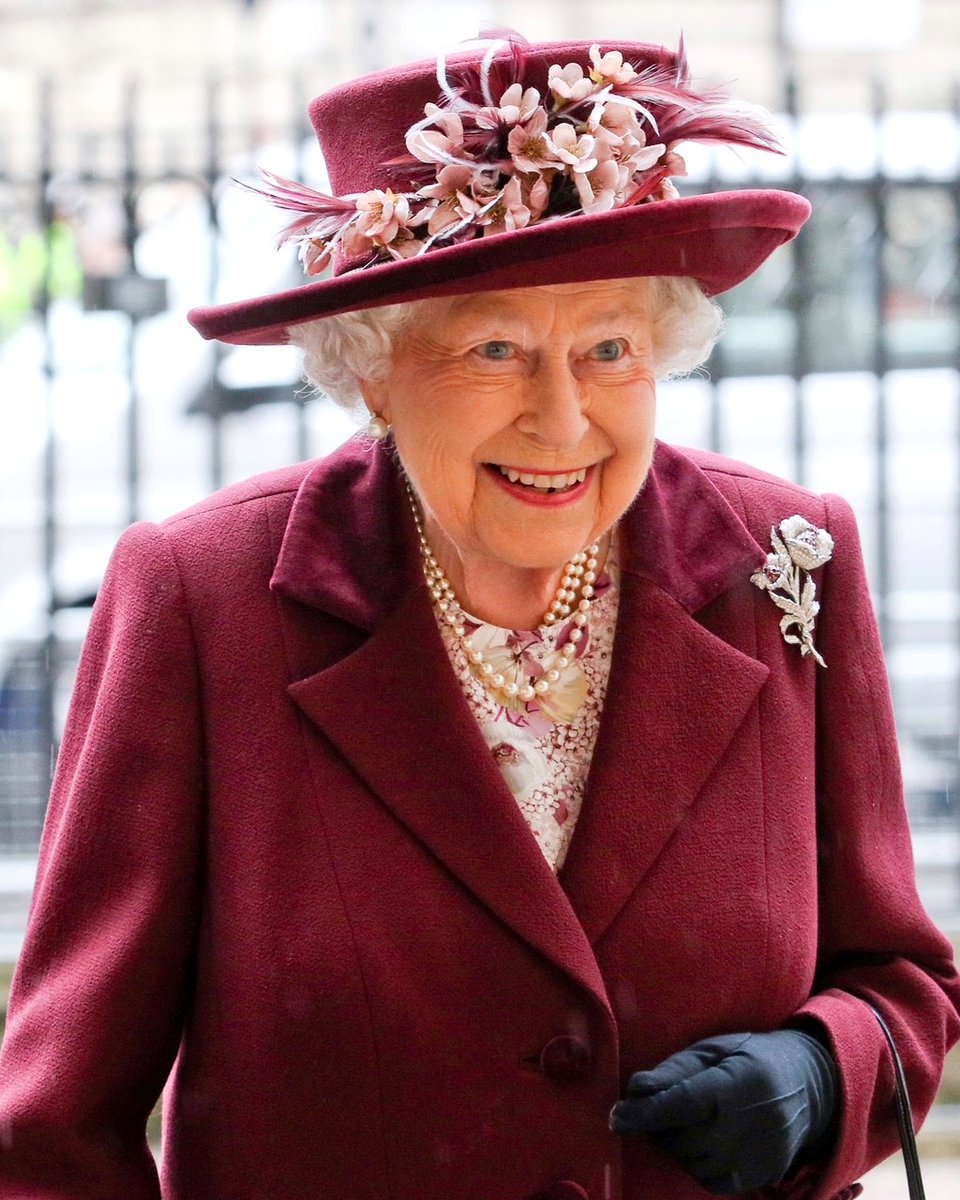
Today we remember Her late Majesty Queen Elizabeth II who died four years ago, on this day in 2022.
As a royal church, Westminster Abbey had a special relationship with the Queen. Over the course of her life, she came here often for state occasions and national services, and some of the most important moments of her life took place here.
'Bring us, O Lord God, at our last awakening into the house and gate of heaven'
This evening Reform UK forewent their Party Political Broadcast in favour of a cross party film of people paying tribute to the late, great Ann Widdecombe. I was asked to take part, and was happy, and honoured, to do so. The film does her proud.
https://t.co/dW8Xz8Jgqj
11 sheep were stolen off Jeremy Clarkson's farm this week, and the first thing he did was apologise to the police for sounding like a man from 1856.
He counted the flock with Kaleb and found 16 Easycares where there had been 27. Somebody took 4 in every 10 sheep he owns, off 1,000 acres with a film crew on it most days, on an evening when nobody was filming.
Then he rang it in. Once you get through 700 hours of recorded messages, he said, he got a girl on the line and told her he knew he sounded like he was from 1856, but he had had some sheep stolen. She took his name and address and said, oh, not your Easycares. She watches the show. His message to whoever has them is to put them back.
In 1831 the courts of England and Wales sentenced 162 people to death for stealing sheep. It had carried the rope since 1741, and Parliament only took it off the capital list in 1832, when the sentence became transportation for life. A man who lifted 11 Easycares in 1856 went to Australia and did not come back.
NFU Mutual's figures in May had good news in them. Rural crime overall fell 6% last year, to £41.5m, with £9.3m of stolen machinery recovered.
Livestock theft went the other way. Up nearly 30%, to £4.5m. The insurer's own phrase for it now is highly organised, which means a lorry, a plan and a buyer before the animals are loaded.
There is one dedicated livestock theft officer in the United Kingdom. One, for the whole country, and the insurance company pays for him.
Clarkson is the one victim in Britain who can get it into The Sun by Thursday. The farm 4 miles down the road has the same lorry, the same night and no film crew, and when 11 ewes go out of that field nobody counts them.
In 1831 the country hanged a man for it. In 2026 it puts you on hold.
The donkey is the animal the language keeps for when it wants to call a person stupid.
In the spring of 1915, on the worst ground of the century, one of them walked into the guns for three and a half weeks and never once refused.
Gallipoli. Anzac Cove, a strip of stony beach under cliffs the Turks held. The wounded came down a gully so worked over by rifle and shell that the men named it Shrapnel Gully and meant it as a plain description.
Up at the head of the valley the fighting fed a constant traffic of broken men who had to be got down to the dressing station on the sand. There were never enough stretchers or bearers, and the track down lay open to the guns the whole length of it.
Onto that beach on the first morning came a stretcher-bearer, a lad from South Shields who had gone out to Australia and enlisted there under half his name, John Simpson.
On the second day, a wounded man on his back, he found one of the donkeys that had been landed to haul water and then left behind. From that morning until the morning he died, the two of them worked the gully.
Simpson is the half of the story that could weigh the odds and decide to go anyway.
The donkey could do no such thing. It could not read the ground or count the guns. It could only be led to the foot of a track every soldier on the peninsula knew was a killing floor, have a man who could not walk loaded onto its back, and be asked to climb.
And it climbed. In daylight, which no sane man did. At night.
Through fire so heavy that John Monash, commanding at the head of the valley, singled the pair out in writing: Simpson and his little beast, he said, had earned the admiration of everyone up there.
Simpson went in front, singing and whistling as though the bullets were weather. The donkey plodded. At the bottom it was unloaded onto the sand, and then it turned itself round and went back up into the fire for the next one.
It made that climb over and over, day after day, up into the guns and down again with a man on its back, on a track where grown soldiers moved bent double and prayed.
The names change in the telling, Duffy and Abdul and Murphy, and the men at the top knew the little procession on sight. How many wounded came down on that back nobody can honestly say, and the round numbers fixed to the story later, three hundred and the rest, are mostly legend.
What is not legend is that it went on, without a day off, under fire, until the nineteenth of May, when Simpson was shot carrying two wounded men and was buried that evening in the sand at a place called Hell Spit. He was twenty-two.
The donkey lived.
Another bearer took it on, and the work carried on without the man who started it.
When the whole ruined campaign was finally given up and the survivors were taken off that beach, they did not leave it behind for the enemy. They got it onto a boat and away to safety.
Somewhere in the moving of it a soldier buckled a collar round its neck. The collar read: Murphy VC. Please look after him.
That is men who had seen everything a war can do to a body, stopping to ask a stranger to be kind to a donkey.
Eighty-two years later, to the very day, on the nineteenth of May 1997, the RSPCA awarded its Purple Cross, the highest honour there is for an animal, to Murphy, and, as the certificate reads, to all the donkeys used by John Simpson Kirkpatrick.
When the country went looking for one image to carry the memory of that whole catastrophe, out of a campaign full of generals it chose a stretcher-bearer and a donkey. It cast the pair in bronze outside the national memorial, and stood them again in his home town on the Tyne.
We keep the beast as our word for stubborn and stupid.
It was handed the dying on the worst ground of the century, and it carried them down out of the fire, and it turned round, and it went back up for more.
Nelson appears in most of the reviews of the holiday cottage at the end of the yard and has never once been mentioned in the listing.
The listing says: two bedrooms, wood burner, walks from the door, dogs by arrangement.
The reviews say:
- Five stars. "Clean, warm, quiet. There is a donkey. Nobody warned us about the donkey."
- Five stars. "Second visit. He was at the gate on arrival. He was at the gate on departure. Unclear whether he moved."
- Three stars. "Shower pressure poor. Donkey excellent."
- Five stars. "The big black horse follows the donkey around like a dog. We watched this for an hour on the first evening instead of going out for dinner."
- One star. "Very isolated. Nothing to do."
- Five stars. "Reply to the above. There is a donkey."
- Four stars. "We came for the Clwydian hills. We did the hills once."
- Five stars. "My husband has not been right since his operation. He went down to that fence every morning at seven and I have not seen him do anything at seven for two years. He has looked up donkey sanctuaries. I do not know what happens next and I am not stopping it."
The yard has not replied to any of them, because the yard does not know the reviews exist. Nobody who keeps a donkey has ever thought of it as an amenity.
Hector is in a fair number of the photographs. He is seventeen hands of Cavalry Black who walked behind a gun carriage at a state funeral while a nation watched through its tears, and in every single picture he is standing slightly behind a small grey donkey, out of focus.
In April 2011 a donkey called Dotty was given a bravery medal for what she did in the ten seconds after a dog got into her paddock outside Scarborough.
She lived with a sheep. Not a flock. One sheep, called Stanley, put in with her for company, which is the most ordinary arrangement on a smallholding in England and nobody gives it a second thought.
Then the dog came over the wall.
Anybody who keeps stock has a particular dread of this and it is nothing like the version in films. A dog in with sheep is not hungry. It is having the best afternoon of its life. It goes for the back end, it does not stop when the sheep stops running, and the damage is usually past what a vet can mend. The dog does not even have to make contact: a flock chased hard enough will abort its lambs a fortnight later, and the farmer finds that out in the spring.
Stanley is alive because the donkey came across that paddock at a gallop and put herself in the gap.
The dog left. The PDSA gave Dotty their Certificate for Animal Bravery, an award with a real assessment behind it that normally goes to police dogs.
Work out what she had to hold in her head to do that. Recognition that a particular animal, on ground she knew every inch of, was in a category of trouble she had never encountered before. That the sheep could not sort it out. That she could. That the correct place for a donkey to stand was between the two of them, and that she needed to be there now rather than shortly.
We have no word for that in a donkey. We have a word for a donkey who stops at a stream because she does not like the look of the bottom, and the word is stubborn.
The dog, incidentally, belonged to somebody.
They always do.