They are a group of illegal soldiers from the Thai royal palace under the orders of King Rama X. This group collects and steals the property of Cambodian refugees every day.
Thailand’s deep airstrikes + cultural destruction + verification blocks = invasion pattern, not pure defense. Cambodia wants checks; Thailand hides. Neutrality = complicity. The images don’t lie—time to speak up.
We Can No Longer Remain Neutral in the Cambodia-Thailand Conflict
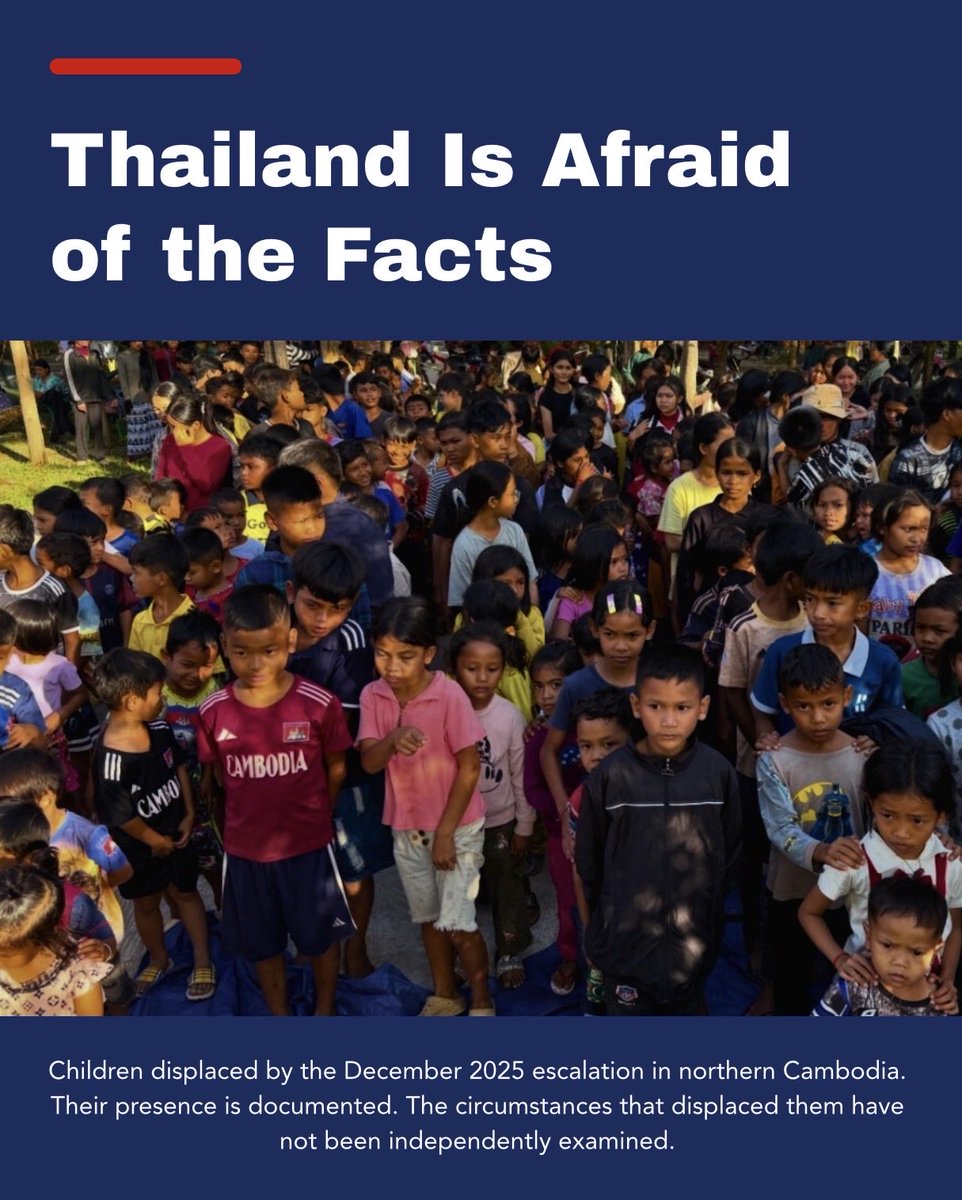
The border war between Cambodia and Thailand has escalated into something undeniable: deep airstrikes, mass displacement, and cultural destruction—with one side refusing independent eyes on its actions.
Neutrality isn’t balanced when the facts scream asymmetry.
Thailand has admitted to F-16 airstrikes deep inside Cambodia (up to 60-100km inland, including Pursat province on Dec 13), artillery barrages, and naval operations. These have killed dozens of civilians, injured scores, and displaced hundreds of thousands (UN reports & official counts: over 500,000 affected on both sides, but heaviest civilian toll in Cambodia).
Cambodia has fired rockets & laid mines, killing/injuring Thai soldiers & civilians—real provocations that deserve investigation.
But Thailand’s response? Strikes far beyond the border zone, destruction of civilian infrastructure (bridges, homes), and now the demolition of a Hindu deity statue (Vishnu, built 2014) in disputed territory—condemned by India as “disrespectful” and sparking outrage worldwide.
Even more telling: Cambodia repeatedly calls for independent verification, observers, monitored ceasefires, and ICJ involvement.
Thailand rejects it all—blocking third-party access, rejecting ICJ jurisdiction, withholding evidence on “military necessity” (citing classification), and continuing fire even during talks.
Self-defense requires proof of necessity & proportionality. Refusing scrutiny while claiming it? That’s not defense—it’s evasion.
The human cost is heartbreaking:
Here, the destroyed Chey Chumneas Bridge in Pursat after the Dec 13 airstrike—civilian lifeline turned rubble: 5 “LARGE” 7 “LARGE”
Displaced families fleeing shelling & airstrikes: 1 “LARGE”
And the demolished Vishnu statue—videos & photos show Thai forces using machinery—provoking global Hindu & Indian anger: 10 “LARGE”
Ceasefire talks are ongoing (military meetings Dec 24-25), but clashes persist. Trump-brokered deals have failed before.
If Cambodia did deep strikes + refused checks + destroyed Thai cultural sites? The world would demand accountability immediately.
Double standards end here.
Neutrality = looking away from disproportionate force, civilian suffering, and stonewalling.
The international community must act: demand UN/ASEAN observers, push verification, protect civilians & heritage.
Records & photos exist. History won’t need permission to judge who hid from the truth.
Stand for facts. Demand scrutiny. Now.
Arnaud Darc Phnom Penh, Dec 26, 2025
#ThailandCambodia #BorderConflict #DemandVerification #CivilianLivesMatter
This is not a defensive war to protect the border. It is a war of aggression and ethnic cleansing. We are suffering deeply and crying out for peace—when will that peace finally come?
#CambodiaNeedPeace#JusticeForCambodia
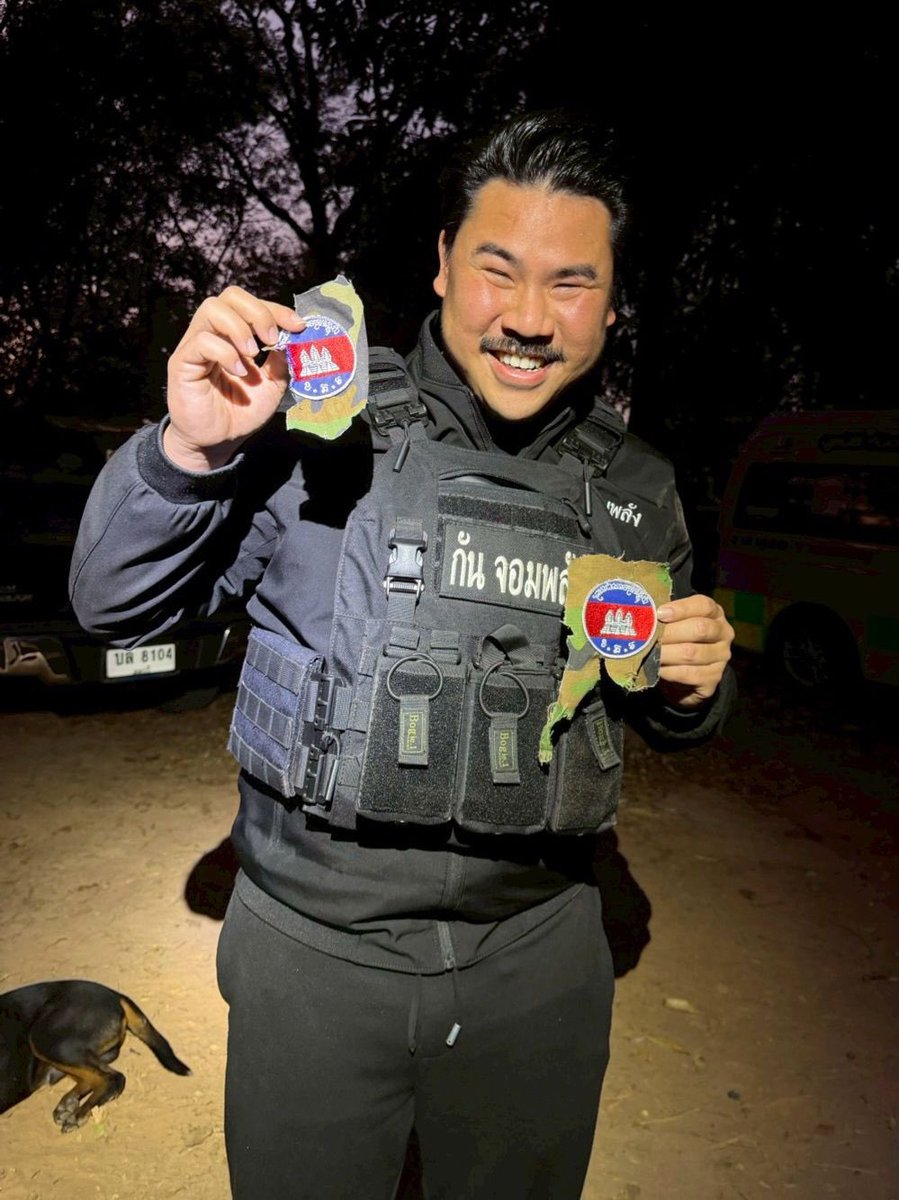
This is disgraceful.
Thai social media influencer Gun Jompalaing is circulating images of himself holding torn Cambodian soldier patches and presenting them as a joke. In the context of an active conflict, this comes across as mocking the deaths of Cambodian soldiers.
Turning symbols tied to loss of life into content for attention is deeply disrespectful. It fuels hatred, hardens public opinion, and pushes the situation further away from restraint or de-escalation.
This behavior should be clearly and publicly condemned by Thai authorities.
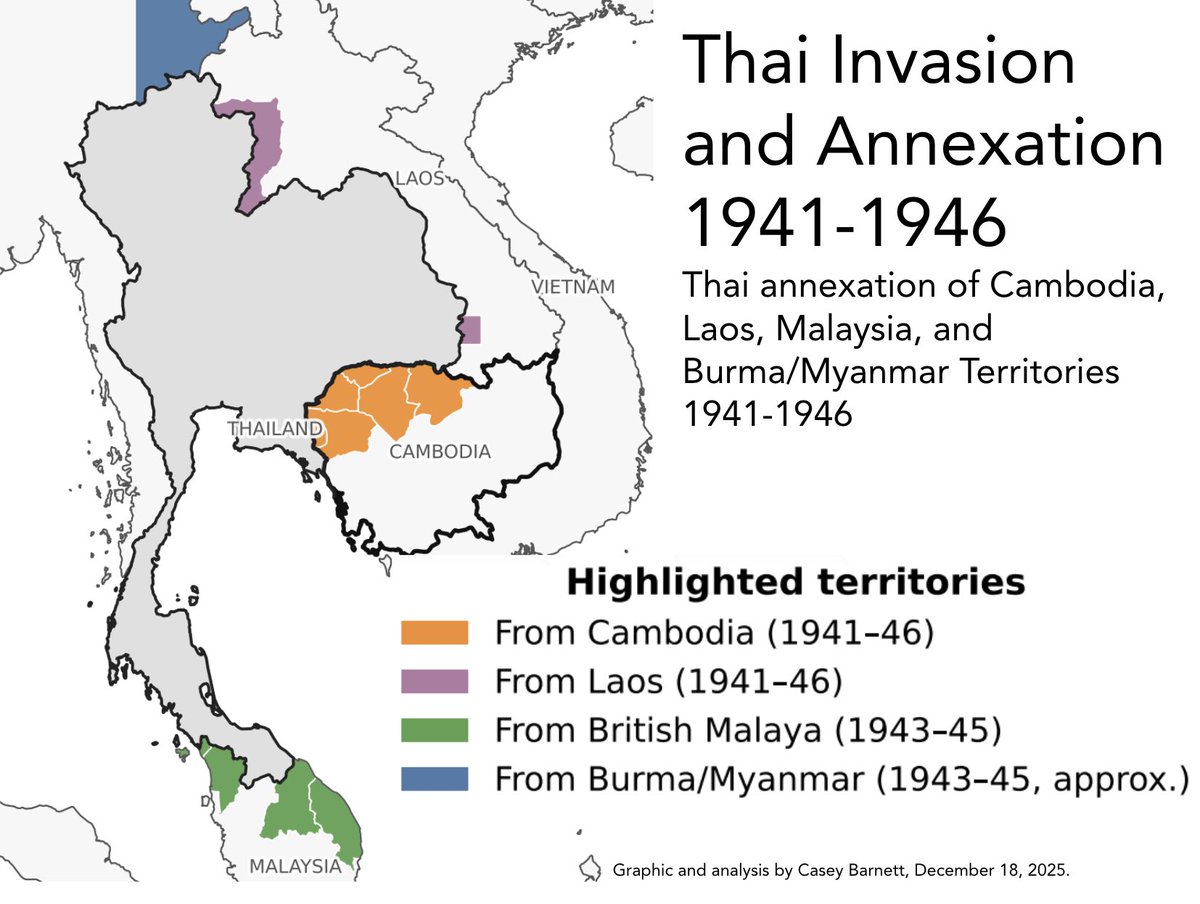
In 1941, Thailand invaded Cambodia and later declared war on the United States and the United Kingdom.¹
In 2025, Thai accusations that Cambodian soldiers fired across the border are again being used to justify an ongoing Thai invasion of Cambodia. Similar claims formed the basis of Thailand’s 1941 invasion of Cambodia. Then, as now, Thailand’s military action was intended to annex Cambodian territory.
Despite full knowledge of Japan’s genocidal conduct in China, including the 1937 Nanjing Massacre in which approximately 200,000 civilians and prisoners of war were killed, Thailand entered into a treaty with Japan on June 12, 1940.² This agreement laid the groundwork for Japan’s subsequent occupation of French Indochina and British Malaya.
After ratifying the treaty, Thailand invaded Cambodia and Laos in January 1941, claiming that French colonial forces in Cambodia had fired across the border into the Thai town of Aranyaprathet. In reality, Thailand had been preparing for invasion for months.³ Within weeks, Thailand forcibly annexed northern Cambodian provinces and western Lao territories.⁴
In December 1941, Thailand and Japan concluded a further agreement providing for mutual military support, with Japan explicitly backing Thailand’s territorial claims covering annexed areas of Cambodia, Laos, Malaya, and Burma.⁵ This agreement secured Thailand’s role as a logistics hub and staging ground for Japan’s conquest of British Malaya and Burma between 1941 and 1942.⁶
In July 1943, Japan rewarded Thailand for its cooperation by transferring to it six provinces of British Malaya and Burma.⁷
During this period, Thailand facilitated and materially benefited from Japan’s use of forced labor to construct the Burma Railway, linking Bangkok to Yangon.⁸ Among the enslaved laborers were 30,131 British and 686 American prisoners of war. Of these, 6,904 British and 131 Americans died as a result of brutal working conditions.⁹
Following the Allied victory in World War II, Thailand was compelled to relinquish all territories it had annexed in Cambodia, Laos, Malaya, and Burma. Britain initially sought punitive measures, including extended occupation of Thailand and potential control over the Thai Isthmus.¹⁰ The United States, however, opposed harsh postwar treatment, arguing that severe demands would destabilize Thailand and the wider region.¹¹
As a result, Thailand faced limited accountability for its wartime territorial aggression.
Now, in 2025, with little apparent collective memory of the consequences of its earlier irredentist ambitions, Thailand is once again invading Cambodia.
References
1Thai declaration of war: https://t.co/SYdY3KWeeA
2Text of the 1940 Japan–Thailand treaty: https://t.co/dLjnVCakvR
3Background to the Franco-Thai conflict: https://t.co/VrnXDtJg1l
4Franco-Thai War overview: https://t.co/XYE5UfMtht
5Text of the 1941 Japan–Thailand agreement: https://t.co/ozpNCZXVbx
6Japanese conquest of British Malaya: https://t.co/LQJz8zsKI1
71943 Japanese award of Malayan and Burmese provinces: https://t.co/eOWdJe3auS
8Burma Railway construction: https://t.co/63L1cStfBw
9POW deaths on the Burma Railway: https://t.co/viMqN31tQI
10British postwar plans for Thailand: https://t.co/Yim2AGPiZa
11U.S. policy on postwar stabilization of Thailand: https://t.co/HFBCTQuP0B
🚨 The Thai military attacked a Cambodian🇰🇭 civilian home in Sror Aem market, Choam Ksan District, Preah Vihear Province, on the afternoon of December 9, 2025.
A real video exposing Thailand’s violent aggression against Cambodia.
Thai people will say that it’s AI, but AI kduyyyyy mae gg kon mi juy mrayyyyyyyyyyy.
The Thai military launched airstrikes on Samraong city in Oddar Meanchey province this morning on December 9 at around 11am, employing F-16 Fighting jets, in a densely populated area where civilians reside.
#CambodiaNeedPeace
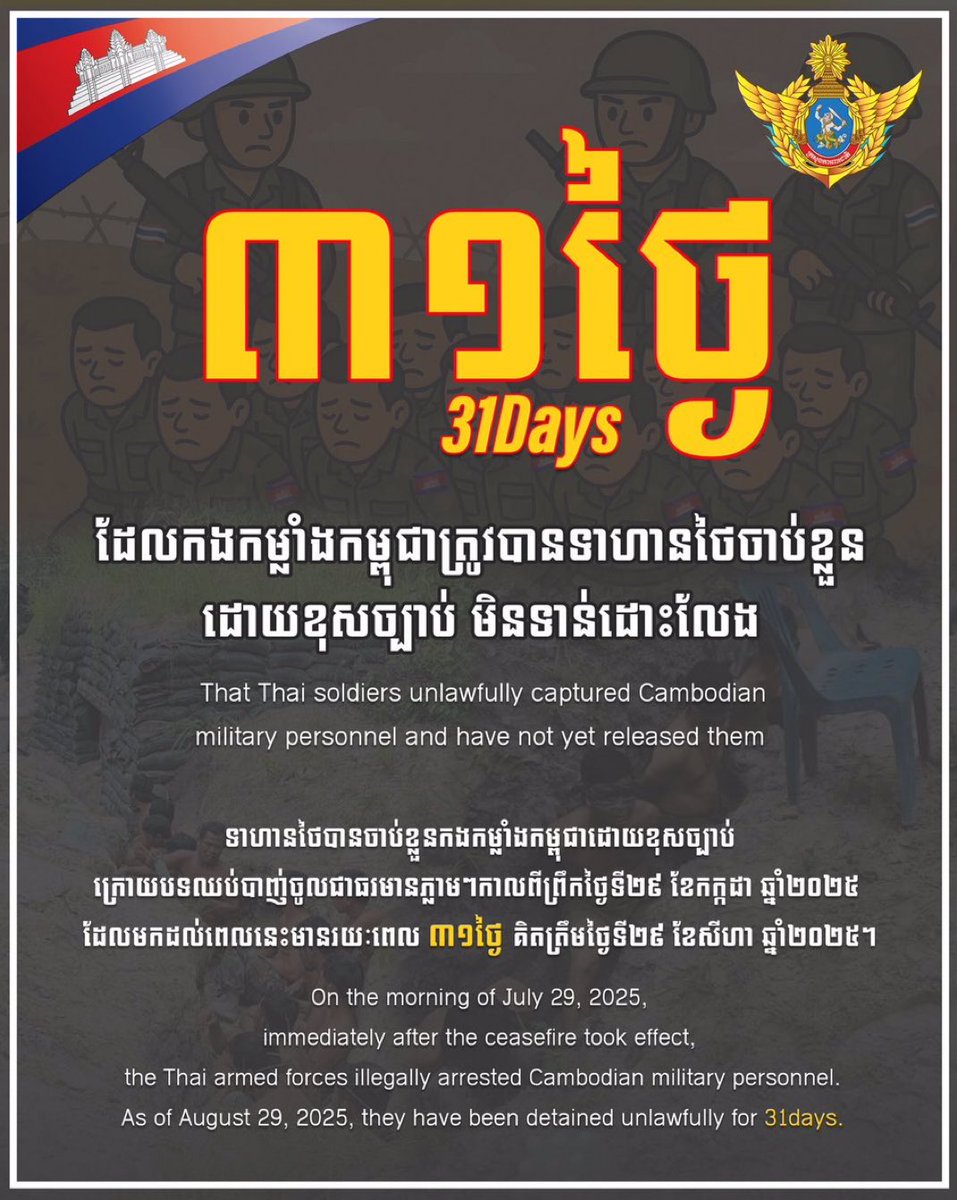
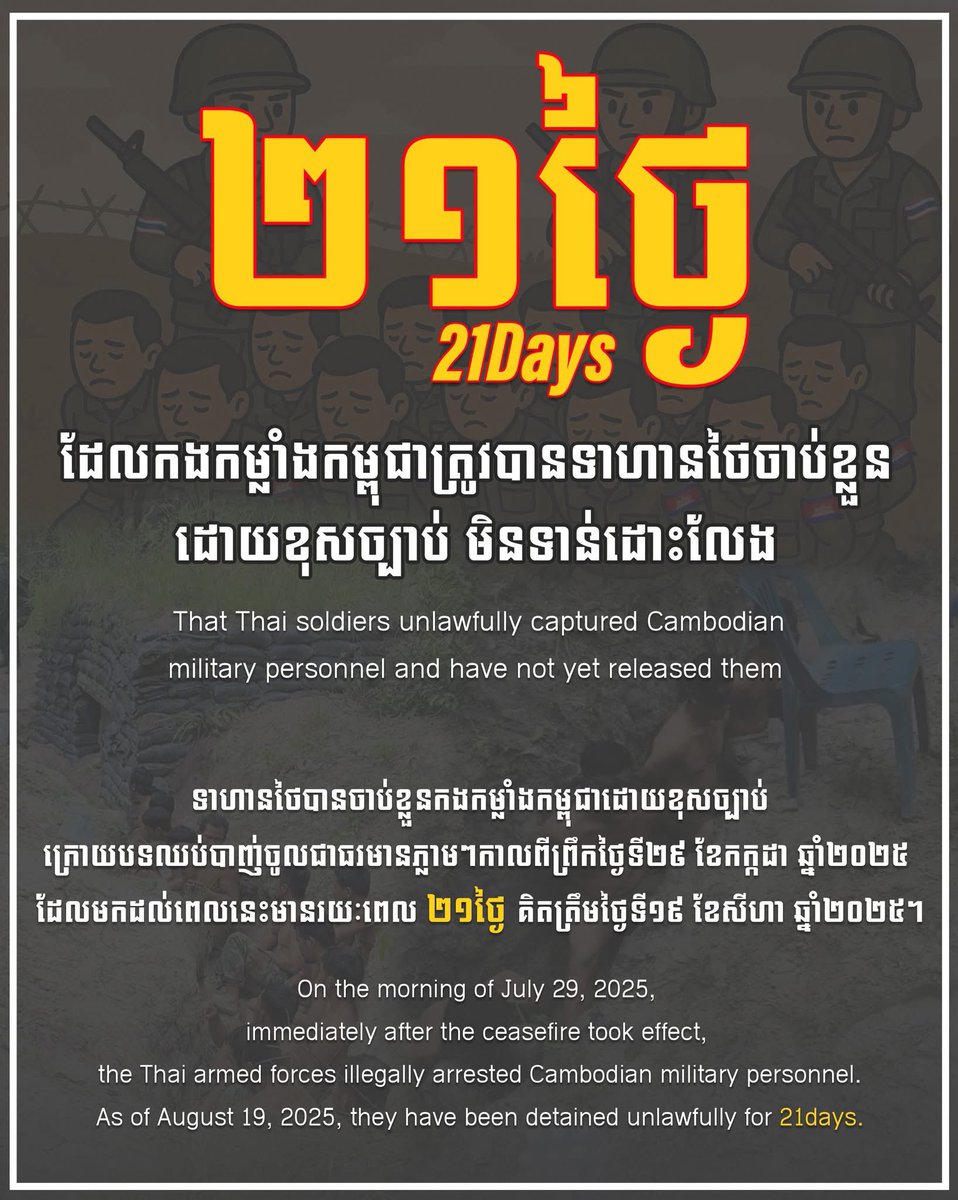
it’s been a month already when will we get our soldiers back to our country? Please release them back they need their families here! 🥹
RELEASE CAMBODIAN SOLDIERS #ReleaseCambodianSoldiers#CambodiaNeedPeace