Nobody washed wool, and that is the part that sounds wrong now.
The jumper hung out for a morning and came back in. The blankets came off the bed in May, went over the line in the sun for a day, and sat in the airing cupboard until October, and plenty of them went ten years without ever meeting water. A gansey went out on a boat for a fortnight and was hung on a nail.
Say that in 2026 and people look at you.
Wool takes moisture into the core of the fibre instead of leaving it on the surface, about a third of its own weight before it even feels damp, and the keratin locks up the compounds that make a smell and declines to hand them back. Bacteria need water sitting on a surface. There isn't one. Hang it in cold air overnight and everything leaves.
Polyester does the reverse on every count. It pushes water away and it loves oil, so your own grease sits on the outside of the fibre with the bacteria on top of it. That is why a gym top stinks after forty minutes, and stinks again coming out of a hot wash, and why the sports trade now sells you an antibacterial treatment to fix a problem it caused by choosing the fibre.
Babies slept in wool, under wool, in a freezing bedroom, with not a gram of flame retardant in the room. Wool needs a far higher temperature to catch than any synthetic, it will not melt onto skin, and it has a habit of smothering itself. In 1972 America made flame resistance a legal requirement in children's sleepwear. The industry did not switch to wool. It kept the cheap synthetic and sprayed it with a chemical called Tris, and five years later Tris came off children's pyjamas over concerns it caused cancer.
The safe option was standing on a hillside the whole time, growing itself back every summer.
This is the fibre the country was built on. By the eighteenth century woollen cloth was over half of everything Britain sold abroad, and the Speaker of the House of Lords still sits on a sack of it, put there in the fourteenth century so Parliament could not forget where the money came from.
Terylene was invented in Accrington in 1941. Acrylic followed in the fifties. Then in 1979 an American mill knitted polyester into something fluffy and called it fleece, which is the cheekiest act of naming in the history of cloth.
By 2022 a British fleece was worth under 75p a kilo and the farmer saw about 26p of it. Shearing costs him roughly £1.50 a sheep, and he has to do it whether anyone wants the wool or not, because an unshorn sheep gets flystrike and dies badly. He pays to take the coat off and then cannot give it away. Farmers have been photographed burning a thousand fleeces in a heap, because the bonfire is cheaper than the lorry to the depot.
Every wash of the stuff that replaced it sends hundreds of thousands of plastic fibres down the drain, through the treatment works, into the water, into the fish, back round to you.
The fibre that never needed washing lost to the fibre that has to be washed constantly and poisons the water every time it is.
The flocks are there, the graders are there, the mills are still turning. The only thing missing is demand, and you are holding a piece of that.
Old wool blankets sit in every charity shop in the country for about a fiver, and the old ones are the good ones. Buy two, and put them on the bed in October.
Then leave the jumper unwashed, hang it out the window overnight in the frost, and put your face in it in the morning.
Years ago I used to look at these images of ritual humiliation Austrian people carried out against Jews in 1938, right after the Anschluss, and wonder what kind of people engage in such psychopathic and dishonorable behavior.
Who would laugh at a grown honorable person being forced at gunpoint to scrub the streets with toothbrushes?
How can any human being behave like this, I would wonder, especially since many of these Viennese people were highly acultured and educated.
Today I wonder no more.
The people who behave in this antisocial cruel and hateful way are all over Instagram and TikTok.
It is Swedish, British and German citizens who carry out weekly gorish plays in which they portray IDF soldiers in the most demonic way possible with medieval zeal.
It is the social media accounts who go to Brooklyn videoing themselves throwing coins and dollar bills at shocked Hasidic Jews.
Is Palestine News Network berating Jews in the streets and approaching them as they try to dine quietly in kosher restaurants.
And what about Vienna? How did producing such behavior workout for them?
Vienna went from being one of the world's great intellectual and cultural powerhouses to a city you would only visit to see it's achievements of past.
Vienna went from being the city of Freud, Mahler, Schönberg, Schrödinger, Pauli, Zweig and many others who transformed the entire world of psychology, physics, music, art, literature and philosophy to being a a tourism based city where people come to visit what it used to be in the past.
Every single person who is silent about the treatment of Jews today on social media, the normalization of cruelty, the rewarding of antisocial behavior towards Jews needs to understand that there will be extraordinary societal consequences for that silence.
Photo: Austrian national library.
Erling Haaland paid $134,000 for a 430-year-old Viking kings manuscript, then gifted it to his hometown. He said: “I’ve never been a big reader, but I want people to read about those who came from my area.”
Erling Haaland and his father, Alf-Inge Haaland, quietly acquired one of Norway’s greatest literary treasures at auction: a 1594 edition of Snorri Sturluson’s Kongesagaer. Translated by Mattis Størssøn from Old Norse into Danish, it was the first printed history of Norway and helped preserve the stories of the nation’s medieval kings for generations.
Widely regarded as one of the most significant works in Norwegian literary history, the copy purchased by the Haalands was the only complete edition still in private ownership. It sold for 1.3 million Norwegian kroner (about $134,000), setting the record as the most expensive Norwegian book ever sold at auction.
Instead of keeping the rare volume in a private collection, the Haalands donated it to the library in Time Municipality, where Erling grew up. The book is now on public display, and the donation also funded a reading competition to inspire local children and young people to discover Norway’s history and literary heritage.
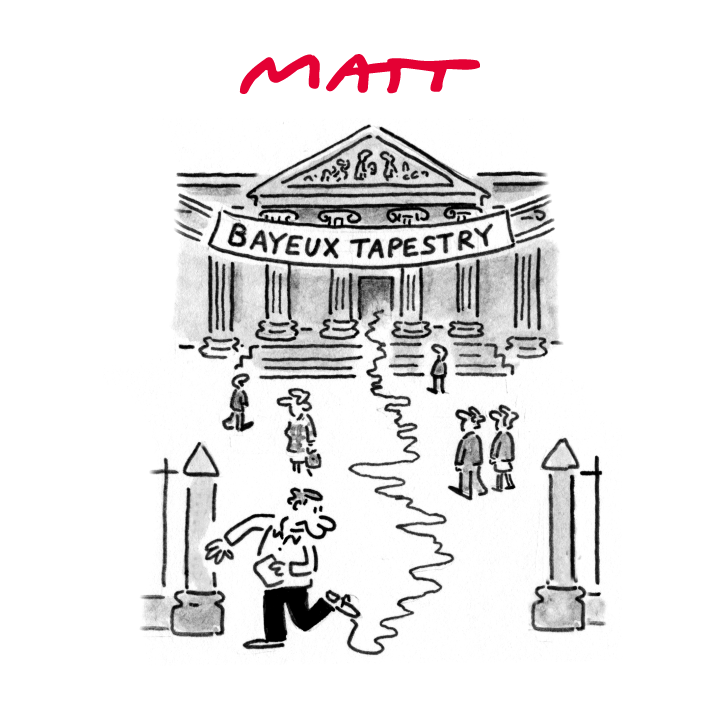
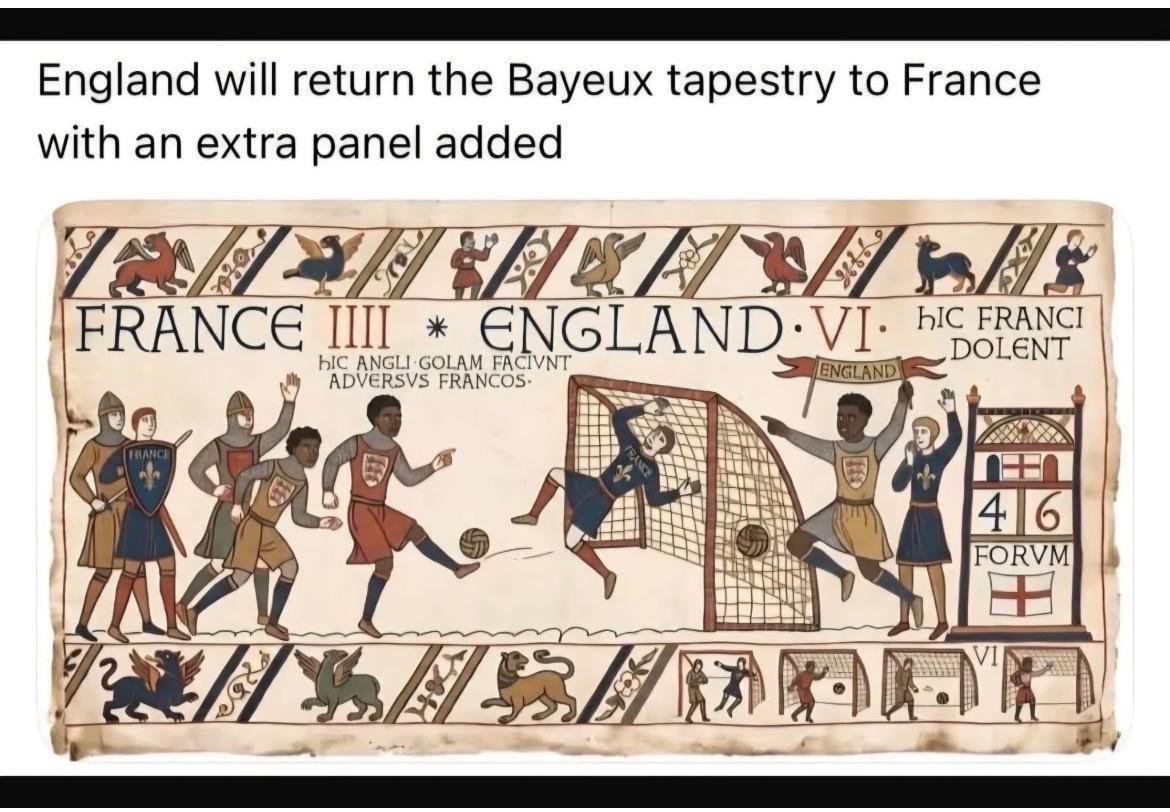
You can forget your magic octopus. The Bayeux Tapestry predicts the result of the World Cup this year... and it's an England victory https://t.co/DMqmovTbfJ
What can Harry Kane learn from the Bayeux Tapestry? I just hope the England captain reads my advice on the plane to Mexico, or I fear the World Cup won't be following the Tapestry home this summer https://t.co/BAMvhYzt5t