Training Course Coordinator 👩🏻🎓 & Sales Ops 📊@Wazuh | Passionate about optimizing processes, team success, and productivity. Now get me another screen!
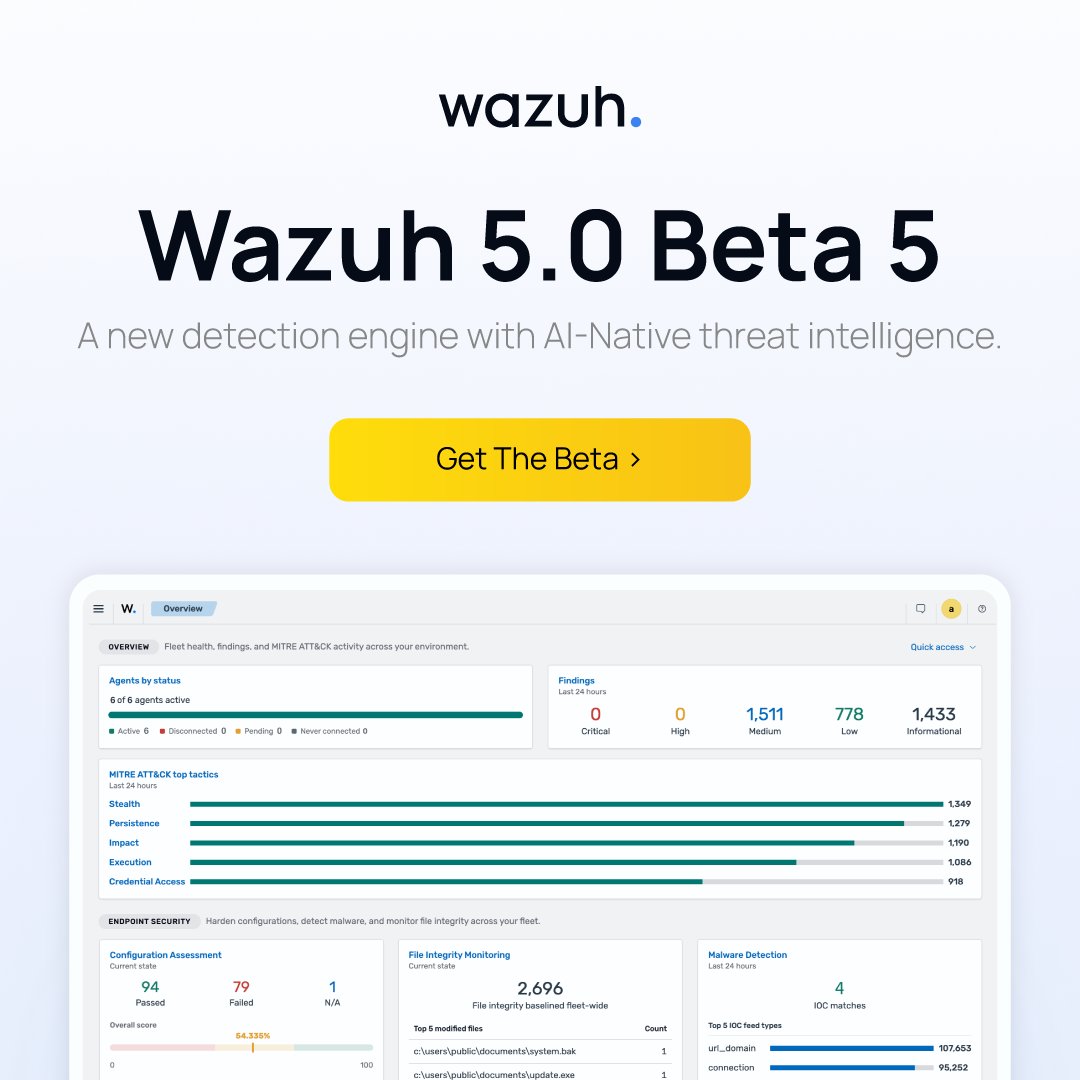
It's here!!! 🎉 Wazuh 5.0 is our biggest platform release to date. It rebuilds the platform around a unified data model, the Wazuh Common Schema (WCS), and introduces a next-gen detection engine and #AI-native threat intelligence with Wazuh CTI. 👇🏻
#CyberSec#ThreatIntelligence
Wazuh 5.0 Beta 5 is here 🚀
The final beta before RC1. Rebuilt around a unified data model (WCS), with a next-gen detection engine and AI-native threat intelligence from Wazuh CTI.
Get the Beta: https://t.co/L3idL4SJRO
#Wazuh#Cybersecurity
Apache HTTP Server is affected by CVE-2026-59797 (CVSS 9.8 - Critical), a mod_ssl flaw that can bypass SSLRequire access restrictions. Upgrade to 2.4.69+.
Read more: https://t.co/gW3zmmcaQ1
Attackers with sufficient privileges can abuse eBPF attachment points to intercept credentials, terminate tracing tools, or block traffic.
See how Wazuh detects unapproved eBPF programs across PAM, ptrace, XDP, and cgroups.
Read on: https://t.co/CbgRXWlPTW
Wazuh 5.0 Release Candidate 1 is here 🚀
Our biggest platform release to date is now available as RC 1, a more mature release ready for hands-on testing ahead of general availability.
General availability is coming soon.
Learn more: https://t.co/jz5cUgsYaV
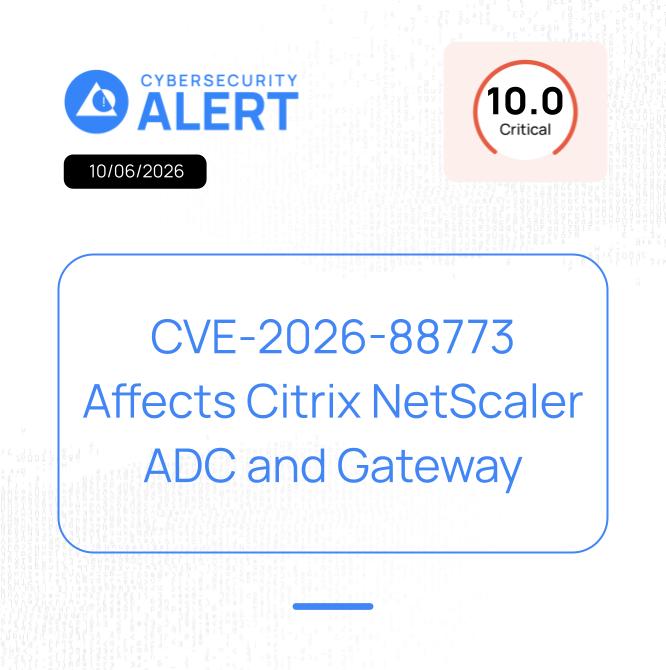
Citrix NetScaler ADC and Gateway are affected by CVE-2026-88773 (CVSS 10.0 - Critical), an unauthenticated HTTP request smuggling flaw. Upgrade to the applicable fixed version now.
Read more: https://t.co/NNvRAieMcE
Kyverno enforces security policies in Kubernetes, but its policy reports and events stay inside the cluster by default. Our new blog post shows how Wazuh detects Kyverno policy violations.
Read on: https://t.co/FdXJDlDJUU
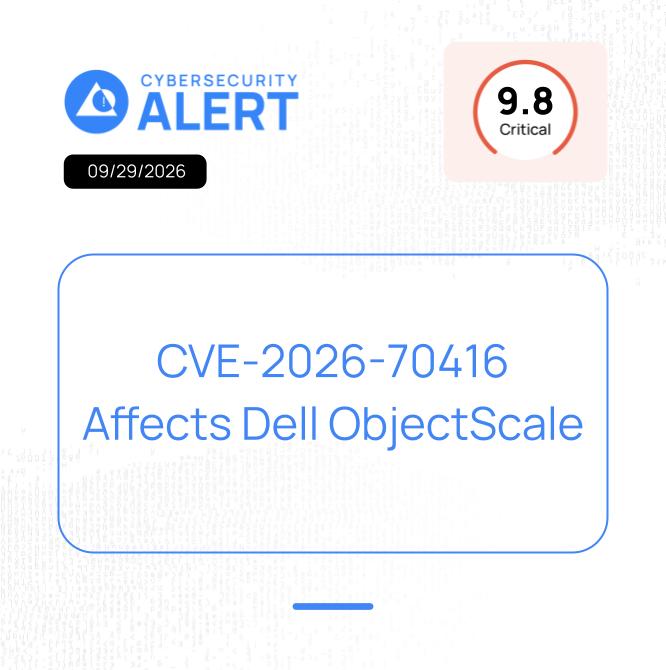
Dell ObjectScale is affected by CVE-2026-70416 (CVSS 9.8 - Critical), an unauthenticated deserialization flaw that can lead to remote code execution. Upgrade to 4.4.0.0 or later immediately.
Read more: https://t.co/IlM5QyDYMY
Privilege escalation allows attackers to turn a standard-user foothold into full SYSTEM access on a compromised Windows system.
Our new blog post shows how to detect Windows privilege escalation techniques using Wazuh.
Read on: https://t.co/EPN5MJulDU
Google Chrome is affected by CVE-2026-84325 (CVSS 9.8 - Critical), an improper input validation vulnerability in DataTransfer. Update to 152.0.7977.75 or later.
Read more: https://t.co/8mMaKZobNm
Attackers abuse legitimate Windows features to run malicious code, steal credentials, and persist. Our latest blog post shows how to integrate Microsoft Defender ASR telemetry with Wazuh.
Read on: https://t.co/CGbPGzjfgo
Dovecot is affected by CVE-2026-42007 (CVSS 9.1 - Critical), a Sieve editheader use-after-free flaw that can crash mail delivery or potentially execute code. Apply vendor updates or disable editheader.
Read more: https://t.co/IWth03YOhh
Long-term AWS access keys can leak through public repositories, build pipelines, and compromised devices. Learn how Wazuh detects AWS access key compromise using AWS CloudTrail and GuardDuty telemetry.
Read on: https://t.co/mMO8fDXcvg
Apache Tomcat is affected by CVE-2026-65905 (CVSS 9.8 - Critical), a DIGEST authenticator replay flaw that can allow one-time request replay. Upgrade to 11.0.25, 10.1.58, or 9.0.121.
Read more: https://t.co/LVUTC0o6n0
🚨 For anyone interested in getting hands-on with Wazuh: this training starts at 9:00 AM CEST and is currently available with 10% off.
Request your code at [email protected] and mention this post. 😉
#CyberSecurity#Wazuh
PostgreSQL is affected by CVE-2026-14662 (CVSS 8.8 - High), an integer wraparound in tsvector/tsquery that can allow a database user to trigger out-of-bounds writes. Upgrade to 18.5, 17.11, 16.15, 15.19, or 14.24.
Read more: https://t.co/YH10nbECu1
CVE-2026-33017 (CVSS 9.8) is a critical, unauthenticated remote code execution vulnerability in Langflow that lets a single POST request execute arbitrary Python code. Our latest blog post shows how to detect exploitation with Wazuh.
Read on: https://t.co/F9uqEQOqSM
crypto-js is affected by CVE-2026-71851 (CVSS 9.0 - Critical), a weak random-number generator in affected 3.x releases that can expose keys or wallet seeds. Upgrade to 4.0.0+ and rotate exposed secrets.
Read more: https://t.co/2WL4cmFtKv
A rogue SUID root binary can allow attackers to maintain root access and abuse existing privileged binaries to escalate privileges. Learn how to detect unauthorized SUID and SGID binaries on Linux using Wazuh.
Read on: https://t.co/q1sFj4lTam
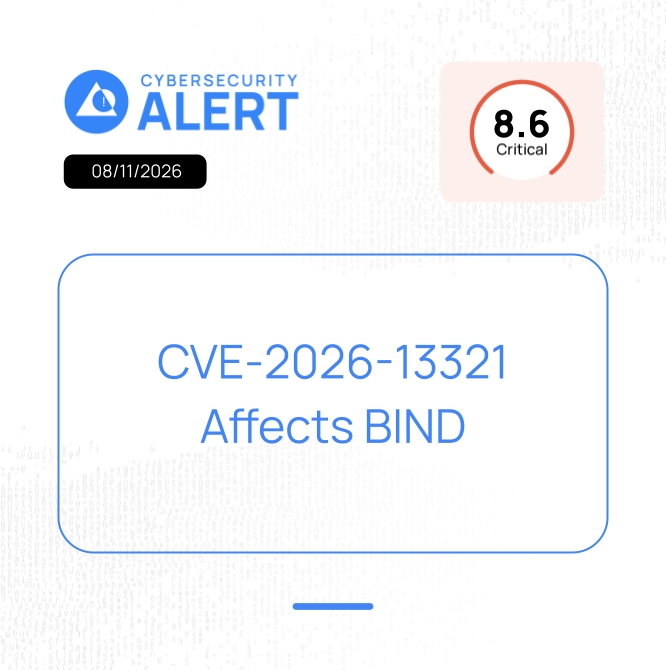
BIND is affected by CVE-2026-13321 (CVSS 8.6 - High), a DNSSEC validation flaw that can let crafted NSEC records bypass intended resolver checks. Upgrade to BIND 9.20.26, 9.21.24, or 9.20.26-S1.
Read more: https://t.co/jFwucdtLOS