Research physicist at @Cambridge_Uni. Working on @CR_UK RadNet, applying machine learning to predictive modelling of the effects of cancer radiotherapy.
"Machine learning for auto-segmentation in radiotherapy plannning" written with @Hannah_52, C_Welsh, @ozanoktay__, @alvarezvalle, @ml4cancer. Part of @ClinOncology special issue "Artificial intelligence in radiation therapy" and free until 24th Feb: https://t.co/trmJOu3frS
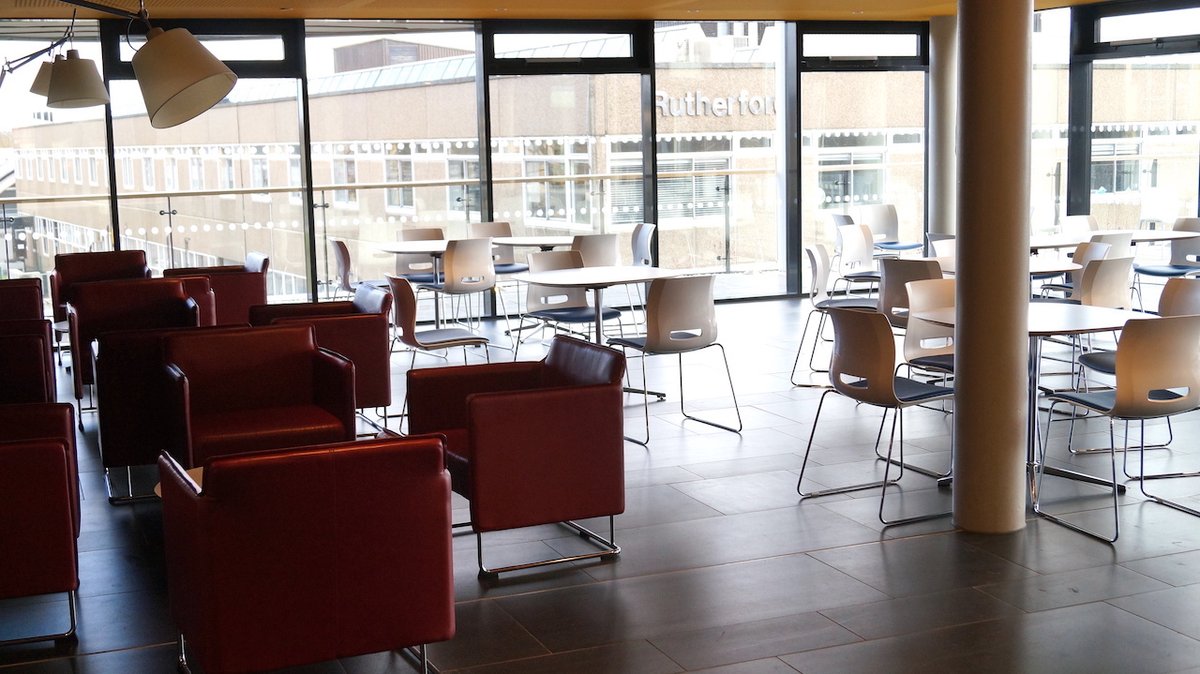
Two months after she joined @CR_UK RadNet Cambridge #DataScience team, and after she's already done much good work from home, great to have @Hannah_52 make her first visit to the office!
Randomly selected to take part in @ImperialMed#REACT study, tracking #COVID19 prevalence in England. Not hugely surprised to have antigen test return negative. And yes, nasal swabs induce sneezing!
https://t.co/HPKEas1FOo
Our paper "Associations between voxel-level accumulated dose and rectal toxicity in prostate radiotherapy", reporting work led by @Lady_Physics, now available online: https://t.co/NC7BAp19qW
Excitement this afternoon of first in-person work meeting for two months - socially distanced catch-up with @ml4cancer, under the shade of a tree in the grounds of @ChurchillCol. #Covid_19
#PhD studentship, funded for four years, available at @Cambridge_Uni to work in @CR_UK RadNet, developing novel machine-learning approaches for prediction of tumour control and normal-tissue toxicity in radiation therapy #DataScience#DeepLearning https://t.co/O3hZaeyUdl
For one day only, @KingsHeadThtr is offering the gift of a live talk about theatre posters with the wonderful @bex_1986. Worked with Bex on @HiggsBosonRS14 and other projects, bringing the colour and energy of theatre to the world of particle physics. Expecting great talk!
I'll be doing a LIVE talk about theatre posters for @KingsHeadThtr at 1pm today folks. Please tune in so I'm not on my own! It'll pop up on their facebook page at 1pm sharp: https://t.co/uM59CCpZt5
@catarinavveiga@ProtonAdvanceRT@UCLmedphys@CmicUcl Interesting paper! The DOI link perhaps doesn't work until publication. The following is a link that I found to the in-press version: https://t.co/OXL0quQQzN
Last day in office for a while, following Wednesday's message to staff from head of @DeptofPhysics: "From 17.00 on Friday 20 March the Department will close [...] We are planning on the basis that the closure period will be months rather than weeks." #Covid_19
After an injury-hit winter, more than happy with 2:08:01 at @CambridgeHalfUK - about 30 minutes behind #VoxTox MSci project student @EmmaAndrews1313, who’s brilliant run has raised an amazing £800 for @CR_UK.
We have a PhD studentship opportunity for paediatric radiotherapy research @ProtonAdvanceRT! Apply before March 22nd, details at https://t.co/TUrIl6SyIP
Final data collated for @CR_UK#VoxTox study of long-term side effects following cancer radiotherapy. Massive thanks to the 850+ study participants, who between them completed 3400+ post-treatment health assessments over 6 years. Data analysis ongoing.
My top tip to anyone doing a PhD is to NEVER label anything as FINAL. Ever. In fact, this applies to any document. It’s just going to come back and bite you in the ass!! 🤣🤣 #phd#phdchat@PhDForum@AcademicChatter
Excited and so grateful to have received imaging data from #IMPORT trials for study of breast-cancer relapse, but hadn't expected 45-DVD box set! Reminder that healthcare providers can be cautious in adopting newer technologies. #BigData#CloudStorage
Many congratulations to Nina Niebuhr on completing PhD with @DKFZ and @UniHeidelberg. Research partly at @Maxwell_Centre - summing radiotherapy doses in a way consistent with biological effect. Wonderful to follow Nina's work, with input also from @Dr_Lady_Physics and @ml4cancer.
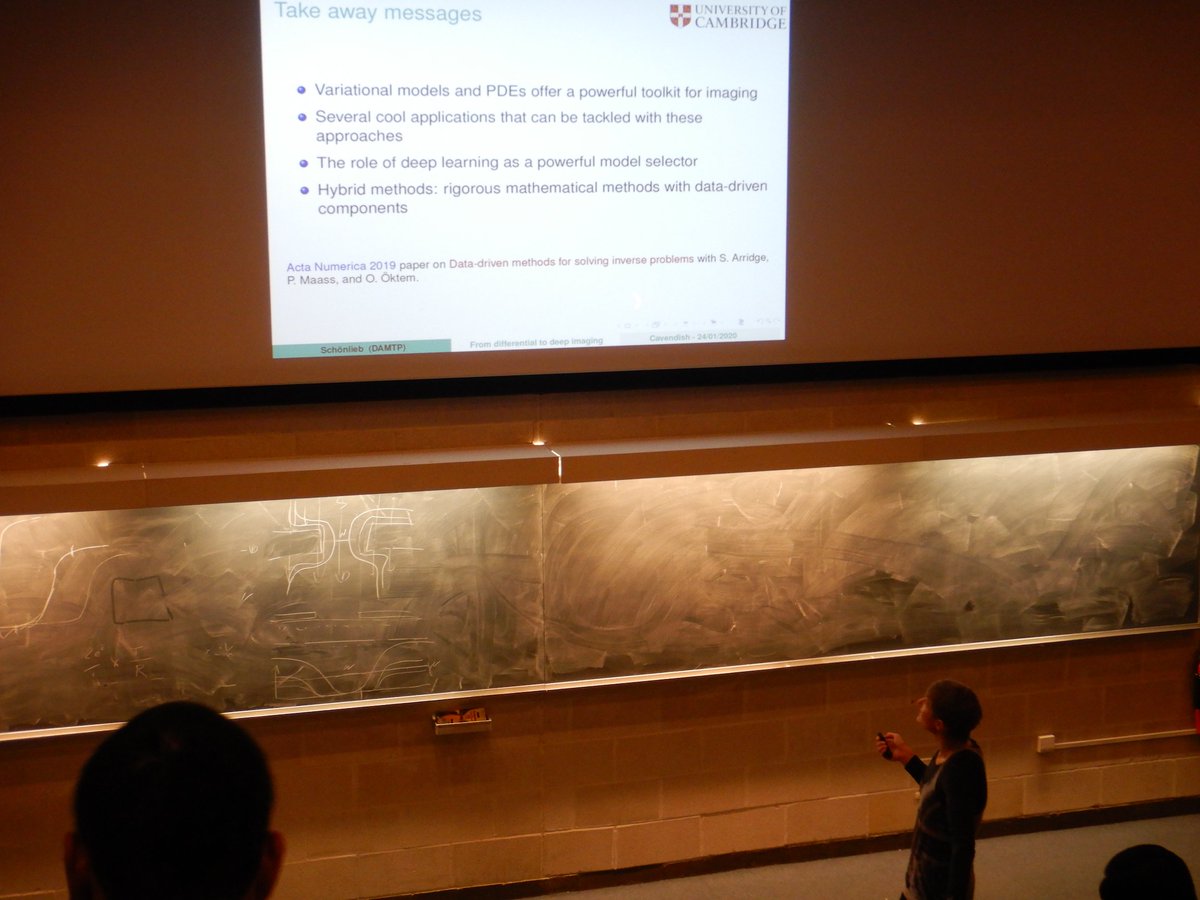
Interesting and wide-ranging talk by @caromitreka at today's @DeptofPhysics BSS seminar - outlined use of knowledge-driven mathematical models for #imageanalysis, and their combination with data-driven approaches, e.g. #deeplearning. Related review paper: https://t.co/hMicfcCLyt
First meeting today of @CR_UK RadNet Cambridge. Focus very much on the science, and translating this to improved cancer care. Report from me on work-in-progress to understand how radiation dose during treatment for breast cancer affects probability of tumour recurrence.