ER Physician, Assistant Prof, Startup Founder, Media Contributor, enemy of misfortune and disease, fighter for a better world; Love history/politics/tech/AI
So I created an entire med school using AI.
It started out as a joke with my friends, but just grew and grew into something that still astonishes me in its depth and breadth.
I call it the Hibbert School of Medicine. Check it out at https://t.co/0SziHUZFRr
A few things I do to keep sane:
- check what lists people are putting you and block them if the list name is insulting
- block people who do low effort personal insults. blocking everyone is hard, there's just too many
- set responses to follows or mutuals
- just ignore most of it, people get upset when their guy is losing and are venting.
Protein-based biologic drugs (like Ozempic, Keytruda) are the future of medicine. We need to simplify the trial process and reduce costs so they are widely available to everyone.
China has gotten ahead of the US in biotechnology, largely by making their clinical trial system more effective. I covered this in a @nytimes article.
Now, American patients are travelling there to have access to drugs they can't access at home. It's high time the US woke up and implemented much needed reforms.
I love electric cars, but i don't love the trend of them having electronically controlled door handles. If a lithium battery catches fire, you only have a few seconds to escape. And these doors can fail to open when you need them to.
I think I have maybe five close relatives on biologics of different kinds. 2 are on them for allergies, 1 oncology, 2 for diabetes/weight loss. Each one is expensive and covered by some form of extra insurance.
The future of preventative health is probably going to involve marshalling these miraculous treatments along with peptides. At this rate, we're going to see literal fountain of youth drugs appearing, but at exorbitant prices that will put them completely out of reach. We're already seeing wealthy individuals creating custom mRNA cancer vaccines made to fight their illness.
Most health systems can't possibly afford to offer this on any kind of broader level the way things stand now.
In January 2025 my mom’s lung cancer spread to her brain. The drug with the best chance of helping her was approved in China but not here.
A doctor told me, almost as an aside, that if she were Chinese she could buy it at a pharmacy.
So I flew to Shanghai and came home with 26 boxes in my luggage. That was 19 months ago. My mom is still here, still working, and in her words has had an amazing three years.
The drug was approved in China in 2023. The FDA approved it in July 2025. It still is not for sale here. I know of at least 30 Americans who have made the same trip.
I have been scared to tell this story because I worried it could cost my mom access to the medicine keeping her alive. But the problem matters more than my silence. These drugs need to be developed and available here, and that means FDA reform.
Art Allen at KFF Health News told our story this week. It also ran in The Washington Post.
https://t.co/tHKV3L004L
Aside from the shocking substance of this story, what's amazing is how it was unearthed by Cole. The short version: The Russians were able to penetrate Jared Kushner's iPhone and extract screenshots and data. Then, a Russian intel official was captured by Dutch intelligence (!) and flipped. The Dutch believed Kushner may have been acting on behalf of Russia, so pursued him as an intel target and were able to get into his phone.
They did not find any evidence of Russian collusion, instead they watched him moving hundreds of millions of dollars from slush funds created by Saudi Arabia and the UAE, one of them housed in Israel's central bank.
Incredible reporting, and if Democrats have any sense, they will pull on these threads and learn a lot more about this money.
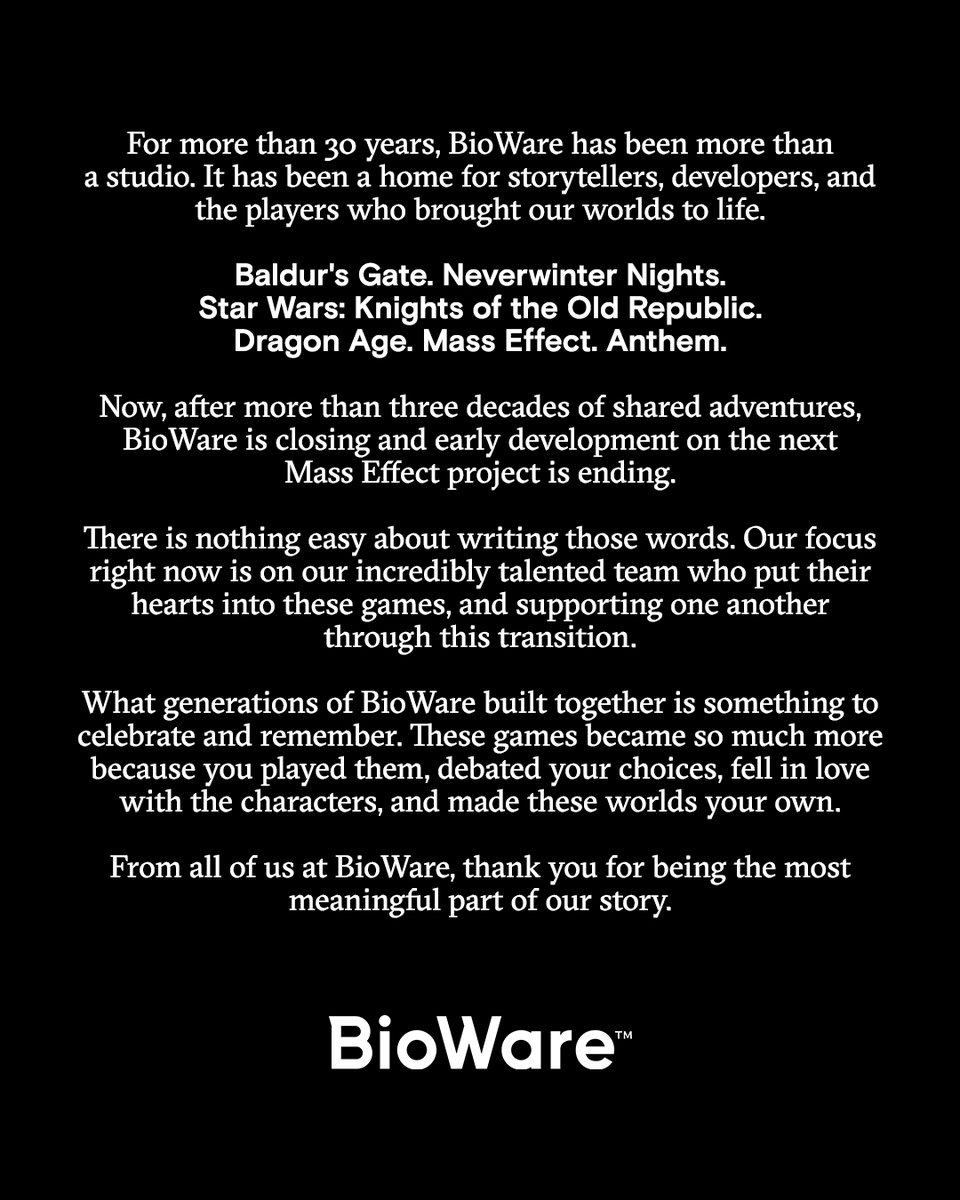
A BioWare dev on reddit leaked a Mass Effect 5 trailer... it's called MASS EFFECT UNIVERSE and it's fucking gorgeous. I'm crying. This is everything I wanted. They were a lot farther than we thought. FUCK EA
A visible sign of what AI insiders have been warning about since at least the Mythos release. Acceleration of attack and defense, at inhuman speeds, interacting with the very human systems that need to react to them.
So basically, today PHP got two critical bugs that let anyone run code on your server without even logging in, which is bad, and then the details leaked before the patch was even out, which is worse, and it works on WordPress and MediaWiki and Magento and Joomla and Laravel, and Censys says like 1.5 million servers are running a version with no fix, so the NSA was like "take your system offline," and the FBI was like "take your system offline," and CISA and the UK and CERT-EU were all like "take your system offline," and then the Prime Minister of Japan, the actual Prime Minister, posted at 5:55 in the morning telling 48.8 million people to take their system offline, so everyone took their system offline, like the Dutch cybersecurity agency took its own website offline, and the Dutch parliament went offline, and the Port of Rotterdam went offline, and Finland and France and Denmark started pulling government sites, and Wikipedia went down, and https://t.co/QlOXb3COq3 went down, and Asana and GOG and Something Awful went down, and the University of Vienna's webmail went down for some reason, and that's just PHP. Because GitLab also dropped a CVSS 10.0, which is the highest score they give out, for a bug that's been there since 2014, so that's every self-hosted GitLab for twelve years, and then LiteLLM 1.107.0 got hijacked and shipped a credential stealer and a remote access trojan in every single wheel and the Docker images, including latest, and you didn't even have to import it, just installing it was enough, and it's the second time this year, and then Railway paused every deployment on the entire platform because someone got into the environment variables, so now everyone has to rotate every secret they've ever stored there, and TiDB Cloud said someone was walking around inside with stolen credentials for basically a month and an extortion group says they took 10.6 terabytes, and Zeabur got breached for the second time in two months and is just shutting down, like the whole company, and Node.js patched remote code execution and a TLS bypass, and CISA says Plex is being actively exploited, and someone took over 300 Tor exit relays to steal SSH passwords, and SafePay ransomware has hit over 600 critical infrastructure orgs, and India's biggest bank filed a data loss incident, and Japan has been in an official state of emergency in cyberspace since October 9, which honestly explains the 5:55 AM post. Oh, and eMudhra, a certificate authority that's issued over 60 million certificates, whose entire job is proving websites are who they say they are, was supposed to be using private keys that are random numbers over a hundred digits long, and one of them was 4. Just 4. And the others were like 66 and 237. Anyway, it's Wednesday.
Such a gut punch, the Mass Effect series was gaming at its best. The company has been in zombie mode since being acquired by EA, so at least it's being put out of its misery.
I’ve been detained by the IDF, along with a group of rabbis & volunteers. We were simply harvesting olives in a grove near Nehalim in the West Bank.
The occupation is a crime under international law. Harvesting olives isn’t a crime under any law I know.
I’ve increasingly come to worry about the rise of “judicial nihilism” (for lack of a better term) in Canada.
We have a justice system that spends enormous energy considering the personal circumstances of offenders, their rights, identities, mental health, and prospects for rehabilitation. Yet it seems unconcerned with the victims whose lives have been destroyed, or the public that must live with the consequences when dangerous individuals repeatedly reoffend.
I think we need to take judicial reform more seriously, rather than dismissing concerns about overreach and malfeasance as conservative fearmongering.
The more I look at recent cases (many highlighted by @sarkonakj) the more concerned I become that our institutions are losing sight of some basic moral values in justice.
I’ve been thinking about the
principles that should guide us to a more liberal, rules-based approach to criminal justice (I’ll admit that this is hardly new thinking, but I can’t remember the last time I’ve seen them laid out):
1. Justice should begin with victims, whose suffering should never become secondary to the circumstances of offenders.
2. Protecting the public from dangerous individuals must be a central responsibility of sentencing, and we should lean towards caution.
3. Punishment must be a meaningful deterrent and reflect the gravity of crimes. Some crimes warrant permanent imprisonment (if not capital punishment). Some crimes are so heinous that the mere prospect of rehabilitation should not be considered.
4. Repeat offenders should face dramatically greater consequences, including long-term incarceration or asylum to protect society. Nobody with dozens of separate criminal convictions should be roaming freely.
5. Mental illness should determine treatment and facility type, not reduce punishment. The bar for criminal non-responsibility should also be much higher than it is today.
6. Sentencing must apply to those convicted equally, based on actions and responsibility, not race, religion, cultural identity, immigration status etc. The rule of law should be non-discriminatory, the right time to address the “root causes” of crime and pursue social justice is before crime is committed.
7. Parliament needs to figure out how to reclaim its authority, with courts exercising much greater restraint in constitutional interpretations.
8. Judicial “independence” must be balanced with meaningful accountability for serious failures and overreach. The judiciary is not supreme to legislature.
I worry that too many political leaders have become uncomfortable defending the very concepts of order, punishment and personal responsibility, as though doing so is somehow incompatible with liberal moral values.
They aren’t.
A liberal democracy has two fundamental obligations. To protect people from the arbitrary exercise of government power, and to protect them from the violence and predation of others.
We cannot fulfill one by neglecting the other. They are together the necessary preconditions for liberty.
When the public sees rulings that seem fundamentally disconnected from shared expectations of right and wrong, it erodes trust in the system.
Order and public safety are necessary conditions for freedom.
The freedom to walk down the street, take public transit, operate a business or simply live peacefully in your own home means little if the government cannot protect you from disorder, violence and criminality. It’s often those with the fewest resources who suffer most when that protection fails.
If we want Canadians to have faith in the rule of law, they need to believe that it applies equally, that serious wrongdoing carries serious consequences, that dangerous people will not repeatedly be allowed to victimize others, and that the system will not be careless with the lives and suffering of victims.