Hello from the watery abyss!
I've been neglecting this account as the current platform has made it hopeless to post, but I haven't been neglecting the camera. If you've enjoyed my kelp forest photo and video work, I'm launching a new way to follow along... 👇
🧵1/4
If you miss the pretty underwater pictures, I'm also still posting fresh frames on IG at the same handle: @katevylet. I may resurface here if things improve, but with limited bandwidth it's back to the watery abyss for now.
Hope to see you on the saltier side!
🧵4/4
...A newsletter! If you like conservation photo updates, marine bio fun facts, and uw photo tips delivered with uncalled-for snark, you'll enjoy this.
Dive in from the dry comfort of your inbox every month with all the above and more here:
https://t.co/TzJ32hptJu
🧵2/4
And to spice things up, if you subscribe by June 23 you'll also be entered into a raffle to win this signed 16x20" bull kelp print, because we all need more algae in our lives.
🧵3/4
Hello from the watery abyss!
I've been neglecting this account as the current platform has made it hopeless to post, but I haven't been neglecting the camera. If you've enjoyed my kelp forest photo and video work, I'm launching a new way to follow along... 👇
🧵1/4
With riveting detail, marine scientist and underwater photographer @KateVylet documents the complex ecosystem of underwater kelp forests along the Pacific Coast—and efforts to save them and the organisms that rely on them as we face a changing climate. https://t.co/9a7LzBFqdq
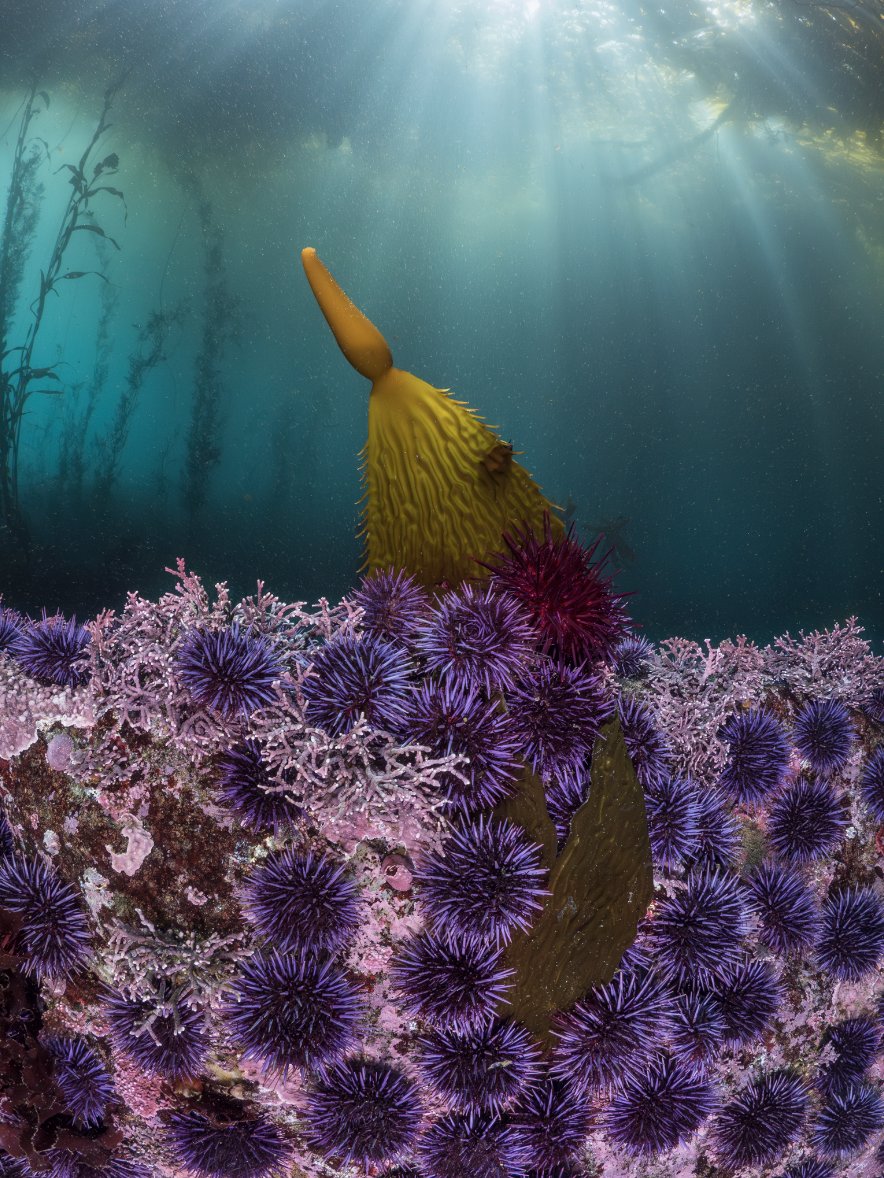
Sea urchins are often vilified in the story of kelp forest decline. But for @KateVylet, they still play a critical role in a balanced ecosystem: “Urchins belong to the kelp forest as much as the kelp itself does." See the full @bigpicturecomp gallery: https://t.co/TnJ8fMGgNR
Since disease wiped out large numbers of their predators, sea urchin numbers have exploded in West Coast kelp forests. However, population booms aren’t great, even for urchins, who face increasing competition for dwindling resources.
📷 by ’23 Aquatic Life Winner @KateVylet
*tap tap tap* Is this thing on??
A juvenile Brandt's cormorant (Urile penicillatus) pecks at the camera after paddling over to probe the weird bubbling creature. Young cormorants explore the world with their beaks, nibbling anything and everything that piques their interest.
@tmcclure74@benthicbuggin@AdrianStier The Nemo is a dreamboat, so much nicer than a pneumatic - easy setup and no tanks, oil, vibration pain, or hearing damage. Only downside is it struggles in extra hard rock, and it does need rinsing immediately after, especially the chuck. But I'd take it over a pneumatic any day.
Black surfperch (Embiotoca jacksoni) dodge around a heap of urchins in shallow water.
The spiky inverts are dogpiling on holdfasts, remnants of kelp once anchored here. Despite this barren, a thicket of algae looms just beyond the murk - a model of the coast's forest patchiness.
Eclipsed by floating clouds of kelp, a moon jelly (Aurelia labiata) rises through the upper atmosphere of the underwater forest.
The lunar swarm is gathered here to feast on zooplankton. Using their translucent tentacles, they sweep up the tiny prey suspended beneath the canopy.
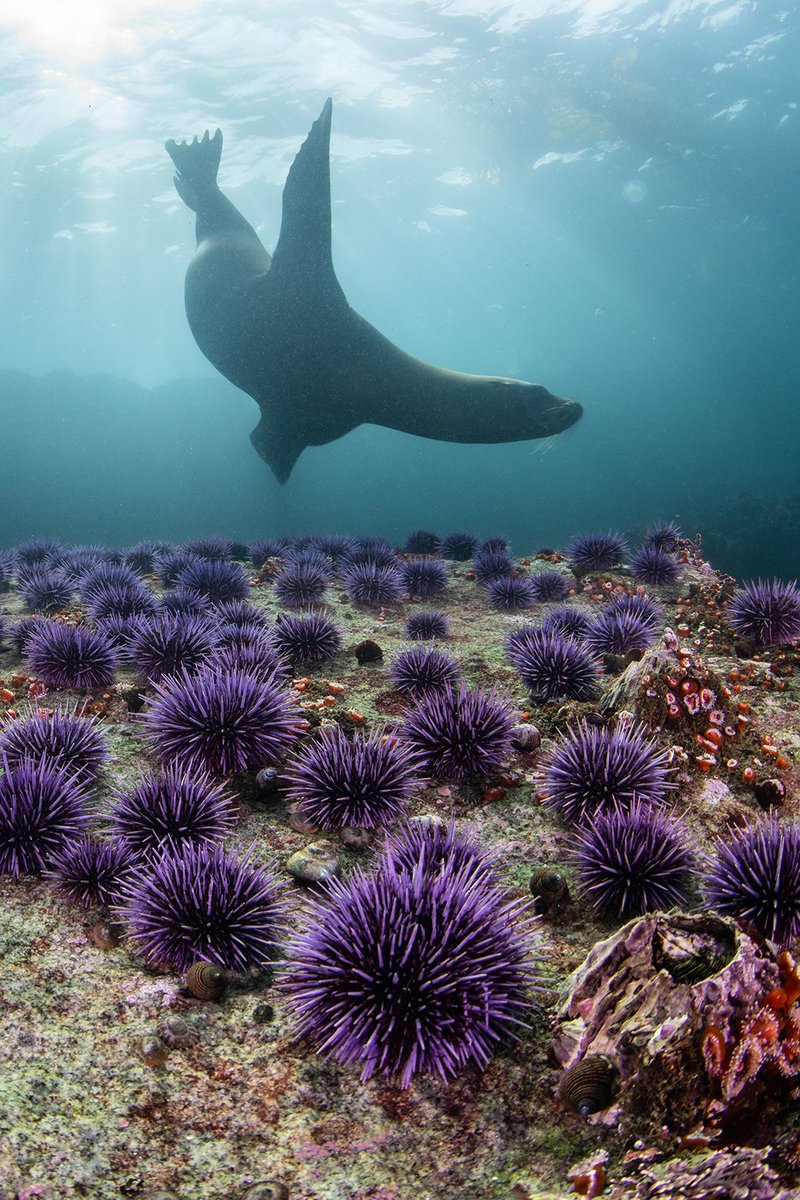
Showing off his underwater acrobatics, a California sea lion (Zalophus californianus) swoops over a spine-studded reef. In contrast the purple urchins (Strongylocentrotus purpuratus) and other inverts live at a snail's pace, unfazed by the chaos of dancing pinnipeds above them.
Floating through an alien forest like this, it can be hard to believe we're still on Earth.
These unusual "trees" are animals known as tube-dwelling anemones (Pachycerianthus fimbriatus). Clustered across the sandy bottom, they form an invertebrate forest below the surface.
A moment of red algal zen. 🌹
Red algae and durable invertebrates dominate the kelp forest shallows, a zone besieged by the unrelenting churn of an ocean in motion.
A moon jelly (Aurelia labiata) escapes the gravitational pull of a gelatinous sun, an egg-yolk jelly (Phacellophora camtschatica).
A few minutes earlier it looked like the egg-yolk had snared itself a Jell-O snack, but the rolling swell freed the moon from its tangle with fate.
One, two, three, four, I count the fish forever more.
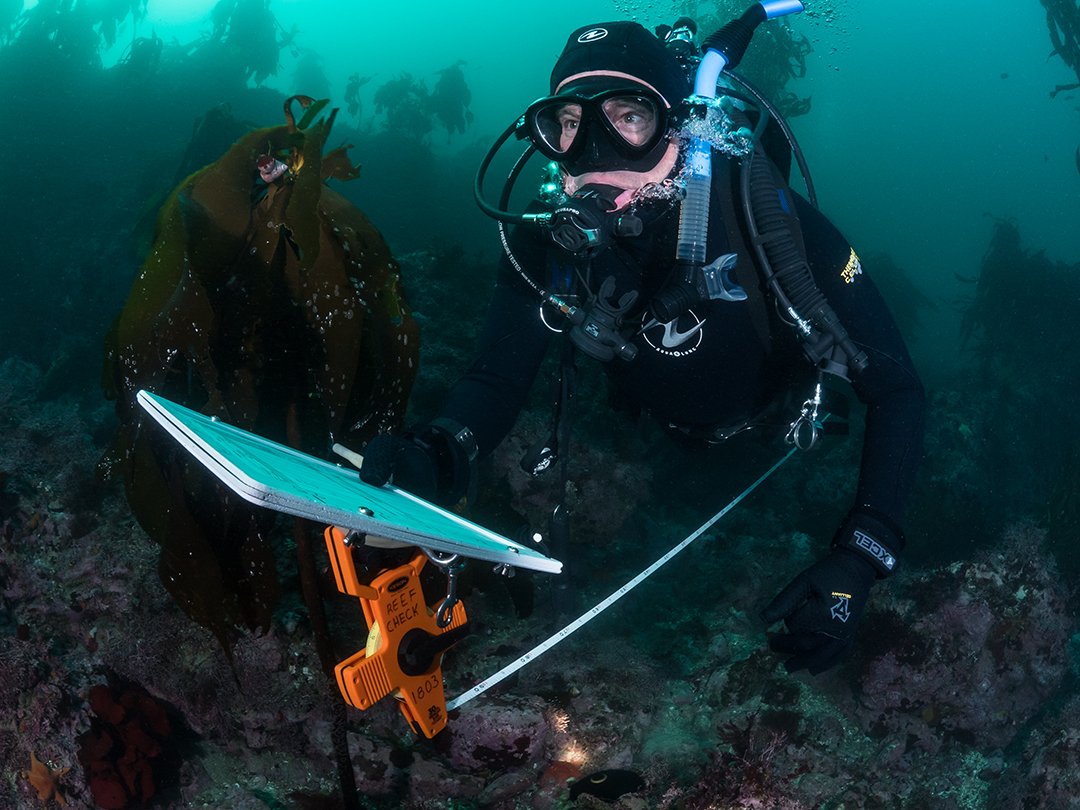
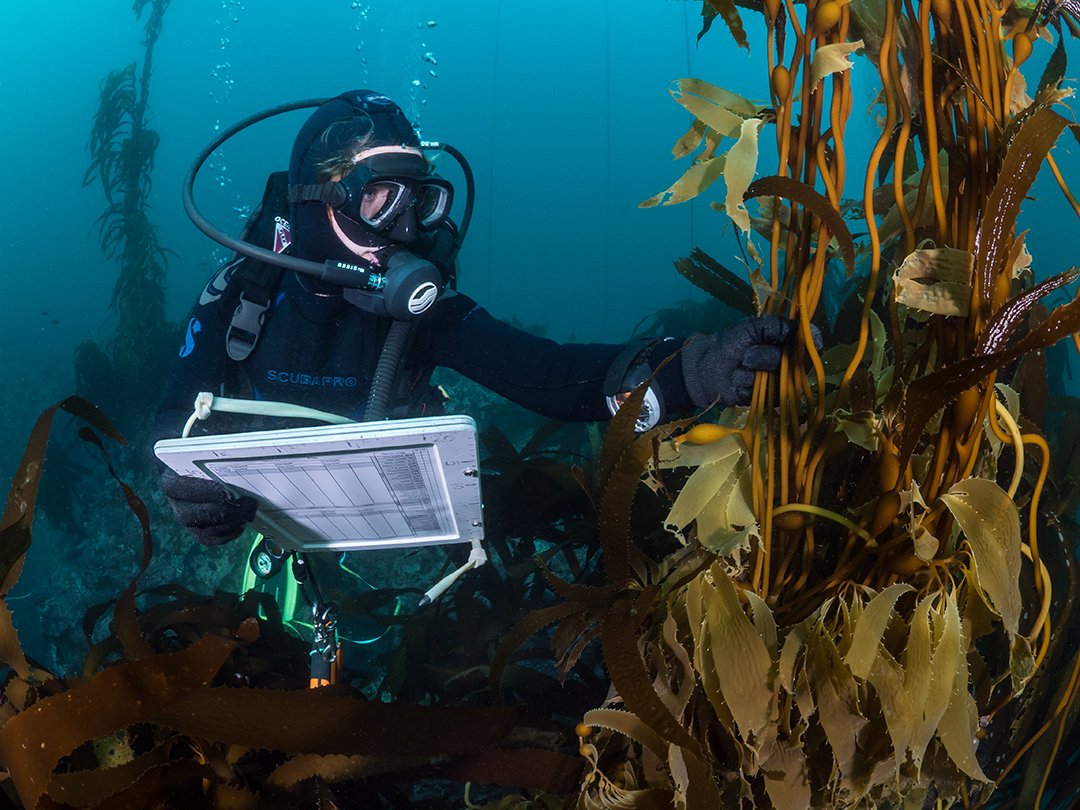
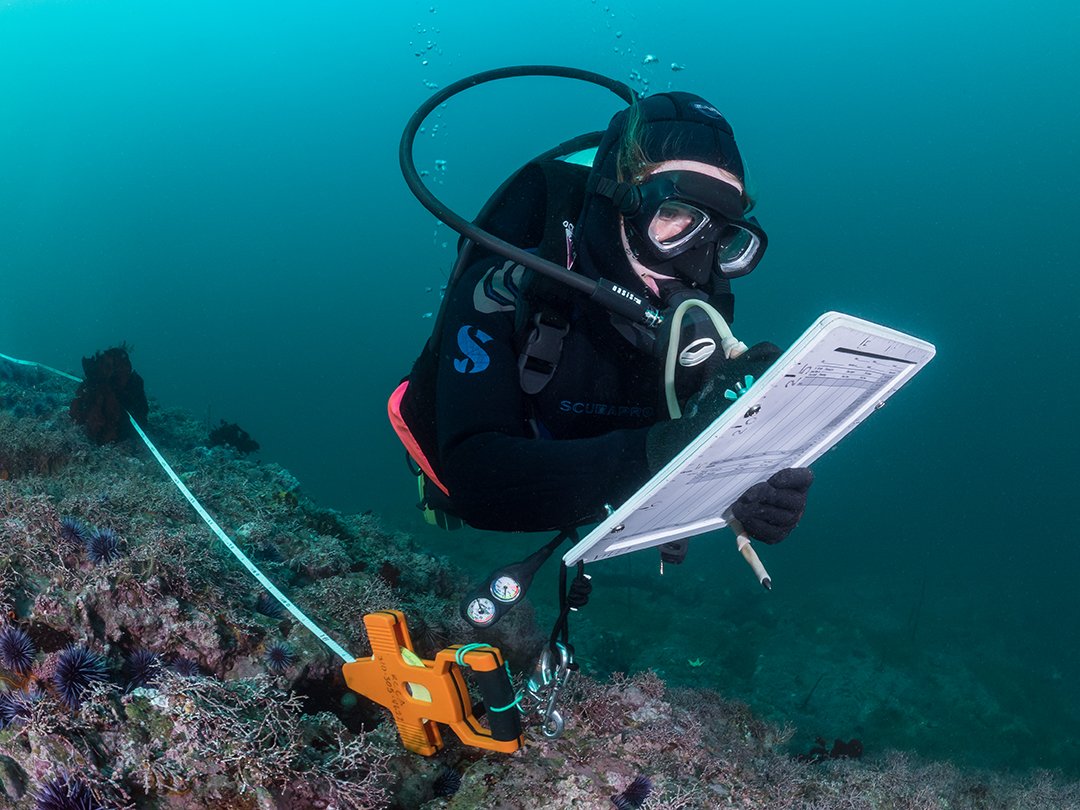
During these calm summer months the scientific field season is in turbo mode. Here citizen scientists from @reefcheck conduct kelp forest surveys, fortifying a long-term database that advises research and resource management.
These tiny isopods are small, but just HOW small are they?
The rocks they're crawling on are actually this coarse sand, a handful of which I have here by my thumb for reference. These lil undersea roly-polies are only about 2.5mm long, or about the size of fleas!
Clinging to a torn blade of red algae, these tiny isopods and amphipods are in a world of their own. They're huddled here to eat the algal growth on its surface, a herd of undersea roly-polies grazing on a miniature garden.
🎵: "Discovery" by Jon Luc Hefferman, CC BY-NC 3.0
Clinging to a torn blade of red algae, these tiny isopods and amphipods are in a world of their own. They're huddled here to eat the algal growth on its surface, a herd of undersea roly-polies grazing on a miniature garden.
🎵: "Discovery" by Jon Luc Hefferman, CC BY-NC 3.0