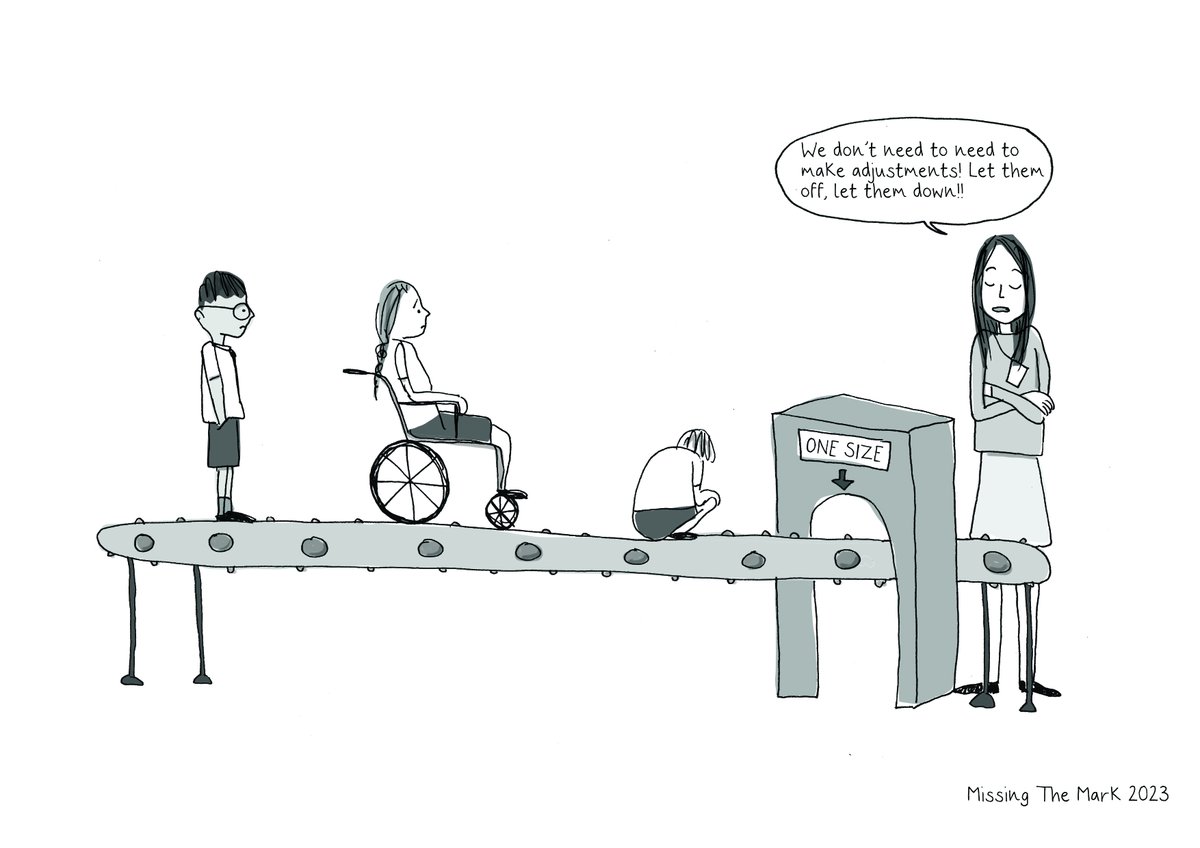
It appears that British schools are spending a lot of time controlling exactly which black shoes teenagers are allowed to wear, and their parents are frustrated about it. This is effectively control of their parents, since they are buying the shoes and many are told at short notice that the shoes they have bought are not acceptable.
I've now been sent several school shoe policies with multiple pictures of slightly different black shoes, some of which are acceptable and some of which are not. Parents tell me that they are threatened with isolation or the child being sent home if their shoes are wrong.
Can anyone explain to me how this helps children learn and how it supports struggling families to get their children into school?
“Strict enforcement of uniform, punishments for infringements of draconian rules and the liberal use of isolation and exclusion have created a harsh culture in many schools. If the rigid and narrow curriculum – with reduced opportunities for creativity – plus endless testing is added to students’ experiences, it is hardly surprising that they are anxious. Such a culture is anti-educational and anti-learning.”
Three letters to @guardian, all from highly experienced academics specialising in education. All saying that the high control environment and punitive culture in some of our schools is creating high levels of distress in our young people. This mirrors what I hear every day from parents and young people.
We need to stop saying that our young people are the problem and instead ask ourselves what they need to flourish. It’s an unfortunate fact that you’ll never be able to punish someone into thriving.
https://t.co/4MMNdTZAGT
I have heard from several young people whose schools use apps to monitor their behaviour. Immediate notifications are sent to their parent if they get a demerit. Demerits are given for minor transgressions, including not being immediately on task at the start of a lesson, having two pairs of earring studs in or not having a spare pen if yours breaks.
The effect of this on both the young people and their parents is significant. Young people describe feeling on edge all day, worrying that they’ll get something wrong and then their parent will be informed. Their parents describe it as mounting anxiety each time they get a notification – and total powerlessness, because they can do nothing about it. They describe it creating family tension and arguments – and it brings problems at school into the home. For some young people, this creates very high anxiety – and for some parents, it does the same. Of course, parents respond in different ways. Some try to help, others ignore them whilst others punish their children.
These apps do more than send notifications. They collate the points which young people are given and compare them against others in their class or school. Sometimes this is done visibly – projected onto the whiteboard when it’s in ‘resting mode’. Then schools use them to give awards at the end of term. This means that young people are left carrying their past behaviour records with them all term. There’s no way to let it go.
It's easy to see what these apps are selling. Easy behaviour management. What’s less clear is whether anyone has done a risk assessment on the side effects of these constant alerts for both parents and young people. For the young people who are struggling, does it actually help to be constantly reminded of that – and to have the rest of class reminded of it too? For parents who are worried about their kids, what is the impact on sending them alerts throughout the day to tell them that things aren’t going well? Or could it be destructive of their mental health?
I know what you’ll say – well they should just behave! Then there would be no problem. This isn’t the case. I hear from very well-behaved high achievers who are constantly worried about getting a point. And I hear from kids who don’t ‘behave’, not because they are choosing to get in trouble but because the demands of school are hard for them to navigate. Both these groups (and their parents) describe these apps causing intense distress.
These apps are businesses, and they are selling a dream. Happy well-behaved kids and engaged parents. Everyone working together. Maybe it works like that for some, but it’s clear that it isn’t like that for everyone.
Is anyone doing the risk assessment? What’s the impact on the most vulnerable?
I'm a clinical psychologist. This means that I use psychological theory and practice to help people with their mental health. I have two doctorates, one in developmental psychology and one in applied clinical psychology. In the therapy room, I hear stories. People tell me things that they haven't told anyone before.
It's an immensely privileged job and has opened my eyes to the experiences of people who I would never have otherwise met. I hear about how people's experiences affect them and their emotional wellbeing. I have worked with refugees, survivors of trafficking, police officers, military veterans and many more. I worked in the NHS for years.
I am concerned about what I hear about our schools from young people and their parents. I hear about increasingly authoritarian practices, and of sanctions such as isolation rooms used for minor misdemeanours. They tell me that there is a 'no excuses' culture which for some young people means that things go downhill very fast as they accumulate consequences and their relationship with school and their parents breaks down. Parents tell me that their concerns go nowhere, and that the focus is on making their children comply.
I have checked out whether this is really happening - many schools have behaviour policies online which align with what young people are telling me. And I hear many stories from different areas of the UK from people who do not know each other, but whose stories are similar.
When I raise the alarm about this, I'm often told that I'm not a teacher and so I don't understand and should keep quiet. That's true. I'm not a teacher and I have never claimed to be one. That isn't where my expertise lies. I'm an expert in mental health, and what I'm saying is that what is happening in our schools is having an adverse effect on the mental health of our young people. Not all of them, of course, but a significant number. Not all schools, of course, but it appears to be an increasing number. I don't think this is the fault of teachers, many of whom also report mental health problems and who are leaving the profession.
Mental health problems are a result of the interaction between a person and their environment. Some environments cause more distress, and when this happens, some people will develop serious problems as a result. Yes, there are many reasons why young people develop mental health problems, but one of them, for some young people, is the systems which are being put in place in an increasing number of our schools.
I wish I knew the answer. I wish I could produce a checklist of easy adaptations which would solve this problem. I don't know, but I do know that whilst we don't even accept that there might be a problem with the way we are treating our young people, we'll never find the solution.
Sometimes, unresolved trauma, ACEs & adversity disrupt the way a parent’s mind meets their new baby’s mind. Supporting parents, including through specialist parent-infant therapies, can prevent babies becoming children w mental health problems. Not all MH problems start this way.
Parents and teachers tell me that the behaviour and attendance policies in our schools are making things worse for young people. Here’s what they say. 1/
Brilliant people leave teams when they feel they just can’t make change happen. The barriers?
- fixed hierarchies based on grade
- slow or no decision-making
- 0 freedom to innovate
- blocking good ideas
- taking credit for the efforts of others
- no engagement
- hubris
- spin
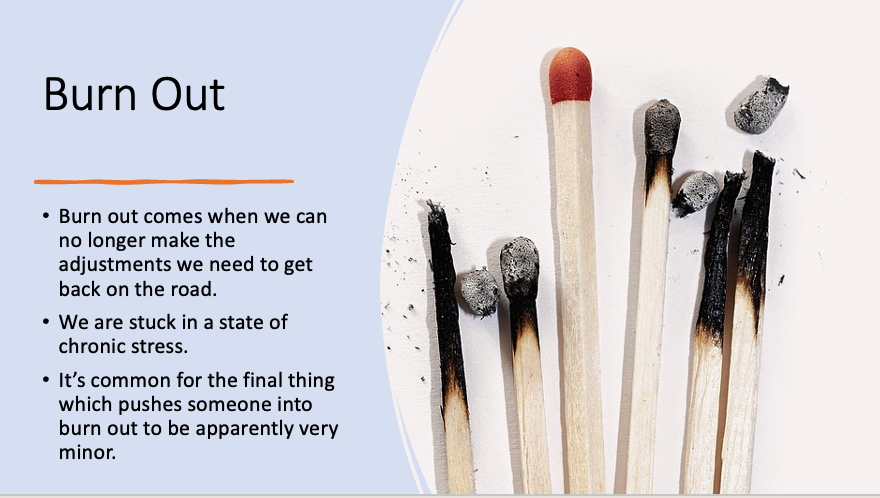
Is it possible to be burnt out by school? How and why does it happen and why does it happen to autistic young people? That's what I'm talking about in my next webinar on Monday. Yes it's recorded. Please share if you know parents who might benefit. https://t.co/Zd4qvp989s
‘School is not my enemy: an artistic visualisation on school refusal’.
A perspective of a young person struggling to go to school, created by researchers at @Hogeschool_Gent in Belgium.
https://t.co/m15jIsxBR2
What would happen if we saw school related distress as feedback on the system? As a psychologist, I meet many children who are distressed by school. Usually I’m being asked to change that. Can I make them less anxious? Can I make them attend without protest? 1/
Eating disorders can take over your whole identity and make you feel like it’s all you are. I had anorexia on and off since I was 12, so I had very little concept of who I was outside of being ‘sick’, ‘in treatment’, ‘tiny’, and ‘disciplined’. Here’s how I found myself again: 🧵
Emotion based school refusal (EBSA) is an individualising reframe for inaccessible school systems. CAMHS services nationwide are seeing increased referrals&taking individual approaches to respond. We need to critically reflect on what harm is being perpetuated (1/3)…
The “golden child” is loved for what they do, not who they are. They become an extension of their parent’s self worth.
Why the golden child learns to wear a mask:
Doing some fascinating research around how the mother’s cortisol levels effects the development of the baby’s nervous and immune system. Babies and children from high cortisol mothers begin dissociation as an early defense. I might be writing my next book...
“If they really are refugees, why don’t they have to stay in the first safe country they reach?”
“Why don’t they just claim asylum in France?”
Here is my answer, once & for all. To Jonathan Gullis, and to everyone else who ever wondered.
#RefugeesWelcome