Ok I want to chime in here and clarify a few things.
1. Aughinish Alumina was originally developed by the Canadian company Alcan. It was later acquired by the commodities trader Glencore in 1999. In 2007, Glencore sold Aughinish to Rusal, the Russian aluminium giant founded and controlled by Oleg Deripaska. The sale was a commercial deal between private companies. Ireland did not yet have the foreign direct investment screening mechanisms that many European countries use today to scrutinize strategic acquisitions. Ireland was operating under EU single-market and foreign-investment rules, there was no special Irish government approval process for a transaction like this at the time.
2. Ireland cannot unilaterally ban most exports to Russia. Foreign trade (including sanctions against Russia) is an EU competence, not a purely national one. That means, Ireland cannot independently impose a general ban on exporting alumina to Russia if the EU has not sanctioned it. Companies in Ireland must comply primarily with EU sanctions regulations, which are directly binding law across all member states. So if alumina is not on the EU sanctions list, the Irish government cannot simply decide “stop exporting this to Russia” without an EU-wide measure.
3. To stop exports to Russia in a legally robust way, one of these would be required:
EU-wide sanctions explicitly covering alumina or related aluminium inputs!
Or a specific EU decision restricting trade with entities like Rusal-linked supply chains!
Or evidence-based designation of end-use for military purposes triggering tighter export controls!
4. Apply pressure to the EU, not to Ireland. Slagging off the Irish won't work even if it is entertaining to watch. We're thick skinned and slag the living fuck out of each other for fun. Insults are a form of flattery here. So thank you all for that!
5. This is the last I will have to say on the matter. I wish the #Alumina21 the best of luck but I gave up activism a long time ago so I could direct all my energies at fundraising for groups involved in deleting orcs, their equipment or otherwise supporting the Ukrainian military. I hope you will join me in this endeavour. As always I recommend @Y_Chornomorets for sniper groups that get results, @wilendhornets for Sting interceptors for air defence, @69thSB for trucks for Ukrainian military units and Irish lad @Hannuska2109 does great work supporting Rugby Team drone unit (part of Phoenix Group) with whatever they need!
We were shown video footage of tens of thousands of dead bodies of Holocaust victims in the private secondary school I went to in Ireland. At no point was it treated as anything less than an industrial and systematic genocide. We met a Holocaust survivor in the assembly hall
There's been a rising tide of 'Ireland supported the nazis' this last day or so. We all know that's bullshit. Where you come across it, feel free to deploy any of these https://t.co/SjR3wmGsLk
“mining industry has long history of environmental disasters caused by poorly stored waste in tailings dams, type of dam that will also be built for Bendigo-Ophir. Poisonous waste, including arsenic, will be stored there in perpetuity.” Stop #NZ#fasttrack https://t.co/fcf2O0T5Rc
Melika Azizi is 18 years old. The regime wants her dead because she isn't afraid of them.
While the world slept, they raided her home. While they beat her in Lakan Prison, she held her head high. When the judge handed down a death sentence, she didn't beg for her life—she demanded justice for the fallen.
"How can I stay silent?" she asked.
We cannot be the ones who stay silent while they try to hang a teenager for her bravery. Silence is a death sentence. Noise is a lifeline.
ACT NOW: Save this post. Share it. Tag three friends who will help spread her name. We have to make the cost of executing her higher than the cost of letting her go.
#MelikaAzizi #SaveMelika #StopExecutionsInIran #HumanRights
Ukrainian journalist Yana Suvorova was abducted in occupied Melitopol when she was just 18 years old.
After a closed, staged trial, she was sentenced to 14 years in prison on charges of terrorism and treason. Her case has been classified. She has disappeared from the prisoner exchange lists.
Yana about her imprisonment: “The cell is cold. Rats are running around. The lights are never turned off.”
Her boyfriend says that after being transferred to Donetsk, Yana’s condition sharply deteriorated — she was held together with girls who had attempted suicide. The psychological pressure was constant.
Russian courts are reclassifying Ukrainian journalists as terrorists in order to prevent them from being included in prisoner exchanges.
Russia is blocking their exchange, hiding them from public view, and sentencing them to decades in prison.
By 2025, russian courts had fabricated terrorism cases against journalists from RIA-Pivden. Sentences range from 14 to 16 years.
One exception — Mark Kalyush — was released and confirmed systematic torture in detention.
Yevhen Ilchenko, a citizen journalist, documented life under occupation.
He was abducted in July 2022, tortured with mock executions, filmed in a staged “confession” of terrorism, and then forced into hard labor — digging trenches near the front line.
Ilchenko’s case is the first in nearly 40 years in which a journalist was abducted, tortured, and subjected to forced labor amounting to slavery.
He is currently being held in the Taganrog pre-trial detention center under constant light and in inhumane conditions.
Vladyslav Hershon — 15 years. Heorhii Levchenko — 16 years. Charges: participation in a terrorist organization. Evidence: activity on Telegram.
Journalist Anastasiia Hlukhivska is being held incommunicado. Russia refuses to confirm her detention.
In the Kizel pre-trial detention center, Ukrainian journalist Viktoriia Roshchyna was tortured to death.
Russia is currently holding 50 journalists in prison — 29 of them Ukrainians.
Russian “anti-terrorism laws” strip civilians of legal protection and block exchanges. Without a mechanism for the return of civilians, these sentences may effectively become life imprisonment.
Source: This text was translated and adapted from Tymofiy Milovanov.
Here's the documentary that 1.1 million Hungarians have watched over the past week. It investigates the damage that Viktor Orban's regime has done to health, education and public transportation in Hungary.
With English subtitles:
https://t.co/MswF1wk8qR
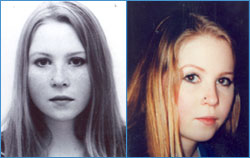
The haunting murder and grave vandalism of Raonaid Murray is still unsolved today. On the night of Friday 3rd of September 1999, she did what most 17 year old girls in south Dublin were doing at the turn of the millennium, hanging out with her mates. They started in Scott’s pub in Dún Laoghaire.
Just after 11.20pm, she left to walk the short route home to Glenageary to change clothes before heading out again. She never made it. About 500 yards from her home, in a narrow laneway known locally as The Cut, or The Gap, Raonaid encountered her killer. What happened there was fast and vicious.
She was stabbed frantically four times with a small kitchen knife, the blade barely an inch and a half wide. People nearby heard it. That is one of the most chilling aspects of the case. Witnesses reported a female voice shouting, “leave me alone,” “go away,” “fuck off.” Then a scream. No one intervened. Perhaps they assumed it was a drunken lovers’ row, something none of your business that might get you in to bother for interfering.
Despite her injuries, Raonaid did not die in The Cut. She staggered on for almost two hundred feet, bleeding and disoriented. She collapsed on Silchester Crescent. At 12.33am, her sister Sarah found her there. The fear and desperation Raonaid must've experienced and the shock and heartbreak her poor sister felt on the discovery are impossible to imagine.
The vicious frenzied murder appeared motiveless. There was no sexual assault or robbery. The knife vanished and has never been recovered. Gardaí took over 4,500 statements and interviewed countless people, yet the case stalled almost immediately. For years, the working assumption was a lone male predator, socially isolated, stalking the streets at night. But it didn't really fit.
As the case was later reviewed by the Garda Serious Crime Review Team, kind of a "cold case" unit, the focus shifted to considering Raonaid was killed not by a male, but a woman. The weapon of choice was a small knife. The attack was frenzied rather than surgically lethal. The wounds were described by some investigators as disfiguring suggestive of rage rather than dominance. Raonaid fought back, and under her fingernails, forensic testing reportedly identified female DNA.
Then there were the voices. Witnesses were adamant that the shouts they heard were female. Some spoke of a man “hassling” Raonaid earlier, but others recalled only a woman’s voice in the laneway. Gardaí began to ask uncomfortable questions. Had witnesses mistaken a woman of slight build for a man, especially in an era of baggy clothes and short haircuts. Or had Raonaid encountered more than one person in those final minutes.
The absence of sexual motive pushed investigators toward mates falling out or a jealous grudge. One theory suggested Raonaid had recently broken contact with an older acquaintance, a woman known for volatility and violence toward other women. This individual, in her thirties at the time, left Ireland about a year after the murder. She has never been charged. Gardaí have never had enough to extradite or prosecute. But she remains a person of interest.
Another bizarre element involved Farah Swaleh Noor, later murdered and dismembered by the “Scissor Sisters”. While drunk, Noor reportedly claimed he had killed Raonaid, allegedly as a threat to the sisters’ mother. Gardaí investigated and ruled him out.
In 2009, a tribute website created by friends and family was vandalised by online trolls. Over the years, there have also been sporadic despicable disturbances and vandalism near her grave.
Only in 2024 was a formal inquest finally completed, returning a verdict of unlawful killing. The investigation remains open at Dún Laoghaire Garda Station. Gardaí continue to appeal for information, particularly to those who may now doubt the truth of an alibi given in 1999. That phrasing is deliberate.
Contact the Serious Crime Review Team [email protected]
Garda Confidential Line: 1800 666 111