Ok. This is a bit confusing. Prez Trump didn’t attend his son’s wedding due to situation with Iran, but he’s going to a basketball game as Iran sends bombs to Haifa.
Scientists across the country are expressing alarm as the Trump administration dismantles another tool for understanding how the planet is changing.
Starting this month, more than 900 deep-sea ocean sensors will be pulled out of the Pacific and Atlantic Oceans off the coast of Washington, Oregon, Alaska, North Carolina, and Greenland.
Researchers say these are critical ocean observation tools.
William Brangham (@WmBrangham) explains.
They have roamed America's open land for centuries.
Wild. Free. Untouchable by law.
Right now, helicopters are chasing them down.
The BLM is conducting large-scale roundups across the West—thousands of wild horses and
burros pursued to exhaustion, separated from their
families, and loaded into government holding facilities.
In those pens, herds are broken apart. Stallions fight in close quarters.
Horses built for open land crash into the bars of their enclosures in desperate escape attempts.
The leading cause of death in holding facilities is traumatic injury.
Over 64,000 wild horses and burros are already warehoused in these facilities. More arrive every day.
And every budget cycle, the administration tries to open the door to slaughter. Project 2025 calls them a problem to be "disposed of.
Congress has pushed back - so far. But without permanent protection, this fight never ends.
If slaughter isn’t the goal, why keep removing the protections against it?
#DemsUnited
General Omar Bradley called it the most dangerous mission of D-Day. He was not wrong.
At 6:30am on June 6, 1944, 225 Army Rangers approached a 100-foot sheer cliff face on the Normandy coast called Pointe du Hoc.
Their mission: climb it.
The cliff was vertical. The Germans were at the top with full visibility of everyone below. As the Rangers fired grappling hooks upward, the Germans cut the ropes. Shot the men hanging on them. Dropped grenades over the edge onto the climbers beneath.
The Rangers kept climbing.
It took roughly 40 minutes. Men fell. Men were shot off the ropes. The ones behind them grabbed the ropes and kept going.
They reached the top.
Then came the gut punch: the massive 155mm artillery guns they had been sent to destroy were gone. The Germans had moved them inland before the invasion. The entire mission had been sent to destroy guns that weren't there.
Most commanders would have regrouped and called it done.
The Rangers fanned out. Two miles inland, they found the guns, hidden in an orchard, already aimed at Utah Beach and loaded to fire. They destroyed every one with thermite grenades.
Then they dug in. Cut off, with almost no ammunition, no reinforcements, and no resupply, 225 men held Pointe du Hoc against relentless German counterattacks for two full days.
When relief finally arrived, only 90 Rangers could still stand and fight.
Their names are carved on a memorial in Normandy. Most Americans today cannot name a single one.
“In this country, we have no ‘other people.’ We are American people, all of us.”
This 1940s film warning against bigotry and fascism is more relevant now than ever.
This is really stupid, and it’s not getting enough attention.
The Trump administration is pulling a working $368 million ocean monitoring system out of the water, equipment taxpayers already bought, built, and sank into the deep ocean.
And they are doing it right when the oceans are behaving in ways that alarm the scientists who study them.
Record-breaking temperatures.
A system of Atlantic currents that may be lurching toward collapse.
The response?
Yank out the instruments and walk away.
That is not budgeting. That is smashing the gauges while the engine is on fire and calling it efficiency.
For what? The Trump administration dressed it up as a “nimbler approach” and “smart lifecycle management,” which is fancy nonsense for “we shut it off and hoped nobody would ask why.” There is no return-on-investment analysis. They cannot show taxpayers save a dime, because the gear is already paid for and the science it produces protects real money and real lives.
The kicker: the same people killing the monitors want to mine the deep sea for minerals. So they are destroying the only tools that could measure what that mining does. That is not an accident.
That is the point. You cannot see the damage if you break the instruments first.
https://t.co/MzE4AW1QBv
The shape of your pollinator garden matters more than its size.
Most native bees have small foraging ranges. Peer-reviewed research on solitary bees found female flight distances of just 73 to 121 meters from the nest. A small bee born in your neighbor's yard might not reliably reach a flower patch in the middle of your yard if there's a length of mowed grass between them.
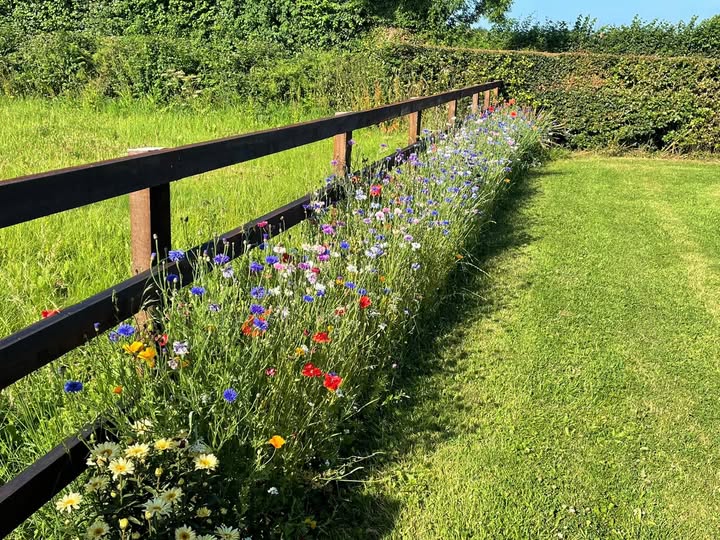
What works is linear pollinator habitat. A strip along a fence line, a corridor along the driveway, or a narrow band of natives running the full length of the property is best.
A 2018 study in the journal Ecography found that the length of linear semi-natural habitat was the single strongest predictor of wild bee species richness and connectivity in agricultural landscapes. Bees track edges.
A 2-foot-wide strip running 50 feet does more ecological work than a 10x10 island in the middle of the lawn. The strip gives pollinators a route to follow, something that guides their movement across the landscape.
The effect multiplies when your neighbors do the same. A strip along your fence meets a strip along theirs, and so on.
@TikiTales That trainer is a local girl from southwest FL. For some reason, people think FL doesn’t have horses and girls can’t train them. The laughs are in them. So proud of her and Golden Tempo! TY Tiki.
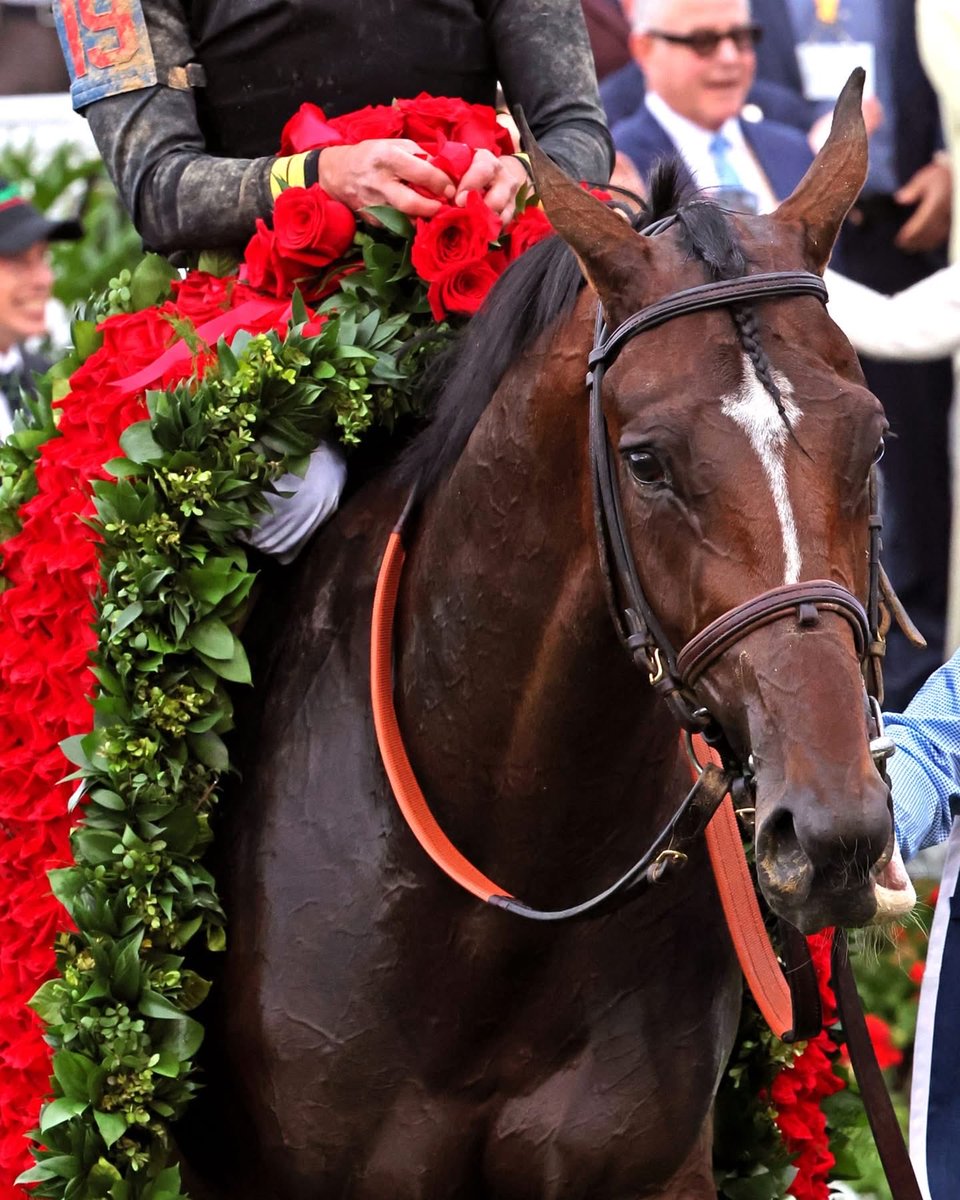
Big congrats to Kentucky Derby champ Golden Tempo on his win at Belmont 🏆🌹
and 🍻 to his trainer who made his health a bigger priority than a triple crown 👑 👑👑 😘
Private Carlton Barrett was possibly the smallest man in his regiment.
5 feet 4 inches tall. 125 pounds.
On the morning of June 6, 1944, he landed at Omaha Beach in neck-deep water, machine gun fire cutting the surface all around him. He made it to shore.
Then he turned around and went back in.
A soldier was drowning. Barrett pulled him out. Then another. Then another. For hours, under constant fire, this 125-pound man waded back into the surf again and again, pulling drowning men to safety and physically carrying the wounded to evacuation boats offshore.
But he didn't stop there.
He ran dispatches the full length of the fire-swept beach. He found soldiers paralyzed by shock and calmed them back into action. He appeared wherever the crisis was worst, doing whatever needed doing, treating rank and personal safety as irrelevant details.
He did this for hours without stopping.
His Medal of Honor citation says his courage had "an inestimable effect on his comrades." That is military understatement for: this small, anonymous man held that section of beach together through sheer force of will.
He survived the war.
His comrades later said his life darkened after he came home. He lived quietly and died in 1986 in California, largely unknown outside of military history circles.
5 feet 4 inches. 125 pounds. He went back in.
Remember him.
It doesn't happen overnight. It takes time to learn what motivates your human, to figure out what makes them smile, and to understand the things they fear. You'll spend most of your life teaching them to understand you and learning to understand them. And you will love them.
#DogThoughts