Simply Explained : Why did the RBI ban the Paytm Payments bank ?
Turns out that the payment bank has had significant regulatory lapses and has been tussling with the RBI for long.
Infact, it paid a fine of Rs 5.4 crores in 2023.
1/ It has failed to identify benefical owners of certain listed accounts.
Imagine a company A opening an account with a bank. A is owned by companies B,C,D which are further owned by companies E,F,G and it becomes difficult to trace the natural person.
2/ It breached the regulatory ceiling of end of the day balance in certain customer advance accounts.
This ceiling for payment banks is Rs 2 lakh which means on any given day, the account balance cannot exceed this amount.
RBI imposes such ceilings to hedge against a potential ecosystem collapse.
3/ It delayed reporting of cybersecurity incidents on multiple counts.
According to the Cybersecurity Framework for Banks in India, it is mandatory to report such incidents in 2 to 6 hours depending on the intensity of the incident.
4/ It’s video based customer identification process (V-CIP) infrastructure failed to prevent connections from IP addresses outside India posing a geopolitical risk.
5/ The cyber cold between India and China.
Alibaba holds 33% share in Ant Group.
Ant Group holds 20% share in One97 Communications.
One97 Communications holds 49% stake in Paytm Payments bank.
It is speculated that there have been data breaches and the data is siphoned to China.
Interestingly,
Airtel Payments Bank and Fino Payments Bank have too been fined Rs 5 crores and 1 crore in the past on similar charges.
RBI Kehta Hai Satark Raho.
#PaytmBank
What is the average number of working hours for an employed person in India?
47 per week.
With 51% of people working greater than 49 hours per week!
- Higher than Japan (37) infamous for karoshi,
i.e death by overwork.
- Higher than China (46) infamous for 996 rule,
i.e 9 to 9 for 6 days in IT companies
Infact, India ranks 8th worst country in the world when it comes to work life balance.
It’s not even that longer hours translate into productivity. It’s actually otherwise.
Precisely why our developed counterparts have started to take a proactive approach to protect their workforce and focus on innovation rather than exploit their workforce in the rat race and lose it all.
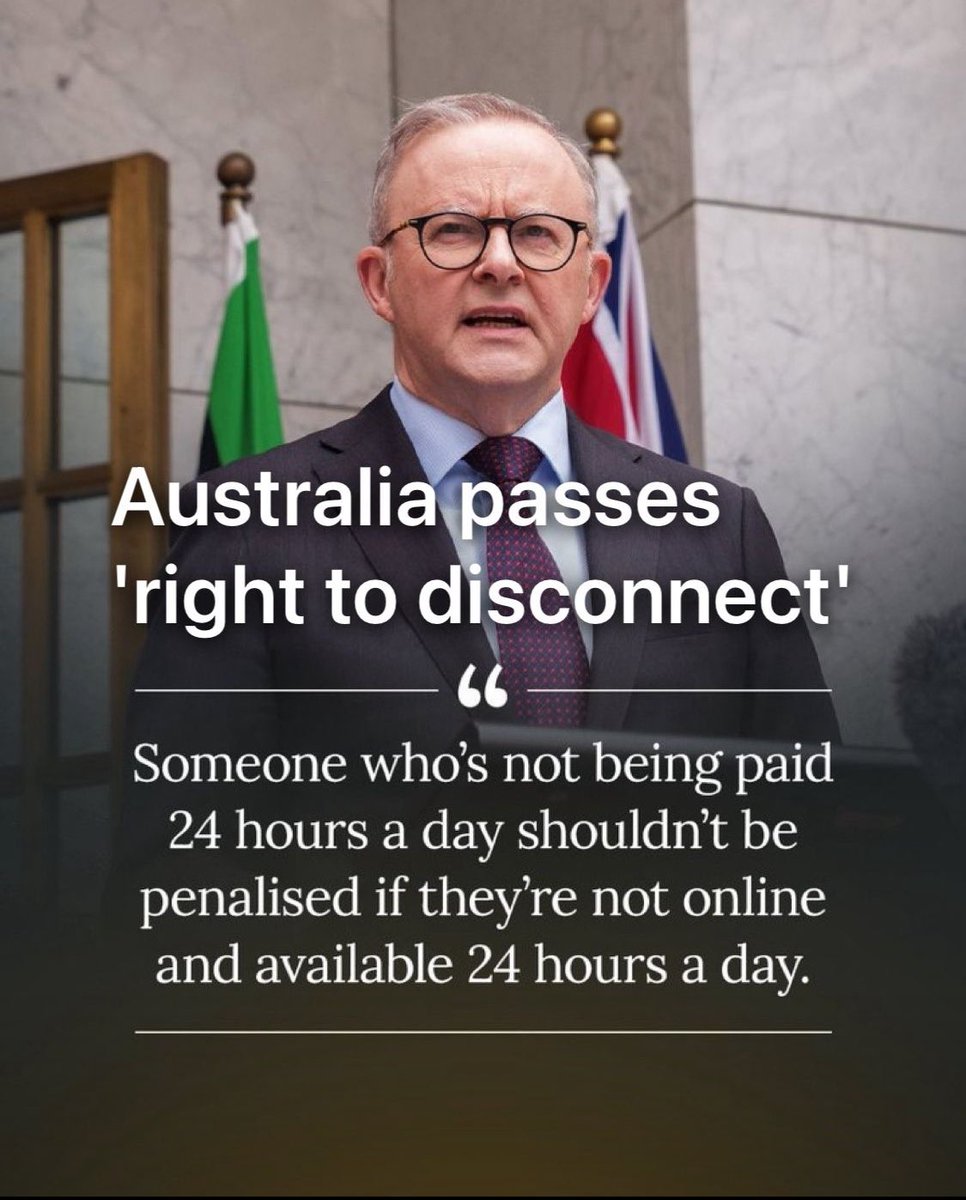
Australia is the latest to join the bandwagon on the ‘right to disconnect’ after work hours.
France, Spain, Belgium, Portugal, Ireland, Greece, Italy are some countries which have already incorporated this right.
And yet in India, we feel guilty of
- applying for earned leaves
- leaving office on time
- not reverting to that email on a Saturday
Why?
Because somewhere we are all getting the definition of growth mindset all wrong.
This IMO, is a colonial mindset.
Right to disconnect would free our overtime calendars to make way for :
- Upskilling ourselves
- Focussing on our health
- Thinking of out of the box ideas
- Making memories with our families
That’s where the real impact lies.
It’s time we move away from our ‘punchcards’ and focus on our ‘punch’.
#Righttodisconnect #WorkLifeBalance #Australia
Coldplay is a marketing genius. No wonder, everybody in my friend circle seems to be in Thailand right now.
What makes Coldplay a marketing legend though ?
1/ Price Price, baby.
The average ticket price to a Coldplay concert is 50% of what other stars in the same league charge.
Taylor Swift → $141
Beyonce → $131
Coldplay → $78
Infact, Rolling Stones, way back in their times charged $93 per ticket.
Price builds pull.
2/ Focus on Sustainability
It almost feels like they are doing much more than Greta Thunberg.
- 1 tree for every new ticket.
- 50% reduction in carbon emissions
- Discount to fans if they commit to low carbon travel
- 100% renewable energy used on stage.
Infact, Coldplay realised they were spending $500k per show on LED bands that their fans wore during the concert which eventually went to waste.
Coldplay worked to make these bands rechargeable and nudged people to return them after the concert so that they could be used for future shows too.
Guess what?
86% people actually return it!
Cause builds loyalty.
3/ Charity begins at home.
Coldplay gives 10% of every show’s earnings in charity. Their website has all details on where the money is going and what all they have been able to achieve through their charities.
Transparency builds trust.
4/ Positioning.
Coldplay does not consider itself as a rock band but as a hybrid band.
They know that every genre has a shelf life and staying relevant is important.
Coldplay X Rihanna
Coldplay X Chainsmokers
Coldplay X BTS
and the list goes on.
Collaboration builds relevance.
Coldplay are the highest grossing contemporary band right now - with about $1.7 bn in gross sales.
That is still a lot more than the cost of India's Mars and Moon missions - combined!
#ColdplayBangkok #coldplay
Acko Health Insurance should be taught as a marketing case study in B Schools. It is a delicate dance of art and science. Here’s how :
The campaign opens up to Munnabhai and Circuit making fun of how health insurance today works.
“Ye toh aisa hua ki
phone liya is saal aur
incoming aur outgoing chalu hogi agle saal!”
pointing out how health insurance providers today include cunning clauses like 2-3 years of waiting period before you can be eligible to claim bills of pre-existing diseases.
1. Health Insurance = Lack of faith.
Recall a time when you or your relative unfortunately were admitted to a hospital and the bill left you in splits.
Because either
- the room rent was not entirely covered in the policy or
- the claim got rejected because you didn’t disclose a pre existing disease or
- the disease fell under a sub limit.
The whole mediclaim drama of running pillar to post is a big pain as if the pain of getting hospitalised wasn’t enough.
Munna Bhai and Circuit in a series of 6 ads challenge this status quo like they always have in their movies.
2. The prime demography for health insurance is millennials ++.
Munna Bhai and Circuit evoke nostalgia for this generation building on marketing principles of familiarity.
3. Who doesn’t like humor?
‘Subah Ho Gayi Mamu’ is as fresh as it was 20 years ago.
90% of people are more likely to remember a brand's ad if it was funny.
Bottomline :
Great Storytelling X Promising Product
= Acko’s Mantra
🚀 Results :
While I don’t have published numbers, I went to track how their brand search terms have been moving on Google Trends.
Keywords like
- Acko Platinum Health insurance shows a 950% increase
- Acko Health Insurance Claim Settlement Ratio shows a 450% increase.
IMO, this is one of the smartest campaigns I have seen in a long long time.
Bole toh Health Insurance Ki Subah Ho Gayi Mamu!
PS : The ads are directed by none other than Raj Kumar Hirani.
#marketing #business #Advertising #startups
Sad to see stone pelting on the Vande Bharat Train running from Chennai to Tirunelveli. And then we complain we don’t get enough resources.
May be we need a separate budget to spread awareness about awareness.
#VandeBharatTrain
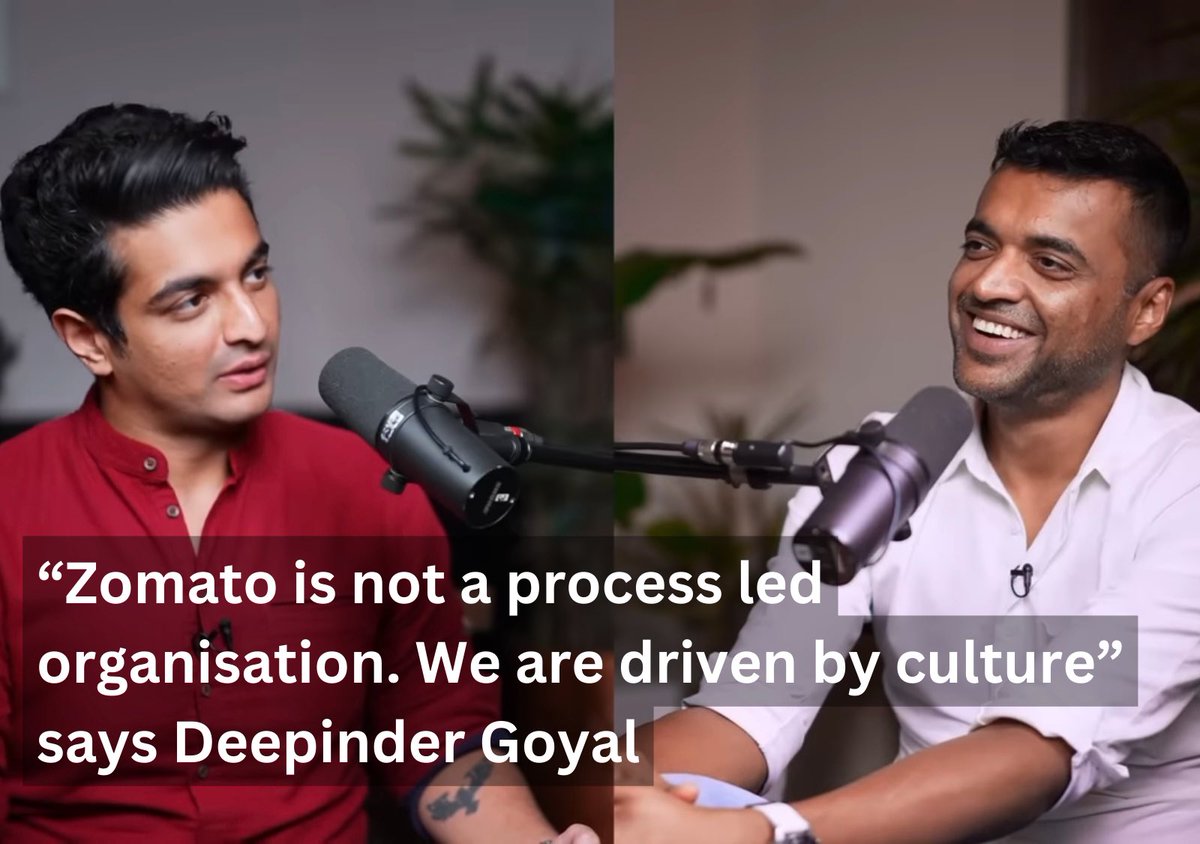
Deepinder Goyal is a founder I look upto. He did an episode on the TRS where these 2 things he talked about gave me a brain rush.
1/ Psychological spending is the reality of the world we are in today.
Little or more income, everyone wants to spend on leisure. For Tier 3+ cities, this is easily spending on food. Because there are no grand malls or theatres, what else would they do? This insight led Zomato to expand in these cities. And it is one of the reasons why Zomato trumped Swiggy even though Swiggy had a first mover advantage in food delivery business.
Interestingly, this is the same insight that OTT industry plays on too.
My learning → Decode psychology.
2/ CEO is the new CHRO.
There are only 2 kinds of companies : one which is led by processes and one which is led by culture.
Zomato is led by culture.
Apple is led by culture.
Netflix is led by culture.
Tata Sons is led by culture.
My learning → Processes can be imitated. Culture cannot. Make it your moat.
What do you think?
PS : Deepinder sometimes writes the push notifications himself. That’s the culture we are talking about.
#business #startups #MondayMotivation
It is further discovered that
- 1000 users used the same PAN and did crores of transactions questioning the KYC process
- frequent transactions between the bank and other verticals Paytm questioning money laundering
#PaytmBank
Simply Explained : Why did the RBI ban the Paytm Payments bank ?
Turns out that the payment bank has had significant regulatory lapses and has been tussling with the RBI for long.
Infact, it paid a fine of Rs 5.4 crores in 2023.
1/ It has failed to identify benefical owners of certain listed accounts.
Imagine a company A opening an account with a bank. A is owned by companies B,C,D which are further owned by companies E,F,G and it becomes difficult to trace the natural person.
2/ It breached the regulatory ceiling of end of the day balance in certain customer advance accounts.
This ceiling for payment banks is Rs 2 lakh which means on any given day, the account balance cannot exceed this amount.
RBI imposes such ceilings to hedge against a potential ecosystem collapse.
3/ It delayed reporting of cybersecurity incidents on multiple counts.
According to the Cybersecurity Framework for Banks in India, it is mandatory to report such incidents in 2 to 6 hours depending on the intensity of the incident.
4/ It’s video based customer identification process (V-CIP) infrastructure failed to prevent connections from IP addresses outside India posing a geopolitical risk.
5/ The cyber cold between India and China.
Alibaba holds 33% share in Ant Group.
Ant Group holds 20% share in One97 Communications.
One97 Communications holds 49% stake in Paytm Payments bank.
It is speculated that there have been data breaches and the data is siphoned to China.
Interestingly,
Airtel Payments Bank and Fino Payments Bank have too been fined Rs 5 crores and 1 crore in the past on similar charges.
RBI Kehta Hai Satark Raho.
#PaytmBank
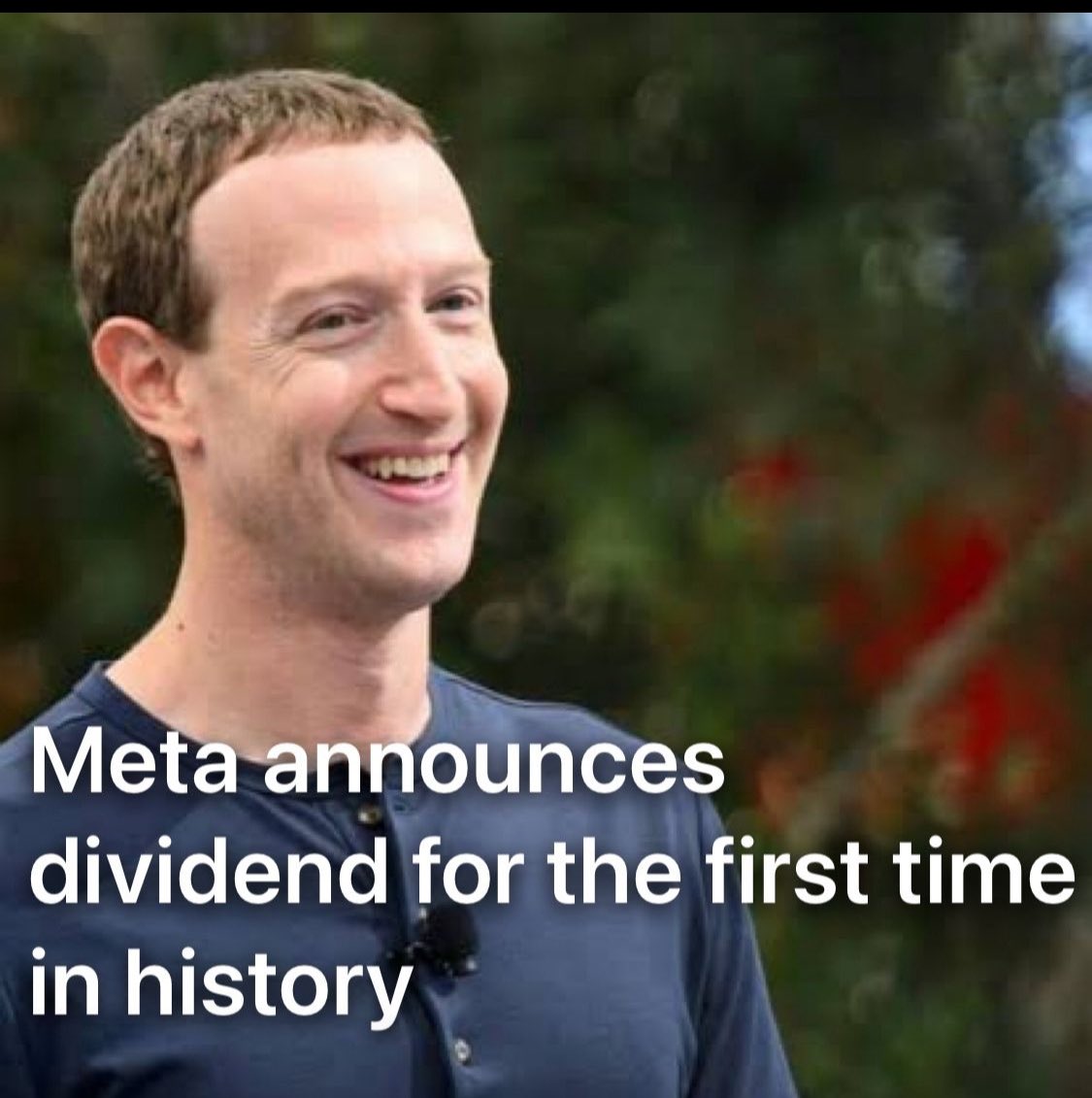
Simply Explained : @Meta for the first time in history has announced a dividend. The stock has skyrocketed 20%! But, WHY?
Q423 and FY23 turned out to be goldilocks for Meta. It beat not just it’s own but analysts expectations on the results.
1/ Meta officially calls FY23 a Year of Efficiencies.
It’s revenue grew 15% YOY to close at $134bn. Net income saw a massive improvement of 69% to close at $39bn.
2/ More people are getting active on a monthly basis signalling stronger engagement loops.
MAU (23) → 3.98 bn (6% up)
MAU (22) → 3.74 bn (4% up)
MAU (21) → 3.59 bn
3/ Advertisers are turning out to be more price inelastic than they were before.
For 2022, average price per ad decreased by 16% and ad impressions increased by 18% YoY.
In Q4 2023, where the average price per ad increased by 2% YoY, ad impressions still increased by 21%
This gives the market a signal of strong recovery.
4/ Meta raised it’s investment targets specifically in AI for 2024.
It announced that it is going to invest $30-37bn in capital expenditure.
That’s about 23% of it’s FY23 revenues.
For context,
That’s a lot higher than Google.
Google will invest $40bn - about 13% of it’s FY23 revenues.
5/ Meta also boasts the highest-possible 99 IBD Composite Rating.
IBD Composite Rating ranges from 1 (worst) to 99 (best), and measures performance across various metrics like sales growth, profit margins, return on equity, institutional buying and selling of the stock against other stocks.
After the earnings call this week,
Mark Zuckerberg will not mind a cage match with the Musks of the world.
And Netflix will probably stream it live.
PS : The report also mentions Zuck’s involvement in combat and extreme sports as a risk factor to it’s operations.
#Meta #Facebook #startups
Unpopular Opinion : The right way or the wrong way, the lady did spread awareness which perhaps a serious campaign could never do in a day.
#PoonamPandey
Rare finds : Sh Lal Krishna Advani Ji discussing liberalisation reforms that India needed in 1989 at the BJP Office in Gujarat. @narendramodi Ji can also be seen as an upcoming leader in the picture. Behind a nation what it is today is the foundation laid many many years ago.
#BharatRatna #LKAdvani
@smritiirani@narendramodi@MinistryWCD With all due respect, Women participation in workforce is still a challenge and the numbers are lesser than what they were in early 2000s.
The growth is only recorded in rural areas and urban areas is pretty flat. This is dangerous because women in urban areas are more educated.