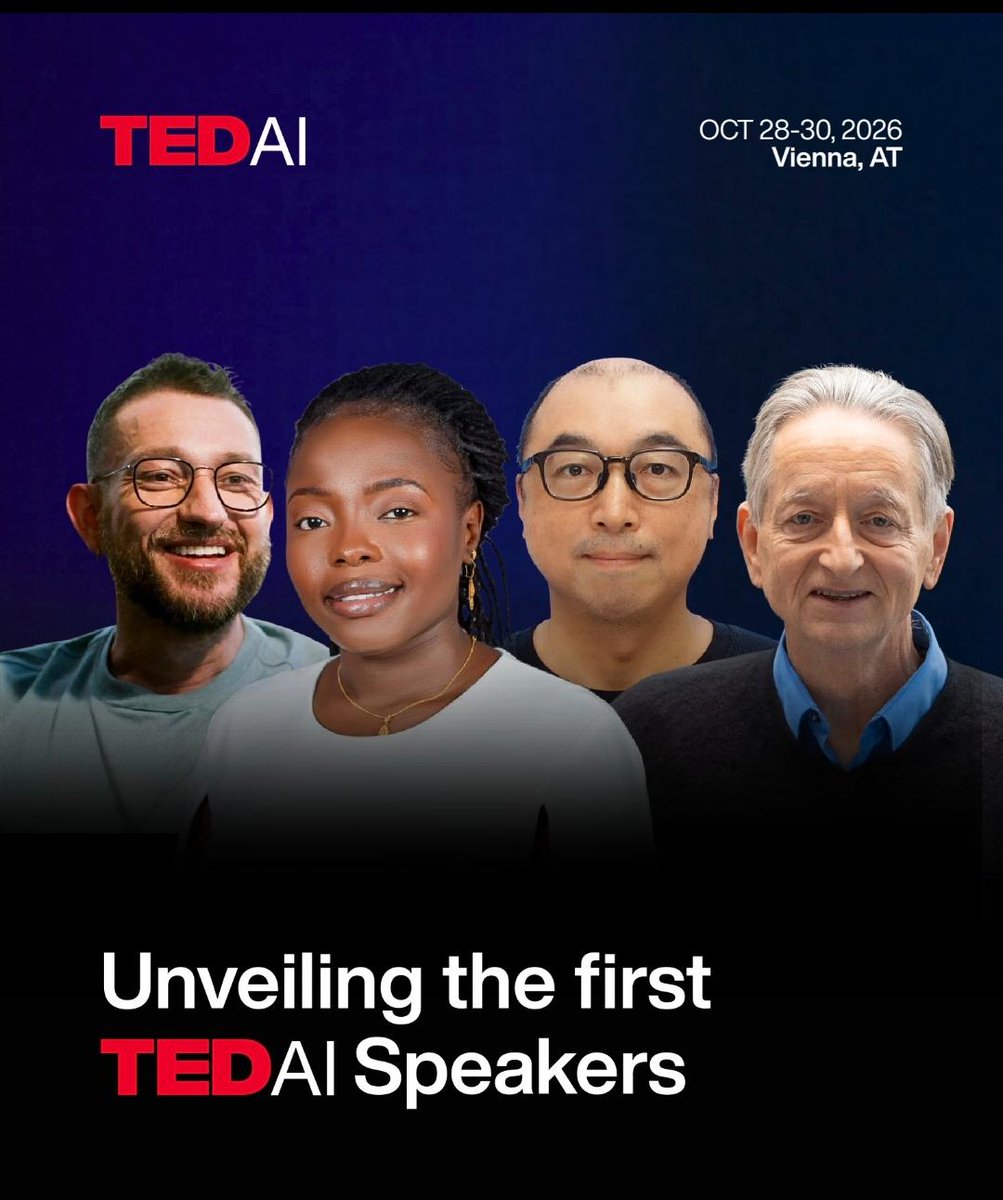
Proud to be included on @TIME's list of the TIME100 AI of 2024! https://t.co/9xnmd6YbBo
Find out why Kauna Malgwi made TIME’s list of the most influential people in artificial intelligence Source:https://t.co/NRLQgxovIH
@ContmoderatorAf#EthicalAI#TIME100AI#contentmoderation
Don't miss this important conversation—register now to reserve your spot: https://t.co/JEQC3ZSM3e
This International Workers’ Day, we’re bringing together a powerful panel for a critical conversation on algorithmic trauma, mental health, and labour rights in AI systems with a
-The gendered realities women navigate in AI labour
-The urgent need for structural protections, not just resilience narratives
Because ethical AI cannot exist without protecting the people behind it.
Join us as we unpack what’s often ignored and push for accountability where
Digital Rights and Mental Health Initiative (DRMHI)
Irene Mwendwa – Lawyer
Kauna Malgwi – Founder & Executive Director, Digital Rights and Mental Health Initiative (DRMHI)
This is not just another AI conversation.
We are centering:
-The mental health cost of data work
strong focus on the realities women face in this space.
Meet the people leading this conversation:
🎙 Moderator
Angela Chukunzira – Independent Researcher
💬 Speakers
Joan Kinyua – President, Data Labelers Association
Patience Olawuyi – Clinical Psychologist (PhD in view),
Structural labor inequalities in the Global South
* Policy and industry solutions for worker protection
🎯 Uniting voices from mental health, labor, AI policy, and lived experience.
Don't miss this important conversation—register now to reserve your spot:
📢 Webinar Announcement | International Workers’ Day (May 1st)
Algorithmic Trauma: Building Mental Health Protections for AI's Workforce
AI systems are built on human labor, but at what cost?
Join DRMHI for a discussion on the mental health challenges faced by AI data workers
and content moderators, and what protections are needed.
🗓 Date: May 1, 2026
⏰ Time:
* 11:00 AM (EAT)
* 10:00 AM (SAST)
* 09:00 AM (WAT)
📍 Venue: Zoom
This session will explore:
* The concept of algorithmic trauma
* Mental health risks in AI and data work
Only 10% of Nigeria’s 2.5 million tons of annual plastic waste gets recycled. The rest? It clogs our drainage systems, pollutes our environment and threatens our health.
But young innovators like Victoria Francis are changing that, starting from the streets of Akwa Ibom.
Through Plastic Cultured, she and her team are turning collected waste into fuel, mattresses and plastic bins. Their innovation is about more than just recycling; it’s about creating jobs, protecting the environment and building cleaner communities for residents and tourists alike.
Thanks to the Young Africa Innovates Programme, Victoria now has the support, mentorship and tools to scale her idea and push for a zero plastic waste culture across Nigeria.
In partnership with the Mastercard Foundation, we’re empowering atypical and underrepresented innovators especially young women and community-based change makers to build solutions that work.
downward, affecting outsourced workers, often in the Global South, who have the least protection and highest exposure.
To everyone affected: I see your pain. This transition, after such demanding work, is challenging and deserves acknowledgment.
The recent redundancy notice at Sama’s Nairobi office affecting over 1,100 workers is not just another industry update.
Our case against Meta, Sama, and its contractors is about psychological harm, labor conditions, and systemic failures. What is happening now with these layoffs
the system that manages it is inherently unstable. When these two realities intersect, the cost is borne by workers.
This issue is not confined to one company or contract. It shows how the global AI industry is shaped. Power sits with large technology companies. Risk flows
challenged the idea that content moderation is just a technical function. It is labor. It is psychological labor. And it comes with consequences that extend far beyond the workplace.
What we are seeing now is the convergence of two truths: the work is inherently high-risk, and
well-being after exposure to high-risk content.
This gap is critical. The psychological impact of content moderation does not end when employment ends. Without aftercare or continuous support, workers manage the long-term effects of trauma alone.
Our case in Kenya has already
depression. When layoffs happen at this scale, especially without structured aftercare, the system abandons workers at their most vulnerable.
Sama’s statement highlights wellness resources and counseling support. Mental health care for data workers is treated as a benefit rather
As a former content moderator, I understand what that burden looks like. The work doesn’t just end when a contract ends. The images, the patterns, and the psychological impact remain. Many workers leave these roles with symptoms of secondary traumatic stress, anxiety, and
Sama says Meta's decision to end a major engagement drives the redundancy. Industry usually calls this standard practice. But from where I stand, standard practice means mass disruption, psychological risk, and economic precarity. Workers already carry an invisible burden.
is not separate from that case. We have always known the system is unstable. Workers are hired into roles that expose them to extreme and traumatic content, violence, and abuse. These jobs come with the promise of support, and what happens when that employment ends suddenly?