International media in the last 30 days: "India Hunger strike", "protests in India", "Floods in India."
🇮🇳India in the last 30 days:
July 19, 2026: Indian Gen-Z team wins 4 gold medals (top rank) at International Chemistry Olympiad and medals at the International Biology Olympiad.
July 18, 2026: Young Indians working at Skyroot Aerospace successfully launch Vikram-1, India’s first privately developed orbital-class rocket, from Sriharikota, placing payloads into Low Earth Orbit.
July 17, 2026: PM Modi flags off India’s first indigenous hydrogen-powered passenger train (10-coach set) from Jind station, Haryana, on the Jind-Sonipat route as an inaugural service.
July 14, 2026: DRDO completes successful military field trials of an indigenous scalable fiber-based Quantum Key Distribution (QKD) system for secure strategic communications.
July 13, 2026: Lucknow-Kanpur Expressway (63 km), India’s first barrier-free expressway with satellite-based tolling, opens to traffic.
July 12, 2026: Young Indian team wins 5 gold medals at the 56th International Physics Olympiad (IPhO 2026) in Colombia, securing joint world #1 rank.
July 11, 2026: RM Rajnath commissions INS Mahendragiri, the sixth Project 17A stealth frigate, in Visakhapatnam (~75% indigenous content).
Early–mid July 2026: Vimag Labs (Bengaluru) secures its 5th Indian patent for the Virtual Magnet Synchronous Motor (VMSM), a software-defined rare-earth-free electric motor platform.
Early July 2026: ISRO announces plans for a new Satellite Earth Station campus near Ledo in Assam to strengthen space communication in the Northeast.
Early July 2026: IIT Gandhinagar team wins a grant for developing indigenous liquid cooling plates for AI data centres, EVs, and high-performance electronics.
June 26, 2026: Nuclear heat-based hydrogen production facility (copper-chlorine thermochemical cycle) commissioned at Kalpakkam using Fast Breeder Reactor process heat.
June 24, 2026: ISRO successfully conducts hot test of semi-cryogenic engine power head at 175 tonnes thrust level.
June 24, 2026: RDSO (with ARAI) successfully conducts full-scale crashworthiness testing of LHB coaches for enhanced passenger safety.
June 21, 2026: PM Modi commissions three indigenously built warships in Kolkata: INS Dunagiri (Project 17A stealth frigate), INS Sanshodhak (hydrographic survey vessel), and INS Agray (ASW shallow water craft).
June 15, 2026: DRDO successfully flight-tests the indigenous Long Range Land Attack Cruise Missile (LRLACM) from Odisha; all objectives met.
June 10–11, 2026: DRDO conducts successful Phase-2 Ballistic Missile Defence (BMD) trials and anti-ship missile tests, demonstrating capabilities against long-range ballistic threats including ICBM-class.
Mid-June 2026: India’s defence production reaches a record ₹1.78 lakh crore in FY 2025-26.
Mid-June 2026: Maiden flight of the indigenous C-295 military transport aircraft highlighted as a major self-reliance milestone in aviation (with 40 aircraft under production in India).
June 13, 2026: First batch of women cadets trained at NDA commissioned into the defence forces. Marking the start of an women empowered era in defence.
#WATCH | Sriharikota, Andhra Pradesh: On the launch of India's first privately developed orbital-class rocket, Vikram-1, by Skyroot Aerospace, Pawan Kumar Chandana, CEO and Founder of Skyroot Aerospace, says, "... This is the first time that a private company in India has built the rocket, brought the launch pad, and taken off... It is a very important moment for the global space sector... We are proud that we were able to do this. A team with an average age of just 28 years has built India's first private orbital rocket... The rocket is completely built with carbon composite..."
Meet Pawan Kumar Chandana, the man who scored 51 marks in maths as a schoolboy and went on to build India's first private rocket.
Born in 1991 and raised in Visakhapatnam, Chandana grew up in a middle class household. Maths was a weak spot until entrance exam prep turned it into an obsession, and that push got him into IIT Kharagpur in 2007 for a dual degree in Mechanical Engineering.
He joined ISRO in 2012, working on the GSLV Mk3 heavy lift vehicle. But he wanted to build a private rocket industry in a country where that barely existed.
In 2018, along with fellow ISRO engineer Naga Bharath Daka, he founded Skyroot Aerospace in Hyderabad. By 2020 they had tested India's first privately built rocket engine. Skyroot went on to launch Vikram-S, India's first private rocket, and the company is now valued at over 1 billion dollars.
Once defeated by numbers, now he counts stars - leading India toward the cosmos.
We’ll be watching this ignition on loop all day.
Kalam-1200 — Vikram-1's first stage, named for Dr. A.P.J. Abdul Kalam — roaring to life and lifting Vikram-1 off the pad, on a flight that reached orbit.
#Vikram1#MissionAagaman
Let me explain what just happened today because it deserves so much recognition.
GalaxEye is a Bengaluru startup founded in 2021 by IIT Madras engineers. Today they launched Mission Drishti on a SpaceX Falcon 9. It is India's largest privately built satellite at 190 kg. And it carries a technology that no commercial satellite has ever carried before.
Normal satellites take photos of the Earth using optical cameras. Like your phone camera, but from 500 km up. The problem is obvious. Clouds. Night. Fog. Smoke. If any of these are in the way, the photo is useless. India has monsoon cover for 4 months a year. That is 4 months where optical satellites are partially or fully blind over large parts of the country.
The alternative is SAR. Synthetic Aperture Radar. Instead of taking photos with light, it sends radar waves down and reads what bounces back. Radar goes through clouds, through darkness, through smoke. A SAR satellite can image a flooded village at 2 AM during a cyclone when no optical satellite can see anything.
The problem with SAR is that the images look nothing like photos. They look like grainy black-and-white radar maps. A military analyst or a trained geospatial engineer can read them. A farmer, a disaster response team, or a city planner cannot.
Until today, if you wanted both optical and SAR data for the same location, you needed two different satellites, passing over at different times, at different angles. Then someone had to manually align and fuse the two datasets. Expensive, slow, and the data never perfectly matched because the satellites saw the same spot minutes or hours apart.
GalaxEye put both sensors on one satellite. Optical and SAR, fused into what they call OptoSAR. Three times more information than a single sensor. Processed onboard by an NVIDIA AI chip at 1.8 metre resolution.
Now in practice, during the next cyclone hitting Odisha, one satellite pass gives you a clear image of which villages are flooded, which roads are cut, and which buildings are standing. Day or night. Cloud or clear. In near real-time.
For defence, it means you can monitor a border area 24/7 regardless of weather. For agriculture, it means tracking crop health across an entire monsoon season without a single cloud gap. For infrastructure, it means monitoring construction progress on highways and bridges without waiting for a clear day.
GalaxEye tested their SAR tech on ISRO's POEM orbital platform. The satellite was tested at ISRO facilities. IN-SPACe provided regulatory clearance. NSIL, ISRO's commercial arm, will distribute the imagery globally. And it launched on SpaceX because ISRO's PSLV doesn't have the right orbit slot for this mission.
Yes, four IIT Madras graduates built a world-first satellite in 4 years in Bengaluru.
Take a bow!
What a champ and what a role model!
Values, intellect, determination, super efforts, composure and so grounded. Much to learn for the generation he belongs to.
Respect @DGukesh 👏
A crying Gukesh arranging pieces back on the board as a part of his ritual. Ding made a blunder, and Gukesh took 2 mins to digest he is the new world champion. What amazing scenes!
Four days before he passed away, Bibek Debroy wrote his obituary: ‘There is a world outside that exists. What if I am not there? What indeed?’ | The Indian Express
Respect to @bibekdebroy 🙏 https://t.co/gfbPHvt3qZ
This week India performed - for the first time ever, foetal blood transfusion and saved a child’s life even before it was born at AIIMS-New Delhi.
Literally, nobody is talking about it.
Until India is a culture where such achievements are more talked about, we cannot progress.
That's Mariyappan Thangavelu. Just few hours back he won India's 🇮🇳 first ever Gold Medal in High Jump at World Para Athletics. Media won't share stories of such incredible athletes. But should know more about him.
At the age of 5, he met with an accident where a drunk bus driver ran over his right leg that permanently disabled his knee. His school physical education teacher encouraged him to try high jump and he excelled at it.
Comes from a humble background, he was was raised by a single mother working as a daily wage labourer and vegetable seller to support the family.
Despite this setback, he completed his schooling and earned a bachelor's degree in business administration.
At the 2016 Rio Paralympics, he won the gold medal for India. In 2020 Tokyo Paralympics he could have won the gold again but the rains made the conditions difficand settled for a silver.
He is a Padma Shri and Arjuna Award winner. And won the Dhyan Chand Khel Ratna award in 2020 which is India's highest sporting honor.
He used all his prize money to buy a paddy field for his mother and built a better house for his family.
Mariyappan believes that his right deformed big toe helps him to get the leap. “This is what gives me leverage when I jump,” he says. “It is my God.”
India is a country of amazing sporting talent. But we also need to be a country to celebrate all sports athletes.
Everyone doesn't get brand deals and sponsors. The only fuel for these athletes is their grit and determination. Our only job is to cheer them and share their stories.
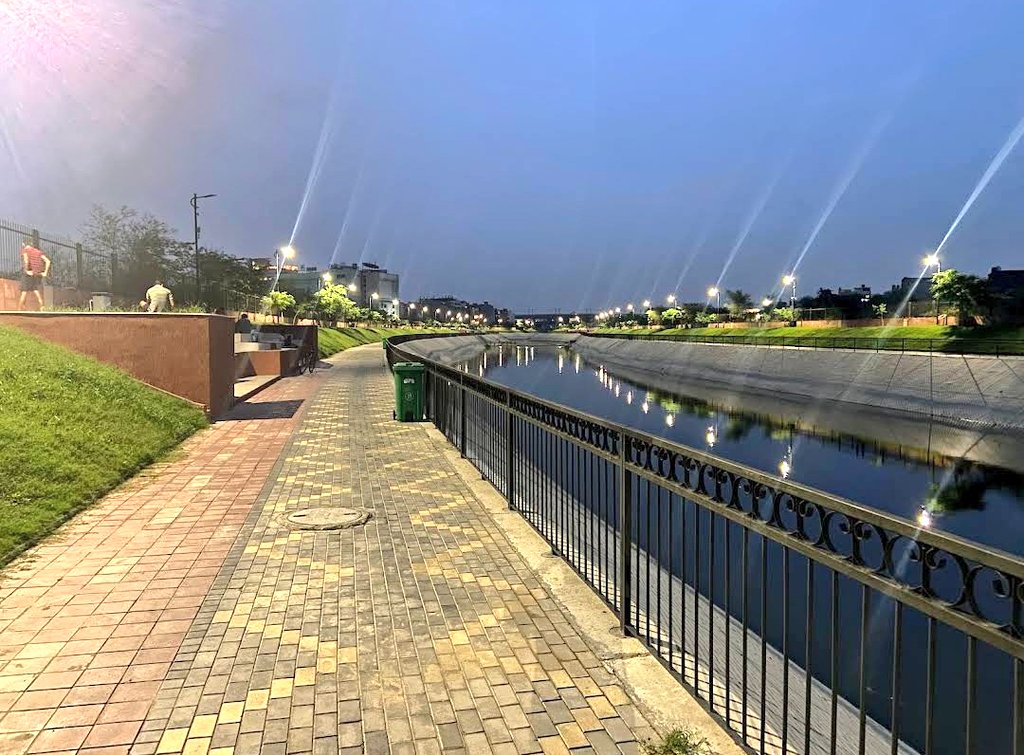
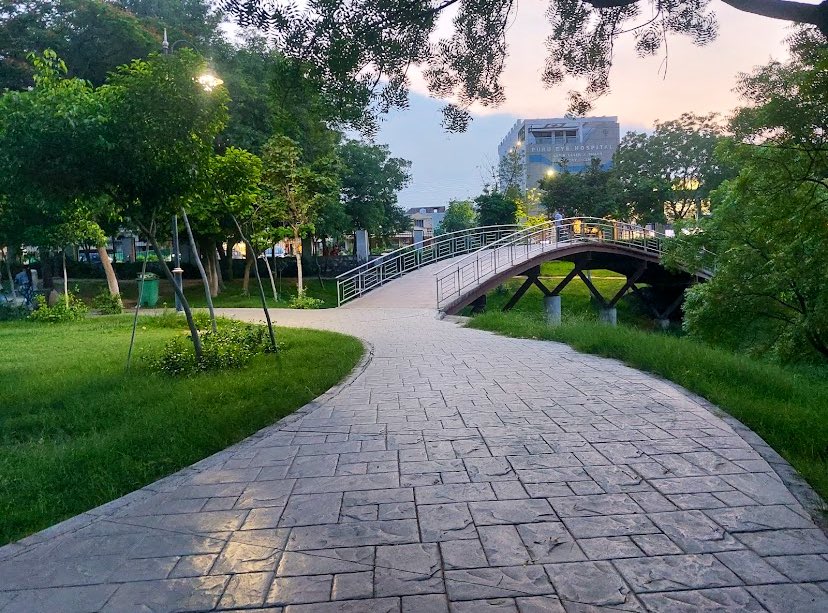
Riverfront Revolution of India. Thread🧵
We are waking up after 65 yrs to provide decent public spaces. Dont miss Jhelum, Gomti etc at the bottom!
1/n Dravyawati Riverfront, Jaipur
Chandrayaan-3 Mission:
'India🇮🇳,
I reached my destination
and you too!'
: Chandrayaan-3
Chandrayaan-3 has successfully
soft-landed on the moon 🌖!.
Congratulations, India🇮🇳!
#Chandrayaan_3#Ch3
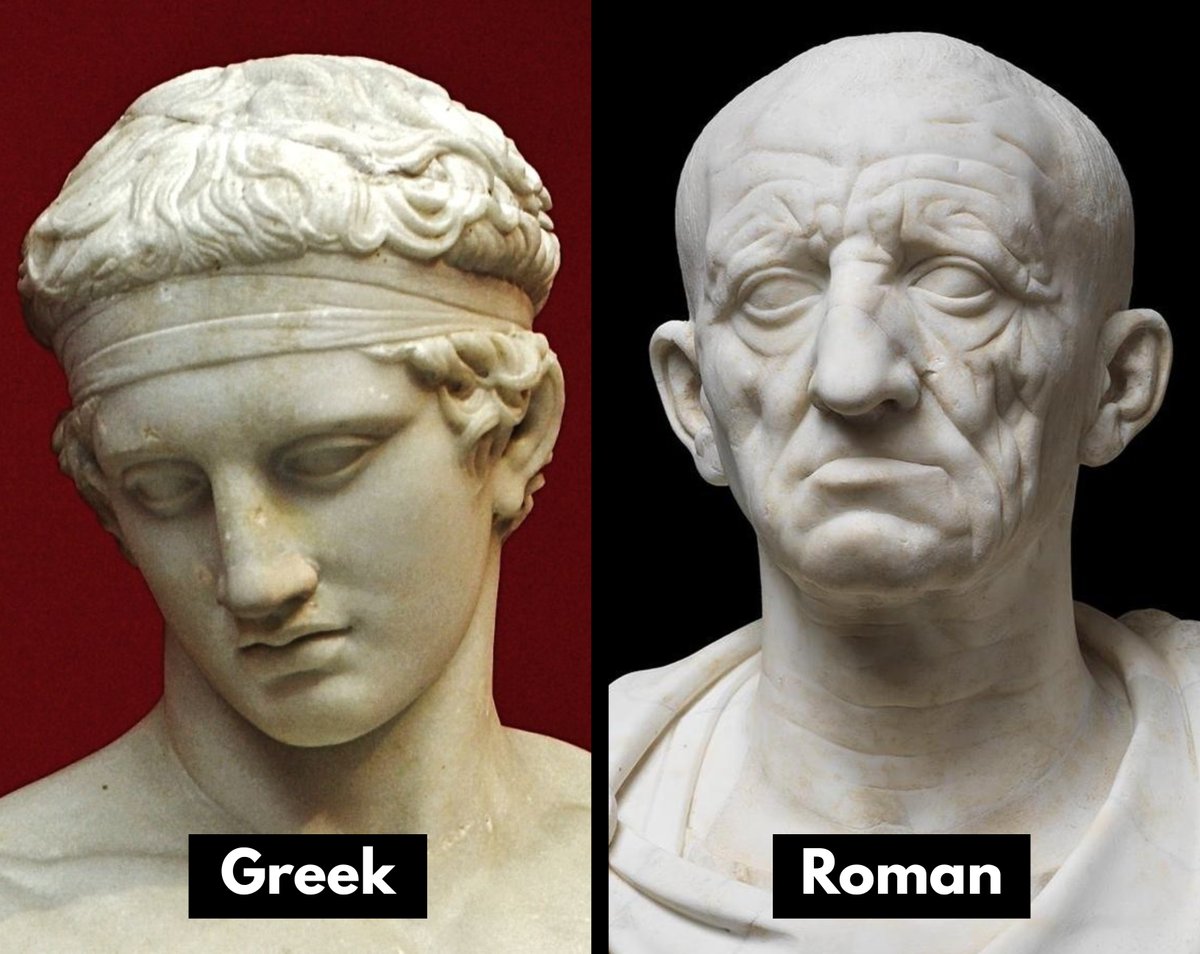
Want to know the difference between the Ancient Greeks and the Ancient Romans? Just look at their statues.
Art always tells you what a society wants to believe about itself.
So, from the Soviet Union to the Marvel Cinematic Universe, here's what art says about who we are...
"Nigerian engineering students benefit from Indian Youtube tutorials"
What an amazing story about transnational education #India#Nigeria https://t.co/kcjPPuDV8F