A faulty relay could be the reason something in your car suddenly stops working.
So before spending money replacing expensive parts, it's worth checking the relays and fuses.
@waluwande Seems like you don't know the traffic that is there on a daily basis from Eldoret to lodwar via Kitale.
PSVs have at least 3 to 4 scheduled vehicles plying that route daily and they are always fully booked.
Sasa hii assumptions yako ni porojo tu
@djeduhmaks@iakovoskk So whats stopping you from doing an Olunga?
Your team and MOFA are on the same WhatsApp group based on your argument of being in the lower tier.
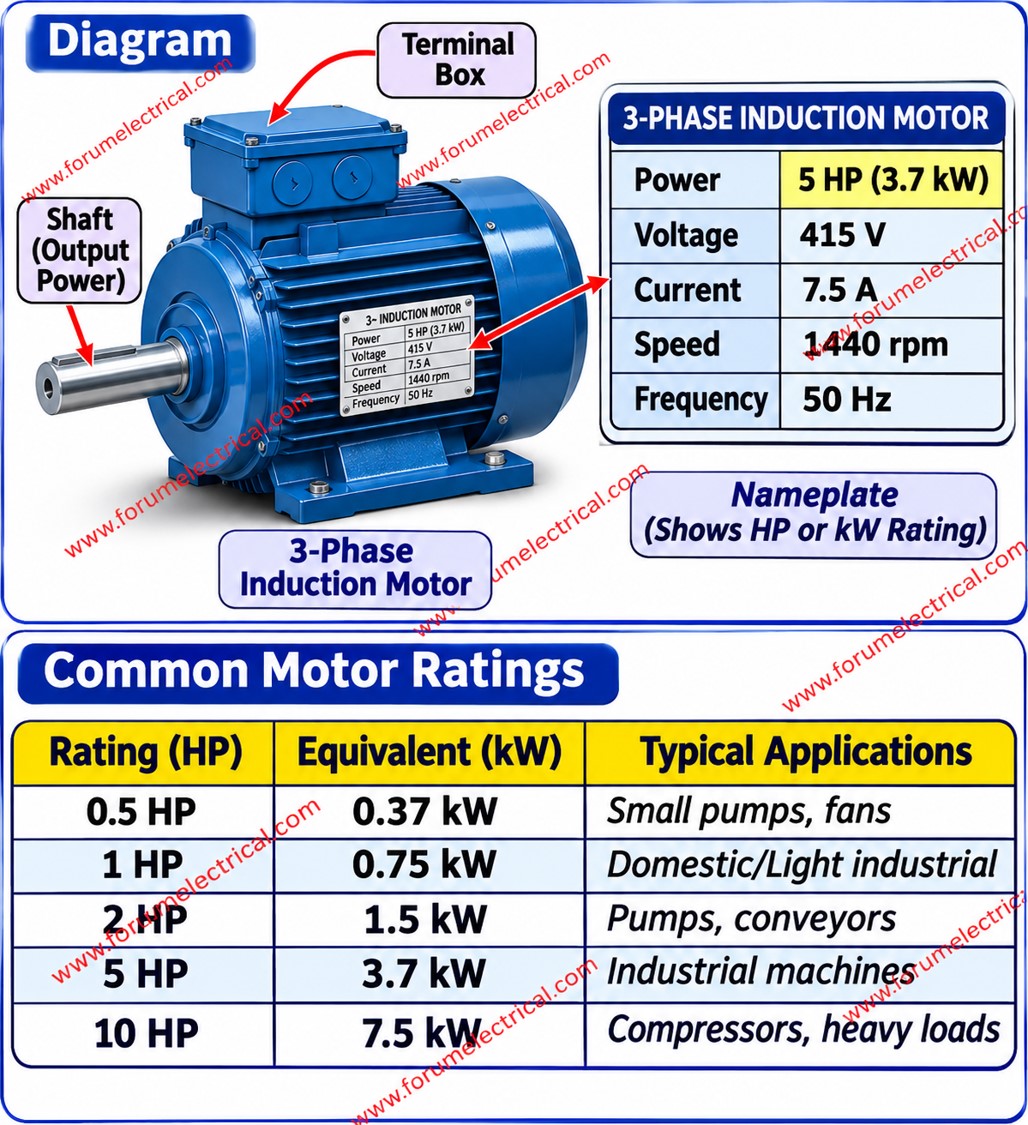
Why are Electric Motors Rated in HP or kW? https://t.co/Ri2JJcAXvM
Electric motors are rated in Horsepower (HP) or kilowatts (kW) because these units represent the mechanical output power delivered by the motor shaft.
The motor power rating indicates its ability to drive mechanical loads such as pumps, fans, compressors, conveyors, and industrial machinery.
Key Technical Points:
Kilowatt (kW): SI unit of power used to express the motor's rated mechanical output.
Horsepower (HP): Traditional unit of mechanical power commonly used in motor specifications.
1 HP: Approximately 0.746 kW.
1 kW: Approximately 1.341 HP.
Electrical Input Power: Higher than mechanical output power because of motor losses.
Motor Efficiency: Determines how effectively electrical input power is converted into mechanical output power.
Important: Motor HP or kW ratings generally indicate shaft output power, not electrical input power. Current consumption depends on supply voltage, power factor, and motor efficiency.
Technical Discussion: Why do you think motor manufacturers commonly specify output power instead of electrical input power on motor nameplates?
#ElectricMotor #MotorPowerRating #HPtoKW #KWtoHP #ElectricalEngineering #MotorEfficiency #ElectricMotorWorking #IndustrialMotors #MotorNameplate #ElectricalMachines #PowerEngineering #MechanicalPower #ElectricalBasics #IndustrialAutomation
https://t.co/Ri2JJcAXvM