#ERGAReads | Despite rapid chromosome changes, sedges maintain conserved synteny - likely due to repetitive DNA shaping recombination and gene order. This may explain how they retain species cohesion despite high rates of #chromosome evolution. 🧬
🔗 https://t.co/V6yT7ohGXm
Camille Cornet, @KayLucek, Paula Escuer & I had the pleasure of organising the first conference on holocentric chromosomes in @UniNeuchatel . 2 days of terrific talks & 🗣️ all about holocentricity, its #evolution across the Tree of Life, role in #speciation & #adaptation 🙌🏾🌱🦋🕷️
🚨 New ERGA-BGE study alert! 🚨 @BioGenEurope
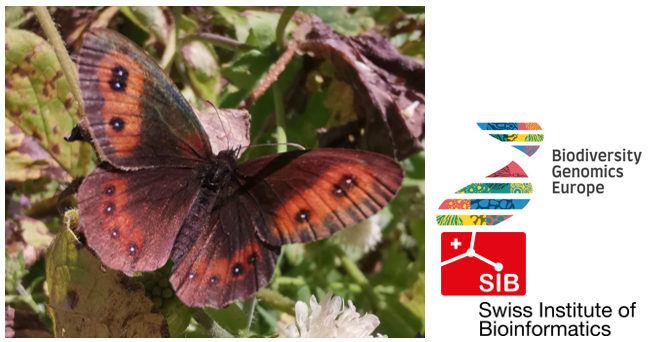
The reference genome of Erebia palarica, a montane butterfly endemic to North-West Iberia 🦋, is now available.
Explore its insights for biodiversity 🌍✨
➡️ Read the full preprint: https://t.co/4z6t5Vv3bl
#genomes for #biodiversity
Looking forward to get the #holocentric community together @UniNeuchatel
Thanks to @snsf_ch we can also offer some travel awards! 👉 https://t.co/w4IBgvM4Vx
New ME Special Issue!
𝘼 𝙂𝙚𝙣𝙤𝙢𝙞𝙘 𝙐𝙥𝙙𝙖𝙩𝙚 𝙤𝙣 𝙩𝙝𝙚 𝙀𝙫𝙤𝙡𝙪𝙩𝙞𝙤𝙣𝙖𝙧𝙮 𝙄𝙢𝙥𝙖𝙘𝙩 𝙤𝙛 𝘾𝙝𝙧𝙤𝙢𝙤𝙨𝙤𝙢𝙖𝙡 𝙍𝙚𝙖𝙧𝙧𝙖𝙣𝙜𝙚𝙢𝙚𝙣𝙩𝙨, edited by @HAugustijnen, @CrisAriasSarda, @marta_f_b, & @KayLucek.
@WileyEcolEvol
Read more: https://t.co/BoqgTOoMFD
Great article @guardian featuring Project Psyche https://t.co/ipg3lr4JfD aiming to sequence reference genomes for all European Lepidoptera 🦋 👉https://t.co/GgE6mSndVr honored to be part of this exciting community project @UniNeuchatel
What happens when strongly divergent species form zones of secondary contact? 👉 @HAugustijnen last paper with me @Mol_Ecol https://t.co/nvNIfIzOSb on alpine #erebia 🦋 using whole genome resequence data for 300 individuals #biodiversitygenomics
@ibc2024 has been joyful to meet our incredible collaborators, plant peers 🌍🇮🇳, learn loads about 🌱 ecology, evolution, genomes, adaptation, & more! Follow us for updates on genome evolution in the holocentric Carex genus! @MEscudero_Carex@KayLucek#IBC2024
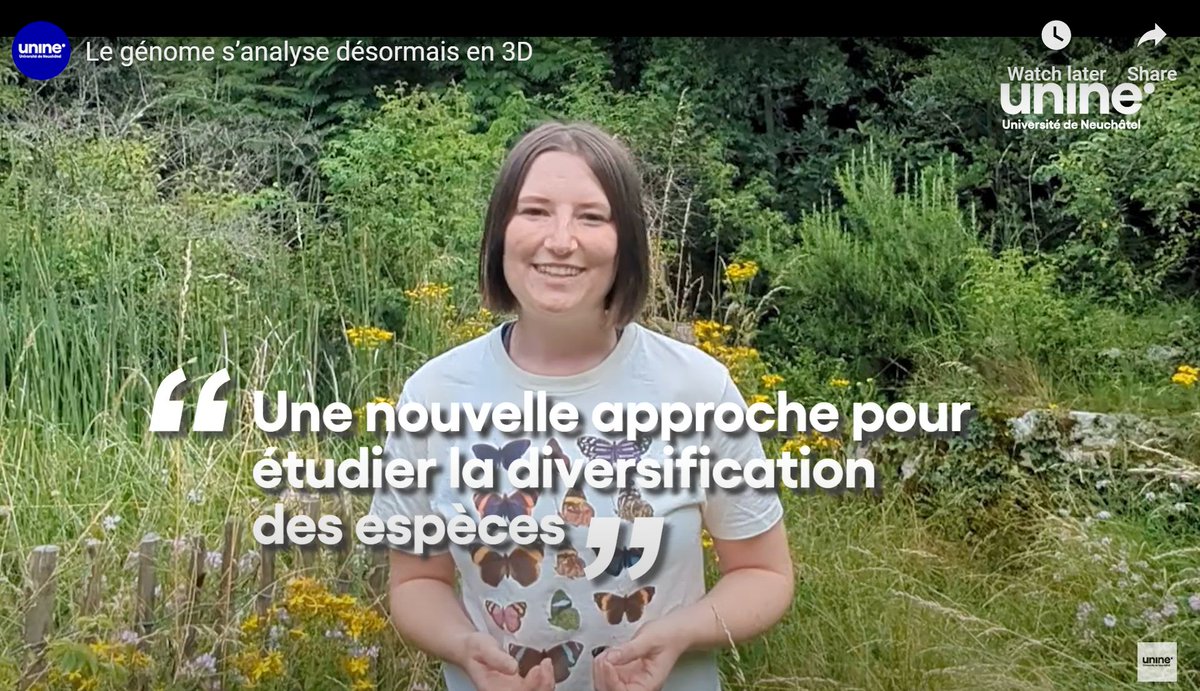
Happy to share our press release (in French) from @UniNeuchatel! We propose a new 3D genomics view to help understand species diversification 🧬🌱🦋 with @crazy_chipkali@scueridae@KayLucek
-> The press release: https://t.co/bO5KLFHc78
-> The paper: https://t.co/3TgP7ErtCN
Very excited to start a @BioGenEurope case study with @KayLucek on the adaptive potential of alpine butterflies in changing environments! 🦋🏔️We will annotate genomes to showcase the importance of genomics for conservation 🧬 @REA_research, @SBFI_CH, @ISBSIB, @Eugreenresearch
@snsf@AliceLaigle@CharJWright@TrendsGenetics For me personally, I started thinking about genomic rearrangements, & 3D genome structures during my @MSCActions grant at the Natural History Museum London during wonderful discussions with @jeff_streicher & @anjgoswami ! Thank you so much for planting this seed in my head! 🙌🏾4/4
We thank the Fondation Pierre Mercier pour la Science & @SNSF for funding, @AliceLaigle & @CharJWright for giving precious feedback on earlier drafts, & the editorial team of @TrendsGenetics for smooth processing 3/4
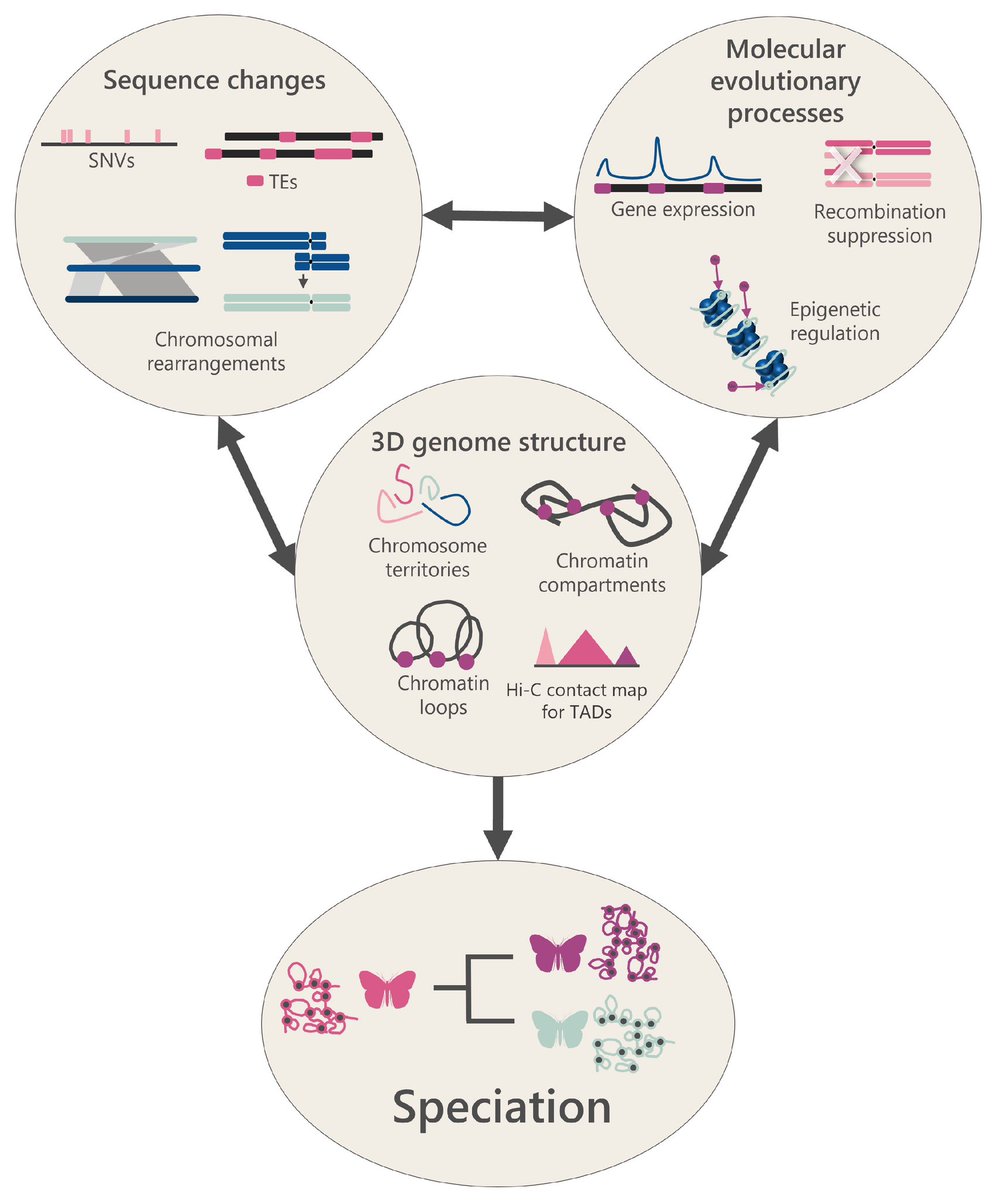
Complex interactions b/w 3D genome structures & sequence evol., genomic rearrangements, & processes such as recombination suppression intrigued us. We immensely enjoyed writing this work! Hope it evokes such intrigue in you & opens a new perspective for speciation research! 2/4
🚨 🧵 We (@CamilleCornet17 , @scueridae , @KayLucek & I) are delighted to share our perspectives on how the 3D genome structure could be both a cause & a consequence of speciation, just out in @TrendsGenetics !!Keeping reading 👇🏾 https://t.co/6ptS48xn1c 1/4
7/7 Overall, we show that fusions and fissions can have a considerable impact on speciation rates, particularly when groups are chromosomally diverse, and that the importance of fusions and fissions can differ even among clades within a single genus.
6/7 The pattern becomes more complicated when clades within Erebia are considered: karyotypically diverse clades (e.g. the purple clade) show higher associated speciation rates while in more conservative clades (e.g. the red clade) diversification is driven more by other factors.
5/7 We found that, while most chromosomal change across Erebia is anagenetic, fusions and fissions seem to differ in the degree to which they are cladogenetic, with fissions being more directly linked to speciation.