A wave of grief has swept through Laria Village, located in the Muhotetu area of Laikipia County, after the shocking murder of a 65-year-old woman and her 40-year-old son.
The victims, identified as Lucy Mbogo and her son John Mbogo, were found dead inside their residence in a pool of blood, according to both local residents and authorities.
@Milano101zz To Obina, content creation and dark comedy took precedence over Gachau's safety. The pursuit of money, views, and likes appeared to matter more than the life and well-being of a battered Gachau. And to the "gym rats", kindly stick to chewing our wives and gals...thats your lane
One morning while the dream still lasted, President Daniel arap Moi summoned the Reform Team to his Harambee House where the President's office was on the same second floor as Dr. Leakey's.
Martin of course expected this to be a briefing session on the many initiatives taking place at the Treasury and so he carried relevant documents.
Without much formality or preamble, however, President Moi asked Martin why he was so loyal to Dr. Leakey.
In response, Martin politely said it was because Dr. Leakey was the Head of the Public Service and therefore his senior.
In the circumstances, he had to be loyal to him although he also had the Finance and Planning Ministers and the President as his political bosses.
An irate Moi stared at Martin straight in the eye and asked rhetorically;
'Do you know, Otieno, what this Leakey thinks of me?'
'As the President of the Republic of Kenya, Mr. President,' Martin said, feeling cornered and not knowing where this conversation was going.
Moi was clearly in a bad temper by now.
'Let me tell you Otieno. Leakey thinks that I am just a black monkey!'
Martin was embarrassed, not sure what to do or say next. Micah Cheserem, the Governor of the Central Bank of Kenya, was also present at that meeting, as was minister Chris Okemo.
Cheserem fidgeted like Martin amidst the embarrassing silence that ensued.
The matter that had sparked the President's ire was of a financial nature and under Martin's docket.
At that time also, there were simmering tensions between the Treasury and the CBK over the overall reform agenda and it's drivers. ...
1/2...
I'm a cardiologist. I prescribe cholesterol-lowering drugs every single day. They save lives. That science is settled and I will never tell you otherwise.
But I'm going to say something that will make a lot of my colleagues uncomfortable — because someone needs to say it, and your doctor probably won't.
Too many physicians make you feel crazy when you bring up statin side effects.
You walk into your appointment and say "my muscles ache constantly" — and you're told it's in your head. You say "I'm exhausted all the time" — and you're told it's your age. You say "my sex drive disappeared" — and you get an awkward silence followed by a subject change. You say "I don't feel like myself anymore" — and you're told the benefits outweigh the risks, take the pill, stop reading the internet.
I've watched it happen in my own field for twenty years. The conversation gets shut down. The patient gets dismissed. And then they do the one thing we should be most afraid of — they stop the medication entirely, without telling us, and lose the cardiovascular protection that's keeping them alive.
That is the real cost of not being honest. Not the side effects themselves — the silence that drives patients away from treatment.
In my practice, I see statin-related complications in at least 25% of my patients. Muscle pain. Fatigue that doesn't resolve with sleep. Reduced sexual drive. Brain fog. Cramping. Joint stiffness. Weakness that makes exercise — the very thing we tell them to do — feel impossible.
Some of these improve with CoQ10 supplementation and optimizing vitamin D. Many do not.
I wrote about the diabetes risk of statins in a New York Times op-ed in 2012. The backlash from the cardiology establishment was immediate. I was told I was undermining trust in a life-saving drug class. Fourteen years later, every major guideline acknowledges the risk I warned about. It's in the prescribing information. The physicians who attacked me for saying it now teach it to their residents.
The truth doesn't care about professional comfort. It never has.
Now a paper published this week in Science Advances has finally explained the mechanism behind statin myopathy — and the finding validates what millions of patients have been telling their doctors for years.
Researchers discovered that statins activate the NLRP3 inflammasome in muscle cells — triggering an inflammatory cascade that causes muscle cell death, activates atrophy pathways, and disrupts muscle metabolism. This is entirely independent of the drug's cholesterol-lowering effect.
The muscle damage isn't caused by lowering cholesterol. It's caused by a completely separate pharmacological action through a different pathway.
The critical implication: the side effect can potentially be separated from the benefit.
Blocking NLRP3 or restoring isoprenoids prevented muscle cell death without interfering with cholesterol reduction. Future therapies could preserve the cardiovascular protection while eliminating the muscle toxicity.
Even more striking — the researchers found that background systemic inflammation significantly lowered the statin dose needed to trigger muscle damage. Patients with chronic inflammation, gut dysbiosis, or metabolic syndrome may be experiencing myopathy at doses their doctors consider "too low to cause problems." They're not imagining it. Their inflammatory state is priming the pathway.
The muscle pain was never in their heads. It was in their NLRP3 inflammasome. And we finally have the molecular proof.
Here's what I actually do in my practice — because I refuse to choose between protecting the heart and respecting the patient.
Whenever possible, I avoid statins as my first-line approach for eligible patients by using alternatives that lower LDL through entirely different mechanisms with no muscle toxicity:
PCSK9 inhibitors — Repatha and Praluent. Injections every 2-4 weeks that dramatically lower LDL without touching muscle tissue. No myopathy. No fatigue. No brain fog. For patients who can access them, these are transformative.
Inclisiran — Leqvio. An siRNA injection I administer twice a year in my office. It silences the PCSK9 gene in the liver. Two shots a year. LDL drops roughly 50%. No muscle side effects. No daily pills. Now approved as first-line monotherapy. This is the future of lipid management and I use it aggressively.
When statins ARE clinically necessary — and sometimes they are, especially post-heart attack or in combination therapy — I choose hydrophilic statins like rosuvastatin or pravastatin. These do not easily cross the blood-brain barrier. The cognitive complaints — the fog, the memory issues, the feeling of "not being yourself" — are substantially less common with these formulations because the drug stays out of the central nervous system.
I never prescribe a statin without CoQ10. 100-300mg daily. Statins deplete the cellular energy molecule your muscles and heart depend on. Replenishing it reduces muscle symptoms in many patients. It should be standard practice. The fact that it isn't is a failure of our field.
I check vitamin D and optimize it aggressively. Low vitamin D — which is epidemic — worsens muscle symptoms independently and compounds whatever the statin is doing. Target 50-80 ng/mL, not the bare minimum of 30.
Bempedoic acid — Nexletol — for patients who can't tolerate any statin. Works upstream in the cholesterol pathway and is not active in muscle tissue. Specifically designed to avoid myopathy.
Ezetimibe added to a lower statin dose. Cut the statin intensity, add ezetimibe to maintain the LDL reduction, and halve the muscle exposure.
There is no excuse in 2026 for telling a patient "just deal with the muscle pain." The toolbox is deep. The alternatives exist. The only barrier is a physician's willingness to listen and adapt.
I want to speak directly to every patient who has been dismissed.
Your muscle pain is real. Your fatigue is real. Your cognitive changes are real. Your loss of drive — in every sense of the word — is real. A paper in Science Advances just proved the mechanism. You were never crazy. You were experiencing a documented inflammatory response in your muscle tissue that your doctor didn't have the science to explain — until this week.
And I want to speak directly to my colleagues.
We have to be honest. Not just about the benefits — which are enormous and undeniable — but about the side effects, the mechanism, and the alternatives. Patients who feel heard stay on treatment. Patients who feel dismissed stop their medications in silence — and die from the heart attacks we could have prevented if we'd simply been willing to have an honest conversation and switch the approach.
The cardiologist who tells you statins are flawless is not protecting you. The wellness influencer who tells you statins are poison is not protecting you either. The truth lives in the middle — where it always has.
Statins save lives. The side effects are real. The mechanism is now proven. The alternatives exist. And you deserve a doctor who holds all four of those truths at the same time.
Both things can be true. They always could.
Now we have the science to prove it.
I ordered a pizza at 9:47pm.
When the delivery guy arrived, he handed me the box and said, "Big apartment for just one person."
I felt a sudden chill, so I lied. "Oh, my roommates are asleep in the back."
He smiled, nodded, and left.
Ten minutes later, my phone buzzed. It was a text from the delivery app: “Your driver has arrived with your order.”
I stared at the screen, confused. I looked down at the pizza box on my kitchen counter. Then I looked at the app again. The driver's profile picture on the screen was a completely different man.
My heart hammered against my ribs. I crept to the front door and looked through the peephole.
The first man was still standing out there in the dim hallway light. He wasn't walking back to an elevator. He was just standing perfectly still, holding an empty insulated delivery bag.
Then, my phone rang. It was an unknown number. I answered it, my voice shaking. "Hello?"
A voice on the other end, the voice of the man outside my door, whispered:
....
VEHICLE THEFT ALERT!!! ⚠️
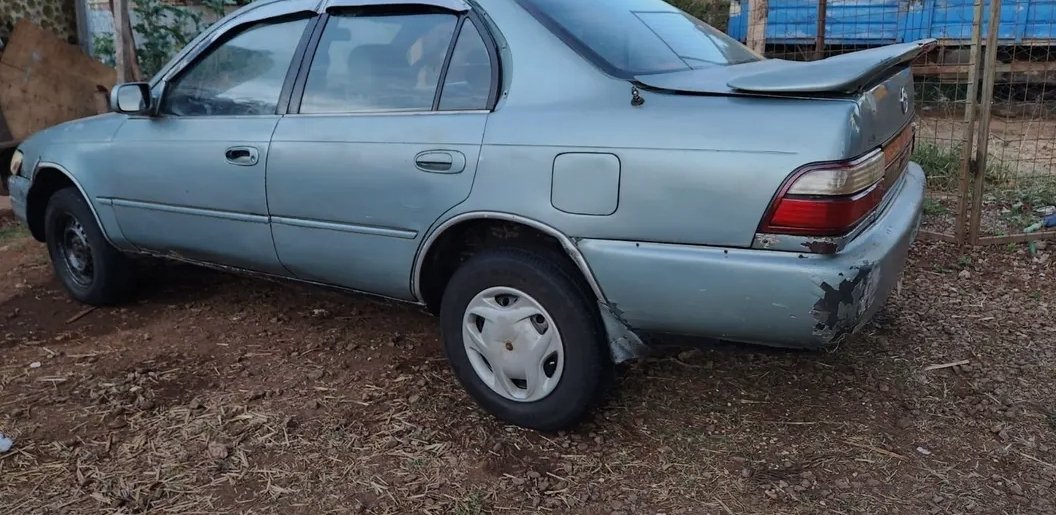
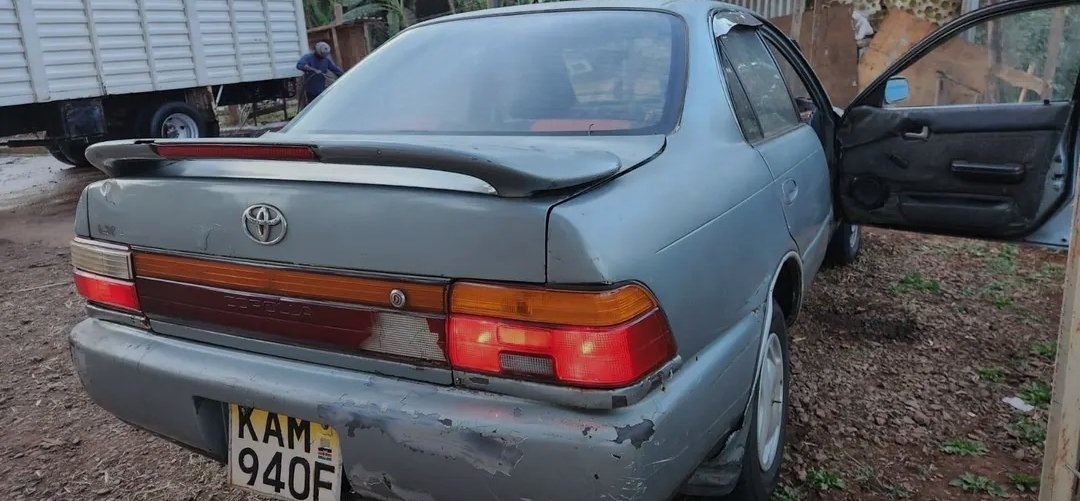
This vehicle, a Toyota 100 KAM 940F has just been stolen at Githunguri town,the owner is a very elderly man, he is feeling dejected, and needs help because this is the only vehicle he has to make his movement possible.....Kindly Kenyans and our followers lets unite and help mzee by REPOSTING
If you see it reach us on WhatsApp number 0738584299.
This vehicle was stolen at Umoja 1 opposite charina.
Kindly Kenyans and our followers let's unite and help the owner to recover their car by REPOSTING.
If you see it reach us on WhatsApp number 0738584299.
VEHICLE THEFT ALERT!!! ⚠️
Ni kama hawa majangili wameachana na personal cars wameendea commercial lorries.
This Isuzu truck Registration number: KDR 855S
The vehicle was stolen at approximately 2:04a.m. on 17th June 2026 from a petrol station in Silibwet, Bomet County.
According to the tracking system, the last recorded location was Kaitui along the Kericho–Kisumu Road, where the tracker signal stopped.
Let's help the owner by REPOSTING until we recover it.
If you see it reach us via WhatsApp number 0738584299
UPDATE ON THE VEHICLE THEFT ALERT.
The report that we shared earlier about the stolen Isuzu truck has actually been made worse by the new development 😬
We have received a report that actually, it was not one lorry that was stolen from the Silas's petrol station, but two lorries!
The report below from Silibwet police station and the attached images show the details of how it happened and the identity of the second lorry.
The owners are in terrible pain bana, let's REPOST widely so that both lorries can be recovered 🙏
@kijana_misa I bought my first car after an acrimonious separation and bought a prime plot after a break up...now looking forward for a third break up with my current woman friend so that i can start developing my plots....never put women in your heart or mind..but only in your pants!
NTSA, this is a citizen complaint.
Blinding headlights on Kenyan roads have become a serious safety issue.
Matatus.
Boda bodas.
Buses.
Private cars.
Some vehicles are no longer using headlights. They are carrying portable suns.
Every night, drivers are forced to slow down, squint, or drive blindly because an oncoming vehicle has turned the road into a stadium.
At highway speeds, a few seconds without clear vision is enough.
Dear NTSA, do you need our help identifying these vehicles?
Because Kenyans meet them every night.
We know the routes.
We see the offenders.
We experience the danger.
Maybe giving Kenyans a better night driving experience has not been urgent enough.
But here is the interesting part:
You can actually fine them.
Maybe the revenue opportunity will finally motivate action where public complaints have failed.
Fine them. Remove unsafe modifications. Make the roads safer.
Road safety is not only about speed cameras and checkpoints.
Sometimes it starts by allowing drivers to see where they are going.
Tag NTSA.
Repost until night drivers are heard.
@ntsa_kenya