It's me, Janet Museveni. It is a confirmation that the God I talk about is a living God. He is not a myth, He lives!
I must therefore thank Uganda, beginning with Mzee, who has prayed with the whole nation. I praise God for leading us to know Him. Thank you all for coming out publicly to pray for me.
Thank you for all those continuous prayers and also for the kind birthday wishes. Thank you for letting me know just how much I am loved.
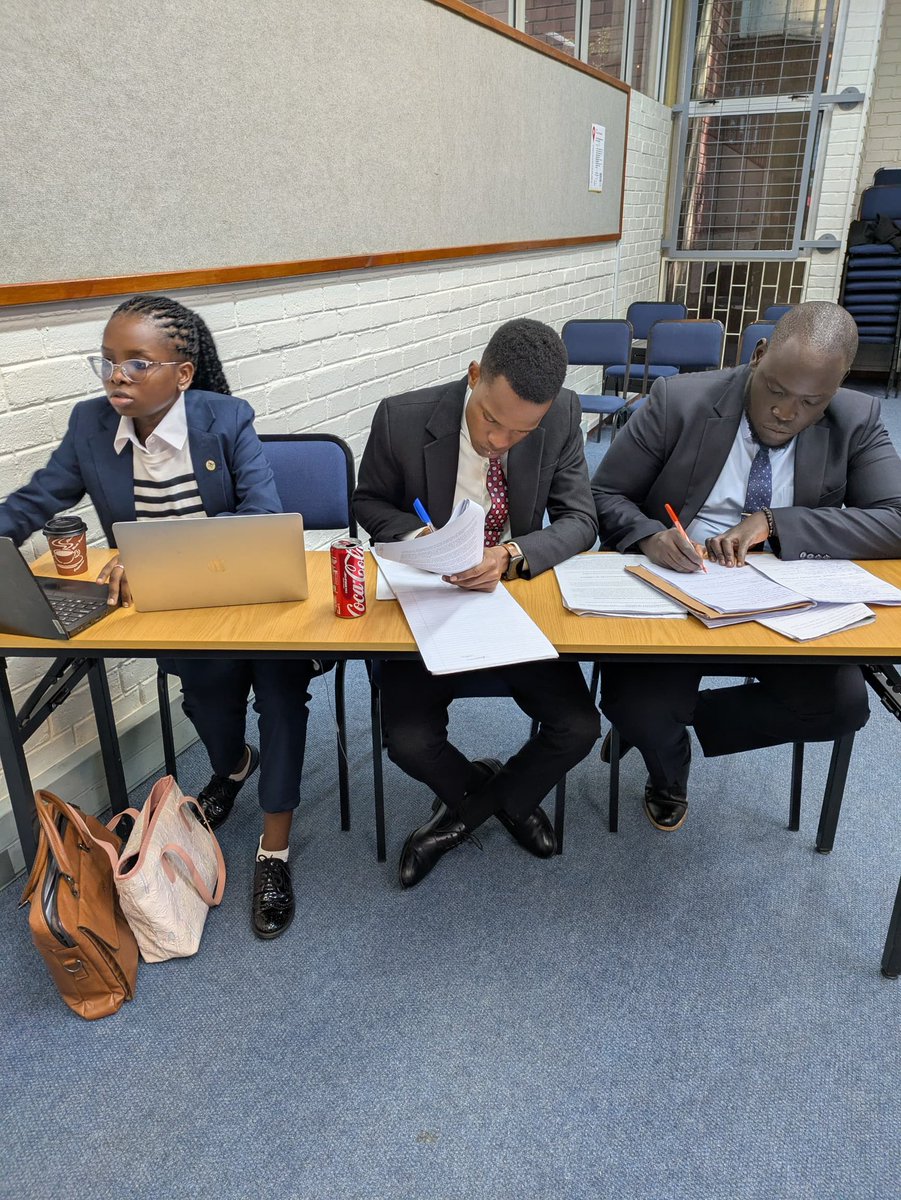
Earlier this month I travelled to Windhoek, Namibia to compete in the Leiden-Sarin International Air Law Moot Court Competition. Our team represented Makerere University and was awarded Best Team in Oral Pleadings.
The problem covered four areas of contemporary air law: Sovereignty over High-altitude Platform Stations(HAPs) and the limits of national airspace, the Lawfulness of interception under Article 3 bis of the Chicago Convention, State responsibility for cyber operations conducted through aviation infrastructure, and Creditor remedies under the Cape Town Convention.
This year's problem unearthed three major gaps in International Aviation Law:
The first is whether sovereignty over airspace is a function of altitude or of effective control. The traditional view treats it as altitude-based, with the Chicago Convention vesting complete and exclusive sovereignty in the territorial state up to some undefined upper limit. The emerging view treats it as control-based, asking whether the state can in fact regulate activity in the relevant zone. High-altitude platforms force the question, because they operate at altitudes where territorial states often lack the technical capacity to monitor or interdict, while the operating states have built the entire infrastructure of presence. If sovereignty follows control rather than altitude, the law of airspace begins to look very different from what the Chicago Convention was drafted to protect.
The second is whether the prohibition on the use of weapons against civil aircraft in Article 3 bis admits of a self-defence exception. The text is silent. The drafting history points in opposite directions depending on which delegation you read. State practice since 1984 has produced a handful of incidents, none of them clean enough to settle the question. The problem required teams to argue the exception in or out without a controlling authority, which is the position the field is genuinely in. Whether the next major incident clarifies the law or further fragments it is an open question.
Thirdly is whether attribution standards for cyber operations track the standards developed for kinetic state responsibility, or whether the cyber domain requires its own framework. The Tallinn Manual offers one set of answers, the ILC Articles offer another, and the African continent has not yet produced a body of practice that aligns clearly with either. Arguing attribution in a problem set on an African state is an exercise in choosing which received framework to import, and the choice itself is contested.
These are the questions the field is now arguing about, not the ones it has already answered. I am eternally grateful to my teammates, our Coaches and @MakerereLaw for the opportunity to represent the institution.
Gift Orban: "The Premier League is my ultimate dream. Man United, Liverpool or Man City…”. 🔴🇳🇬
“I don’t really like Arsenal that much – it’s like they don’t want to win titles”.
“I want to go somewhere where they win titles”, Gift Orban told @hlnsport via @Sport_Witness.