WATCH: Zulu regiments have stormed and disrupted a gathering of the Ingonyama Trust at the Durban ICC.
The trust is at odds with King Misuzulu, its sole trustee and chairperson - KZN Tonight Podcast
The other day, Athini Maqokolo, Usuthu’s 2025/26 Player of the Season linked up with Durban’s ever-energetic motoring journalist, Bonabay, for a cruise around the city in the Mitsubishi Outlander. 🚙💨
Two driven personalities. One smooth ride. 😎
#DriveYourAmbition#AmaZuluFC
#Mitsubishi
citizenship must be a serious privilege, not an automatic right. It must be earned through good character, real contribution to South Africa and genuine integration.
Also, there must be stronger rules for naturalisation and the ability to revoke citizenship (for naturalised citizens) in cases of fraud or disloyalty.
R88 billion.
That is sitting in unclaimed assets across South Africa. Forgotten retirement payouts. Dormant bank accounts. Unpaid insurance claims. Investment returns with nowhere to go.
People changed jobs. Changed names. Moved. Died without beneficiaries identified. The money did not disappear. It just stopped being visible.
How it works now.
Each financial institution runs its own tracing programme. You left a pension fund at a job in 2008. You do not know they owe you. They tried to find you. Failed. The money sits there.
To reclaim it, you have to know which institution owes you money. And contact them separately. And prove you are who you say you are.
Most people never start that process.
What Treasury wants to do.
One central administrator. One database. One public-facing portal. You type in your ID number. It tells you who owes you what. You submit one claim.
The assets would be held in custody by the Corporation for Public Deposits. Ownership stays with whoever is legally entitled.
It would roll out in phases - retirement fund benefits first. Then banking. Then insurance. Then investments.
The expiry clause.
This is the part that needs scrutiny. Treasury proposes that unclaimed assets transfer to the National Revenue Fund after 45 years from the date they became payable - or once the owner would have turned 110.
There is a logic here. A system cannot hold money in limbo forever. At some point, the administrative burden outweighs the likelihood of a valid claim.
But 45 years is a long time. And the National Revenue Fund is under constant pressure. The incentive to let claims expire - rather than actively pursue reconnection - is structural.
Who benefits.
The people who get their money back - if the system works.
But there is another beneficiary: the state. Once assets transfer to the National Revenue Fund, they become general revenue. Not earmarked. Not held in trust. Available for whatever the budget needs.
The question is whether the system will be designed to maximise reconnection - or to let enough claims expire that the NRF gets a steady inflow.
The uncomfortable part.
R88 billion is a lot of money to leave unclaimed. But it is also a lot of money to successfully return. The infrastructure required - matching names across decades of records, tracking surname changes, locating beneficiaries of deceased owners - is expensive and complex.
Countries that have tried this have mixed results. Some reunite most claimants. Others become efficient at collecting unclaimed property and inefficient at returning it.
The proposal is sound in principle. The test is not whether the portal gets built.
It is whether, five years after launch, the majority of that R88 billion has gone back to its owners - or into the NRF.
R4 billion.
That is the amount the SARB is investigating. Not stolen. Not missing. Moved.
Kastelo is a Cape Town fintech. Its model was crypto arbitrage - buy crypto cheaper offshore, sell it locally, pocket the spread. Simple in theory. The problem is how the money got offshore in the first place.
The mechanism.
Every South African has a Single Discretionary Allowance - R1 million a year you can move offshore without SARB approval. You also have a Foreign Investment Allowance - up to R10 million with tax clearance.
Kastelo allegedly pooled these allowances across hundreds of clients. About R891 million in SDAs. R8.9 billion in FIAs.
Here is the key question: Did clients knowingly use their own allowances for crypto arbitrage? Or did Kastelo use their allowances for Kastelo's benefit?
What SARB says.
André Malherbe's affidavit lays out the suspicion:
- Transactions were not settled directly between authorised dealers and clients
- Possible loans or incentives to clients so their allowances could be accessed
- Some clients allegedly did not know offshore accounts had been opened in their names
- Misrepresentation in compliance declarations to SARB
The dominant purpose, in SARB's view, was not to help clients invest offshore. It was to circumvent exchange control regulations at scale.
What Kastelo says.
Clients knew what they were doing. Watched compulsory videos. Signed mandates. Funds were repatriated in rand - no permanent capital export. Kastelo was an intermediary, not a principal.
What the court actually decided.
This is important. The Johannesburg High Court dismissed Kastelo's application to set aside the blocking order. But the court did not find that Kastelo broke the rules.
It only found that SARB had reasonable grounds for suspicion. That is a much lower bar. The investigation continues.
Why this matters beyond Kastelo.
South Africa has exchange controls for a reason. Capital flight is a real pressure on the rand. The SDA and FIA exist to give people flexibility - not to be pooled into a mechanism that moves billions.
If Kastelo's model worked as alleged, it is not one company. It is a blueprint. Every fintech with access to client allowances could replicate it. The R4 billion is what SARB caught. It is not necessarily the ceiling.
The uncomfortable part.
Exchange controls are an old system in a new economy. Crypto arbitrage did not exist when the SDA was designed. The rules were written for a world where moving money offshore meant calling a bank and filling out forms.
Kastelo did not hack the system. It found the gap between what the rules assumed and what the technology allowed.
The question is not whether Kastelo broke the rules.
It is how many others are still using the same gap - and whether closing it requires rewriting the rules entirely.
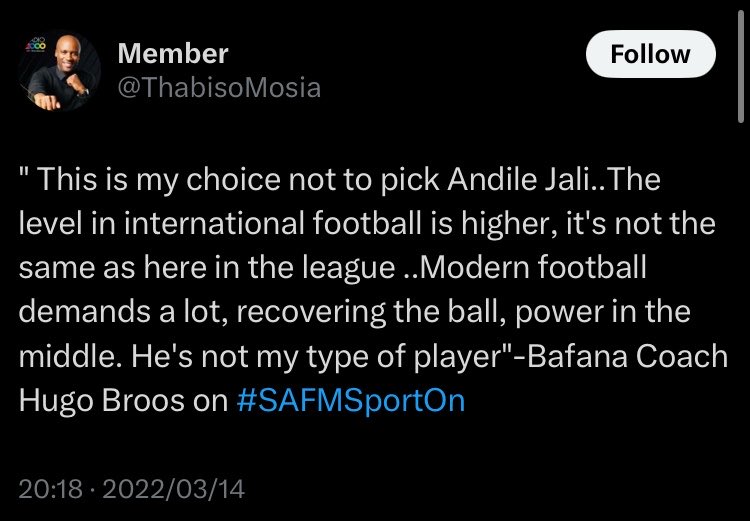
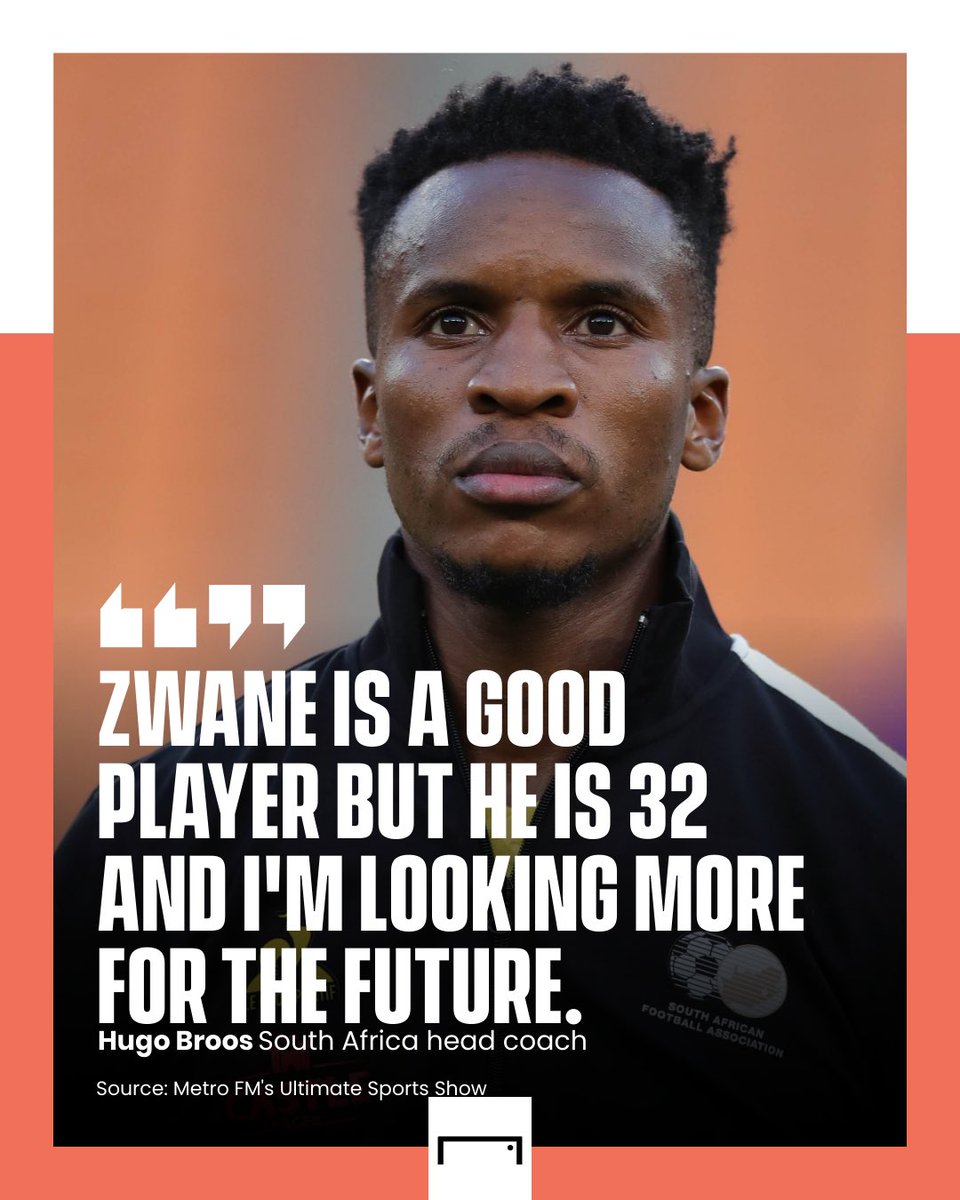
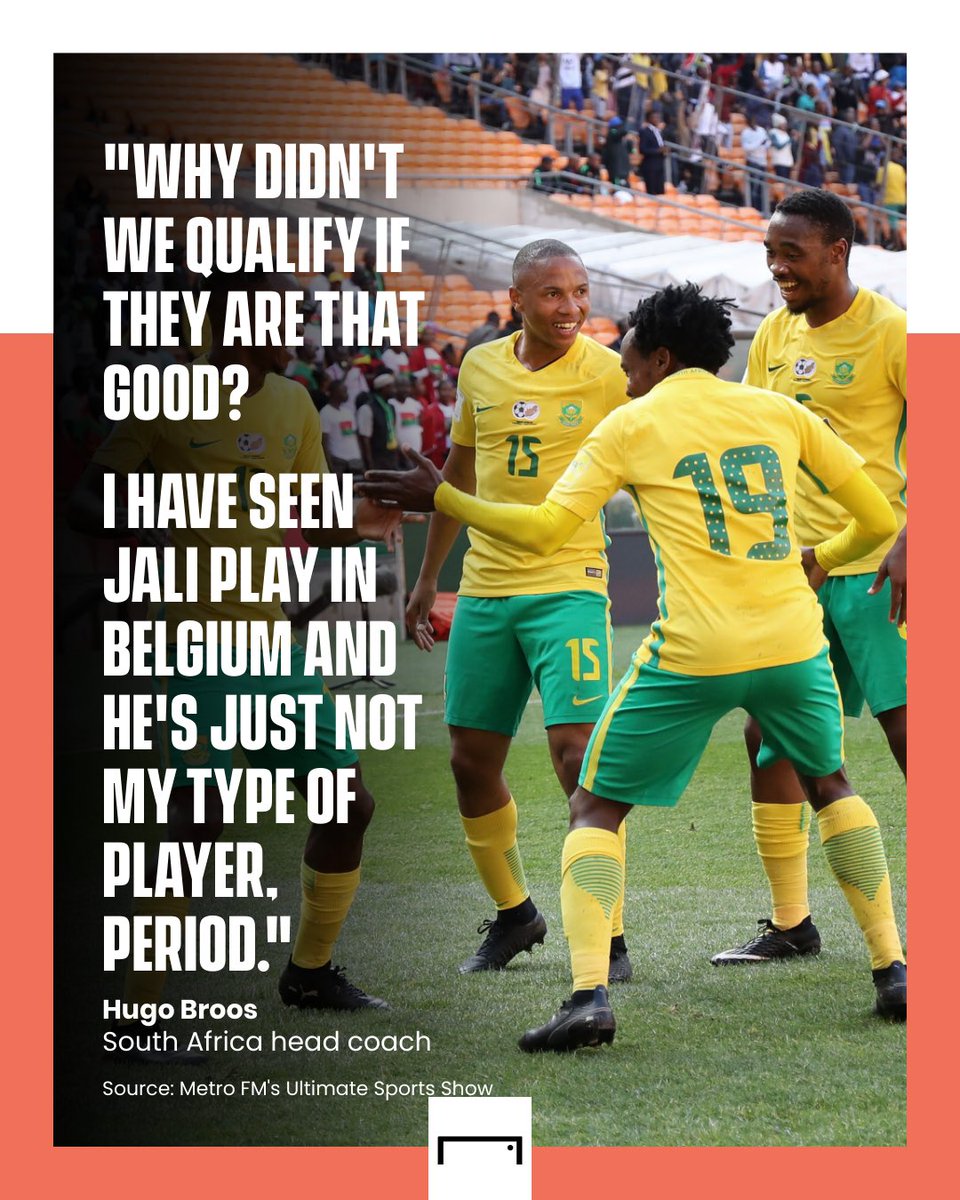
Hugo Broos used to attack Sundowns and Kaizer Chiefs players and he was called an honest man. Pitso speaks his mind and plan jiki jiki “Pitso needs media training” hao! Kanjani manje?
Leaving the house on a Saturday is a R1000 trip now 😭
R500 gets you a quarter tank of fuel.
R250 for drinks and refreshments along the way.
R200 for household essentials at Spar on your way home and when you get there, the remaining R50 will get you 10 units of electricity because the meter is already beeping.
48%.
That is the effective tax burden on someone earning R30,000 a month in South Africa. Same rate as someone earning R432,000 a month in a top European country.
The numbers sound wrong. They are not.
Where the 48% comes from.
PAYE is what people see on the payslip. It is not the whole picture.
VAT - 15% on almost everything. Every swipe. Every fill-up. Most people do not think of VAT as a tax. It is the largest single source of government revenue after income tax.
Fuel levy - built into every litre. Petrol at R26.92 inland includes roughly R3.80 in fuel levy and Road Accident Fund levy. That is a tax on getting to work.
Then there are the charges that look like fees but function like taxes. E-tolls. Municipal surcharges. Electricity tariffs with embedded levies.
Add the visible and the invisible - you get 48%.
The key difference with Europe.
In the Netherlands. In Denmark. In Germany. High taxes come with a social contract.
Free tertiary education. Universal healthcare that does not require medical aid. Childcare subsidies. Paid parental leave that covers an actual year. Robust unemployment support.
You pay 45%. And you get services back.
In South Africa you pay 48%. And then you pay again - privately.
Medical aid because public healthcare is collapsed. Security because policing is broken. Private schools because public education cannot be trusted. Solar panels or a generator because Eskom cannot guarantee power. Water tanks because the municipality cannot guarantee supply.
The middle-class earner pays twice. Once in tax. Once in escape.
Who actually pays.
There are about 8.3 million personal income taxpayers in South Africa. A relatively small slice of the population. The top earners supply most of the revenue.
Corporations optimise. The wealthy structure. Offshore trusts. Semigration. Emigration. The R30,000 earner cannot escape - it comes out before they see the money.
The base is narrow. The burden is concentrated. The services are not.
Why it accumulated this way.
No one designed this system. It grew.
Income tax funds the general budget. VAT funds the general budget. Fuel levy funds roads and the general budget. Each mechanism made sense when it was introduced. Each one expanded quietly.
Raising income tax visibly upsets people. Raising VAT is less visible - it is embedded in the price. Raising fuel levy is buried in the pump price. Municipal charges are non-negotiable.
The objective was not fairness to the middle class. It was revenue extraction with minimum political friction.
The uncomfortable part.
This is not a policy failure. It is a policy success. The system extracts efficiently. It offends quietly. And the people who carry it do not have the means to opt out.
The question is not whether 48% is too high.
It is how long the R30,000 earner can pay twice - once in tax and once in escape - before something breaks.
The history of the kitchen girl is one of the clearest examples of labour exploitation in this country. To see it continued at the hands of black women is disappointing to say the least.
R6.3 billion.
That is the number from the Tshwane study making headlines today. Money generated by foreign-owned spaza shops, moved out of South Africa through unregistered channels.
Unregistered SIM cards. Informal cash networks. No SARS trail. No SARB record.
Okay. Before you react - walk through this with me.
Formal remittances from SA to SADC already run over R19 billion a year. That is the visible part. Banks. Mukuru. Western Union. The R6.3 billion is informal flows from spaza shops specifically. Not all informal transfers. One slice of one sector.
This is not a crisis. It is an informal economy doing what informal economies do.
Follow the incentive.
87,000 registered spaza shops. 38% foreign-owned. But in the unregistered sector, foreign operators hit 50 to 70%. Only 30% of all spaza shops pay tax. Most trade is cash. No POS. No invoice. No trail.
Why?
Registration costs money. Compliance takes time. Documentation requires papers many do not have. When you make the formal door heavy, people use the window. Then you act surprised they are not inside.
The study also links unmonitored channels to the FATF grey-listing. That link is real. But the grey-listing came from weak beneficial ownership registers and gaps in formal financial regulation - not township shopkeepers sending money home. The spaza piece is one small gap among many.
The terrorism financing claim.
The media reports say the study found some funds reached Islamic State-linked cells in Kenya, Somalia, Nigeria, Mozambique. I need to flag this - the original paper is not publicly available. I cannot verify how strong that finding is. Treat it as reported, not confirmed.
What the headlines are really about.
Foreign spaza operators fill a gap formal retail left behind. Townships that Checkers and Shoprite do not serve. Customers who need credit. Late hours. Home delivery. They are providing a service because the formal economy did not show up.
Then they are criticized for operating outside the system that excluded them.
This is not to say R6.3 billion should go unmonitored. It should be. Untaxed money flows are a real regulatory gap.
But a solution that starts with "shut down foreign spaza shops" does not solve the remittance problem. It removes the retailer and leaves the informal money transfer intact.
The question is not whether R6.3 billion should be monitored.
It is whether SA wants 38% formal participation or 100 percent. And what it is willing to change to make registration worth the cost.