This book is quant AI treasure.
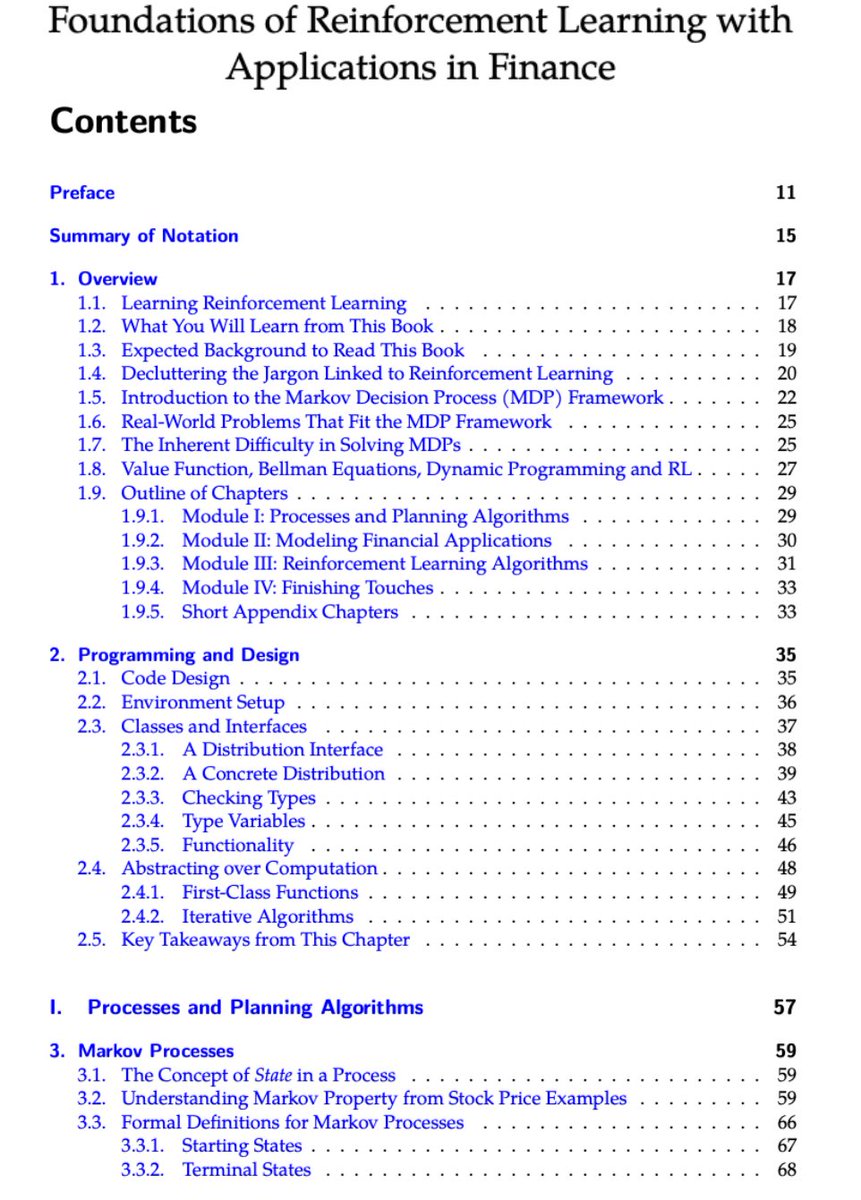
"RL for Finance": a free Stanford textbook by an ex-Goldman trading strategist & Morgan Stanley MD with 14 years on trading floors. The same system used to teach Stanford students to trade with RL from scratch.
Bookmark & If this helps you, pass it on.
this quant paper is f*cking insane
a former Morgan Stanley quant who went on to found his own hedge fund just gave the whole thing away.
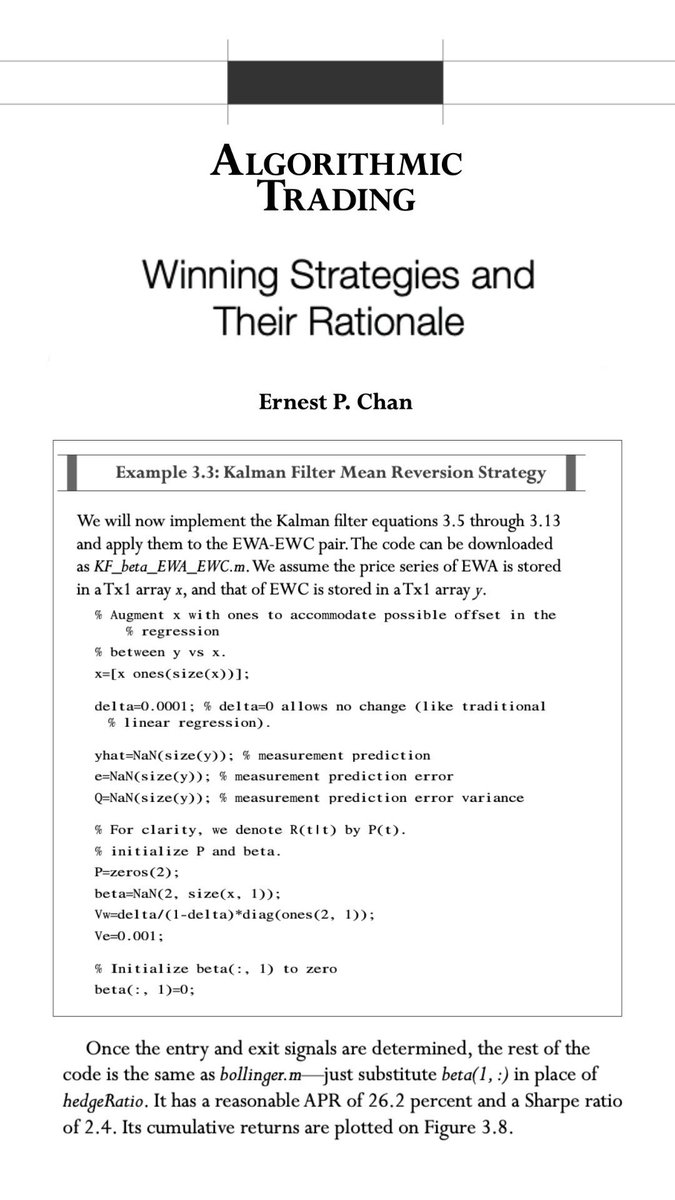
224 pages, and it's not theory, it's the exact winning algorithmic strategies with every single line of code included.
the crazy part is this level of detail almost never leaves the walls of a fund, let alone gets released for free.
if you've been wanting to start quant trading but didn't know where to begin, this is the starting point.
bookmark now before it disappears.
this paper completely changes how quant trading looks
elite quant firms are not trying to call the next market move
they search for tiny repeatable distortions, control the risk, and let scale do the heavy lifting
the result: a strategy can win barely more than half the time and still become highly profitable across thousands of trades
the wild part is the signal may look almost meaningless
a temporary pricing gap
a residual pushed too far
a few basis points of expected value
one trade proves nothing
but repeated with discipline, proper sizing, and enough frequency, that tiny edge becomes the whole machine
bookmark this before it gets buried
As someone who builds quant systems, this Stanford paper is one of the cleanest small-scale RL execution demos I have ever seen made public.
State vector with order book depth. Reward shaped around slippage + terminal penalty. Ablation studies proving the agent actually uses market microstructure to decide.
Bookmark & If this helps you, pass it on.
25 of Wall Street's most elite quants just told the whole story
these are the people behind the firms that print billions and never say a word publicly.
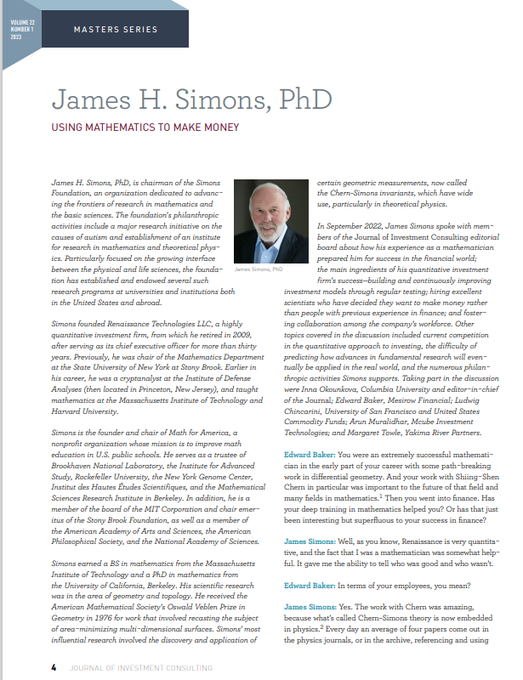
their real backgrounds, their actual mistakes, how they genuinely broke in.
and none of it reads like the myth everyone's sold on.
bookmark for later.
Terence Tao, UCLA professor and the most decorated mathematician alive:
"Funds pay $750K to combine weak signals into one real edge. I proved the thing that makes it work and makes it dangerous: in any long enough sequence, hidden structure is unavoidable. it always accumulates. the whole job is telling the real structure from the noise that only looks like it."
this free lecture is the most decorated mathematician alive on the exact problem sitting underneath every factor model, and it costs nothing.
at the board it's simple. Tao's lifelong theme is the line between structure and randomness. The Erdős discrepancy problem asks a deceptively simple thing: can you write an endless string of plus-ones and minus-ones that stays perfectly balanced forever? Tao proved you cannot. No matter how cleverly you try, imbalance, hidden structure, is forced to accumulate as the sequence grows. There is no such thing as a long stream of pure, structureless noise. That's the whole idea, minus the jargon.
Which is exactly why a multi-factor model can work, and exactly why it can kill you. Stack enough weak signals and real structure will appear, because at scale structure is unavoidable. But so will fake structure, patterns that exist only because the data is long enough to force them. Same point as the post above: finding structure is guaranteed. Knowing which structure is an edge is the rare and expensive part.
the mathematics is free and public. what nobody can sell you is the judgment to tell the structure the market will pay you for from the structure that exists only because you looked hard enough. That judgment is the alpha, and it takes years to build.
Marvin Minsky, the MIT scientist who founded AI:
"Citadel pays PhDs $500K to find the perfect equation. The market doesn't have one. It's beaten by a swarm of dumb agents, the exact design Marvin Minsky said your brain runs on."
the thread above is about swarm intelligence, letting a crowd of simple agents search the ugly, shifting landscape of a market that no clean equation can solve. minsky's entire life's work says that isn't a hack. it is how intelligence itself is built.
he proved you don't need a smart central solver. you need many mindless specialists, each doing one tiny job, none understanding the whole. connect enough of them and something intelligent emerges from parts that are individually dumb. a market is exactly that: millions of simple agents, no one in charge, collectively solving a problem none of them can see.
that is why the swarm beats the elegant math. a single closed-form equation assumes a clean, stable world. the market is nonlinear, non-stationary, full of traps. a swarm doesn't need to understand the landscape, it explores it from a thousand angles at once and can't get permanently stuck where one clever model would. minsky saw this in the mind decades before quants borrowed it for markets. he taught it at MIT, for free, in this lecture. same story i keep telling: the "new" AI idea running the funds is an old idea in a new wrapper.
here is what the thread underplays, and minsky knew it. a swarm is only as good as how its agents are wired and rewarded. connect them wrong and a thousand dumb agents don't become a genius, they become expensive noise that overfits and blows up. the swarm is free. the architecture, knowing how to connect and constrain the agents, is the entire edge.
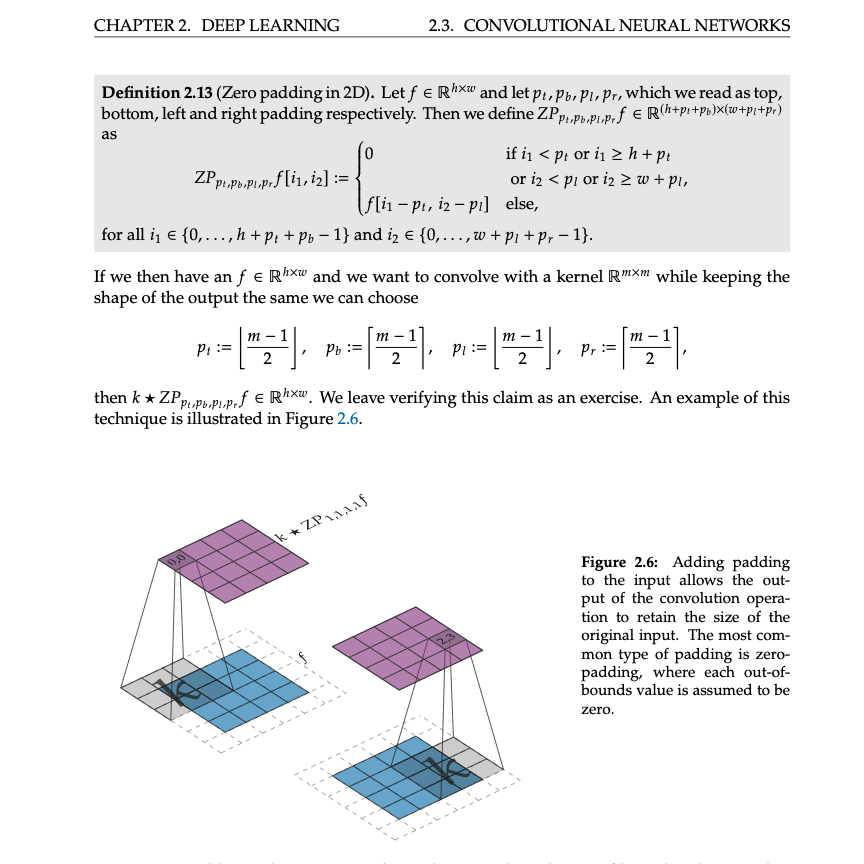
"Mathematics of Neural Networks" is a concise introductory text that presents deep learning from a mathematical perspective.
It progressively introduces the fundamental concepts behind modern neural networks, including supervised learning, artificial neurons and activation functions, feed-forward networks, stochastic gradient descent, deep neural networks, weight initialization, convolutional neural networks, automatic differentiation and backpropagation, optimization algorithms such as Adam, RMSProp, and Adagrad, as well as an introduction to equivariance, Lie groups, homogeneous spaces, and geometric deep learning.
It is a practical, accessible resource for students and anyone who wants to build a solid mathematical foundation in neural networks before moving on to more advanced texts. Although introductory, it maintains a rigorous approach and provides valuable insight into the mathematical principles underlying modern deep learning systems.
https://t.co/IpWzlJzfQW
A SENIOR ANTHROPIC ENGINEER LEAKED THE FRAMEWORK THAT POWERS SELF-RUNNING AI AGENTS.
The biggest idea wasn't a prompt.
It was replacing prompts with loops.
Discover work. Build. Verify. Repeat.
One agent writes the code.
Another assumes it's broken and tries to prove it.
Results are saved to disk instead of disappearing with the chat, so every run starts smarter than the last.
The difference isn't better AI.
It's building a system that keeps working after you stop typing.
Bookmark this before everyone realizes prompts were never the real advantage.
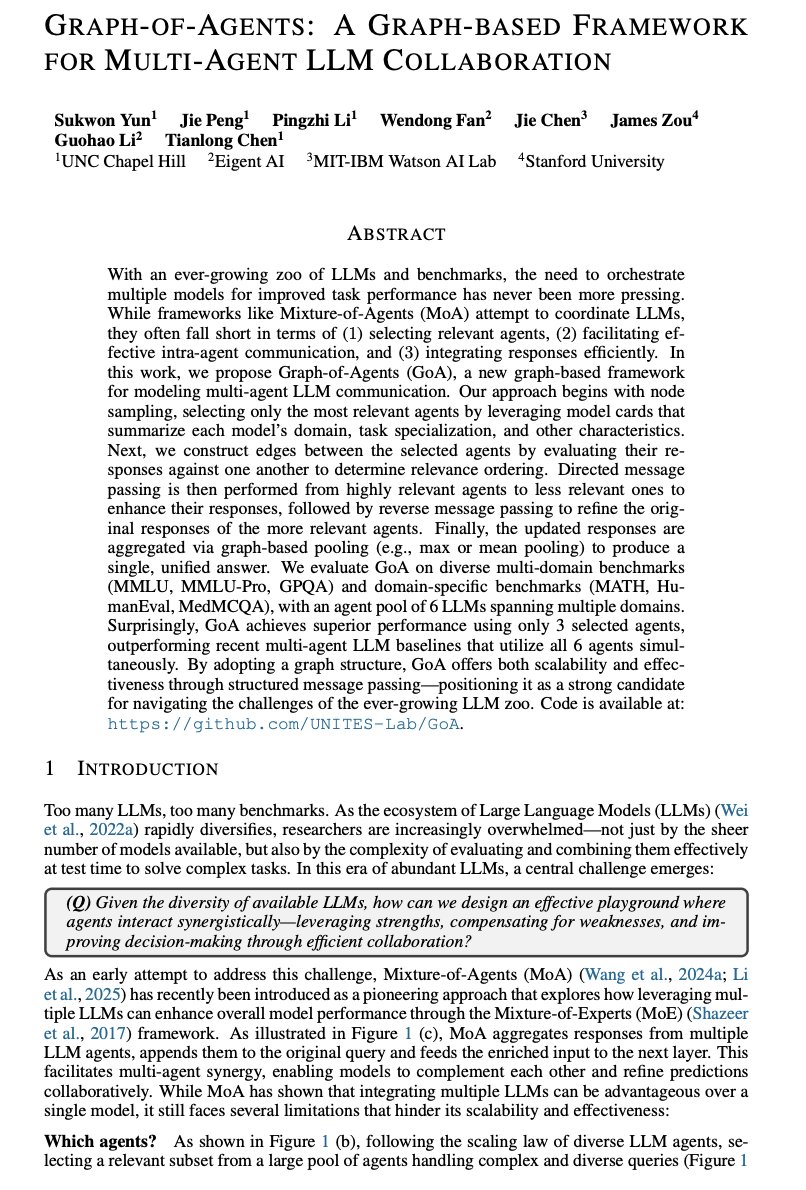
This paper completely changed how I think about multi-agent systems:
Sample nodes -> Build edges -> Pass forward -> Refine backward -> Pool
Here is the 5-step blueprint:
Sample nodes: From a large LLM pool only relevant agents are picked via model cards, short summaries of each model's domain and specialization.
Build edges: Edges are drawn between selected agents by scoring their responses against one another, setting a relevance ordering.
Pass forward: Directed message passing runs from highly relevant agents to less relevant ones, lifting the weaker responses.
Refine backward: A reverse pass refines responses the other way, closing the exchange inside the graph.
Pool: The updated responses are aggregated through graph pooling, max or mean, into a single final answer.
The key insight: Wiring in every agent hurts, Mixture-of-Agents drags the whole pool and drowns in intra-layer overhead, while a graph structure buys scalability.
GoA with 3 selected agents beat baselines that burned all 6 at once across MMLU, MMLU-Pro, GPQA, MATH, HumanEval, and MedMCQA.
Read this, then check the article below.
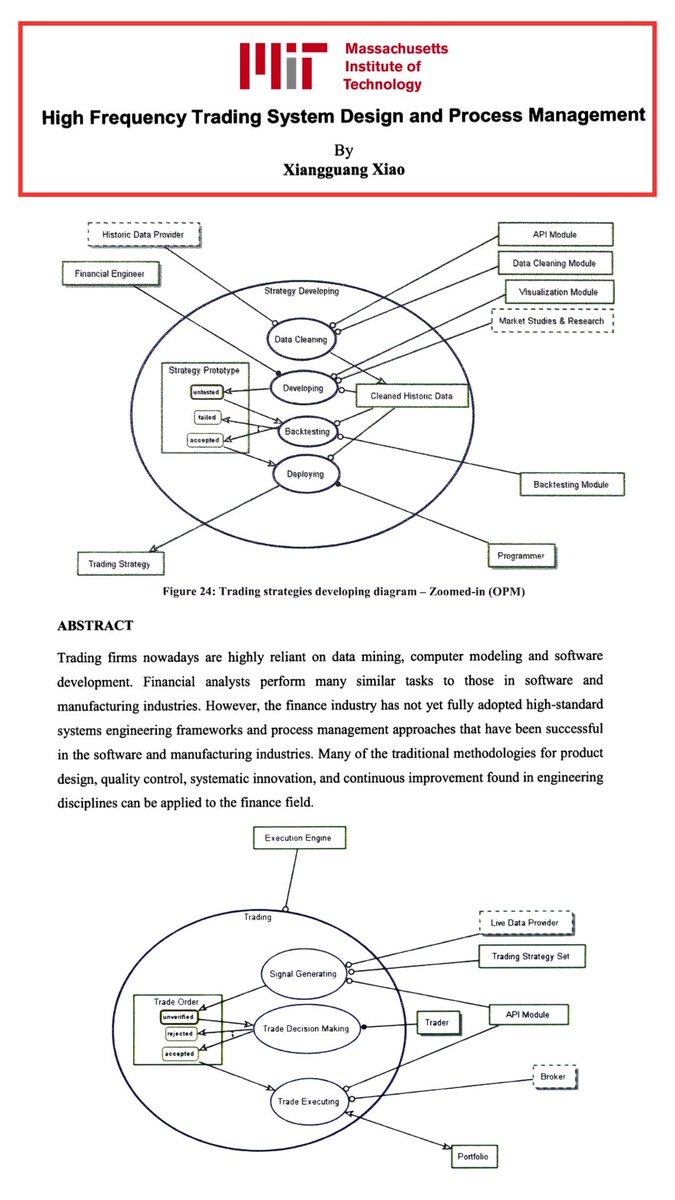
this MIT HFT bible is f*cking insane
built by someone running institutional-level quant systems, and this is the closest thing to a real trading desk floor plan ever leaked into public.
78 pages. full pipeline from raw signal generation straight through to live execution, no gaps.
the crazy part is this isn't a toy overview, it's the actual architecture desks pay six figures to keep internal.
most public resources teach you indicators.
this one teaches you the system that decides which indicators even get to trade.
bookmark before this thread gets buried.
this paper is f*cking insane
a quant team built a lightweight AI trading system that turns 800+ US equities into daily directional signals
the result: 2.5+ Sharpe with around 3% max drawdown and near-zero correlation to the S&P 500
during the volatile 2025 market it kept producing stable returns across changing regimes
the crazy part is it does this with small feed-forward and recurrent networks instead of giant transformers
bookmark before this thread gets buried
this trading paper is f*cking insane
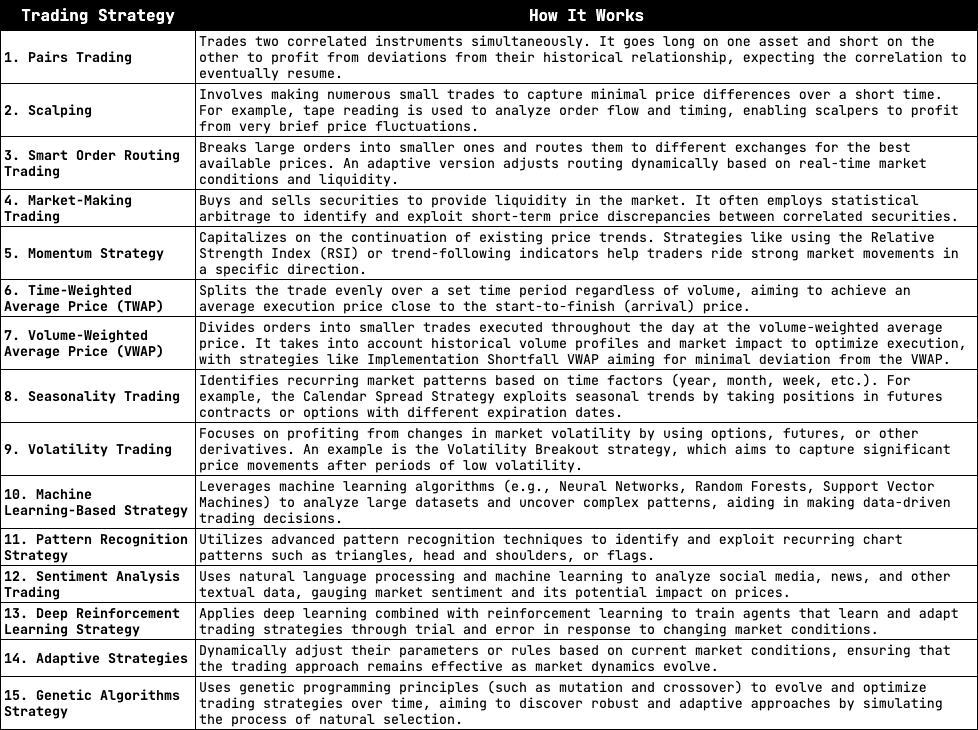
most people have no clue you can build hedge fund level strategies with AI, completely from scratch, using nothing but this.
this paper lays out exactly how top quants fuse AI with real market data to engineer strategies that actually print.
the crazy part is this isn't theory, it's the same combination running on live desks right now.
most guides teach you to backtest an idea.
this one teaches you how the idea gets built in the first place.
bookmark this before someone takes it down.
A QUANT BUILT AN ALGO WITH NO OPINION AT ALL, IT JUST TAKES A VOTE AND BETS THE MARGIN OF VICTORY
The secret is one line.
R(t) = Rmax · (1/J) · Σ sⱼ(t)
J signals each vote long, short or nothing. Risk is the share that agree, so a split committee gets a tiny bet and a unanimous one gets the whole clip.
In plain words. Never ask if you are right. Ask how many of your signals agree, and size exactly that much.
On screen 1407 trades take $10K past $250K with Alpha +2362%. No prediction anywhere, just a vote count turned into position size.
Minara lets you blend factors into that exact composite by describing it. 500+ factors, risk-scaled sizing, real backtests. The PhD math is real, the wall is gone.
I took one plain sentence to a live, backtested strategy & posted every number in the article. Read it ↓
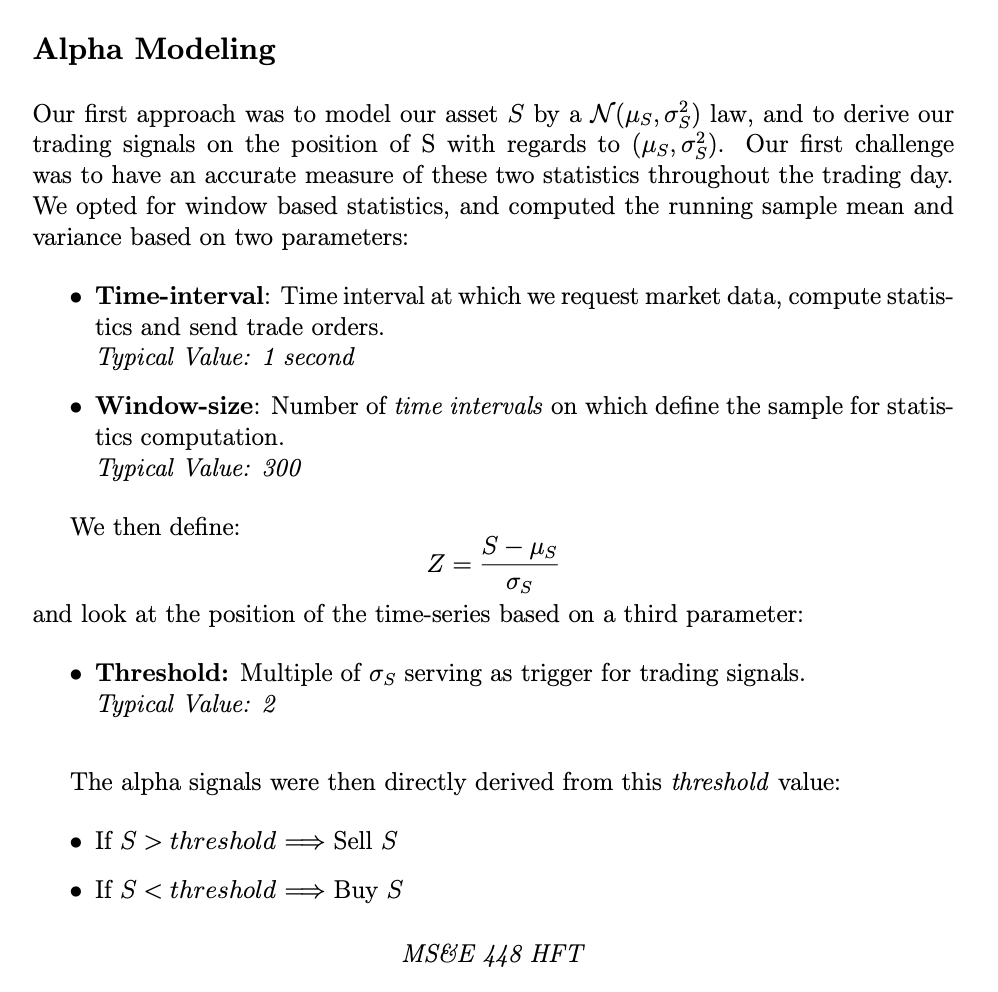
As someone who builds institutional level quant systems, this Stanford paper on HFT Mean Reversion is the closest thing to a live trading playbook I have ever seen publicly shared.
19 pages. Window size tuning that flips PnL on the exact same stock, same day, same code. Hurst exponent universe selection.
Bookmark & If this helps you, pass it on.
this paper is f*cking insane
a NASA and MIT research team built a simple trend and momentum system for gold futures and tested it strictly out of sample
the result: 2.88 Sharpe, 0.52% max drawdown, and 43% annualized return at a 15% volatility target after costs and market impact
across 2,793 trading days the strategy produced near-zero beta to gold with estimated capacity approaching $1 billion
the crazy part is the signal is not complex
the edge comes from turning weak predictability into disciplined sizing, exits, and execution
bookmark before this thread gets buried