My latest nutr-e-book... Nutrient Dense Eating on a Budget. 50% of sales from my nut-e-books will be donated to The Angel Network, working to relieve the increased hunger crisis we are facing in South Africa as a… https://t.co/EF0yiCCOO9
@ADSA_RD A4: If eating a starter from a central dish shared amongst several guests, use utensils to portion your serving on to a side plate. This allows you to visualize the amount you are eating. #EatWholeFoods#NNOW2019
A5 Form a lunch club with colleagues to bring & share whole plant-based lunches at work. This takes the load off having to prepare healthy meals every day & can inspire you to try new recipes to impress your colleagues #EatWholeFoods
A7 The ingredients list tells you what forms that largest portion of the food, as ingredients are listed in order from highest quantity to lowest. Have a look at this great infographic #EatWholeFoods
A7 Beware of ‘reduced-fat or low-fat’ claims, as these foods are not always the healthiest options. Read the nutritional information to compare the sugar and fat content on the original and the reduced-fat option. #EatWholeFoods
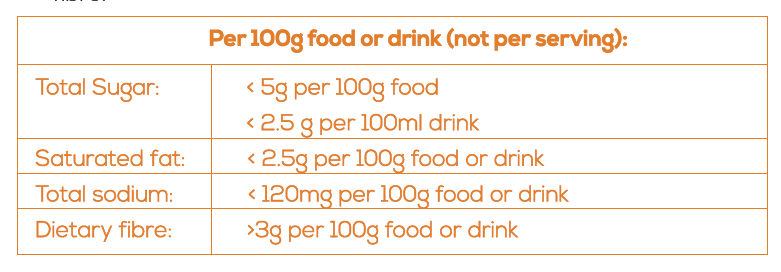
A7 - #NutritionalInformationTable: Look at the nutritional information table to find out how much sugar, salt or fat is in a food. Also use the following cut-off points when looking for foods that are lower in saturated fat, total sugar, salt & higher in fibre. #EatWholeFoods
A7 Use the following cut-off points when reading labels:
Per 100g food (not per serving):
Sugar: < 5g per 100 g food or < 2.5 g per 100 ml drink.
Saturated fat: < 1.5g per 100g food
Sodium: < 120mg per 100g food
Dietary Fibre: > 3g per 100g food
#EatWholeFoods
@ADSA_RD A7: When reading food labels, it is important to establish how much of the carbohydrate is in the form of added sugar. Our carbohydrate intake should come from whole plant foods and unsweetened dairy. #EatWholeFoods
@ADSA_RD A6: Team up with a friend or a family member to buy whole foods in bulk and share. This works out cheaper than buying small quantities #EatWholeFoods