Africa’s largest IPO is rewriting the rules of global business with a staggering $40B–$50B valuation and a $5B capital raise.
We broke down the massive numbers, the strategy, and the story behind Africa's biggest-ever IPO.
Here’s everything you need to know:
A student submitted an essay she wrote by hand. Her university ran it through an AI detector. The detector said she cheated. She is autistic.
Her name is Moira Olmsted. Adelphi University. February 2026. Turnitin flagged her essay as 100% AI-generated. She was disciplined.
Two other AI detectors classified the same essay as human-written.
She sued. She won. The court called the school's decision "arbitrary and capricious."
She is not the only one.
In May 2026, a high school student in Palo Alto was expelled after an AI detector flagged his work. He faced visa revocation. He filed a federal civil rights lawsuit.
A researcher at Griffith University just proved mathematically why this keeps happening. The paper is on arXiv. The finding is one sentence.
AI text detectors have a structural flaw that no amount of better engineering can fix.
Here is what the math says.
If a university wants its detector to catch 80% of cheaters, at least 750 out of every 10,000 innocent students will be wrongly accused. That is not a software problem. It is a theorem.
If the university tries to limit false accusations to 1%, detection power collapses to 6%. It catches 6 out of every 100 AI-written papers. The other 94 get through.
There is no setting where the detector is both fair and effective.
The reason is diversity. Every student writes differently. Non-native English speakers use simpler vocabulary. Shorter sentences. Clearer structures. So does AI. A Stanford study found that 61.3% of TOEFL essays written by non-native English speakers were misclassified as AI-generated. A separate analysis tested 14 commercial detection tools. Zero out of 14 reached 80% accuracy.
The students most likely to be wrongly accused are non-native English speakers, neurodivergent students, and anyone who writes with clarity and precision. The qualities that make their writing effective are the same qualities the detector mistakes for a machine.
Vanderbilt University understood this. They disabled Turnitin's AI detection in 2023 after calculating that even a 1% error rate across 75,000 submissions would produce 750 wrongful accusations per year.
750 students accused of cheating for writing like themselves.
The paper's conclusion is not that we need better detectors. It is that the diversity of human writing itself makes accurate detection mathematically impossible.
The same thing that makes your writing yours is the thing that gets you accused.
https://t.co/L91ldtXP05
This needs to go Viral! In Atlanta for the FIFA World Cup game between Spain & Cabo Verde a fan wearing a Spain jersey gestured to a Cabo Verde fan asking if he would like to swap jerseys & he said excitedly said Yes so they traded jerseys & hugged for what seemed like forever.
Cape Verde goalkeeper Vozinha’s Instagram following exploded from 50,000 on Monday evening, after his side’s heroic 0-0 draw against European champions Spain at the World Cup, to over 12 million in just two days — a staggering 13,000% increase!!!
It ranks as the second-fastest surge ever, behind South Korean boy band BTS’s V (Kim Taehyung). V gained 1 million followers in 43 minutes, 10 million in under five hours, and nearly 19 million in 24 hours in 2021.
Star Cape Verdean goalkeeper Vozinha and his mother will be reunited in Miami in time for the match on Sunday.
Thank you to Secretary Rubio, U.S. State Department officials, the government of Cabo Verde and FIFA for working together to make this happen.
🚗🔋 Many think Beijing masterfully planned China's EV takeover. Fengming Lu (@ANUBellSchool ) and I spent 3 years and 60+ interviews finding out what actually happened in our latest article @TheChinaJournal. A thread 🧵
BANKS SHOULD NOT LEND AGAINST ASSETS. THEY SHOULD LEND AGAINST CASH FLOWS.
The headline says Kenya's top banks hold KES 5.7 trillion in collateral against loans.
The question is: How much of that collateral would actually realize its stated value in a distressed sale tomorrow?
That is where the real risk lies. Many lenders still rely heavily on historical valuations, open market values, forced sale values, and legal charges.
Yet when default happens, reality often looks very different.
The asset may be: Illiquid, Overvalued, Encumbered by litigation, Occupied, Difficult to transfer, Located in a weak market and Dependent on significant capital expenditure before becoming productive.
A bank does not get repaid by collateral. A bank gets repaid by cash flow. Collateral should only be the last line of defense.
The first line of defense should always be the borrower's ability to generate sustainable and predictable cash flows.
For real estate, lending should increasingly be based on:
✅ Existing rental income
✅ Future stabilized rental income
✅ Future development potential
✅ Conservative occupancy assumptions
✅ Stress-tested downside scenarios
The future cash flows should then be discounted to present value.
Where no income exists, lenders should ask: "If this asset were fully developed, what would it realistically earn under conservative assumptions?"
Then discount those cash flows heavily.
For non-income-generating assets, perhaps only a fraction of current market value should be considered after applying significant risk discounts.
Because during distress: Market value becomes whatever a willing buyer is prepared to pay. Not what a valuation report says.
The future of lending will belong to institutions that combine:
■ Cash flow analysis
■ Asset intelligence
■ Continuous monitoring
■ Market liquidity assessment
■ Real-time recovery analytics
At The Trade Financial Solutions & Equipment Group (TFSEG) and WH Global Disposal Partners (WH GDP), we help lenders, DFIs, investors, leasing companies, SACCOs, pension funds, and corporates understand the recoverable value of assets before credit approval and throughout the life of the facility.
Beyond valuation, we assess:
✔ Recoverability
✔ Marketability
✔ Liquidity
✔ Development potential
✔ Distressed sale scenarios
✔ Exit pathways
Through our network of over 211,000 buyers, investors, operators, developers, asset traders, and high-net-worth individuals, qualifying assets can be anonymously introduced to potential buyers by specification rather than ownership, allowing institutions to understand real market appetite long before recovery becomes necessary.
The objective is simple: Don't lend against what an asset was worth.
Lend against what the business can generate and what the asset can realistically recover under stress.
That distinction may determine the next generation of winners and losers in financial services.
🦏 Benard ODOTE | The Thinking Rhino | ONAGI ODOTE
Did you have your weekly #team meeting?
Ours started the same way it starts every week:
"What did you do this weekend?"
We go around the table. Everyone shares.
Sometimes it's quick. Other times, you learn something that matters.
1/4
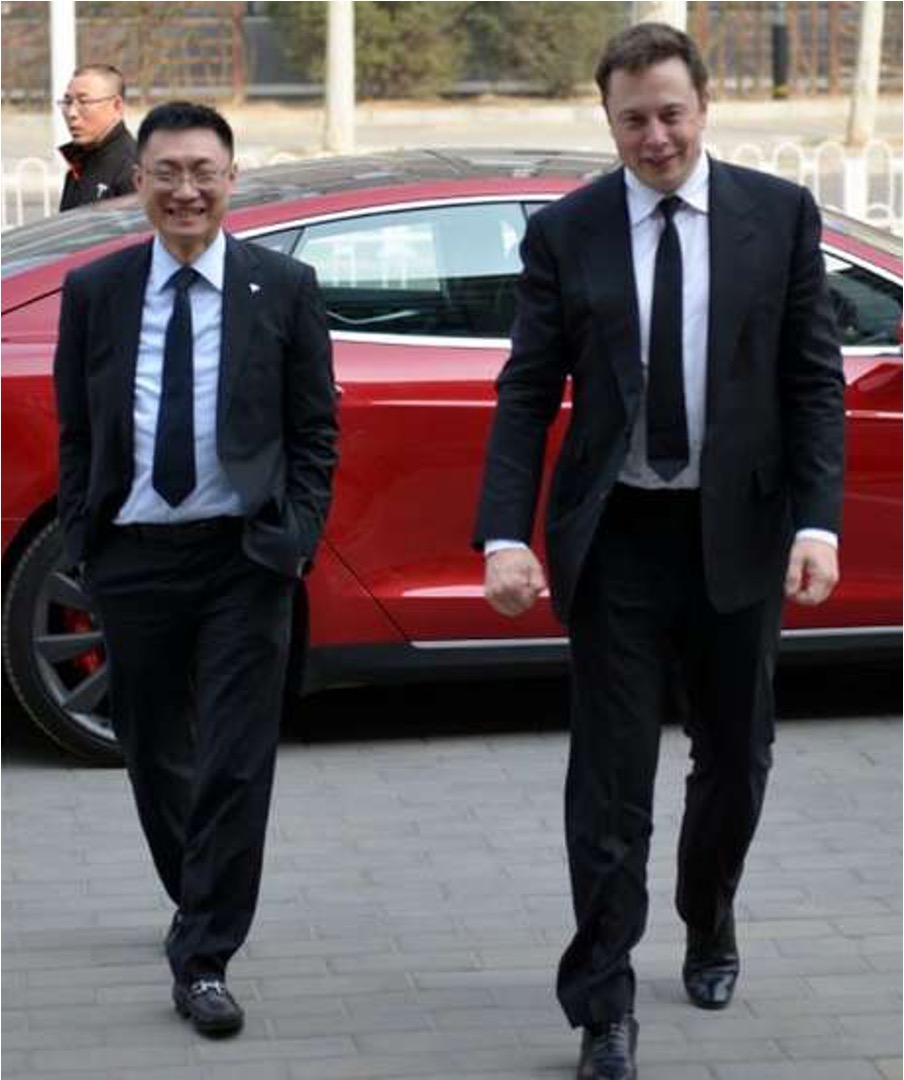
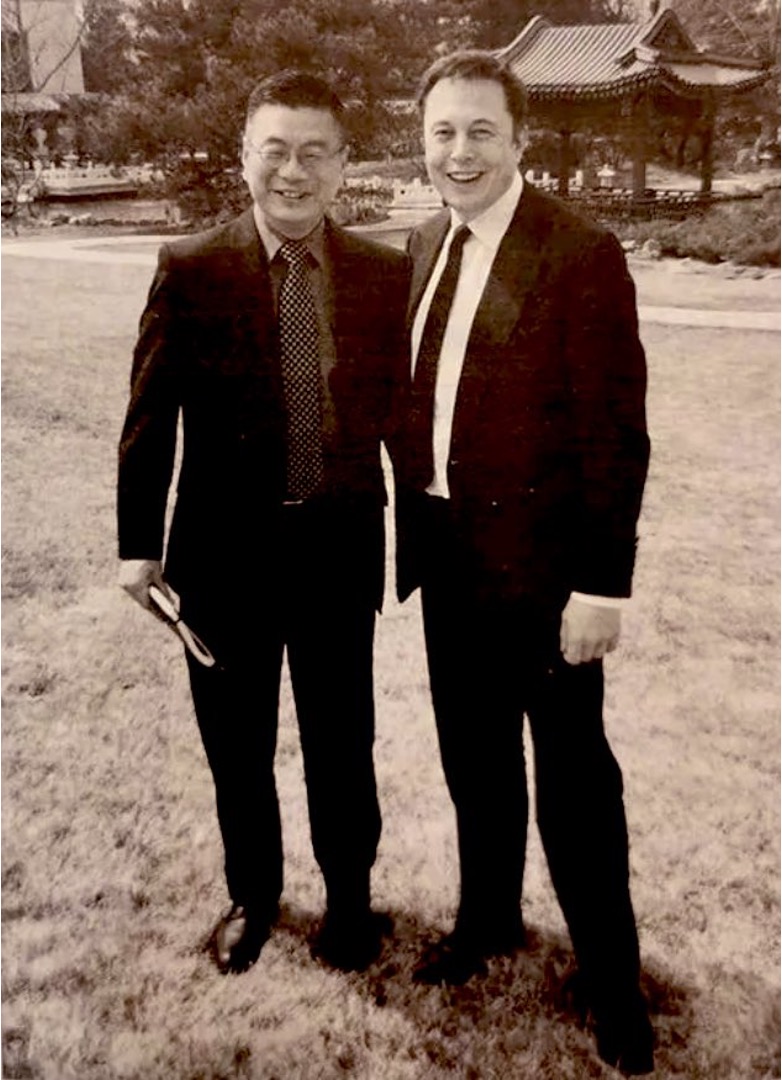
🚨 A REMARKABLE STORY ABOUT ELON MUSK’S SECRET GENERALS IN CHINA: THE TWO MEN WHO BUILT THE SHANGHAI MIRACLE 🏆
🌑 In 2018, Tesla had entered its darkest hour. In the United States, severe production crises and low yield rates had put Elon Musk on the hot seat. Wall Street magnates circled the company, eyeing it for short-selling, waiting for the inevitable collapse.
🌏 Across the Pacific, the situation was equally dire. In the massive Chinese market—which accounted for nearly half of global new energy vehicle sales—Tesla was struggling to gain traction. Faced with dismal sales of only 120 cars a month, an enraged Musk even considered disbanding the entire Chinese team.
🧱 The market was notoriously difficult to crack. Because all Teslas were imported, the starting price of 499,000 yuan for the Model 3 deterred most consumers. To lower prices, domestic production was essential. However, the premise for foreign companies to produce cars in China was to establish a joint venture—a compromise the maverick Musk was unwilling to make.
🔮 Tesla needed a miracle in China. That miracle would require two distinct phases spearheaded by two very different men: Robin Ren, the diplomat who would unlock the forbidden door, and Tom Zhu, the commander who would build an empire behind it.
PHASE ONE: THE DIPLOMAT AND THE BREAKTHROUGH
🕵️♂️ Secretly, Musk began looking for a "China hand" to navigate the complex political landscape. Robin Ren (Ren Yuxiang), a fellow alumnus of the University of Pennsylvania, had long been on Musk's radar. Since 2012, Musk had repeatedly invited Ren to join Tesla, convinced he was the missing link.
🎓 Initially, Ren was surprised by the olive branch. He admitted he "knew almost nothing about the automotive industry" and found it hard to imagine that, 20 years after graduation, Musk would suddenly ask to have lunch. But Musk was persistent. As the 22nd International Physics Olympiad champion and Musk's former laboratory partner at UPenn, Ren was held in high regard by the CEO, who once noted that Ren was the only classmate whose physics was better than his own.
🤝 Ren finally joined in May 2015 as Vice President of Tesla Asia Pacific. Musk was set on him not just for his intellect, but for his unique leverage: his identity as a native Shanghainese with deep government relations.
🏛️ He became the unsung hero of the Shanghai project. Under Ren's mediation, Musk began frequently meeting with high-ranking Chinese officials. In April 2017, Ren first articulated the crucial argument that a wholly-owned factory "benefits the upgrading of China's automotive industry," persuading officials that Tesla's technology could drive the local supply chain. With theories of technological independence and industrial chain driving effects, Ren slowly loosened the customary domestic joint venture model.
✈️ By February 2018, the plan was ready. Ren flew to the US to report to Musk with a detailed blueprint for the Shanghai factory, including location maps, financing commitments, and transaction terms. Unfortunately, Musk was deep in the "production hell" phase of the Nevada battery factory. When they finally met, Musk didn't even look at Ren’s slides. He just stared at him and asked, "Are we doing this right?"
🚦 Ren was taken aback. He thought the heavy lifting was done, but realized Musk needed reassurance, not data. Giving a firm affirmative answer, Ren secured the green light.
🔓 In April 2018, the breakthrough arrived. The Chinese government lifted foreign ownership restrictions on new energy vehicles, and Ren seized the opportunity. By July, the Shanghai Municipal Government and Tesla signed a memorandum of cooperation. While Shanghai Mayor Ying Yong and Musk unveiled the project publicly, it was Ren who signed the agreement, quietly cementing his pivotal role.
✍️ Ren secured three extremely favorable terms that forcefully broke the established joint venture model. First, he negotiated land concessions, obtaining 860,000 square meters of land in Lingang at a 90% discount from the market price.
⚡ Second, he secured low-interest loans, obtaining credit support totaling over 16 billion yuan with an interest rate of just 3.9%. Third, he ensured rapid approval, taking only half a year from signing the contract to commencing construction. Robin Ren had successfully delivered Tesla's first taste of "China speed."
PHASE TWO: THE COMMANDER AND THE WAR FOR SPEED
🏗️ With the door successfully opened, someone had to walk through it and build. While Ren moved in high-level diplomatic circles, the on-the-ground reality for Tesla China was chaotic.
🔌 In early 2014, the company was struggling with a "charging anxiety" crisis that was killing sales before they could start. Consumers refused to buy electric cars without a reliable network. Into this breach stepped Tom Zhu. Unlike the diplomatic Ren, Zhu was a man of the earth.
🌍 Born in China but educated in New Zealand with an MBA from Duke University, Zhu had cut his teeth managing tough infrastructure projects in Africa. He was used to dust, delays, and difficult environments. He joined Tesla in April 2014 to build the Supercharger network, but his pragmatic, military-style execution caught Musk’s eye immediately. Despite having zero automotive experience, he was put in charge of Tesla’s entire China operation by the end of the year.
⚔️ If securing the land was Robin Ren's victory, building the factory was Tom Zhu's war. The timeline Musk demanded was widely considered impossible: transform a muddy field in Lingang into a world-class vehicle factory in under a year.
🏠 Zhu moved to the front lines. Known for his no-fuss style and often seen wearing a standard-issue Tesla fleece jacket and a buzz cut, Zhu rented a small, government-subsidized apartment just 10 minutes from the construction site. He paid less than 2,000 yuan ($300) a month for rent, purely so he could be the first one in and the last one out.
🚀 Under his watch, "China Speed" became a reality. He orchestrated a 24/7 construction schedule that stunned the industry. In January 2019, the site was dirt. By October 2019—just 10 months later—the factory was complete and starting trial production. It was a miracle of manufacturing engineering that saved Tesla’s cash flow at a critical time.
💰 The results were undeniable. Two years later, the Shanghai factory contributed half of Tesla's global production capacity, and costs were sharply reduced by 65%. Through the Gigafactory, Tesla solved its production and profitability issues in one fell swoop, eventually surpassing a market value of $1 trillion in October 2021.
UNSTOPPABLE: THE MIRACLE OF SHANGHAI
🌟 While Robin Ren left the company in 2020, Zhu’s star continued to rise. His defining moment came in 2022 during the severe Shanghai COVID-19 lockdown. The city was paralyzed, and factories everywhere were shutting down. For Tesla, a halt in Shanghai meant cutting off half its global cash cow.
🛌 Zhu made a decision that mirrored Musk’s own famous "sleeping on the factory floor" days. He implemented a "closed-loop" system, moving into the factory and sleeping on the floor alongside thousands of his workers.
🥣 For over two months, they lived, ate, and worked inside the facility, cut off from the outside world to keep the assembly lines humming. While other automakers flatlined, Zhu’s army kept delivering cars. By 2022, Giga Shanghai was Tesla's primary export hub, producing over 710,000 vehicles that year—more than half of Tesla's global output.
🤠 Musk, who values "hardcore" commitment above all else, saw in Zhu a mirror image of his own relentless drive. In late 2022, when Tesla's Texas and Berlin factories were struggling to ramp up, Musk didn't hire a local expert. He flew Tom Zhu to Austin.
🦺 Zhu arrived with a team of his most loyal lieutenants from Shanghai, famously appearing at the US factories in their signature Tesla visibility vests, ready to instill "China efficiency" into American operations.
🏆 In April 2023, the former project manager who built charging stations was named Senior Vice President of Automotive. Today, Tom Zhu sits at the very pinnacle of Tesla's hierarchy, effectively serving as the global No. 2, overseeing all global production and sales.
☯️ Ultimately, the miracle of Shanghai wasn't just about steel and software; it was about the collision of two distinct forces. Robin Ren was the velvet glove who rewrote the rules of the game, while Tom Zhu was the iron fist who built the arena. One conquered with handshakes, the other with grit. Musk may have provided the vision, but without his Diplomat to open the gate and his Commander to hold the line, the future would have remained just a dream.
Gold's parabolic move toward $4,000 is sending a warning signal to the traditional financial system: developed-market nations are losing clout as being good stewards of capital.
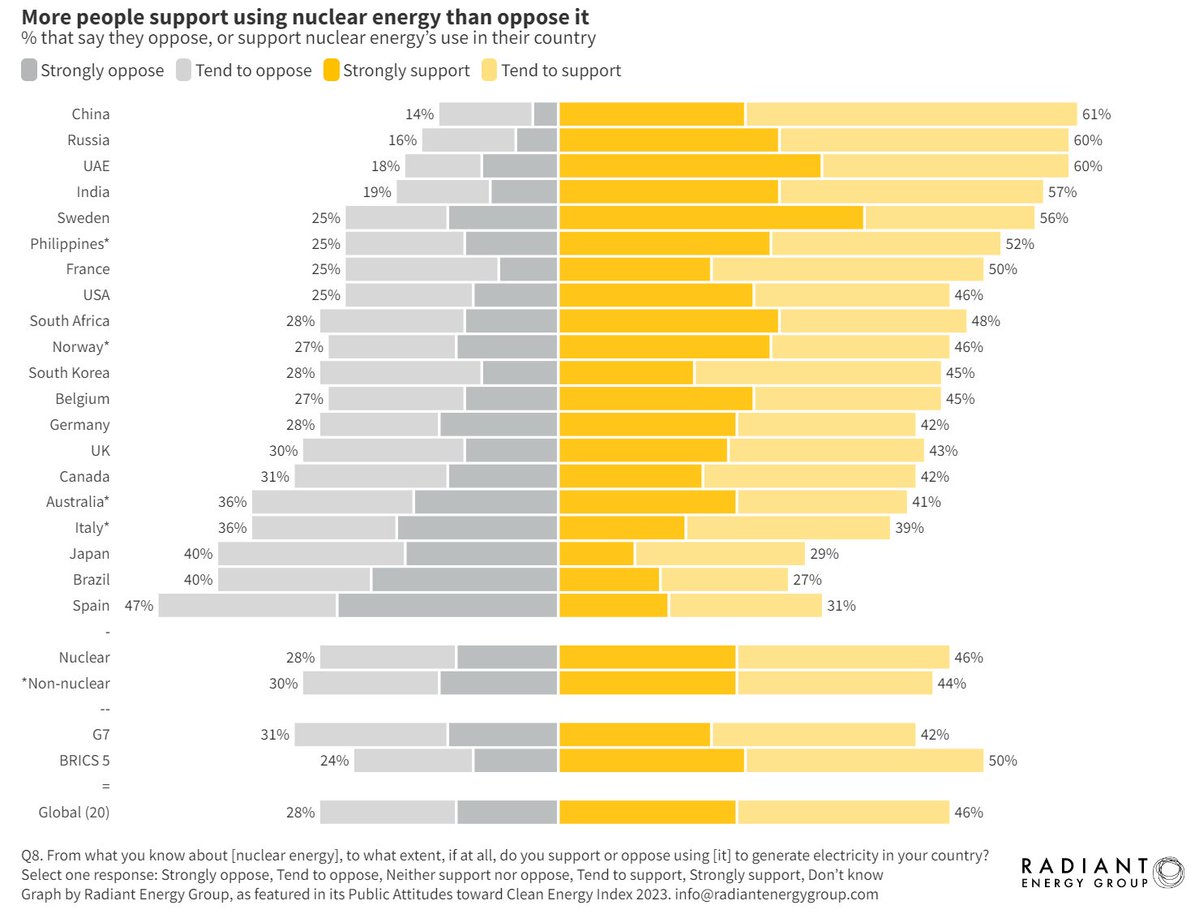
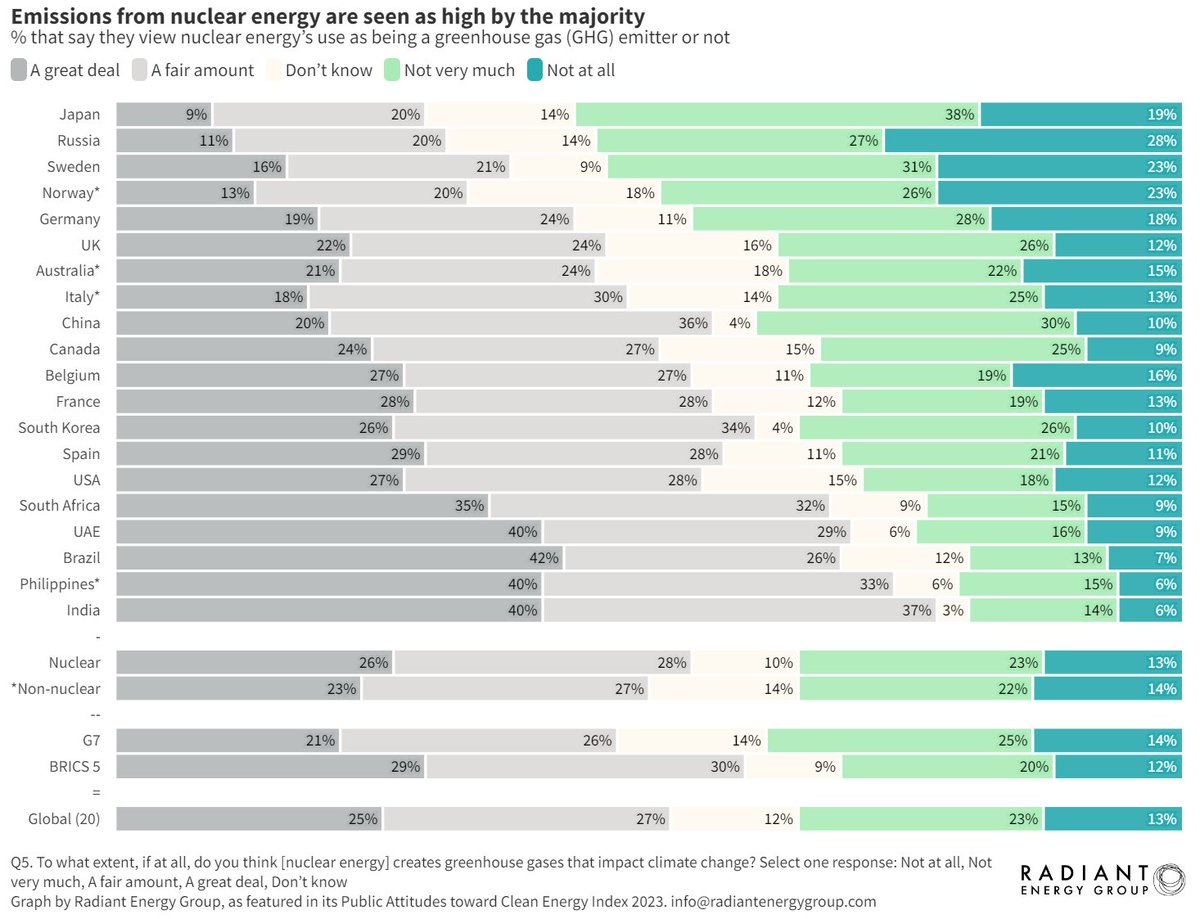
We just ran the biggest poll ever on what the public thinks about nuclear energy and we're sharing the results.
20 countries, 20,122 people surveyed, 55 questions: over a million data points.
Countries surveyed in 2023:
G7 - 🇨🇦🇫🇷🇩🇪🇯🇵🇰🇷🇬🇧🇺🇸
BRICS - 🇧🇷🇷🇺🇮🇳🇨🇳🇿🇦
Other - 🇦🇺🇧🇪🇮🇹🇳🇴🇵🇭🇪🇸🇸🇪🇦🇪
We learned how attitudes differ across age groups, income, geographical location, ethnicity, gender, education, environmental involvement, and even political affiliation.
There are so many stories in this amount of data that we'll be digging through for a while.
But here's what has surprised me most so far:
- Most people still think nuclear is high carbon, yet in many cases they still want it!
It's easy to forget how far nuclear has to go in awareness when you're online too much.
- In countries that recently shut down nuclear reactors for political reasons, more people see adding nuclear as something that could lower their bills compared to other clean energy sources.
I guess they got burned then learned?
@RichardOllingtn led the project and will be sharing more findings.
Interactive charts are available on the @RadiantEnergyG website, followed by links to download the initial findings report and data tables.
I learned this the hard way. It takes a certain level of awareness to shift from seeing things as you want them to be to seeing them as they are, especially when you’re being gaslit from every direction.
At the end of the day, you realize it’s really no one’s fault. It’s something you can’t be taught—you have to experience it. And experience is a diabolical teacher; it demands to be felt and never misunderstood again.
One assumption founders/CEOs should not make is believing that others understand the vision as they do. Delegating without almost absolute clarity is disastrous. By the time you realize the train is heading in the wrong direction at full speed, you’ve already lost money and time.
Being a founder is like being an artist—each brushstroke/note counts, regardless of the size of the canvas/ or the number of artists contributing.
Folks, it is not true to say that if a Court declared a Finance Act invalid, then the government has no basis for taxation. It is an embarrassment to make such a statement. Why? 1/N
@youth_dialogues@IEAKwame there's a sense that we are using monetary policy tools to solve the fiscal policy challenge.
Would you say that we are in a space where fiscal dominance has set in hence the limit on what monetary policy tools can achieve?