Cross-sectional study finds disparities in guideline-concordant care after hip fracture surgery, with racial & ethnic minority patients less likely to receive optimal treatment, even in institutions with standardized hip fracture protocols. https://t.co/V0bDcpqYL6 #OrthoTwitter
We found that the probability of receiving guideline-concordant care at an institution with a standardized hip fracture program increased more for non-Hispanic White patients than racial and ethnic minority patients! #orthotwitter#healthequity
Link: https://t.co/6wETLe1DIe
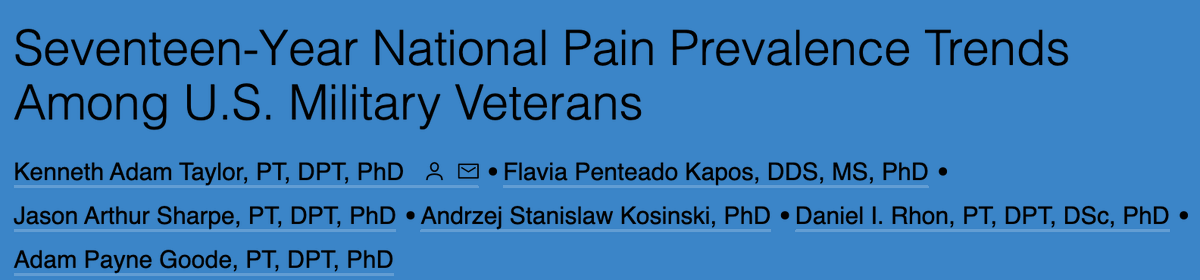
Original: @KenTaylorDPT and colleagues (@DCRINews) highlight that pain prevalence among veterans increased over time (2002-2018), with higher rate of increase compared to non-veterans for all pain variables - a widening disproportionate pain burden
Full: https://t.co/vivGTZifSs
Veterans experienced similar/higher prevalence of pain than nonveterans (2002-2018). Pain prevalence among veterans increased over time, with higher rate of increase compared to nonveterans for all pain variables - a widening disproportionate pain burden. https://t.co/PRg60vkNKf
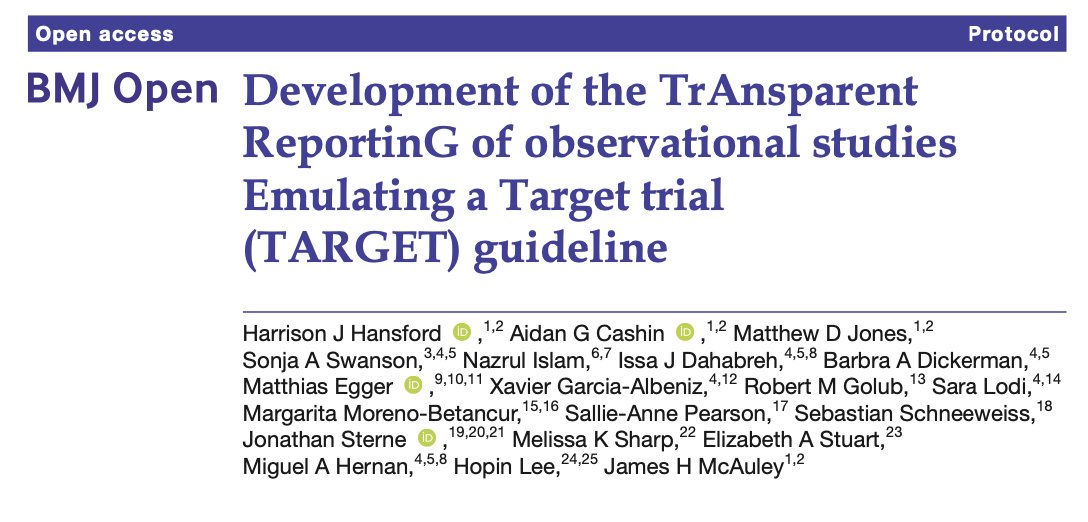
👀Development of the TARGET reporting guideline👀
We've assembled an all-star team to develop a #reportingguideline for observational studies explicitly aiming to emulate a target trial. Reporting of these studies is variable #epitwitter#causalinference
https://t.co/IfMYJ6XRHY
For those of us clinician-scientists who excel in delayed gratification, you know how amazing it is to reach a big milestone! Deeply grateful to mentors & collaborators who opened countless doors. Excited to take on bigger challenges with this team. Onwards towards #PainEquity!
Had a great time working on this paper with @ChristiUlmer and our other coauthors!
Interested in the open access version of the paper? Find it here: https://t.co/9lHZU7D0PL
#VAResearchNewsBrief: A study by @vadurham researchers found that trauma-associated sleep disorder is common in Veterans. Trauma-associated sleep disorder refers to nightmares and disturbed sleep linked to traumatic experiences.
#VAResearch
https://t.co/UbPc7EHYAg
@epi_amanda There are two ways - you can access the configuration file and change it (which makes the change permanent). To use SAS without a hard drive, you'd have to go back and change it later.
Second option is to open SAS using the Run app or command prompt to change it temporarily.
@epi_amanda How large is the dataset?
I ran into a similar issue during my dissertation. In my case, the run time issue I had went from 55ish minutes to <2 minutes by creating a new dataset that was limited to the variables needed for the analysis.
@epi_amanda To get around hard drive space issues, I configured the SAS work library to be a folder in an 2TB external hard drive.
The work lib files disappear when you close SAS, but if you've got a ton of data and lots of subsets in your work lib, you run out of hard drive space quickly
@epi_amanda @Benavidez_Gabe %TABLEN has a learning curve with all the extra optional statements, but the documentation is very helpful. It has saved me hours of my life by streamlining table output and formatting. Especially when I have to re-run any tables after I've made a version 1
@epi_amanda @Benavidez_Gabe There is also the %TABLE1 macro, but %TABLEN is better for tables beyond the traditional Table 1 and is more flexible in my experience.
@SeanRundell For sure! Might be able to address that with Editors through journal-led training on target trial emulation? Probably a harder task to change the reviewer feedback that contributes to this problem.
"Our study suggests that researchers are evasive with causal terminology in their stated aims, but often use methods that signal causal intent. Authors then tend to interpret their results in a causal way."
Important new paper in JCE from @CGleadhill @stevekamper1 @hopinlee@cmwillow et al.
We need to do better….
“Researchers’ interpretations are misaligned with their intent in almost two thirds of observational studies.”
https://t.co/CXhXbXr0aO