It looks like from centuries ago, a movie scene, or AI-generated
Instead, these are the Italian Carabinieri at the Palio di Siena just three days ago
Legendary Italian aesthetic 🇮🇹🛡️
Hold up the glories of thy dead;
Say how thy elder children bled,
And point to Eutaw's battle-bed,
Carolina!
Tell how the patriot's soul was tried,
And what his dauntless breast defied;
How Rutledge ruled and Laurens died,
Carolina!
Cry! till thy summons, heard at last,
Shall fall like Marion's bugle-blast
Re-echoed from the haunted Past,
Carolina!
Henry Timrod
It was two in the morning, the hour when even the bravest samurai retires to his bedroll, yet here, a fortress of light beckoned me from the darkness.
Every castle I have ever known has fallen. Fire, siege, taxes. Eight hundred years of my family learning one lesson: nothing stays open forever.
This house has never closed.
Not for storms. Not for holidays. Not for the hour when even the moon looks tired. I asked the waitress when they lock the doors.
"We don't have locks, hon."
No locks. I own walls, moats, and a sword older than this country, and I have never once said anything that powerful.
Inside, a cook was scraping the grill at 2 a.m. with the calm of a man guarding something. I asked if he was the night watch.
"I'm Darnell."
A trucker two stools down raised his coffee. "Place stayed open during the hurricane," he said. "FEMA's got a whole index about it."
An index. The government of this nation measures disasters by whether THIS HOUSE is still standing. In Japan, we measured a clan's strength by its castle. Same thing. Theirs serves waffles.
I ordered. I ate. I confess what happened next.
I did not want to leave. The night outside was large. The booth was warm. I am a grown warrior, and I sat in a yellow fortress at 3 a.m. feeling protected by hash browns.
A castle does not promise to stand forever. It simply leaves the lights on.
I drive past at night now. Just to check. The lights are always on.
Sentries of the griddle — I see you. Hold the line.
@AaronBastani I am in the US, but it seems as if the UK goverment has surrendered the exclusive use of force by the state to the streets.
The path back does not seem probable from an outside observer. What are your thoughts, @AaronBastani ?
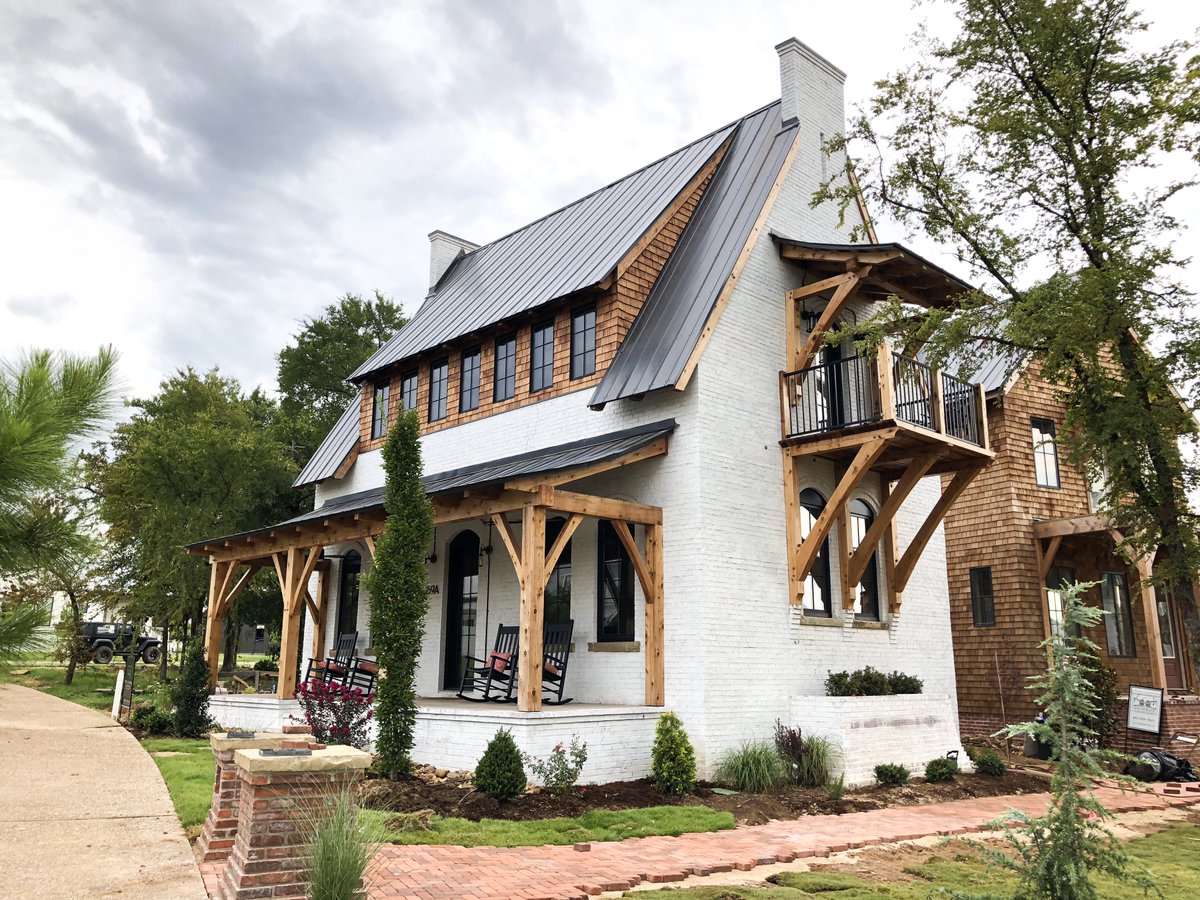
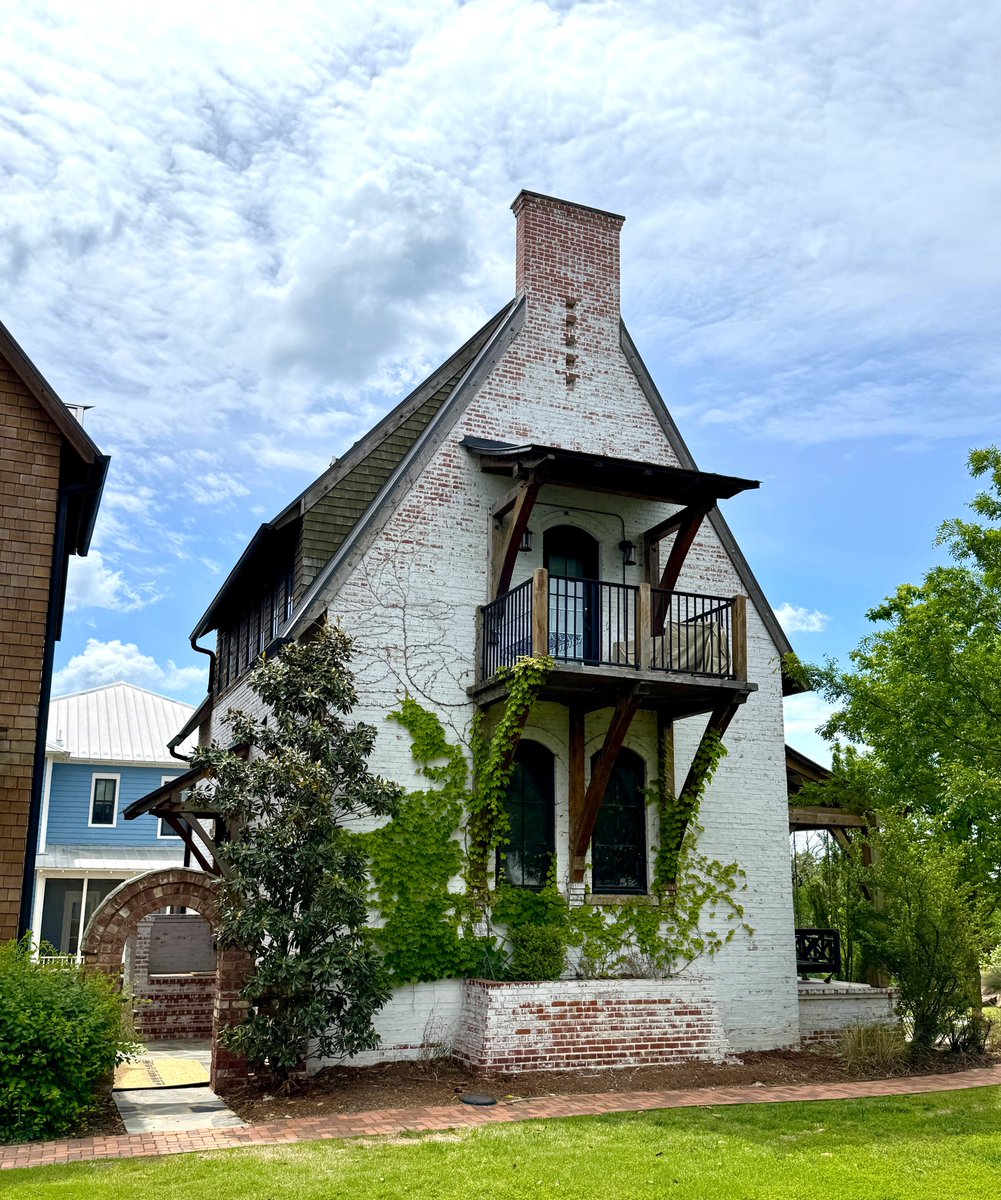
People often say, “I hate when people paint brick! It ruins it.” But we’ve built some beautiful painted brick buildings at Building Culture.
The key is knowing what kind of paint to use.
Drop a dry brick into a bucket of water, and it will soak up moisture like a sponge. Brick is porous; it naturally absorbs water and releases it.
The problem with typical paint, latex or oil-based, is that it forms a coating that essentially seals the brick. What happens when the brick gets wet? The water can’t get out. It’s trapped. This can ultimately damage the brick, particularly in climates where it freezes, and especially with historic, multi-wythe masonry buildings. The brick needs to breathe.
But beyond the masonry's durability, it’s also an aesthetic issue. Peeling paint is ugly.
The right answer is a mineral stain, and the three options are limewash, potassium silicate, and sol silicate.
Mineral stains don't sit on top of the brick; they penetrate the surface and fuse with it. They are breathable, colored with earth pigments, highly alkaline – making them mold resistant – and, depending on which one you choose, can be far more durable. A well-applied sol silicate can last over 50 years.
Limewash, on the other hand, washes away over time. Literally. But it doesn’t look like peeling paint. It looks weathered. It’s actually the look people are often going for, but they try to achieve it with a faux-aged finish. But if you just use the right material and then let time do its thing? You can get a beautiful outcome.
See the pictures below. These were built in 2018, so the limewash is now 7+ years old. When first applied, it’s a solid white. But after seven years, the limewash is wearing away – in a natural way.
If you want this look, use limewash. If you want a solid paint that will last for decades, use potassium silicate or sol silicate. The Germans actually invented potassium silicate in the 19th century because limewash wouldn’t hold up in their harsh climates. Sol silicate is a newer invention and very impressive.
I think the reason people often hate on painted brick in the US is because 95% of the time, it’s the wrong paint. The rubber-like coating from oil-based, latex, and even many “masonry paints” smooths out all the texture of the brick. You lose a lot of character. Mineral stains don’t do this. It still feels like a real brick building. The texture comes through.
People don’t go to Europe and hate the painted masonry buildings. They’re beautiful and charming. It’s because they’re using the right paint.
One more key (and nerdy) fact for why people love European painted brick, but not US painted brick: mineral stains have a characteristic called “double refraction”. One light wave hits it, and it splits off two. It gives it this soft glow. But NOT glossy. It’s actually a chalky look – but doesn’t look flat (as we think of flat paint in the US, which reflects very little light). It’s chalky AND glows. That’s the double refraction. You simply can’t replicate this with petroleum-based products. It’s a chemical thing.
Don’t get me wrong: I love natural brick buildings, and we do a lot of those. But, with the right paint, and for the right project, painted brick can be absolutely stunning.
You can check out mineralstains dot com if you are looking for a supplier of quality mineral stains. Have had the owner on the podcast and he's extremely knowledgeable.
Trump himself could trot out an alien right now wearing a MAGA hat and a Kid Rock t-shirt, but unless it's going to help make life affordable again for ordinary Americans, no one cares.