The Election Commission of India is under fire like never before.
The SIR has struck 13 crore names off draft rolls, putting the EC at the centre of intense public debate over its role in deciding who gets to vote — and who doesn’t.
HOWEVER, what nobody knew: through that same period, some of the sharpest questions were being asked from inside.
Out today, after months of work. Our #ExpressInvestigation 🧵
(1/10)
We spent months investigating the inner working of the EC.
What we found: the majority of the Commission, kept in the dark for almost a year.
Election Commissioners Sukhbir Singh Sandhu and Vivek Joshi objected on record at least 14 times in 10 months, FOUR times on a single day, to decisions taken in the Commission's name without their knowledge.
Here is what they flagged:
(3/10)
https://t.co/LuOZBDxKt8
"If you don't celebrate your life an also spend time in thinking, I could be, I should be, I can be. Thoda bohot Botox se mooh naak badla bhi lo lekin yahi ho tum. Emotionally bhi yahi ho, physically bhi yahi ho," said @iamsrk in an interview to me that's going viral on insta
We need this in India-Pak & beyond!
This Gurbani verse composed by Guru Arjan, the 5th Sikh Master and sung by a Pakistani Muslim singer in a Gurudwara in UK in 1989 promotes tolerance, peace, love and goodwill towards every faith and religion 🕌🛕⛪️🕍🤲
I have always felt that dressing well is about knowledge, not money. Tristan claims this suit costs $20k. That seems high to me, as a Savile Row suit typically costs ~$5k. But perhaps he went to the most expensive tailoring firm and choose the most expensive fabric. 🧵
This is called the 'Blue Jellyfish Shot' and you obtain it by layering drinks with different densities and specific gravities
[read more: https://t.co/0TKOeqgMuY]
there are a bunch of companies right now that are doing really cool things with traditional indian textiles: kardo, karu research, and harago among them. the aesthetic sits somewhere between bode and by walid.
DragGAN officially launched with its mind blowing "Drag your image"
This is next level image manipulation
With DragGAN, you are not just editing images, you are "dragging" them to match your creative vision
Here are 10 example use cases:
@amar013bms @championswimmer Yes, maids can sit on the sofa. Rest when they need a break. Make tea for themselves. Fix lunch for themselves. Take a leave when they need one. They can even turn on the AC in the kitchen while working (we have one). They are human.
@puneet Ever tried pushing a wheelchair and the luggage trolley together? If every human deserves respect and dignity, the guy pulling both deserves it as well. Airlines staff go out of the way for wheelchair users (I am one myself). He is not disrespectful. He is doing his job well.
Our big story this week: Rahul Yadav's Broker Network burnt over INR 280 Cr in less than 18 months, and the founder is alleged to have built a web to syphon off funds from the #InfoEdge-backed company (1/n)
Read now: https://t.co/5JpvKDmb5v
@Inc42
GenZs are suffering from the real PANDEMIC.
No, it's not COVID.
The most FRAGILE breed of human beings are VICTIMs of this famine:
Low Attention Span.
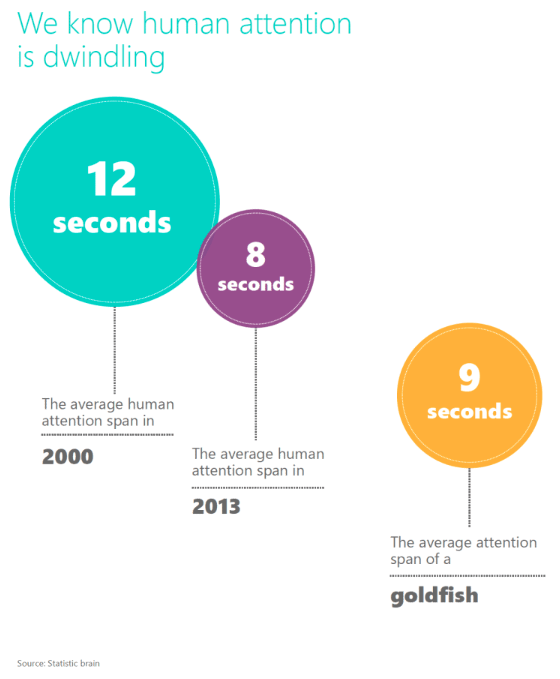
The human attention span is 8.25 seconds.
8.25 seconds.
That's a lot. Don't you think?
Attention is the new oil in the digital age.
And when you leak it. It becomes hazardous.
How do you tune back your attention?
Is there any remedy to bring our monk focus back to life?
8.25 seconds is all you got to manipulate the young generation...
And are we succeeding at it? Well, I don't find it fruitful to even answer this question.
It's visible. To us, the world, the GenZ.
The aftermath of all this distraction? Sloppy thinking, aimless living, and dwindling human connection.
There's so much more in the dirt of attention and GenZs, let me break it down in simple fashion for you:
- - -
Information overload is damaging our ability to think.
These days, people disagree on many topics, often more fiercely than ever. Whether it concerns our elected representatives, pressing environmental issues, or even just celebrity spats, it seems that there are very few issues that we can all unite behind.
But what about the topic of information? The more information you consume, the smarter you are. And the smarter you are, the better. Right? Surely that isn’t controversial?
Well, it might be time to reconsider.
GenZs actually suffer from an excess of information. Whether it’s a stream of incoming messages or a frantic, never-ending newsfeed, most of us are inundated with irrelevant information from morning till night.
Now, this is more than just a minor nuisance. When we subject our minds to this informational onslaught, we actually prevent them from working at full capacity.
There are a couple of reasons for this. One is that your mind needs nutrition, just as your body does – so when you hop from one screen to another, skimming information and never really settling down, you actually undernourish your brain. By keeping things superficial, you fail to consume anything of substance.
The more you consume information in this manner, the more your brain starts to adapt to constant, novel information. Instead of being content to settle down and engage with a task properly, your mind learns to expect hit after hit of gratifying but ultimately superficial stimulation.
Tweets, emails, snaps, you name it – they all rewire your brain and train it to anticipate constant interruptions.
You might think there is nothing inherently wrong with that. After all, you can multitask! Interruptions don’t really bother you – right? Well, not exactly.
Glenn Wilson, a professor of psychology at Gresham College in London, estimates that multitasking depletes our IQ by 10 points. In fact, he’s argued that your cognitive skills take a sharper dip when you try to multitask than when you smoke marijuana.
- - -
Divided attention harms our ability to communicate and connect.
The common denominator in all of these situations is ineffective, unrewarding communication.
You see, technology has made it harder for us to pay attention to others.
Chatting with our family members often isn’t as stimulating as whatever pops up on our phones, so it can sometimes be tempting to disengage from real-world conversations.
This is a particular danger for young people, whose brains haven’t fully developed. Among other factors, teenagers/GenZs have what is called a hyperactive risk-reward system, making them more vulnerable to addiction.
When young people consistently tune in to the world of technological noise, they eventually end up distractible and less sensitive to others’ emotions.
With so much information at our fingertips, it’s easier than ever to be distracted. That means that in order to remain focused and productive, we need to become more aware of how we occupy our minds and cultivate some new helpful habits.
Adopt the 7-to-7 rule.
Do you find yourself reaching for your phone first thing in the morning and last thing at night?
Do you automatically check your phone if you have a few minutes to kill? Not anymore.
When you follow the 7-to-7 rule, you don’t use your phone for any reason before 7:00 a.m. or after 7:00 p.m.
That will give you the downtime you need to disengage from digital distractions.
The key to effective communication in an age of shrinking attention spans is brevity.
- - -
Follow @iKyu_HQ & @VivanVatsa for more such essays, brutal breakdowns, stories and philosophy.