A President and the Endless Question of His Past
As a citizen of no other country, who has never sought foreign citizenship even when doing so became fashionable, my loyalty to Nigeria and my faith in her destiny remain unshaken.
Yesterday, 30th of August, being Sunday, I fervently prayed for our nation and for those entrusted with the solemn responsibility of leadership. I found myself deeply saddened by the direction in which our country is heading.
It is profoundly embarrassing that we have reached a point where a sitting President is asking a foreign court to withhold records concerning his past, particularly records relating to matters of legitimate public interest.
Leadership, in my humble view, demands the courage and humility to confront one’s history — to acknowledge mistakes, provide candid explanations where questions arise, and, where necessary, apologise and seek forgiveness. True authority is strengthened, not diminished, when a leader accepts responsibility rather than seeks to shield uncomfortable aspects of the past from legitimate scrutiny.
This becomes particularly important when questions concern educational credentials. Issues surrounding foundational schooling — primary and secondary — should not remain unresolved or be addressed primarily through legal proceedings. Nigerians deserve clear, credible, and verifiable explanations, especially when such had been submitted in the past.
My deepest concern is the example this sets for more than 200 million Nigerians, particularly the over 30 million young people in schools. The nation’s highest office should exemplify integrity, accountability, transparency, and ethical leadership.
An imperfect past is part of the human condition. What matters is the willingness to confront it with humility, honesty and deep apology, to make amends where necessary and, when circumstances so demand, to place the interests of the nation above personal ambition.
When will our political class fully appreciate that individual ambitions are temporary, while the nation endures? The Presidency is an office held for a season; the moral standards established by those who occupy it can influence generations.
Nigeria is greater than any one person, and the integrity of the Republic must always come before the interests of the individual.
A New Nigeria is POssible. -PO
@theboyisgreat I really do not know why PO attends such gatherings. He should actually be talking with leading Presidential candidates like himself.. If PBAT, Atiku are not there, he should stay away. PO CANNOT join issues with Sowore and his likes.
POMO STATEMENT FOR IMMEDIATE RELEASE
NIGERIANS, AS CAMPAIGNS KICK OFF — HERE COMES PETER OBI; WE URGE YOU TO LISTEN TO HIM
Nigerians, Section 98(1) of the 2026 Electoral Act provides that the presidential campaign for the January 16, 2027 presidential election commences today, August 19, 2026, and concludes 150 days later, on January 15, 2027.
Therefore, beginning today, Nigerians will witness 150 days of intensive political campaigns as presidential candidates present their ideas, records, programmes, and visions for the future of our country.
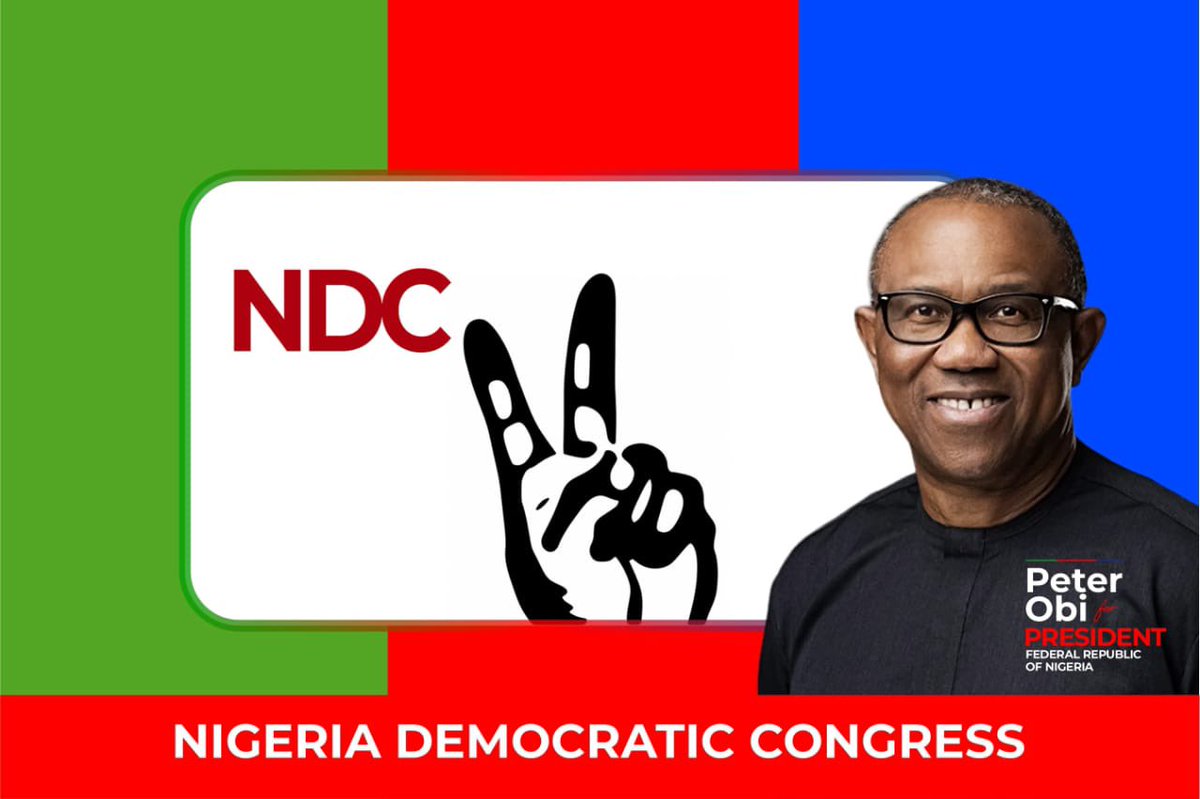
Among those candidates is the presidential flagbearer of the Nigeria Democratic Congress (NDC), Mr Peter Gregory Obi, a 65-year-old former Governor of Anambra State. Today, his media office officially introduces him to Nigerians as the “Candidate of Conscience.”
The description is not merely a campaign slogan. It reflects a political standard rooted in integrity, prudence, frugality, accountability, and a commitment to putting public interest above personal or political advantage. In a political environment too often characterised by fiscal recklessness and transactional leadership, Peter Obi’s public profile stands out for his emphasis on responsible management of public resources and measurable outcomes.
For us in the Peter Obi Media Office (POMO), these 150 days are crucial. They represent a journey that will culminate on January 16, 2027, when Nigerians will decide not only who becomes President but also what kind of nation Nigeria will become.
This campaign must therefore go beyond the usual political contest. It is a choice between competing visions of Nigeria: one burdened by the old habits of waste, division, impunity, and broken promises, and another driven by competence, accountability, productivity, security, and hope.
At the forefront of this latter vision is Peter Obi, whose political identity has become closely associated with prudence, discipline, and public accountability. His message is clear: Nigeria must move from consumption to production. Government must reduce the cost of governance, strengthen education and healthcare, improve security, create opportunities for young Nigerians, and systematically pull our people out of poverty.
Peter Obi enters this campaign not as the candidate of one tribe, religion, or region, but as a Nigerian seeking the mandate of Nigerians based on his record, ideas, and vision. He has consistently maintained that leadership should be defined by competence, capacity, character, compassion, and commitment, rather than ethnicity, religion, or political entitlement.
Over the next 150 days, Nigerians will hear countless promises, witness rallies, encounter campaign slogans, and listen to passionate political arguments. But beyond the noise, one question must remain central:
Who possesses the integrity, discipline, competence, and courage required to confront Nigeria’s economic hardship, insecurity, unemployment, poverty, and institutional decay?
Peter Obi believes the answer begins with restoring trust between government and the people. He has pledged to reduce the cost of governance, strengthen transparency and accountability, invest in productive sectors of the economy, and ensure that public resources serve the public good rather than political privilege.
His candidacy is therefore about more than winning an election. It is a call to Nigerians who believe that public office should be an instrument of service, not personal enrichment; that leadership should unite rather than divide; and that every Nigerian child, regardless of birthplace, ethnicity, religion, or background, deserves the opportunity to succeed.
From today until January 16, 2027, every speech, debate, manifesto, policy proposal, and campaign stop should be judged against one standard:
Which candidate has the greatest capacity to build a secure, prosperous, united, productive, and accountable Nigeria?
@Brainsofweb3 Brains, it's important you understand what you're doing. Apple is "ios" and Samsung is "android" operating system. Having the 2 gives great flexibility. Android is an open source, and "ios" is exclusive to Apple. You can research further, compatibility, cost...