In a post I made yesterday, I analyzed how the broken compact of power sharing between the East, West and the North has trapped Nigeria into a corner where restructuring is no longer feasible. In this archival video, Uche Chukwumerije provided the historical insights of when and how the drift began.
WE ARE IGBOS
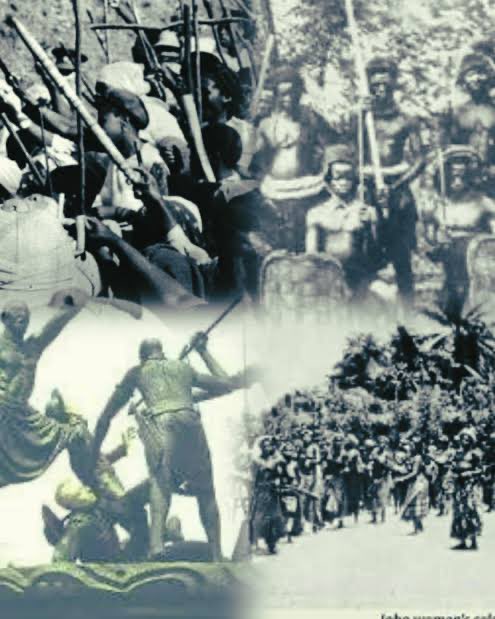
We are the people who set up a 31-year guerrilla resistance movement in Anioma, against British imperial expansion and economic intrusion, thus blessing the history of mankind with the famous Ekumeku War of 1883-1914.
We are the guys who, between 1891 & 1902 staged a major military conflict where the Aro Confederacy fought to defend its long-standing commercial monopoly, spiritual center (Ibinu Ukpabi), and regional autonomy against British Invasion. History remembers this as The Aro war/Aro Resistance
We are the guys who resisted multiple colonial taxation on our women in 1929, and 25,000 plus of our mothers came together in signature Igbo defiance to leave a revolutionary footprint called Aba Women Riots.
In the Early 20th Century, a local revolt by the people of Abiriba against the arbitrary authority of British-appointed warrant chiefs and unfair taxation, led to what history would later remember as Abiriba Rebellion.
Have you ever heard of The Enugu Coal Miners' Resistance in 1949? Oh, that was super high-stakes labor strike by coal miners at the Iva Valley mine in Enugu, who were protesting poor wages and conditions, which turned into a historic anti-colonial flashpoint when British police opened fire and killed 21 miners.
Are you counting?
Here’s another one: 1940s - 1950s, an organized movement of market women in Onitsha fiercely resisted an exploitative colonial price controls, trade restrictions, and taxation. What resulted from that signature Igbo resistance is remembered today as The Onitsha Market Women Protest.
I’m not finished.
In May 1803, around 75 enslaved Igbo people—trafficked via the Middle Passage—overpowered their captors on a smaller coastal vessel named the York after arriving in Savannah, Georgia. Their anger? They were mostly warriors from present day ANAMBRA State and were tricked into making that trip by the slavers. When they realized they were going to be sold as slaves, they staged a revolt, overpowered their captors, capsized the vessel and committed mass suicide by drowning themselves! It’s today remembered as Igbo Landing. They chose the sea; They chose death over slavery, over culture theft, over the misappropriation of their cultural heritage!
They were Igbos. We are Igbos. We are these people today. They’re all back to finish what they started, through us.
Believe me when I tell you the person who will steal and misappropriate our cultural identity and heritage is not yet born. Believe me.
For we Igbos, the battle for total and complete freedom doesn’t end in death, neither does it end in imprisonment. It simply ends when the freedom is won, and this is the generation of reincarnated ancestors who are here to secure that freedom at all costs. This isn’t rhetorics.
We live now, but we have lived before. If we die fighting, it wouldn’t be our first, but it would sure be our last, because we won’t leave this fight for another generation. It ends here.
Igbo Ga Adiri.
Joseph OKECHUKWU
Actor/Author/Activist
As a young “scout soldier”, I was physically present in the immediate vicinity of the locale where Ojukwu delivered this epic last address (on 1st November 1969) to the Biafran war council, known as the Consultative Assembly. It was Ojukwu’s last public appearance. A sober moment when a proud republic borne in defense of freedom took its very last stand before the sunset in January 1970.
“All the South South states together + Lagos and 3 other states, their budget is N10.4 trillion;
tinubu pays one man N11 trillion…”
—- Amaechi speaks on the corruption in tinubu’s government.
"Look at Nigeria with 45 million people, yet they don't enjoy our standard of living despite their vast natural resources...." -Former Prime Minister of Singapore, Lee Kuan Yew, around 1965.
Singapore observed the madness in Nigeria as an example of how not to be a country. 😭
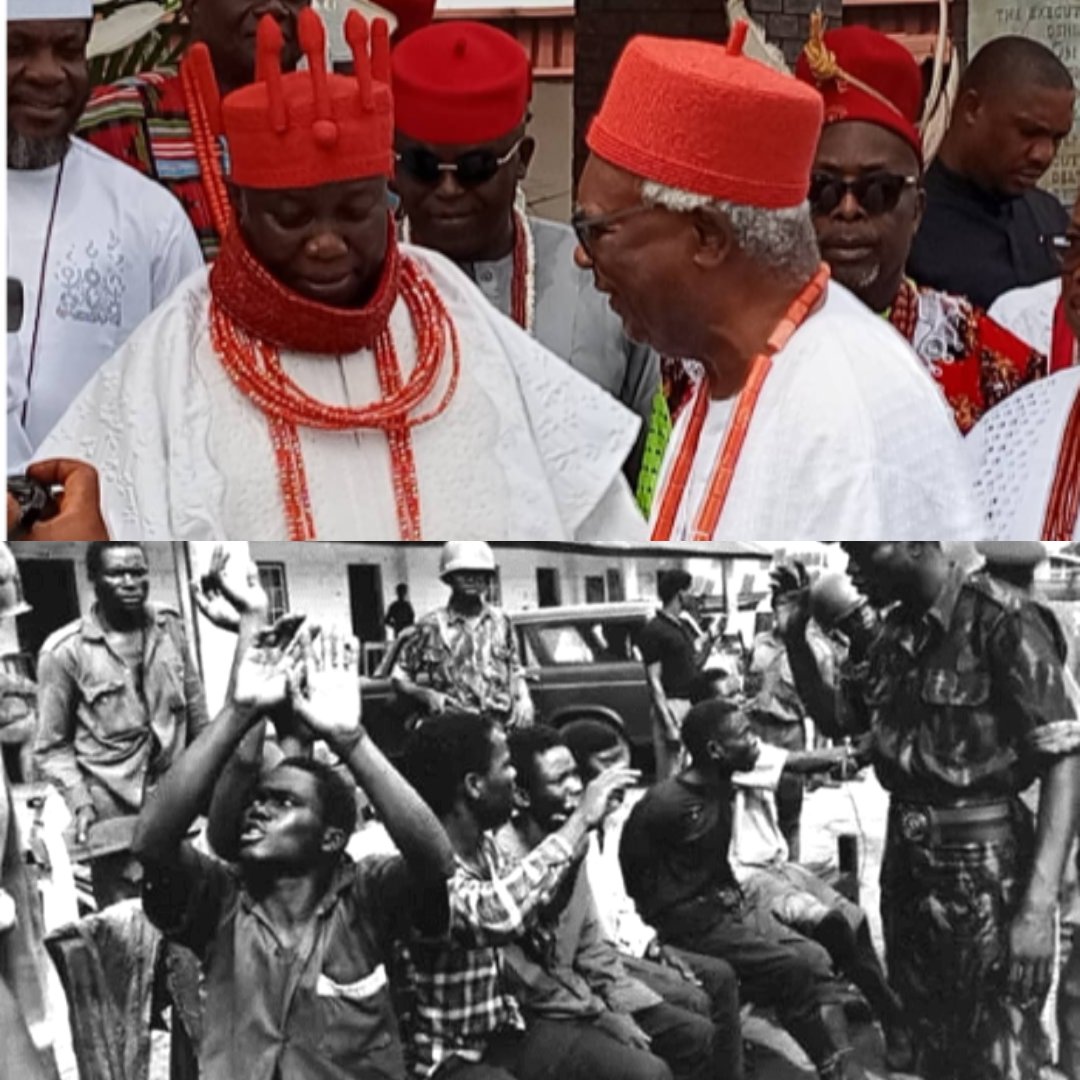
59 years after the Asaba Massacre, former President Olusegun Obasanjo has appealed for forgiveness and reconciliation, but the Asagba of Asaba, HRM Obi Epiphany Azinge, SAN, has insisted that there can be no closure for his people until a sitting President publicly apologises for the 1967 killings.
The prettiest among Kenyan girls are running to Nigeria🇳🇬 so that they can get married to handsome men because Kenyan 🇰🇪men are too slow .
—Kenyan President
Rare Audio of Young Igbo Men Talking More Than 100 Years Ago (with English
Translation)
Listen to 1 of the oldest recorded Igbo conversations ever preserved. The recording was made in 1911 during the anthropological surveys conducted by Northcote W. Thomas for British government.
Just in: “God is angry with Black people because we’ve refused to use our brains, God will not come down from heaven to help us, He created us with a brain and limbs so that we can be useful to ourselves, our community and country” - Ibrahim Traoré
OSITA AGWUNA The Forgotten Hero of Nigerian Independence
Most Nigerians know Zik, Awo and Ahmadu Bello. Few know the young man who went to prison so they could negotiate.
His name is Osita Agwuna (1921- 2007)a powerful orator, revolutionary, and later Eze Enugwu Ukwu Na Igwe Umunri
Who Was He?
Born December 22, 1921 into the Agwuna royal family of Enugwu-Ukwu, Anambra. Brilliant, eloquent, with a very bright future. He was a manager in training at the United Africa Company (UAC) the biggest company in Nigeria then. He abandoned it all for freedom.
He became the President of the Zikist Movement the radical, militant youth wing of Nnamdi Azikiwe's NCNC. While the elders were writing petitions to the British, the Zikists wanted action.
*The Speech That Shook The Empire "A Call for Revolution"
On *October 27, 1948*, at Tom Jones Memorial Hall, Lagos, 26-year-old Osita Agwuna mounted the podium and delivered what is now one of the most daring speeches in Nigerian history.
He called Nigeria a police state and said:
> "The redemption of Africa lies in the hands of Africans themselves and must be achieved by either violent revolution or by non-violent revolution. Positive action, including strikes, boycotts and civil disobedience, is necessary to liberate Nigerians from colonial rule."
He was not begging the British to leave. He was telling Nigerians to force them out.
The British were stunned and declared him wanted,to the greatest surprise of the entire Nation,three days later, he presented himself to the authorities and was arrested, charged with sedition.
During his trial, he did something even bolder he challenged the court. He told the British judge he had no jurisdiction to try him because the judge was both accuser and judge.
He was convicted and sentenced to three years and six months in prison. He Served two years in Kirikiri maximum prison in Lagos and one year and six months in Kaduna prison.
Other Zikists who dared to print and read his speech were also jailed. One of them, at Onitsha Market, built a small stage and started reading the banned speech aloud to traders he too was arrested.
Agwuna's plan was deliberate: He believed arrests would provoke mass outrage and awaken the whole country. It worked. His imprisonment became a national scandal and radicalized a whole generation.
From Prison to Palace
After independence struggle, Agwuna did not chase political appointments in Lagos. He went home.
In 1958, he became *Eze Enugwu-Ukwu na Igwe Umunri* - a throne he held for almost 50 years until his death in 2007.
As Igwe, he became a different kind of revolutionary:
A library of Igbo culture and tradition.
Wrote extensively on Igbo customs. Founded the first museum in the South East in 1957,precisely in Enugwu Ukwu to preserve artifacts. Modernized traditional rule that affected the entire Igbo tribes of Nigeria.
Gave kingship a dignified meaning and introduced the name Igwe to vast communities in Igboland.
He reigned as one of the longest and most respected monarchs in Igboland.
Why Is He Forgotten?
This is the painful part. Nigeria gave national honours to many who negotiated independence on a platter of gold as Zik himself described it.
But the young men who actually went to prison, lost their jobs, ruined their careers, who faced the baton and the colonial jail - like Osita Agwuna, Anthony Enahoro, Sa'adu Zungur, Michael Imoudu were left in the cold.
Till today, Osita Agwuna has never received a posthumous national honour. In 2025, his former Regent, Chief Donald Nwandu, had to write to the Secretary to the Government of the Federation to beg that Tinubu's government honour him.
Osita Agwuna sacrificed his personal liberty for our collective freedom. He was royal by birth like Mandela, radical by choice like Sankara.
We must remember him.
The labours of our heroes past shall never be in vain but only if we remember who they are.
HSH, Chukwudinigbo Agwuna(Nkpume Azaoku )
The Imo State Police Command has confirmed the abduct!0n of at least 20 National Youth Service Corps (NYSC) members along the Owerri-Onitsha Road this morning 💔💔
“Today 1st of October, armed Fulani gvnmen att@cked, r0bbed and k!dnapp£d passengers travelling from Lagos at the Owerri road to Anambra expressway. They also abducted several passengers inside 2 full buses”
- Eyewitness says 💔💔
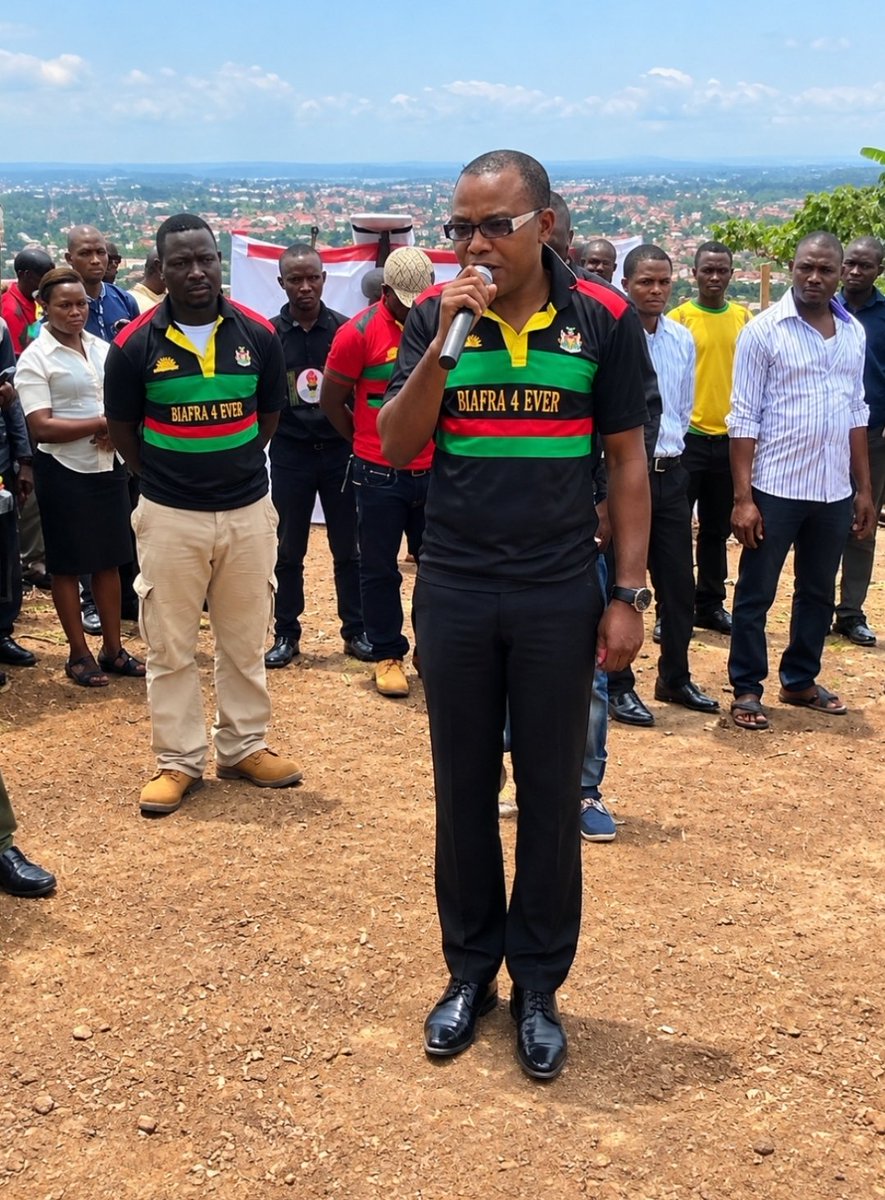
Mazi Nnamdi Kanu, in May 2014, built a Cenotaph, a tomb for all the unburied Biafran soldiers and civilians who died during the Biafra War.
This is something no governor or senator did, but he did it. Mazi Nnamdi Kanu understood the spiritual part of the struggle.