@JacobCanfield I had the same thing happen last year. You could see the realization In her eyes as it all came together for her.
I was juststanding there on one leg pillow lifted with a 5 in my hand. 😵
Still think we have another pull back from here, but just in case you haven't got the memo yet the 10, 20, and 30x moves are coming soon.
Blessed be those that kept the faith.
#cryptocurrency#hyperlinked#cash#ripple#eth
🚨JUST IN: Tristan Tate is now THE NEW OWNER OF X! 😳🤯
The government in recent filing also claims Tristan Tate owns 44 yachts, 159 tequila companies, and the rights to 007.
THE GOVERNMENT 100% TELLING THE TRUTH!
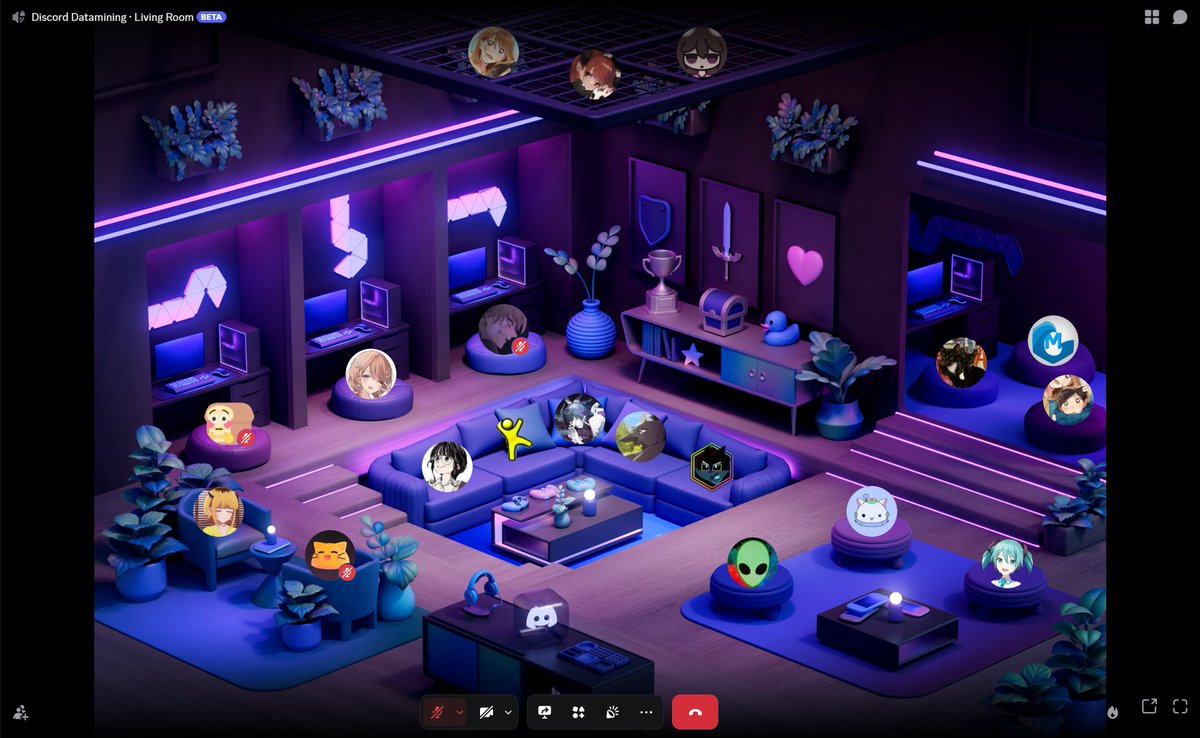
Discord is experimenting with a new Living Room layout for voice channels.
You'll be able to switch the default view of people in your voice chat into Living Room mode, which displays everyone in different seats.
1/ Update 💰🧵 @BagsHackathon
Bags Land: a 3D city block inside @HubzzHQ where autonomous agents compete in the @bagsapp creator coin economy. Here's where we're at ⤵
Notes from $HUBZZ segment w/@HubzzHQ in the @BagsApp $100k Challenge 👇
• Team includes @Russfranky (worked on Axie Infinity & CryptoKitties)
• If they win @BagsApp committing $50K to buy back $HUBZZ tokens
Project thesis:
• Building a mainstream metaverse hangout focused on creators + ownership
• Flywheel starts with content creators showcasing spaces & collaborations
Monetization:
• Zones cost ~$25K → owners can sell subspaces, tickets, rentals
• Goal: $5M revenue from zone sales (raising ~$1.5M)
Ecosystem mechanics:
• Burn $HUBZZ for NFT dividend rights
• Potential airdrops for private space owners
• 15 creators/communities already on the waitlist
Other signals:
• 1–2 years building pre-token + angel backing
• 269 holders currently
• Vision includes acquiring defunct NFT IP and bringing it into the HUBZZ world.
What do VCs actually look for in founders?
I asked @KennethNull who went from website developer→early Axie/Polygon investor→BlockSafe CEO.
His answer: "Just start. Don't wait to be ready."
Full conversation: https://t.co/IzuT8qaSWs
Rushed for time? Here's the TLDR👇
For our second clip featuring Russ Franklin, founder and CEO of @Hubzz_HQ, our VP of Growth Wyatt Clancy asks about adoption
Russ believes a very specific niche of content creators called "midfluencers" are the major unlock. The flywheel is tapping into their super-fan audiences
For our second episode of DecentraLounge, we had a great conversation with Hubzz founder and CEO @Russfranky
Why did he start an ambitious project like Hubzz?
He missed LAN parties with his friends, but also noticed the death of the "third place" and wanted to change that
Taste as the Final Moat
We've entered a strange era where the barrier to creation has collapsed entirely, faster than what we had thought was possible. You can spin up a token in ten seconds. You can make a website in minutes through Lovable without learning how to code. You can generate art in ChatGPT, videos in Gemini, a song in Suno, branding in minutes. What used to take people years to learn, talent, apprenticeship, sleepless nights, hard work and patience now takes prompts. The world accelerated into a hyperefficient loop where everything that used to be scarce is now abundant and valueless. It's only going to get worse, and the one remaining thing that'll live is taste.
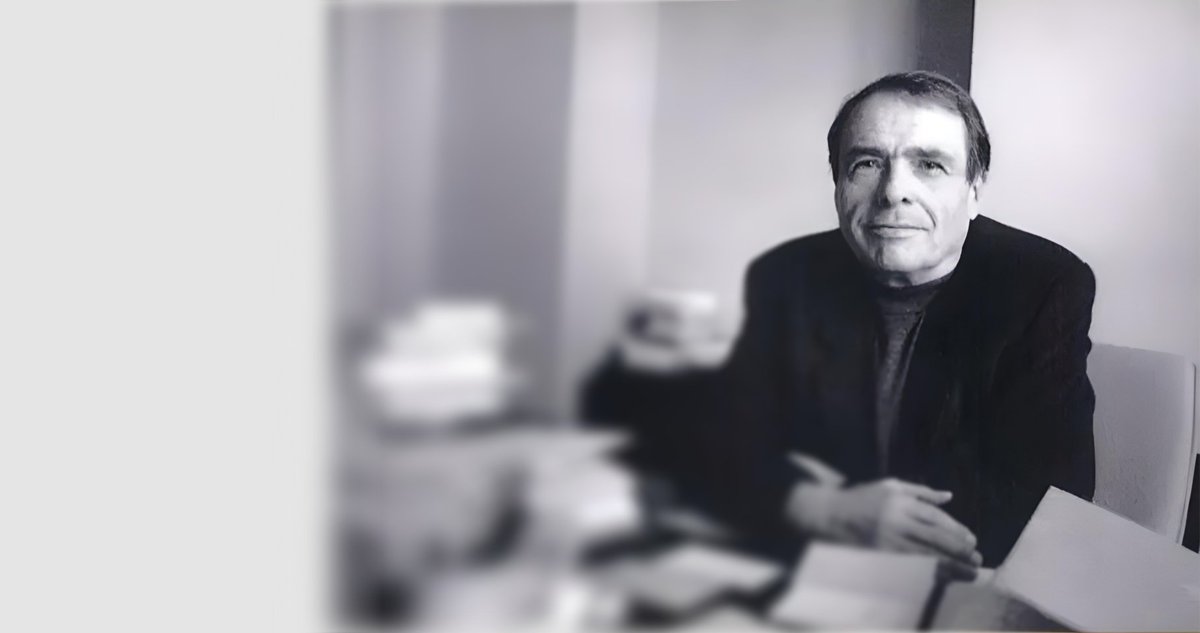
40 plus years ago, Pierre Bourdieu wrote a definitive study on a similar premise at that time in his book Distinction. In it, he wrote that every society quietly sorts itself through taste. Not wealth, not access, not education on its own, but taste. It is the real social currency beneath all the other currencies. Taste is never neutral and reveals the sediments of experience, the shape of upbringing, the worlds you inhabit, the references you carry, the music you enjoy, the movies you watch, the nuance you have absorbed over years of seeing, feeling and practicing. He argued that while the upper class and the middle class may try to imitate each other, Bourdieu shows that imitation can never fully replicate the original because taste is not a surface level style but rather an embodied history.
This becomes even more essential in the (arguably, post) AI era. You can copy a product. You can clone a feature. You can mimic a design. But you cannot fake taste in any sustainable way because taste is the living pattern inside the person. AI gave everyone equivalent tools but it cannot give everyone equivalent judgment. As the world became frictionless, taste became the only friction worth having, the only meaningful source of differentiation. What AI really did is collapse the cost of execution to zero. It made every craft instantly available. It compressed the distance between idea and output into seconds. That sounds like liberation but it also destroys every advantage people used to rely on. Technical skill, design skill, graphics, code, editing. AI ate all of it. The old moats died. The ladder people lived to climb no longer matters. In the new landscape the only thing left that cannot be commodified is the inner sensor that tells someone what to choose, what to ignore, what to combine, what to reject, what feels right, and what feels wrong. And it only accumulates through experience, memory, culture, pain, risk, failure, and the strange wiring that makes each person different from the next.
Bourdieu understood this long before AI. In Distinction he showed that taste is a map of the self. It reveals social class, upbringing, worldview, and the deep structures that shape how people perceive value. The upper class, he argues, does not distinguish itself by wealth alone. It distinguished itself by possessing the right sensibilities, by knowing how to move through the world with a pattern of choices the middle class could never authentically imitate. They could mimic the outputs but not the gaze behind them. Imitation always fell flat because taste is the underlying orientation that created the creation in the first place. AI made imitation easier but it also made true distinction harder.
For example, AI videos look impressive, at first glance, but empty if the person creating them lacks cinematic memory or emotional intelligence. AI art becomes repetitive and sterile and stale if the creator doesn't understand composition, cultural lineage, or the subtle grammar of minuet aesthetic decisions. AI websites built in minutes look the same unless the creator has a sense for authenticity, spatial hierarchy, narrative flow and the design rules that good interfaces obey. Tools = production and they don't equalize discernment. The middle class (which is to say, average AI users today) can imitate the aesthetic signals of the upper class (experienced creators today) with more precision than ever before, but the imitation always breaks under pressure. It feels off, too literal, too direct, too eager, too bold, too wrong. Taste is coded not just in the final output or creation itself but in the chain of decisions that lead to it and those cannot be automated or reverse engineered.
Anyone can launch a token. Anyone can write a thread. Anyone can host a website. The moat is not the ability to build. The moat is the ability to build something that feels true, coherent, and culturally alive. The market rewards what feels inevitable. Inevitability is a taste signal more than anything else. When everything is commoditized the people look to the creator’s taste as the last true sign of authenticity. It becomes the compass that guides attention in a world where everything looks the exact same from a distance.
Bourdieu argued that taste emerges from long exposure to forms, from repetition, from failures and refinements, from the slow internalization of a personal distinct style. This is why it is the most unfair advantage of all. You can't download it. You can't buy it. You can't delegate it. You can only earn it by living. And this is exactly why taste will outlive every wave of automation. When the world is drowning in cheap abundance, people gravitate towards something unique that 'just feels right'. Choice becomes the art in and of itself. Selecting becomes more valuable than producing. The editor becomes more powerful than the creator. The one who has taste draws the map others follow EVEN if AI executes the labor and grunt work.
The irony, in my opinion, is that AI made taste more visible than ever. When anyone can produce anything instantly, the only things that stand out are those shaped by real intention. Bourdieu’s framework, for me, became a survival guide for the new world. The framework reveals that discernment will always operate through subtle signals. These signals are the only remaining way to tell who actually knows what they're doing and who doesn't.
The future belongs to people with taste because they are the ones capable of navigating a world where speed and abundance erase every other advantage. Taste is the last moat.