We mourn the passing of Hall of Famer Bobby Cox, the fourth-winningest manager in MLB history.
Cox led the Atlanta Braves to unprecedented success, winning 14 straight division titles from 1991-2005, along with 5 NL pennants and the 1995 World Series championship.
The four-time Manager of the Year won 2,401 games overall, behind only Connie Mack, Tony La Russa, and John McGraw. Of the 13 managers with at least 2,000 career wins, only one (Joe McCarthy) got there in fewer games than Cox.
Cox managed the Braves for 25 seasons in all, leading them to six 100-win seasons and eight 90-win seasons. He also managed the Blue Jays for four years, including the franchise’s first winning record in 1983 and first division title in 1985.
As General Manager of the Braves from 1986-90, Cox laid the foundation for the teams he would manage to success over the next two decades by trading for one future Hall of Famer in John Smoltz, drafting another in Chipper Jones, and helping develop homegrown legend Tom Glavine.
Owner of a .556 winning percentage in 29 total seasons as manager, Cox was elected to the Hall of Fame in 2014.
He was 84 years old.
@mountainpilled@morganisawizard I saw something that looked like you at Bryce Canyon this morning. She was wearing a Carhartt beanie. I looked at her so hard to figure out it it was you, she had to say good morning!
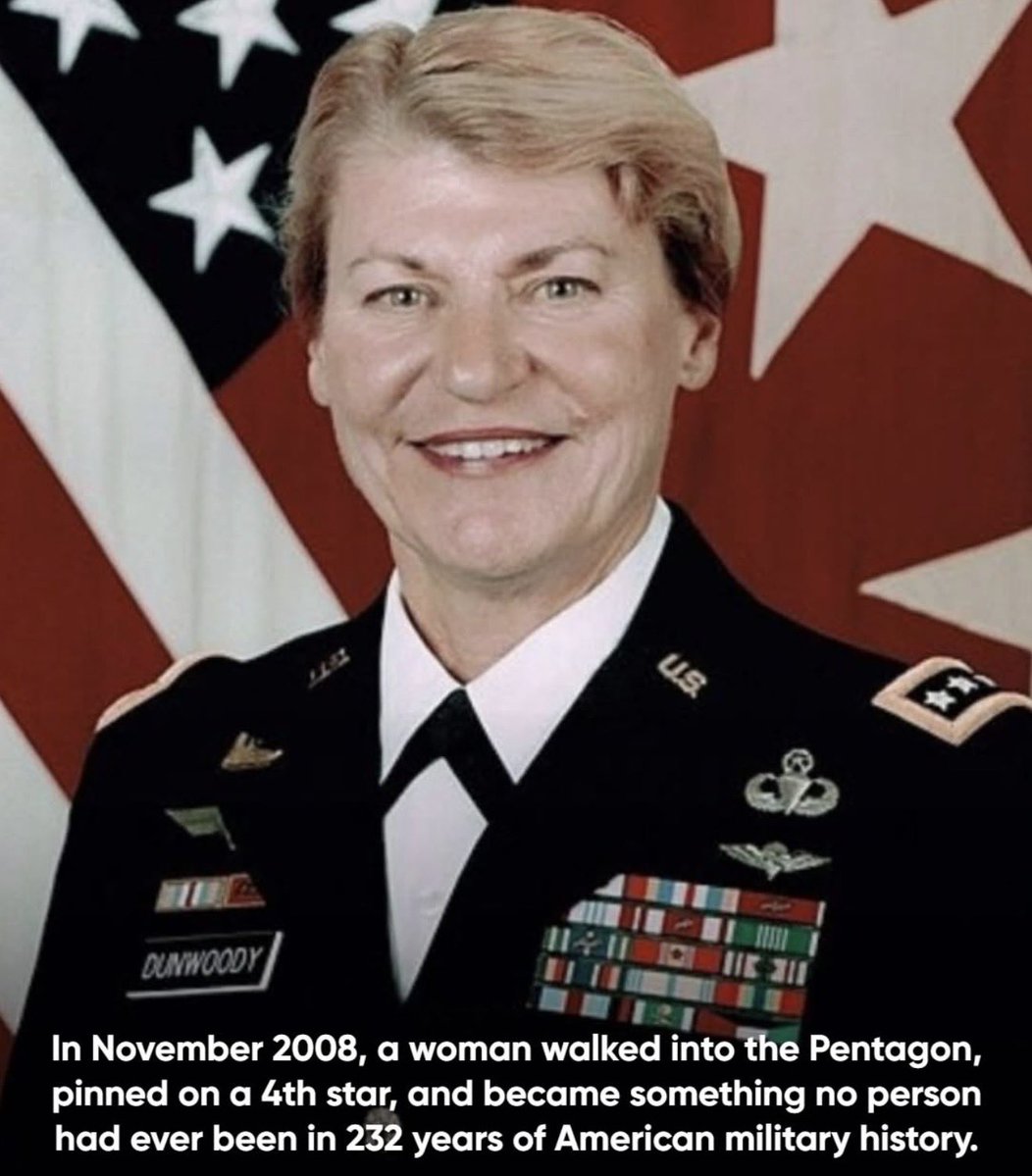
The first woman — in any branch of the United States military — to ever reach the rank of four-star general.
Her name was Ann Dunwoody. And her first words after the ceremony perfectly captured who she is: "There is no one more surprised than I — except of course my husband. You know what they say: behind every successful woman, there's an astonished man."
She joined the Army in 1974, was commissioned as a second lieutenant in 1975
Ann Dunwoody went into logistics.
It was not a glamorous choice. Logistics — the science of getting the right equipment to the right place at the right time — is the unglamorous infrastructure behind every military operation. It is invisible when it works. It is catastrophic when it doesn't. Wars have been won and lost not by strategy or courage alone, but by supply chains — by whether ammunition arrives, whether vehicles are maintained, whether food and fuel reach soldiers who need them.
She understood this from the beginning. And she was exceptional at it.
Over the next 3 decades, she built a record of firsts
1992: First woman to command a battalion in the 82nd Airborne Division.
2000: First female general officer at Fort Bragg.
2004: First woman to command the Combined Arms Support Command.
2005: First woman to achieve three-star rank as the Army's Deputy Chief of Staff for Logistics.
November 14, 2008: First woman in American military history to achieve four-star rank.
At each step, she was not merely adequate. Army Chief of Staff General Ray Odierno, who hosted her retirement ceremony in 2012, said it plainly: "It wasn't because you were a woman. It was because you were a brilliant, dedicated officer, and you were quite simply the best logistician the Army has ever had."
That is the weight of what barrier-breaking actually looks like from the inside. It is not enough to be good. It is not enough to be excellent. When you are the first, you are not just representing yourself — you are carrying an unspoken question on behalf of everyone who comes after you. And the only way to answer it is through results.
She answered it for 38 years.
Her final command, Army Materiel Command, oversaw more than 69,000 employees, operated in all 50 states and 145 countries, and managed a budget exceeding $60 billion. She supported the largest deployment and redeployment of American forces since World War II. She led the Army's global supply chain through the wars in Iraq and Afghanistan and contingency operations in Haiti, Pakistan, and Japan.
At the Pentagon ceremony on November 14, 2008, Secretary of Defense Robert Gates called her "one of the foremost military logisticians of her generation" and said she had broken through "the final brass ceiling." He noted something important: she would rather be known, first and foremost, as a United States Army soldier — not as a symbol, not as a milestone, but as a soldier who did the job.
She also said something that has stayed with people ever since:
"I hope this appointment shows young women and men that anything is possible if you have the passion and qualifications."
After her promotion, a Reserve NCO who had served with her wrote to say: "I can finally tell my 3 daughters that they can be anything they want to be, including a four-star general in the Army."
That is what 38 years of showing up actually looks like.
Ann Dunwoody retired on August 15, 2012. She has since written a book, "A Higher Standard," sharing the leadership principles that guided her career. Army Chief of Staff Odierno said of her legacy: "You have made every unit you have been in a better unit."
She entered a military that handed women mops and cooking aprons and told them to be grateful for the chance to serve. She left it having commanded an organization with a larger budget than most nations' entire defense spending, and having opened the door to four-star rank for every woman who came after her.
She didn't ask permission to belong.
She just proved, for 38 years, that she already did.
@jamiedupree@NathanDallon You are wrong on both accounts. Is your comment click bait or did you fail to check? Took me 5 seconds to confirm both satisfy the real ID act requirements.