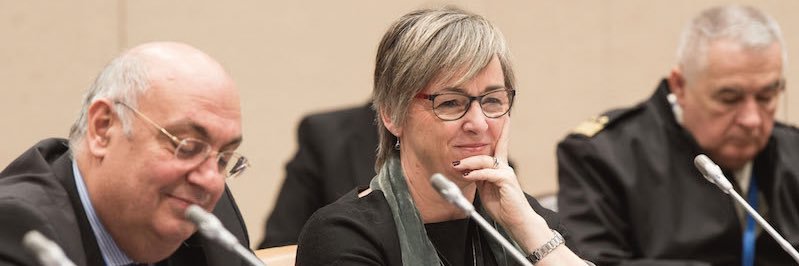
Kerry Buck: The power dynamics of the world are shifting rapidly. If Canada doesn't switch gears soon, it could get left behind https://t.co/QdmzvIPSxv
I think we need to step back and look at this from a six-month perspective.
Imagine that, at the outset of the U.S.-Israeli campaign, someone had predicted that six months later Iran’s nuclear problem would remain unresolved, its missile threat would persist, the regime would still be standing, and Washington would be celebrating the restoration of roughly 30 percent of the prewar maritime traffic through the Strait of Hormuz—a waterway that was open before the war began.
Would we really describe that outcome as the United States regaining strategic control of the conflict?
This is where I think the focus on recent developments in Hormuz risks obscuring the larger picture. The U.S. Navy may be achieving meaningful operational successes, and those achievements should not be dismissed. But operational success is not the same thing as strategic success.
Iran has paid an enormous price. Its military capabilities and infrastructure have suffered serious damage, and Tehran faces profound economic and political challenges. None of that should be minimized.
But from 30,000 feet, Iran survived a campaign that at one point appeared capable of threatening the regime itself. The nuclear issue remains unresolved. The missile problem remains unresolved. The United States is likely to emerge with a smaller military footprint in parts of the Gulf, while Gulf states have been given another reason to question whether relying overwhelmingly on Washington is sufficient and to diversify their strategic relationships.
There is also the broader question of American deterrence and power projection. The Pentagon is acutely aware that another major round of fighting with Iran would consume capabilities and attention needed in other theaters, particularly the Indo-Pacific. That constraint matters. And after the costs of this war, it is difficult to imagine that future administrations will view another large-scale confrontation with Iran as an attractive option.
That is why I am skeptical of the argument that Iran has “lost momentum” and that the momentum has now shifted decisively toward Washington.
Perhaps that is true in a narrow, operational sense in the Strait of Hormuz. The United States has demonstrated that it can clear routes, escort shipping, strike Iranian capabilities, and prevent Tehran from exercising uncontested control over the waterway. Those are real achievements.
But Hormuz is one battlefield within a much larger strategic contest. Even there, American control remains incomplete and potentially reversible. Restoring a fraction of the commercial traffic that existed before the war is not the same as restoring the prewar status quo.
The more important question is whether Washington is now closer to achieving the objectives for which it accepted the extraordinary costs and risks of this campaign. On that measure, the picture looks considerably less favorable.
And this leads to the fundamental problem: the current equilibrium is neither sustainable nor stable. Absent a diplomatic agreement, Washington will eventually face another escalation it does not want. The assumption that the United States can continue applying military and economic pressure indefinitely while Iran simply absorbs the costs without attempting to impose costs of its own is unrealistic. Tehran still has both the incentive and the means to challenge that equilibrium.
So my disagreement is not with the assessment that the United States has recently improved its operational position in Hormuz. It has. My disagreement is with extrapolating from those limited gains to the conclusion that the strategic momentum of the conflict has shifted toward Washington.
Six months into an extraordinarily costly war, the better measure is not who won the latest round in the Strait. It is whether the war achieved its stated strategic objectives, whether the resulting regional order is more favorable to the United States than the one that existed before the war, and whether that order can be sustained without another major escalation.
On those questions, the evidence is far less encouraging.
#IranWar
#Iran
According to U.S. officials, a newly created joint venture between the U.S. government and Alejandro Betancourt, who controls Venezuela's second-largest private oil company, North American Blue Energy Partners (NABEP), will receive 100-year rights to develop 17 Venezuelan oil fields containing roughly 65 billion barrels of proven reserves. Washington will receive 55% of the venture's effective output through a combination of equity ownership and guaranteed access to oil at cost.
NABEP was until recently partly owned by Harry Sargeant III, a Trump supporter and Republican donor who advised the administration on Venezuelan oil policy. Sargeant sold his minority interest in NABEP earlier this month.
The Venezuelan government claims the arrangement could generate more than $209 billion in tax revenues and attract roughly $100 billion in investment. Ostensibly, that sounds like a good deal for both countries. The details are considerably more troubling.
1. The United States government is acquiring an ownership interest alongside NABEP in a company exploiting foreign natural resources. Whatever else this is, it is difficult to reconcile with conventional free-market economics. It is another example of Trump's dirigiste approach to economic policy.
2. NABEP's involvement also deserves scrutiny given its recent financial connection to Sargeant, who was simultaneously advising the Trump administration on Venezuelan oil policy. That history raises legitimate questions about conflicts of interest and the process by which private participants were selected.
3. The guaranteed right of the U.S. government to obtain Venezuelan oil at cost is even more troubling. This is essentially neo-mercantilism: the American state using its political and military power to secure preferential economic access to another country's resources. That is considerably closer to the economic statecraft practiced by China and Russia than to the liberal trading order the United States traditionally championed.
4. The concessions reportedly last 100 years. They have been granted by an unelected government that assumed power after the United States captured Nicolás Maduro and that remains heavily dependent upon Washington. Whatever economic benefits Venezuela receives today, an agreement of that duration would constrain generations of future Venezuelan governments, including any democratically elected successor.
5. There is currently no indication that Congress reviewed or authorized this extraordinary acquisition of a U.S. government interest in foreign petroleum assets. The precise statutory basis, financing structure, ownership arrangements, and contingent liabilities have not been publicly explained.
6. The agreement also cannot be separated from the coercive circumstances in which it was negotiated. Rodríguez took power after an American military operation removed Maduro, and she was reportedly warned that further U.S. attacks could follow if she did not comply with Washington's demands. She also has every reason to fear that she could be next. In practical terms, this looks rather like a deal she could not refuse: a traditional mafioso technique.
The economic benefits to Venezuela may be substantial. That does not resolve the underlying problem.
A century-long concession negotiated by a government dependent upon the foreign power receiving preferential rights to its natural resources raises worrying questions of sovereignty, democratic legitimacy, and economic self-determination. Venezuela may receive considerable tax revenue, but it is simultaneously surrendering substantial control over how a major portion of its national patrimony is exploited and giving the United States preferential access unavailable through an ordinary competitive market.
For a country that spent decades condemning Chinese and Russian coercive economic statecraft, this is a profound betrayal of the principles the United States once claimed to defend. It replaces liberal trade with coercion, sovereign equality with economic extraction, and market competition with state-directed privilege.
What should also worry every American concerned with the rule of law is that this deal will be difficult to unwind once the pieces are set in motion.
@habbies33@bruceanderson There will be a return to the negotiating table at some point. And you can’t negotiate a deal like this through the media. Yes, release information on major sticking points (PM did so) & stay close to key advisors/business & the provinces with more detail (also being done)
Canada's former ambassador to NATO Kerry Buck joined us today to discuss the key takeaways and challenges for Canada at the 2026 NATO Summit.
Listen: https://t.co/kZEn1nMdUO
There’s no provision in @NATO’s founding treaty for the suspension of an ally or downgrading its representation. It’s hard to know how seriously to take the reported Pentagon email beyond ideological trolling.
My take for @POLITICOEurope@victor__jack
https://t.co/0vumWBhxmr
Iran's nuclear constraints were more diplomatic than technical. Then the bombs started dropping.
Nuclear scientists say risk of country building a bomb has only grown.
https://t.co/mpVZ9MGHim
Talked to Ben Mulroney on The West Block last night about Canada reaching NATO’s goal of 2%, what comes next and the very difficult position I’ll on NATO Allies have been placed in by Trump’s war on Iran.
https://t.co/GJypFTtwp9
'Trump is not listening to our career experts': @amanpour speaks to HKS professor and former U.S. Ambassador @RNicholasBurns about how Washington is handling the Iran war https://t.co/Lo2quDgfnM
This is precisely Obama’s JCPOA, but without the international verification that made the original one succeed and at an extra cost of a fifth of a trillion dollars
Wendy Sherman, lead US negotiator for 2015 Iran talks, on stockpiles:
“To remove the material requires expert handling, given risks to life. It’s not like Iran is going to stand around & watch us do it. They’re going to fight & people are going to die.”
https://t.co/mx5EsQIixA
I just finished a trip to Berlin, Vienna, Brussels, Copenhagen, Helsinki and Paris. At every single meeting with senior government officials, military and think tanks, there was consistently high praise for PM Carney’s Davos speech, offered up without asking.
Fiona Hill, former White House advisor on Russia: “Just to be very clear, we’re not really talking about a negotiated peace in Ukraine.
Trump still wants a personal relationship with Putin and to change the nature of the US-Russia bilateral relationship, just as he tried at Helsinki.
Ukraine is in the way. So what Trump is trying to do is get Ukraine out of the way.”
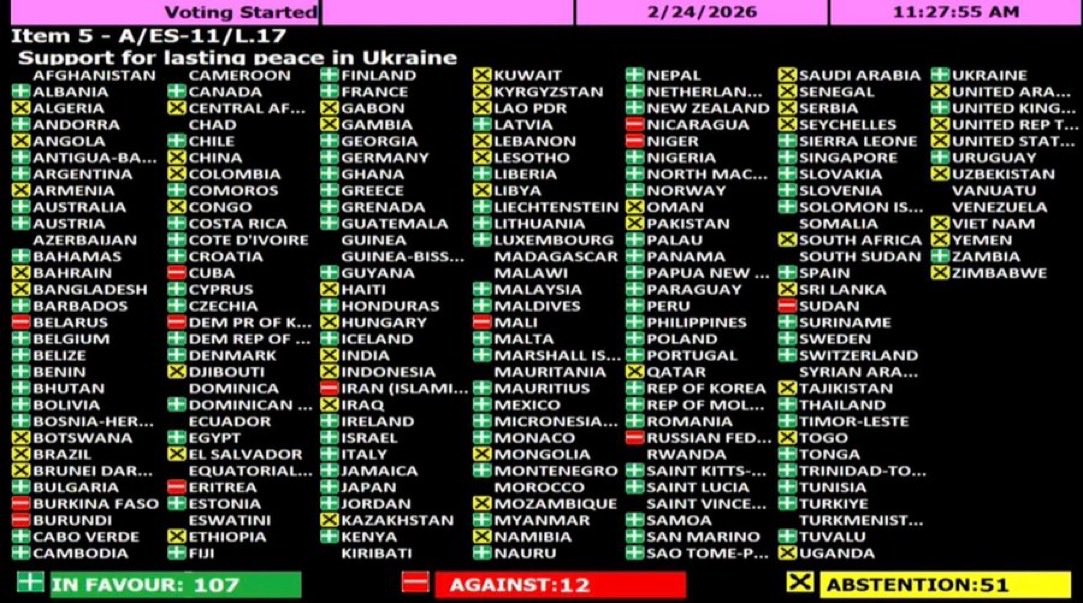
A UN vote on a lasting peace in Ukraine and we abstained. Go figure. The Russian Federation was against the proclamation. Is not four years of war enough? Is not missing children, shelling of cities and the killing of innocents enough? It is not a business deal-it is war.
Our @TeamCanada played the stronger game, at every turn. They leave the ice the better team without question. Congrats to our incredible players, who showed the world what the best looks like.